Powder bathrooms might be the smallest room in the house, but they’ve become one of the biggest opportunities for bold, creative design—and Pinterest knows it. Americans are obsessing over these tiny spaces right now because, with just a sink and a toilet to work around, you can take risks you’d never dare try in a full bath. Whether you’re hunting for moody drama, fresh wallpaper moments, or something that feels quietly luxurious, the half bath is where personality gets to live rent-free. In this guide, we’re walking through powder bathroom ideas for 2026 that range from deeply cozy to sleekly modern—the kind of spaces that stop guests mid-conversation and make them want to know your decorator’s number.
1. Moody Dark Walls with Warm Brass Accents
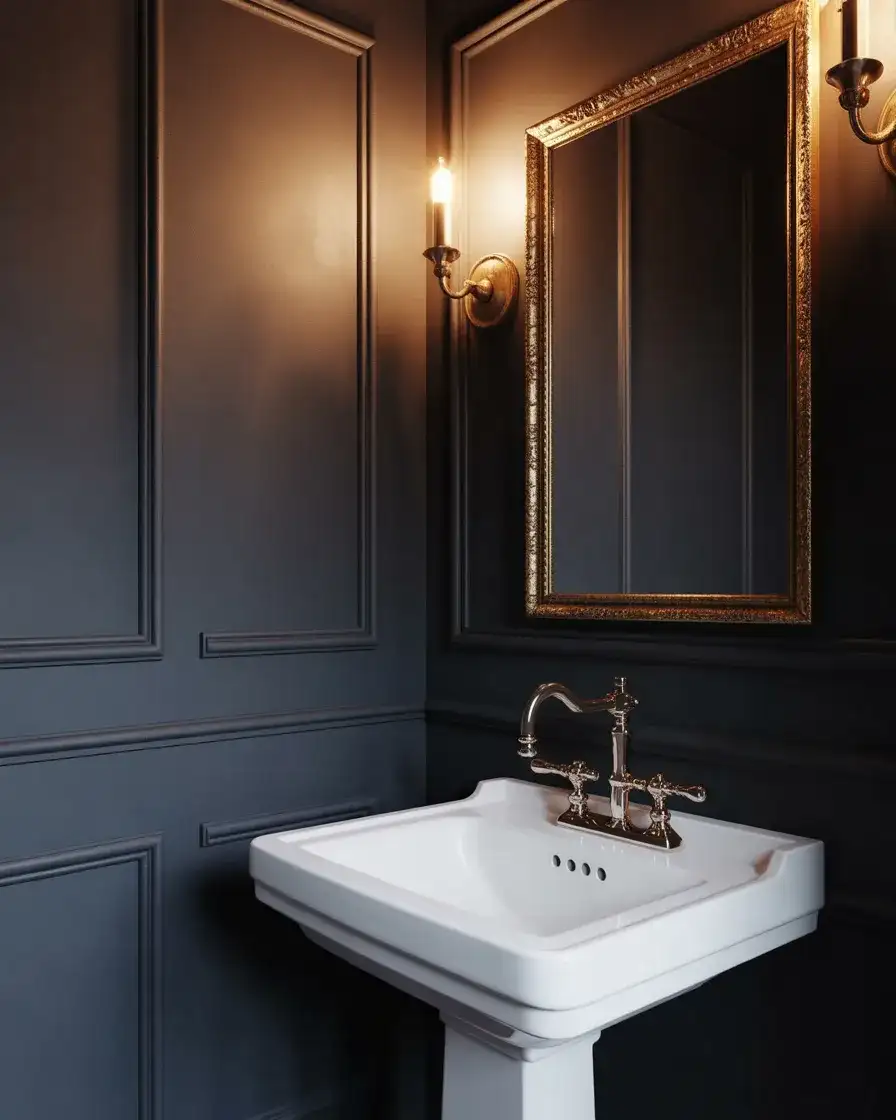
If there’s one trend that refuses to fade heading into 2026, it’s the moody powder room—walls so deep they feel like velvet, fixtures that catch candlelight like old gold. Think forest green, inky navy, or a near-black charcoal layered with dark hardware and warm brass fittings. This look thrives in small spaces because the lack of natural light stops being a liability and becomes part of the atmosphere. It reads as intentional, rich, and unabashedly confident—exactly the kind of design statement a half bath was made for.
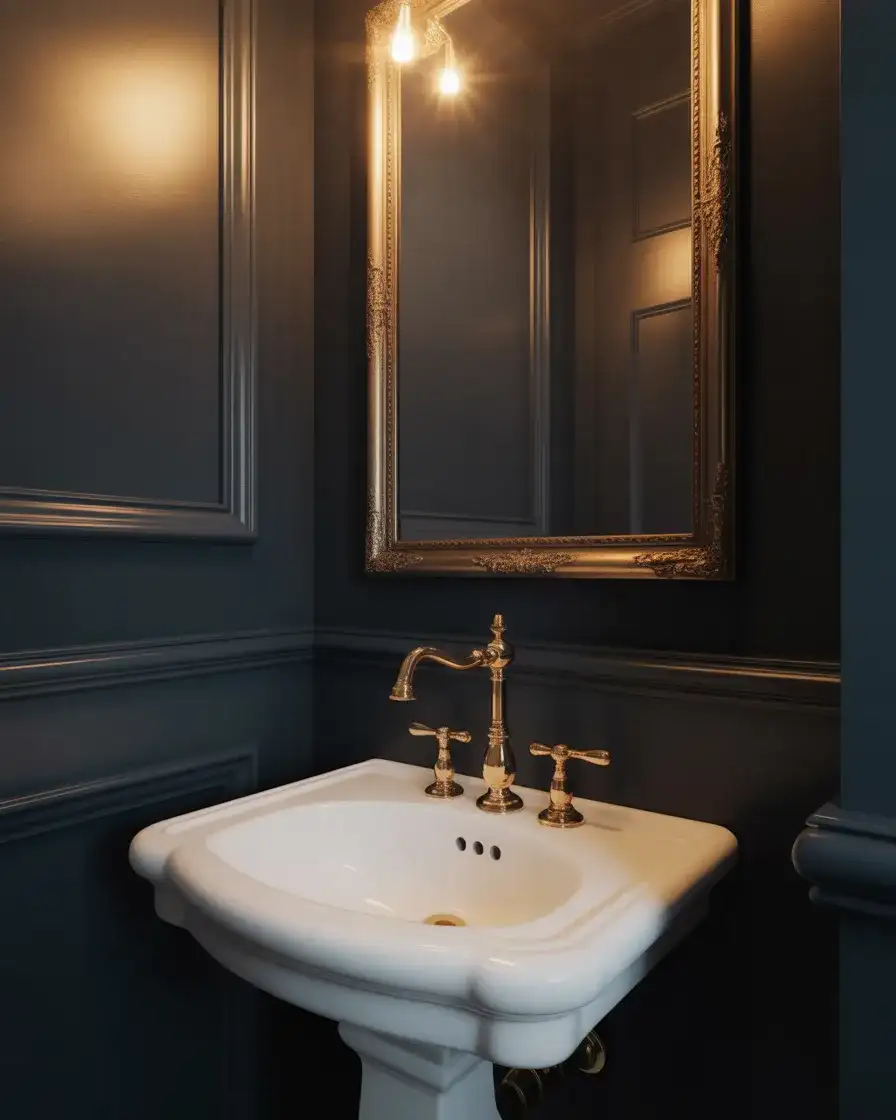
Interior designers who specialize in small spaces often say the biggest mistake homeowners make is trying to brighten a powder room that simply doesn’t have windows. Instead of fighting the darkness, lean into it. Layer a deep wall color with warm-toned lighting—think bulbs in the 2700K range—and let the brass do the heavy lifting. The result feels like a private club rather than an afterthought, and guests who step inside tend to linger a little longer than necessary.
2. Botanical Wallpaper That Makes a Statement
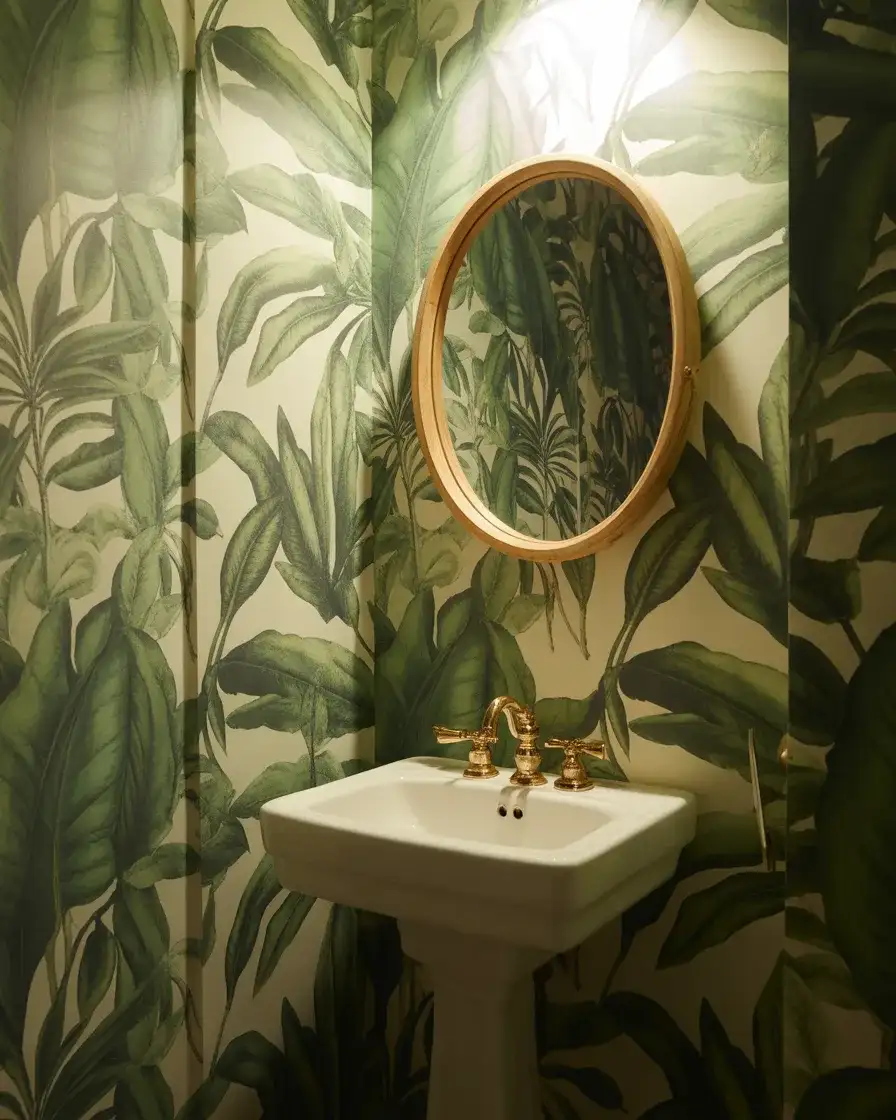
Few things transform a tiny bathroom faster than the right wallpaper, and in 2026, botanical prints are having a full moment. We’re talking lush, oversized tropical leaves, hand-illustrated ferns, or climbing vines in rich emerald and terracotta that wrap the room like a private garden. Because powder rooms are so compact, you can commit to a bold, pricey pattern without breaking the bank—a single roll often covers the entire space. It’s the kind of move that reads as expensive and effortful, even when it’s genuinely one of the most accessible decor upgrades you can make.
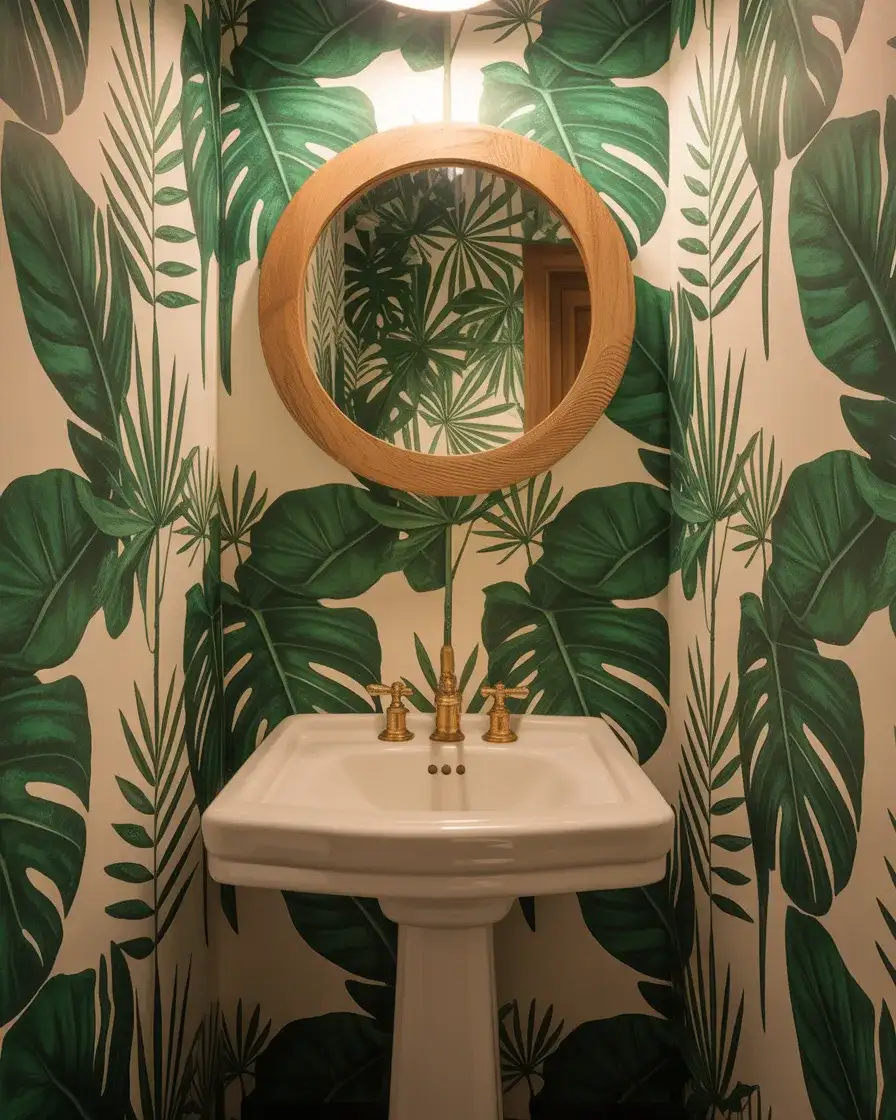
Wallpaper in a powder room is also one of the lowest-commitment ways to experiment with pattern in your home—unlike a living room accent wall, this is a space guests see briefly and your family navigates daily, meaning you can go bolder without the risk of visual fatigue. Peel-and-stick options have improved dramatically and now offer realistic textures and sharp print registration, making them a smart choice for renters or anyone who likes to refresh their space every few years without a full renovation.
3. Organic Modern Vanity with Natural Materials
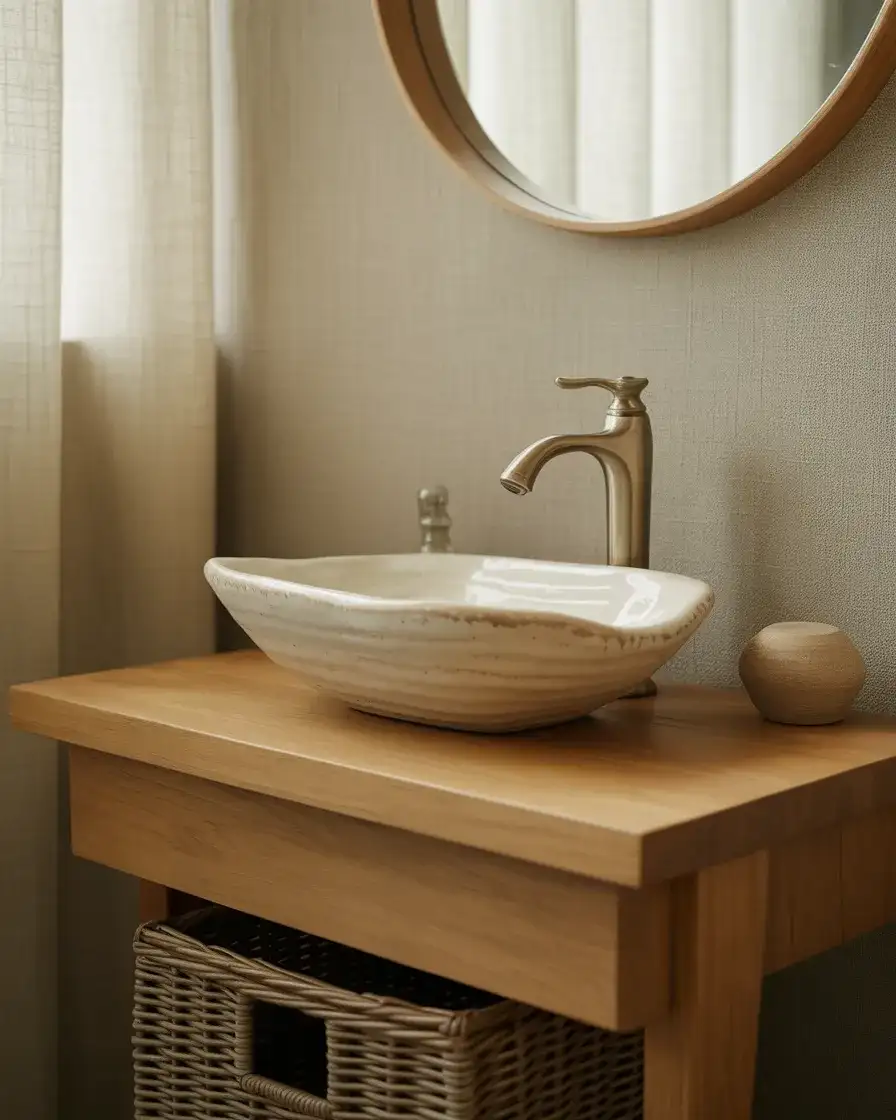
The organic modern aesthetic has quietly taken over American home design, and it’s showing up in powder rooms in the most beautiful ways. Think of a live-edge wood vanity paired with a vessel sink in hand-thrown ceramic or a floating shelf in white oak with a matte stone basin resting on top. This approach brings warmth and texture into a modern space without veering into the rustic territory that felt overdone in earlier years. The key is restraint—let the natural materials do the talking and keep the hardware minimal, in brushed nickel or unlacquered brass.
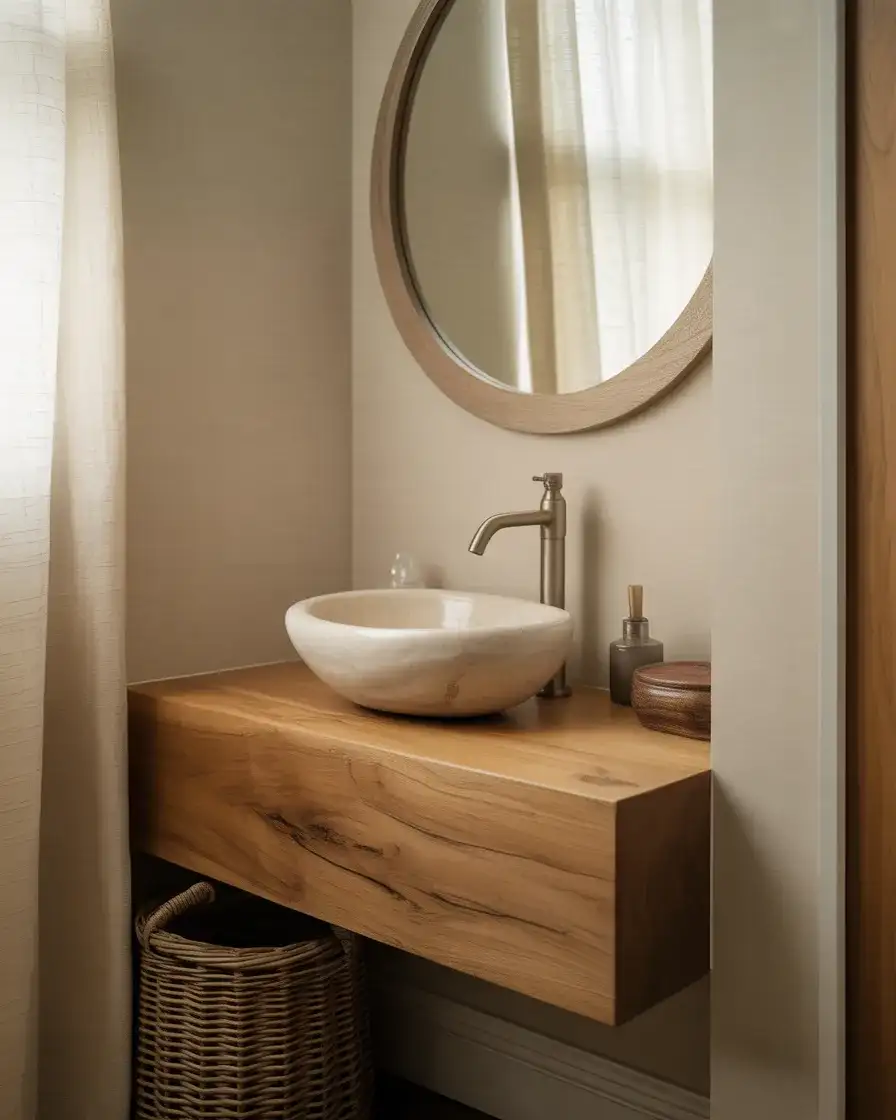
One homeowner in Austin, Texas, described replacing her builder-grade vanity with a simple white oak floating shelf and a $90 ceramic vessel sink as “the renovation that cost the least and got the most compliments.” That reaction isn’t surprising—organic modern materials carry a tactile quality that photos struggle to capture but that guests feel immediately when they walk in. If you’re working with a tight budget, even swapping hardware to brushed brass and adding a natural fiber hand towel goes a long way toward achieving this look.
4. Deep Green Powder Room with Earthy Tiles
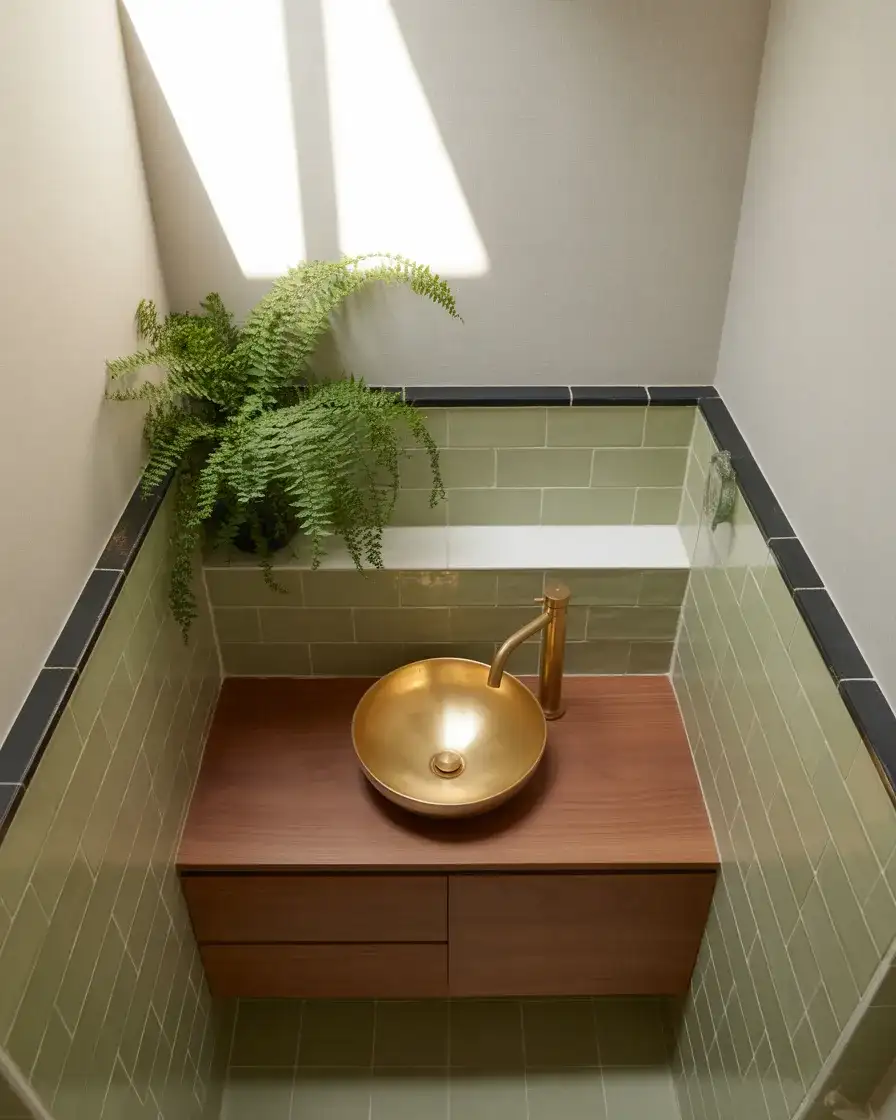
Green has officially earned its place as the defining color of this design moment, and in the powder bathroom, it does something genuinely special. A green half bath—whether it’s a muted sage, a rich forest, or a deep bottle green—reads as grounded and lush at the same time. Pair it with earthy tile—think terracotta, warm beige zellige, or handmade concrete—and the whole room starts to feel like a jewel box pulled from the Italian countryside. It’s a combination that photographs beautifully and feels even better in person, which is exactly why it keeps circulating through inspo boards on Pinterest.
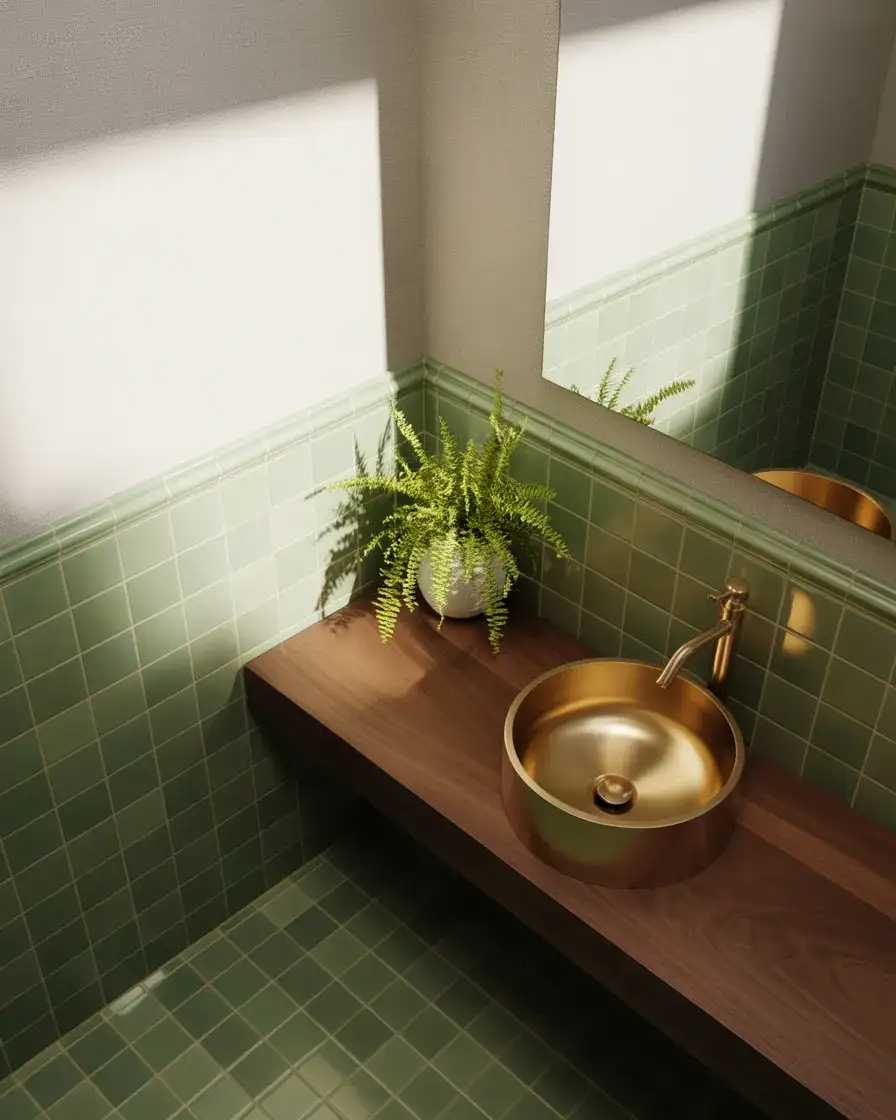
Green is also one of the most forgiving palette choices for bathrooms with awkward proportions. It absorbs rather than amplifies, which means it can make a narrow hallway powder room feel intentional rather than squeezed. Designers commonly recommend using the same green across walls and cabinetry for a tonal, immersive effect—a technique borrowed from English country houses that translates surprisingly well into a modern American home. Don’t shy away from going deep; lighter greens often look washed-out under artificial bathroom lighting.
5. Coastal Half Bath with Blue and White Palette
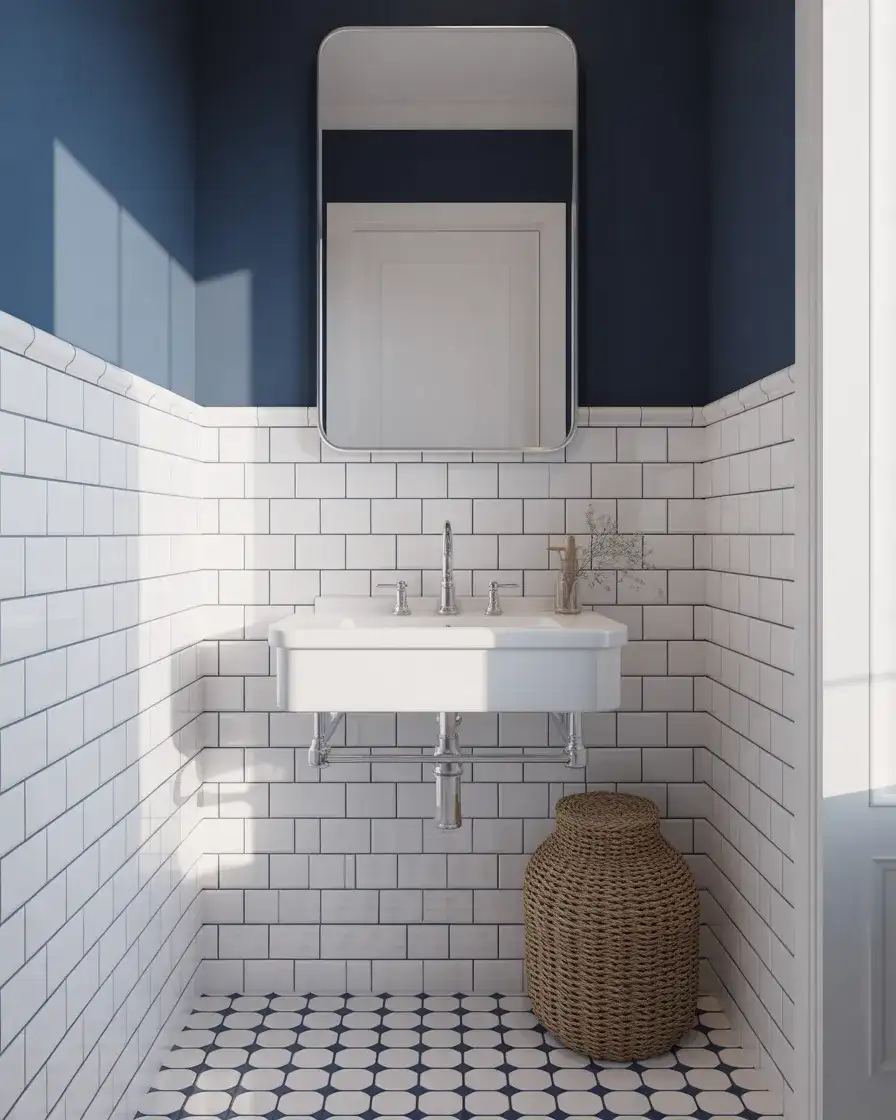
For homeowners who love the breezy ease of coastal design but don’t want the clichéd seashell-and-rope aesthetic, 2026 has a more refined answer: a cool, layered powder room built around a sophisticated blue and white palette. Think French blue shiplap walls with crisp white trim, or white subway tile with navy grout, paired with a driftwood-framed mirror and chrome fixtures that catch the light like sea glass. This is a look that works beautifully in New England cape houses, Florida coastal cottages, and Pacific Northwest Craftsmen alike—it carries water and light without literally depicting the ocean.
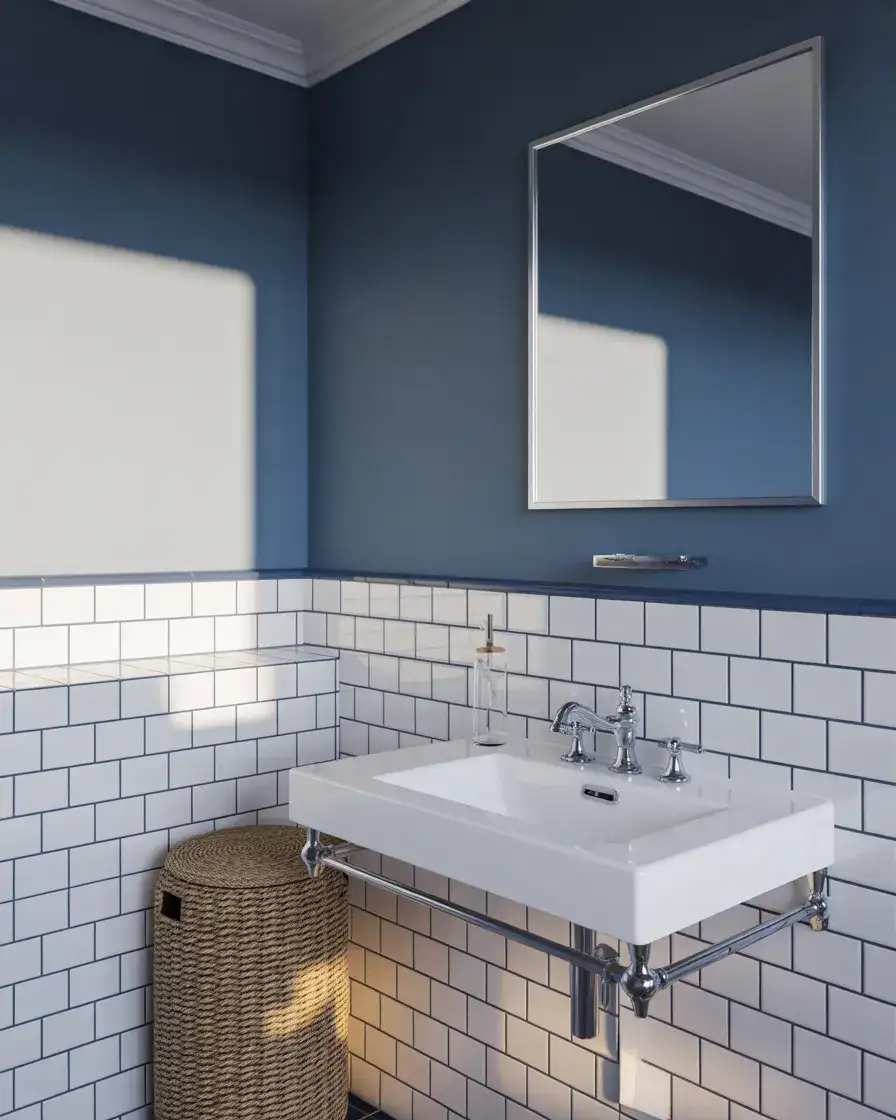
Where this look works best: beachside vacation homes and primary residences within a drive of the water, where the palette connects to the landscape outside. But it also thrives in landlocked homes when executed with restraint—keep accessories minimal and natural (think linen towels and a river stone soap dish), and the room evokes the coast without costume. Avoid nautical-themed hardware like anchor pulls or porthole mirrors, which tip this look into theme park territory faster than you’d think.
6. Statement Mirror as the Room’s Focal Point
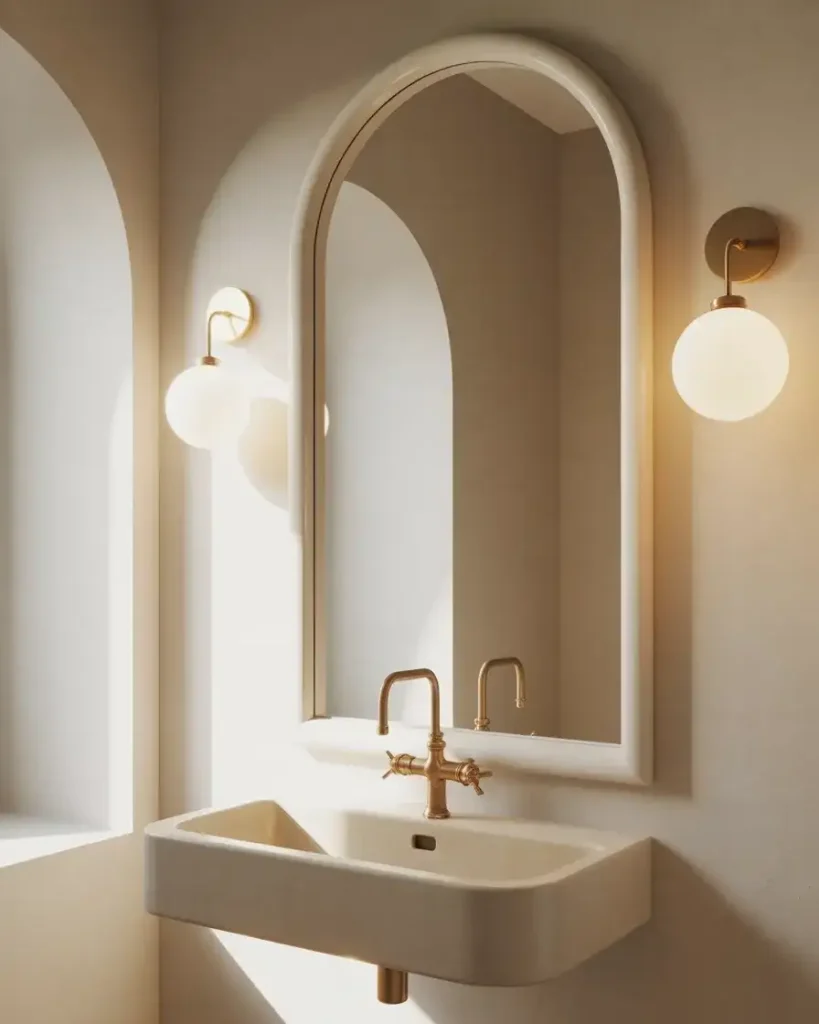
In a room with no shower and no bathtub, the mirror gets to be everything. And in 2026, powder room mirrors are doing serious work: arched plaster frames, oversized antiqued glass, and sculptural unlacquered brass surrounds that look like they were pulled from a Roman bathhouse. The mirror isn’t just functional here—it’s the art, the statement, and the reason the room has a personality. When you choose a mirror that’s slightly too large for the space, something that a more cautious designer might call “overscaled,” the effect is often the best thing in the room and the thing guests comment on first.
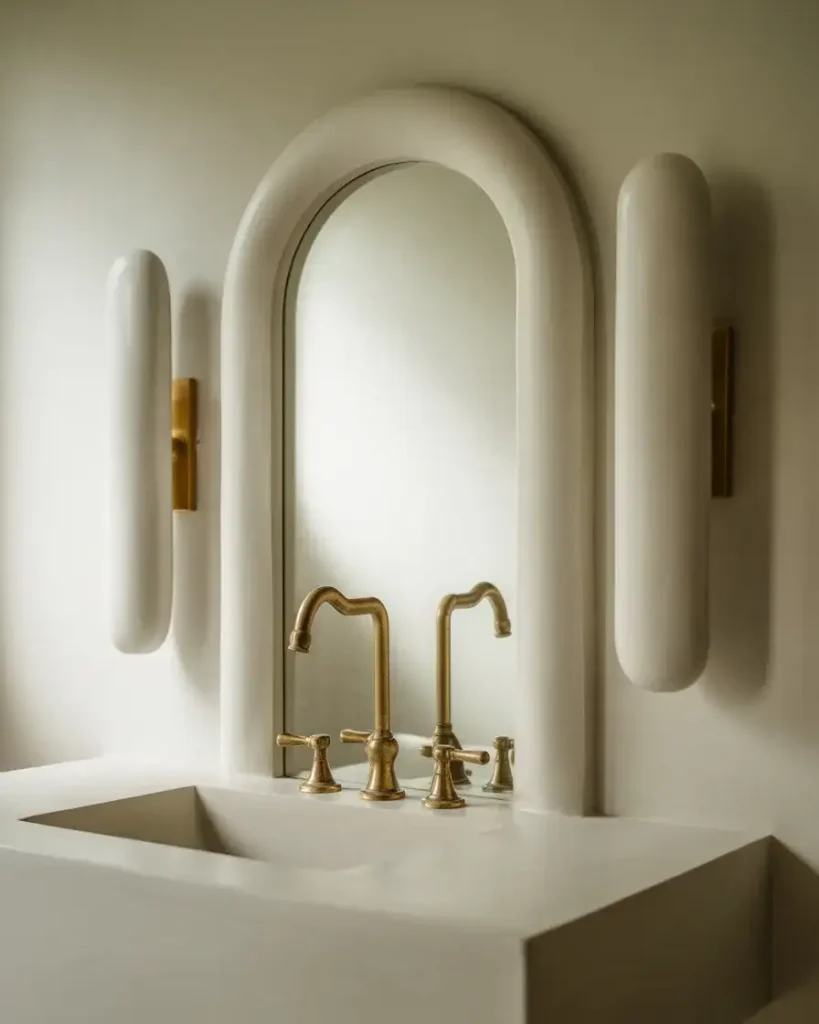
An expert styling tip from professional interior stagers: if you’re working with a tight vanity wall, try mounting your mirror so it extends into the adjacent wall plane—letting it “float” slightly off-center from the sink. This breaks the predictable symmetry and immediately makes the room look like it was designed rather than assembled. Pair an ornate mirror with a plain vanity or a minimal frameless mirror with a highly textured wall to let each element breathe without competing.
7. Luxury Powder Room with Marble and Gold
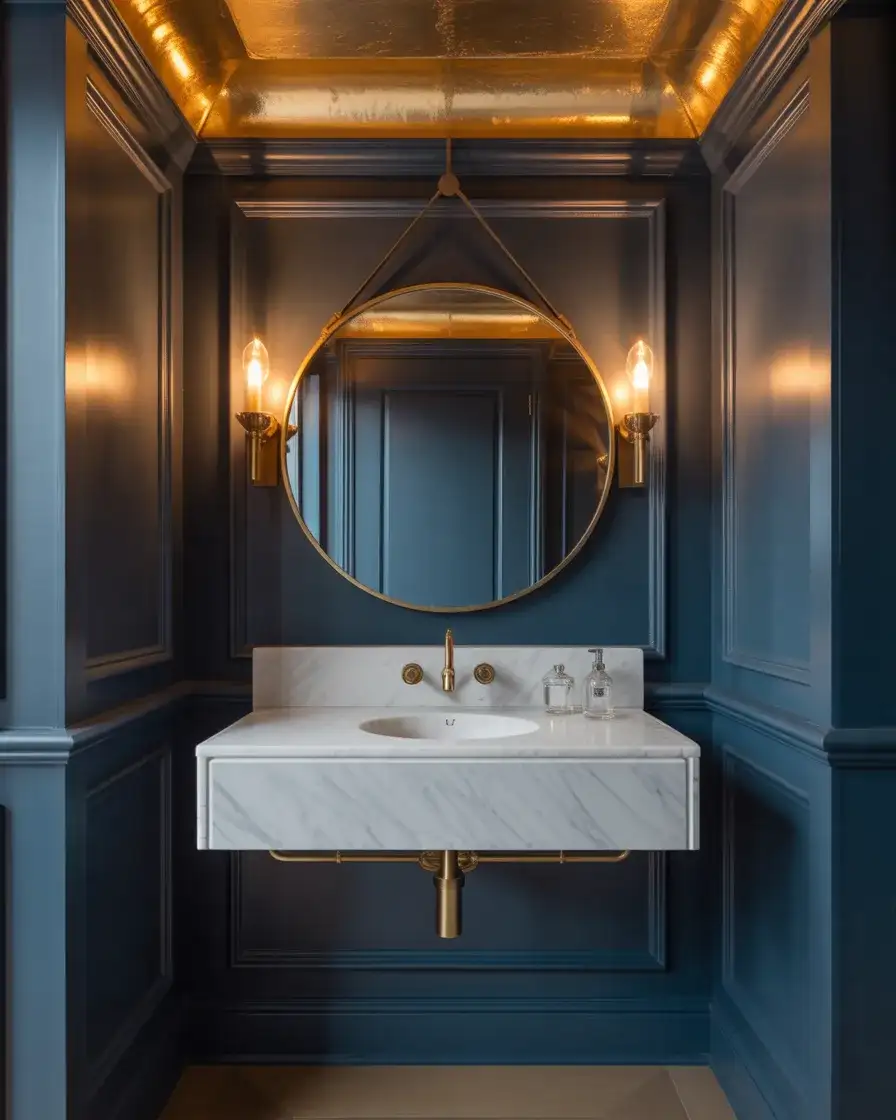
There’s a version of luxury powder room design that feels earned rather than showy, and it almost always involves marble and gold in exactly the right proportion. Imagine book-matched Calacatta marble slabs covering the walls, a gold leaf ceiling that catches the vanity light, or even just a honed Carrara marble vanity top with a matte gold faucet set against deep lacquered walls. The half bath is uniquely suited to this level of material investment because the square footage is so small—going truly luxury here often costs a fraction of doing it in a kitchen or full bath, while delivering equal visual impact.
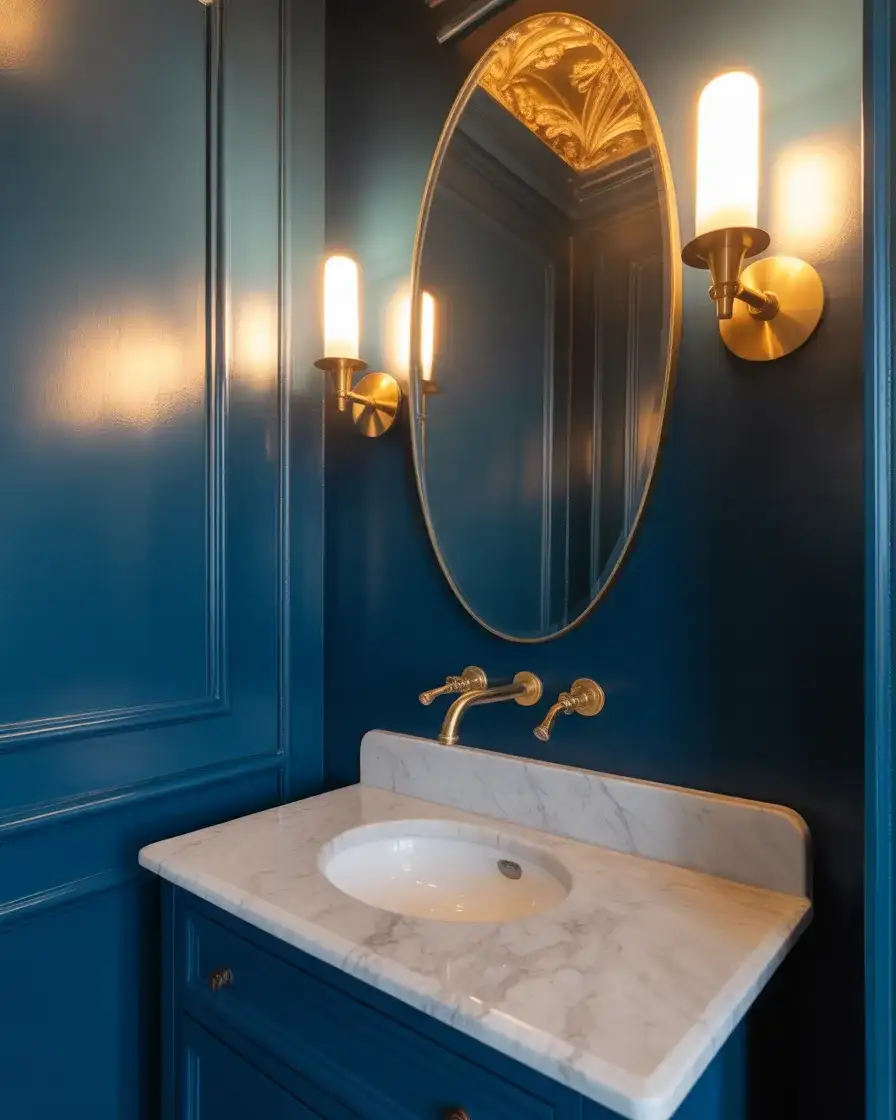
Budget reality check: full marble slab walls are genuinely expensive, but marble-look large-format porcelain tiles have become exceptionally convincing in the last few years, with options available at major home improvement retailers for under $5 per square foot. In a powder room measuring 20–30 square feet of wall space, even the real thing becomes approachable. Focus your material budget on the one or two surfaces you actually touch—the vanity top and the floor—and let the walls carry a more affordable interpretation of the same palette.
8. Playful Pink Powder Room with Retro Vibes
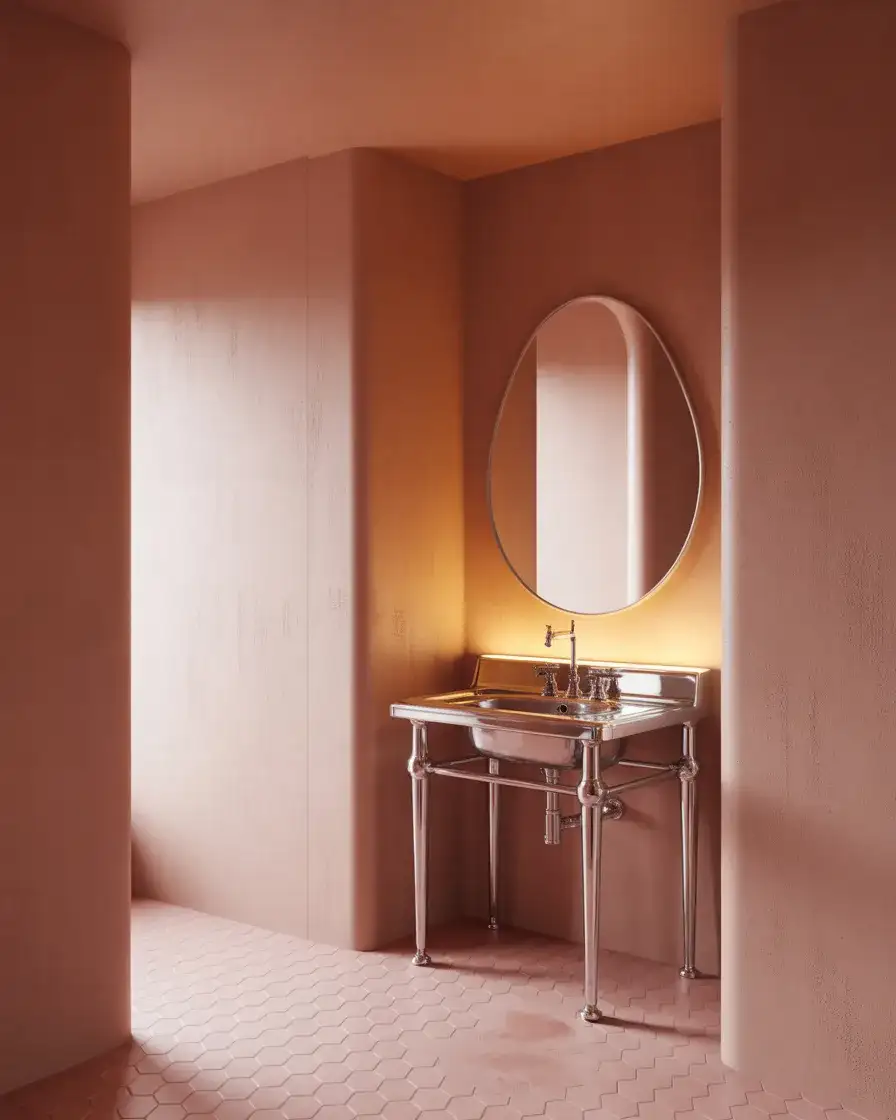
Pink is back—not the blush millennial pink of a few years ago, but something richer and more committed: dusty rose plaster walls, deep mauve tile, and ballet-slipper pink lacquered cabinetry with chrome pulls. A pink powder room done right in 2026 has a retro warmth that nods to mid-century Hollywood glamour without feeling like a costume. It’s one of the most fun directions you can take a half bath, and because guests are only in the room briefly, you can commit fully to the color story without worrying about it becoming overwhelming over time.
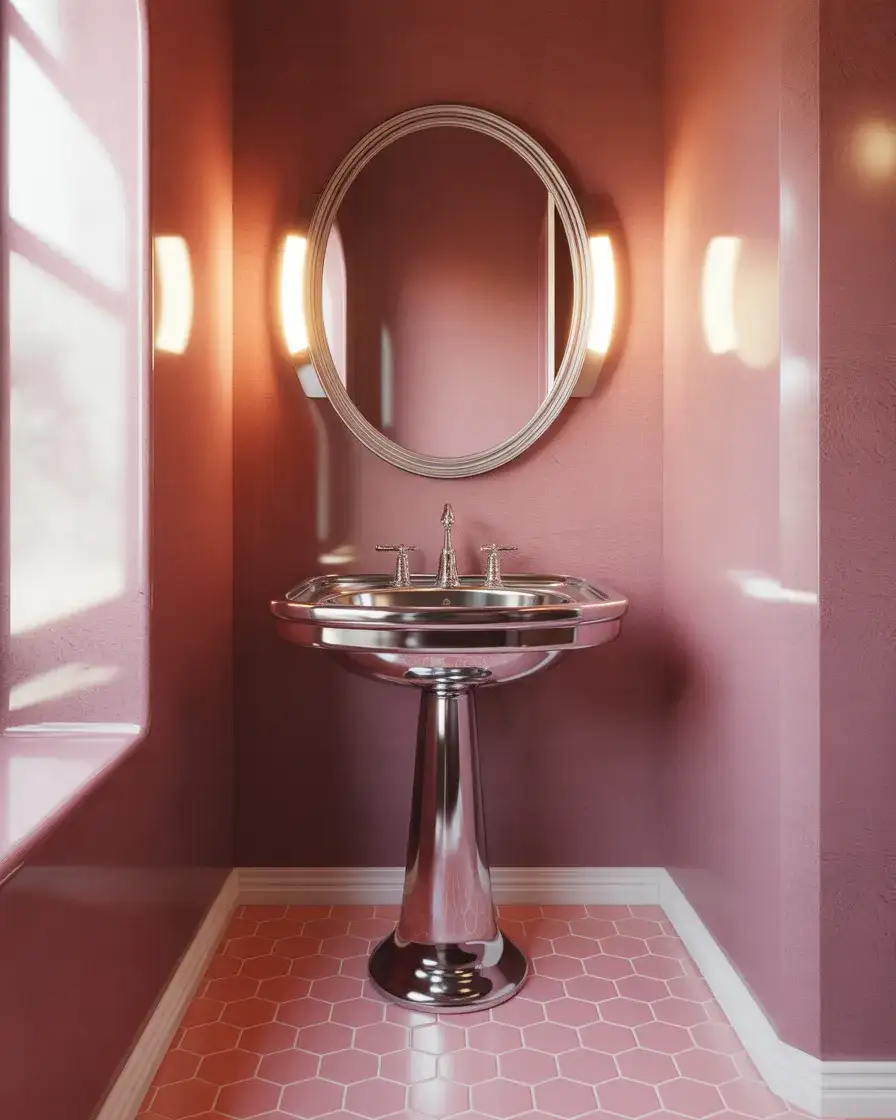
Real homeowners who’ve gone pink in their powder rooms often report the same thing: it’s the room that gets the most reactions, always positive, from guests. One homeowner in Nashville kept her original pink and black tile from the 1950s when renovating, added a brass vanity light and a moody pink-painted ceiling, and ended up with a room that’s been featured three times on home tour Instagram accounts. Sometimes the “dated” choice is actually the most interesting one—the key is leaning in fully rather than apologetically.
9. Modern Half Bath with Floating Vanity
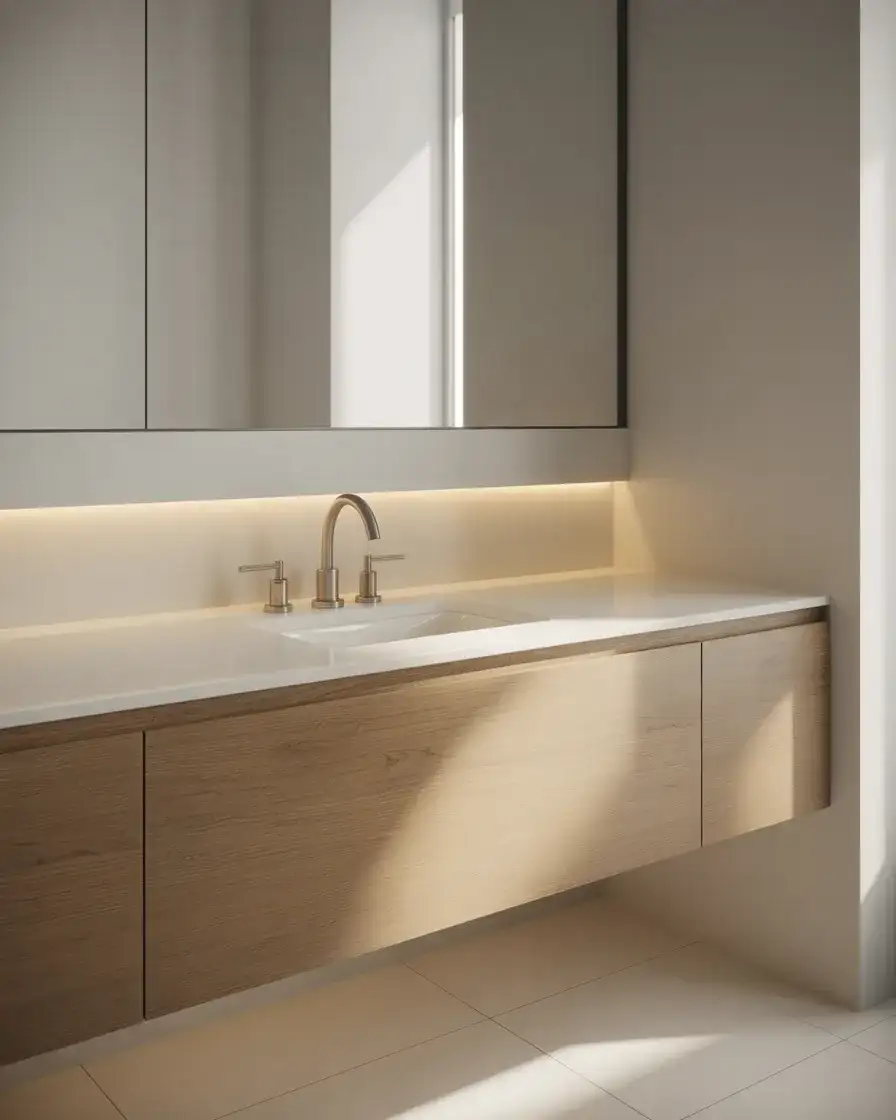
Nothing opens up a small powder room visually quite like a wall-mounted floating vanity. The exposed floor beneath it creates breathing room in a space that’s often tight, and the clean horizontal line of a floating cabinet reads as decidedly modern—especially when paired with integrated undermount lighting that washes the floor in a soft, ethereal glow. In 2026, the best floating vanities are leaning toward warm wood tones in white oak or walnut rather than the cold-gray lacquer of the last decade, making the look feel contemporary without the sterility that plagued earlier iterations of this trend.
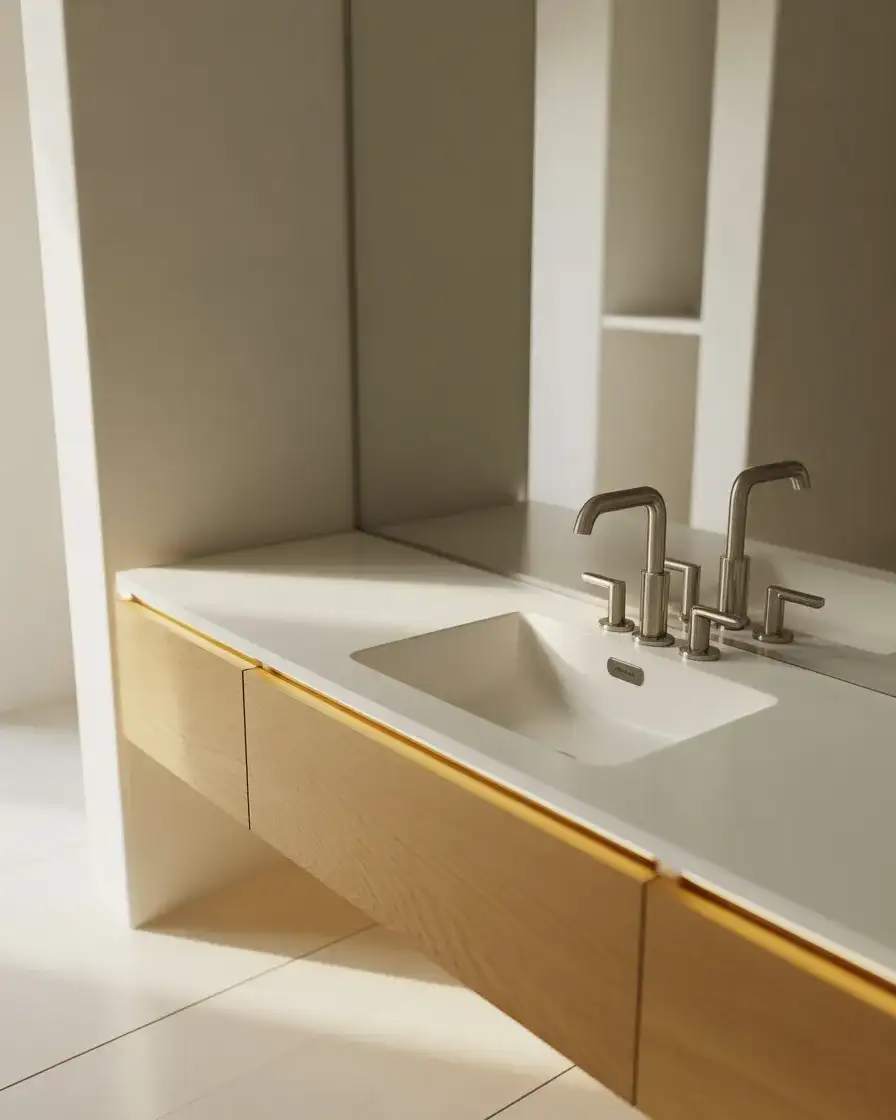
For powder rooms under 25 square feet, a floating vanity isn’t just an aesthetic choice—it’s a practical one. The visual floor-to-ceiling continuity makes the room feel measurably larger, and the clearance beneath makes cleaning significantly easier. One common mistake is choosing a vanity that’s too shallow in depth, prioritizing the floor illusion over actual counter space. Aim for a minimum of 16 inches of depth so the basin doesn’t feel cramped, and the sink edge doesn’t splash the wall with every use.
10. Dark and Dramatic Ceiling Treatment
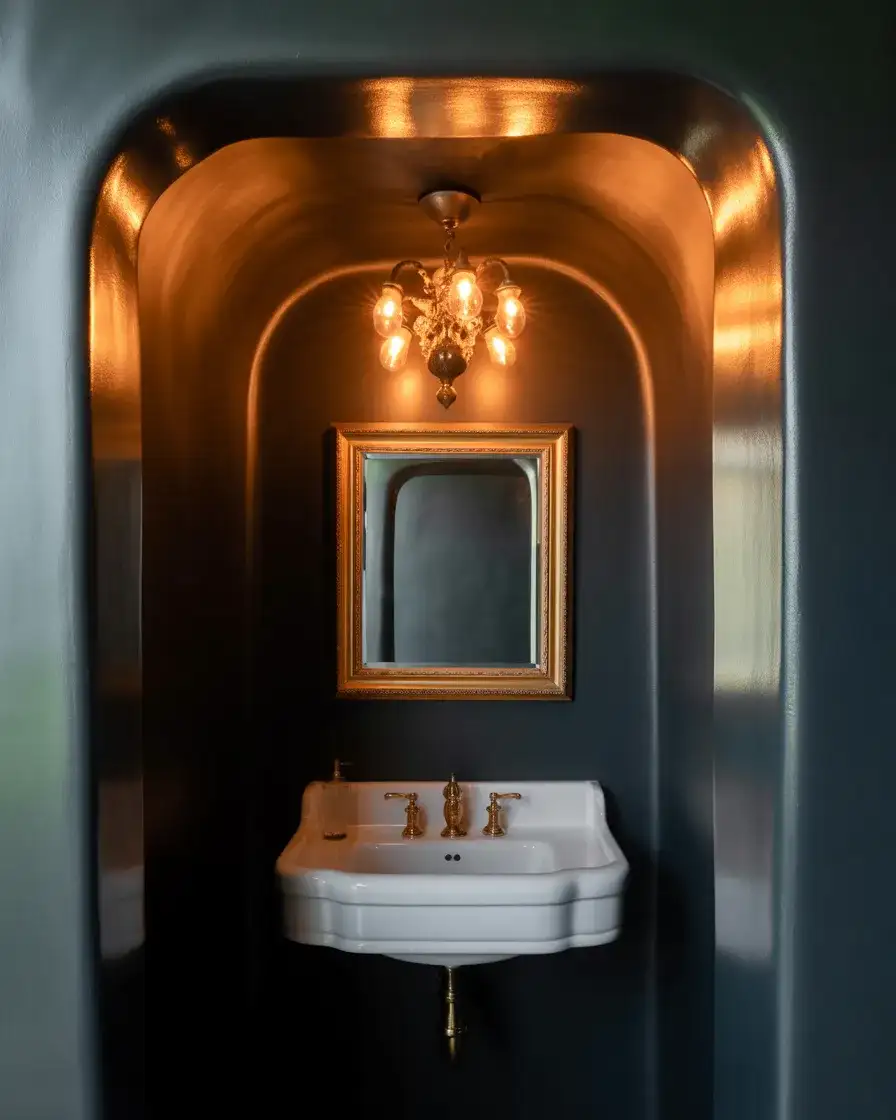
Painting the ceiling has become one of the most talked-about moves in dark and moody bathroom design right now, and it makes particular sense in a powder room. When you take the same deep color from the walls and pull it across the ceiling—or go even darker overhead to create a cave-like canopy—the room stops feeling small and starts feeling cozy, enveloping, and deliberate. This technique, borrowed from historic English country homes and updated for contemporary American spaces, works especially well in powder rooms with ornate light fixtures, since the dark background makes the fixture glow like jewelry.
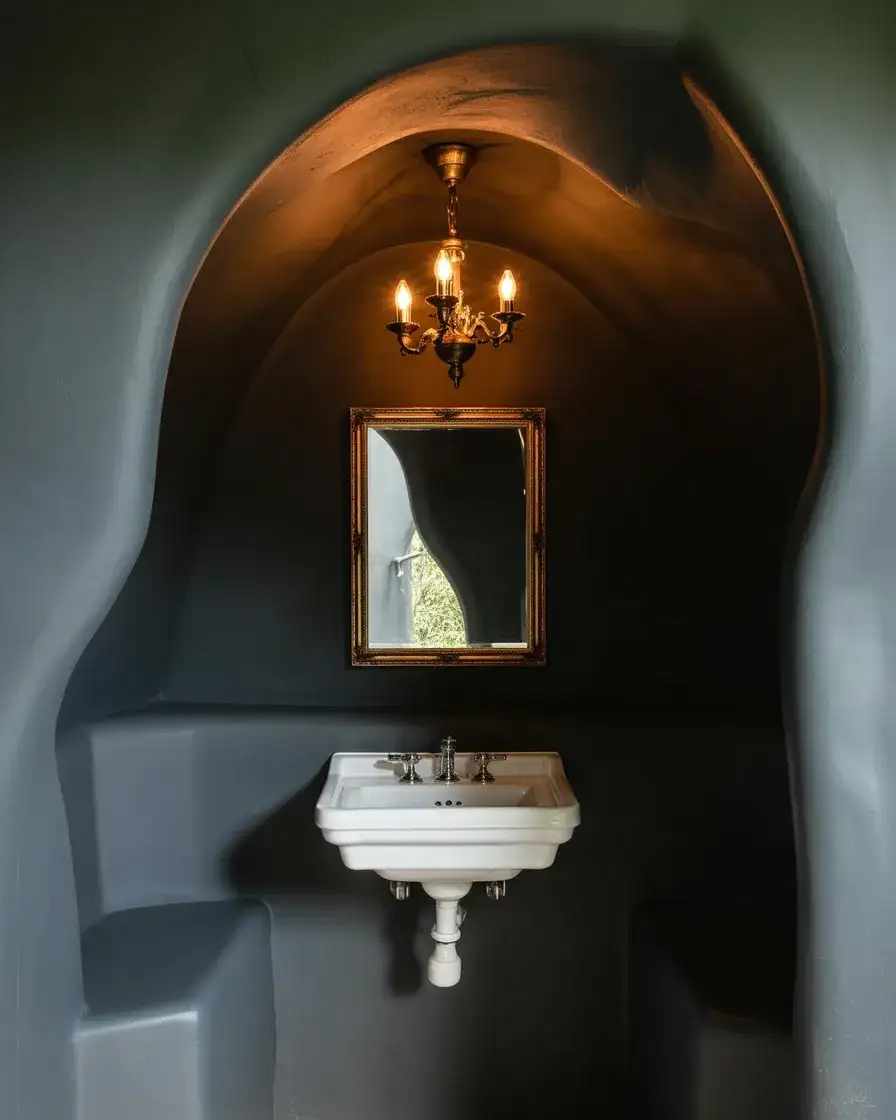
Designers who specialize in color often describe “fifth wall” ceiling treatments as the move that separates a well-decorated room from a truly designed one. The ceiling is the one surface that’s never interrupted by furniture, windows, or artwork, making it the purest canvas in the space. If you’re nervous about committing to the full treatment, start with a tinted ceiling—taking your wall color and lightening it by 30% before applying it overhead—which gives a cohesive feel without the full drama. From there, it’s a short mental leap to going all in.
11. Maximalist Wallpaper with Colorful Tile
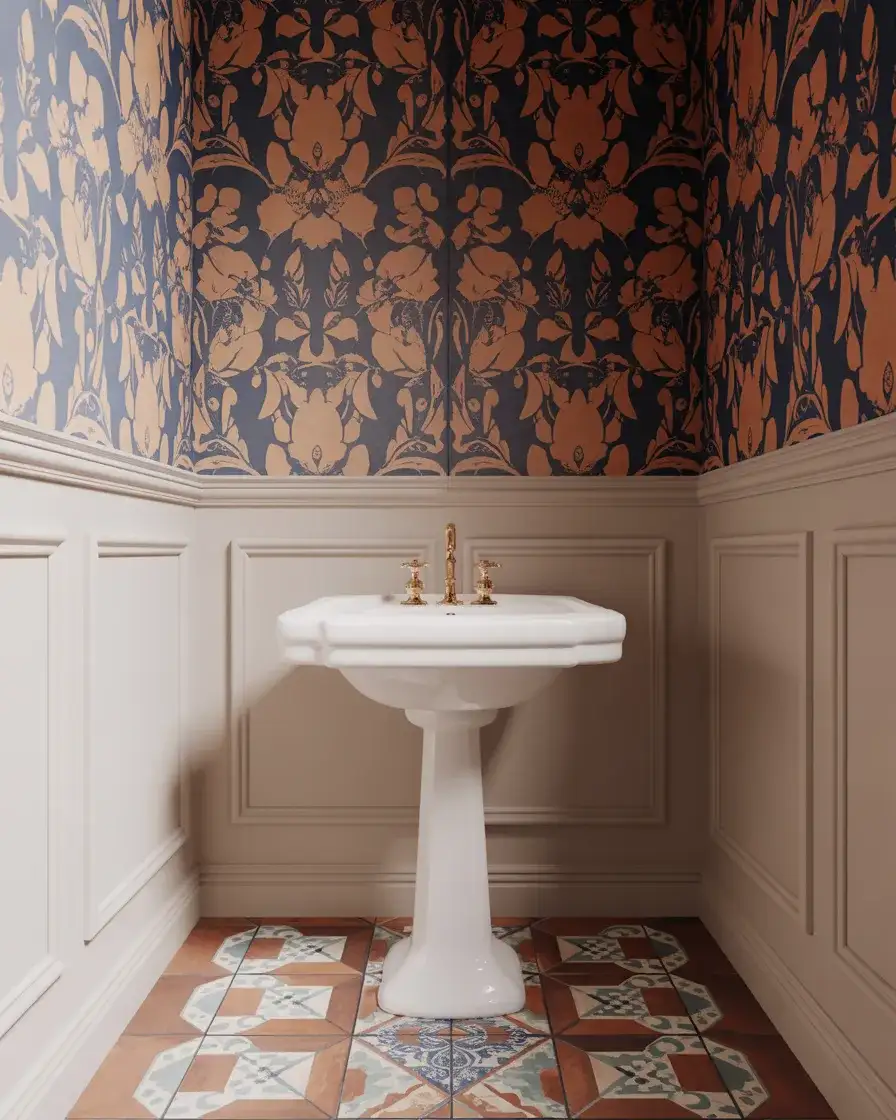
For the design-brave, the powder room is the one place in the house where wallpaper and tile can coexist in full color without the space imploding. We’re seeing this combination everywhere in 2026 inspiration boards: a bold graphic paper above the chair rail and a richly patterned cement tile or Victorian-style encaustic tile below. The key is choosing patterns that share at least one color family—a dark blue in the wallpaper that echoes in the navy tile grout, for instance—so the two elements feel like a conversation rather than an argument. In a room this small, the visual density actually adds to the jewel-box quality rather than overwhelming it.
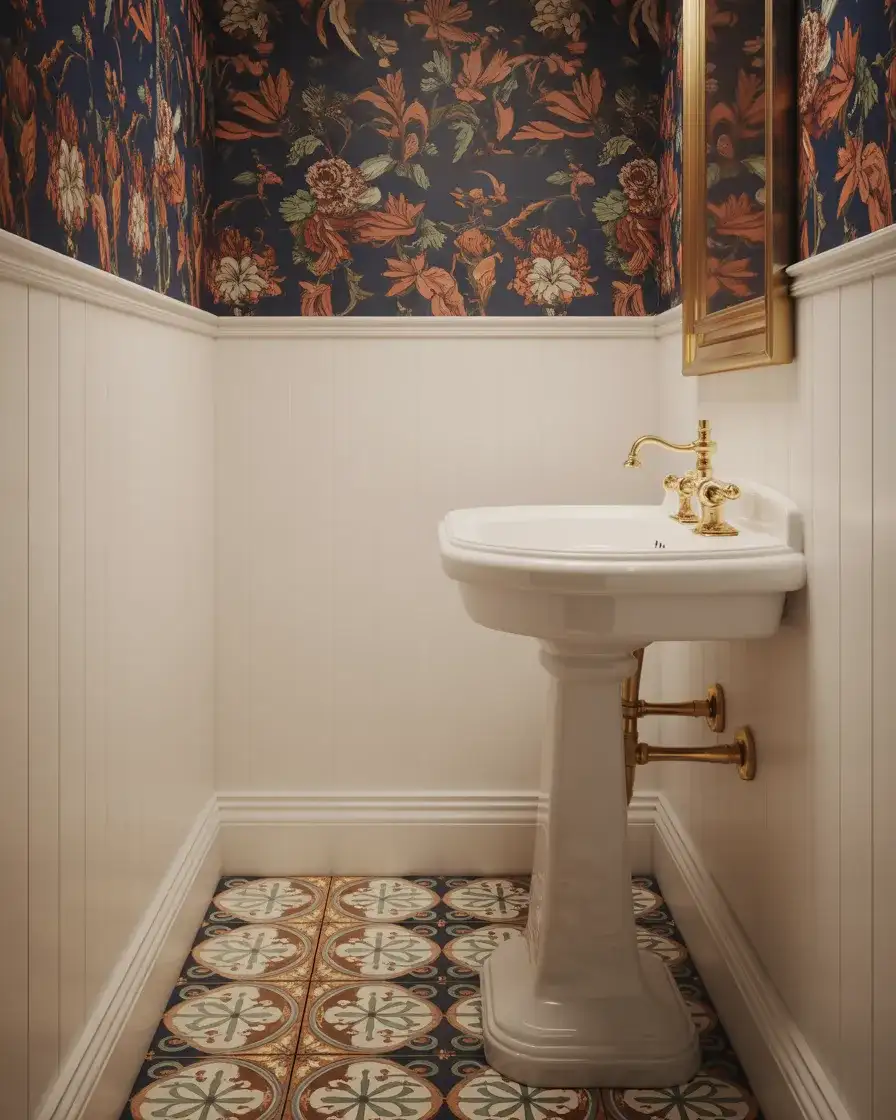
This look is essentially a visual editorial in miniature, and it requires a degree of commitment that most homeowners initially resist—until they see it finished. If you’re mixing patterns yourself rather than working with a designer, use the rule of three: one large-scale pattern, one medium-scale, and one small or solid. The wallpaper tends to carry the large scale, the tile the medium, and accessories like towels or a soap dish the third, binding note. When in doubt, pull a paint chip from the wallpaper and use it to guide your tile selection.
12. Vintage-Inspired Powder Room with Pedestal Sink
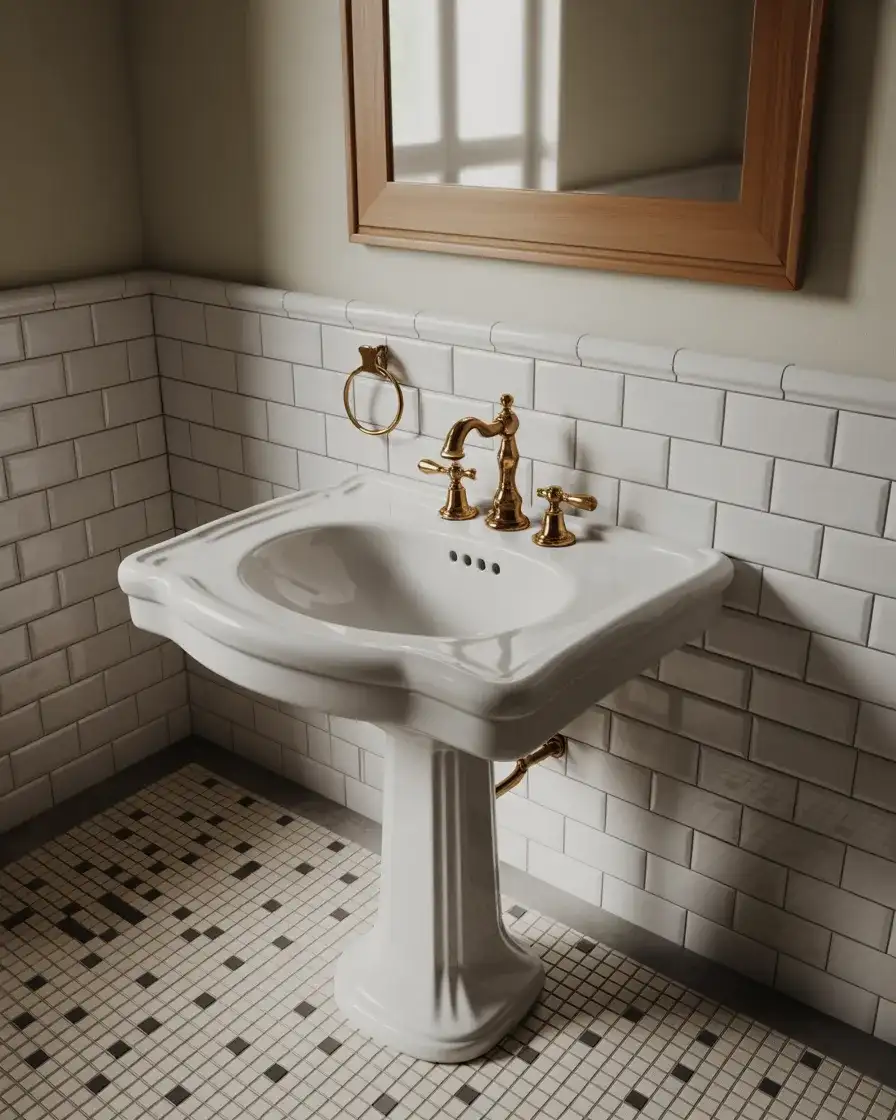
There’s a quiet resurgence of the classic pedestal sink happening in American home decor, and it makes complete sense. After years of bulky floating vanities and storage-heavy cabinetry, the slender, sculptural pedestal feels almost radical in its restraint. A well-chosen pedestal sink—one with genuine curves rather than the builder-grade oval varieties—can be the centerpiece of a vintage-inspired half bath space that feels both nostalgic and completely current. Pair it with subway tile, a simple medicine cabinet, and unlacquered brass fixtures, and the room has a timeless quality that will photograph well in any decade.
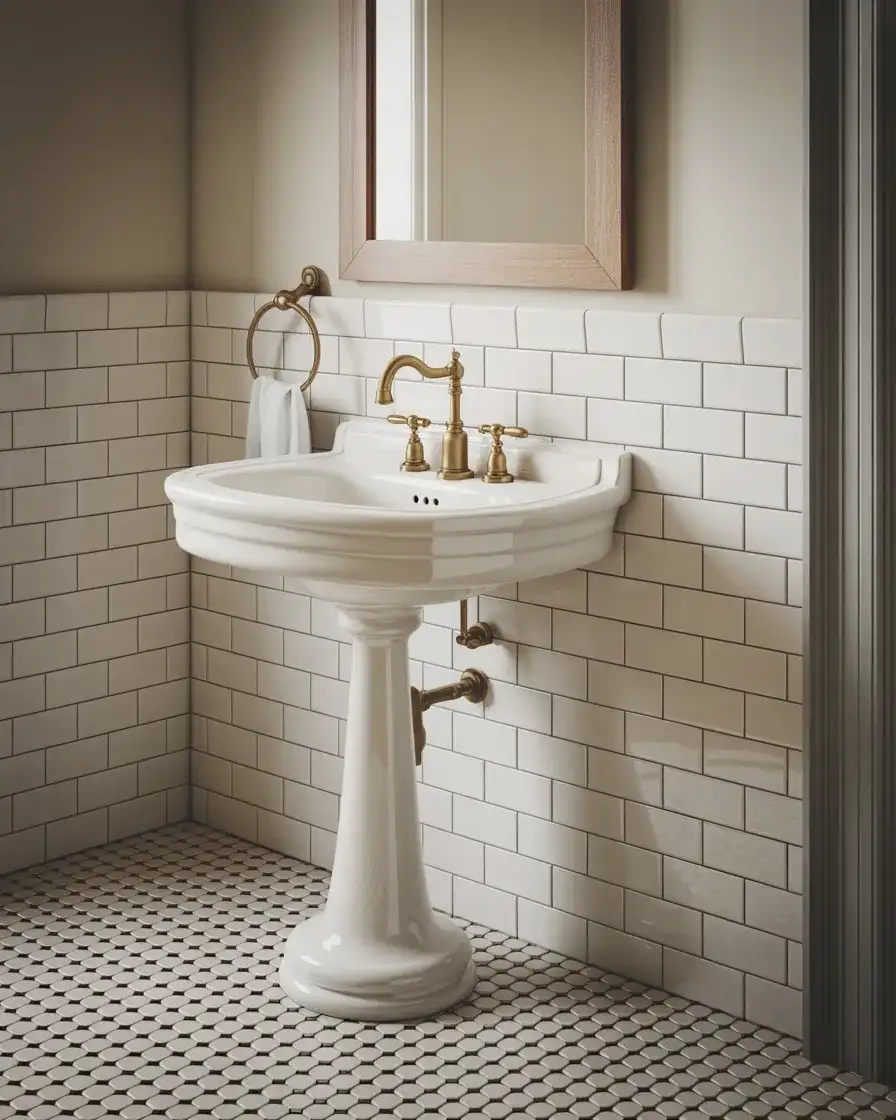
The practical downside of a pedestal sink—the absence of under-sink storage—is real but manageable. Stylish wicker baskets, slim wall-mounted shelves, or a narrow recessed niche cut into the wall between studs can provide toilet paper and hand soap storage without cluttering the floor. In fact, the forced minimalism of a no-storage sink often results in powder rooms that look more curated than their storage-heavy counterparts, because there’s no temptation to accumulate clutter beneath the vanity.
13. Bold Lighting as a Design Statement
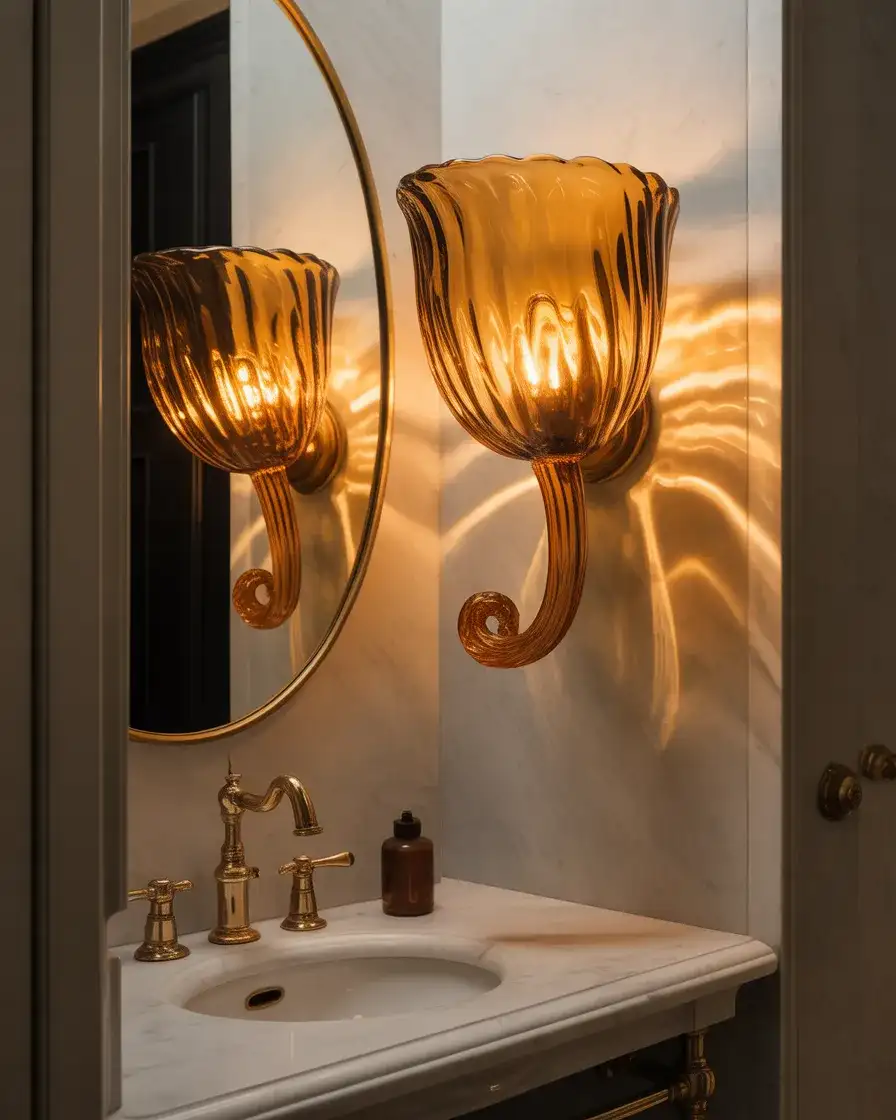
In a room with no windows and four small walls, lighting isn’t just functional—it’s the architecture of the space. And in 2026, powder room lighting is getting genuinely bold: sculptural sconces in hand-blown amber glass, miniature chandeliers that read as jewels against a dark ceiling, or a single statement pendant hanging over the vanity like an art installation. The right fixture changes how every other surface in the room reads—warm-toned bulbs make marble glow, make wood feel honey-rich, and make painted walls look like they were glazed by hand. This is one design investment that pays compounding visual dividends.
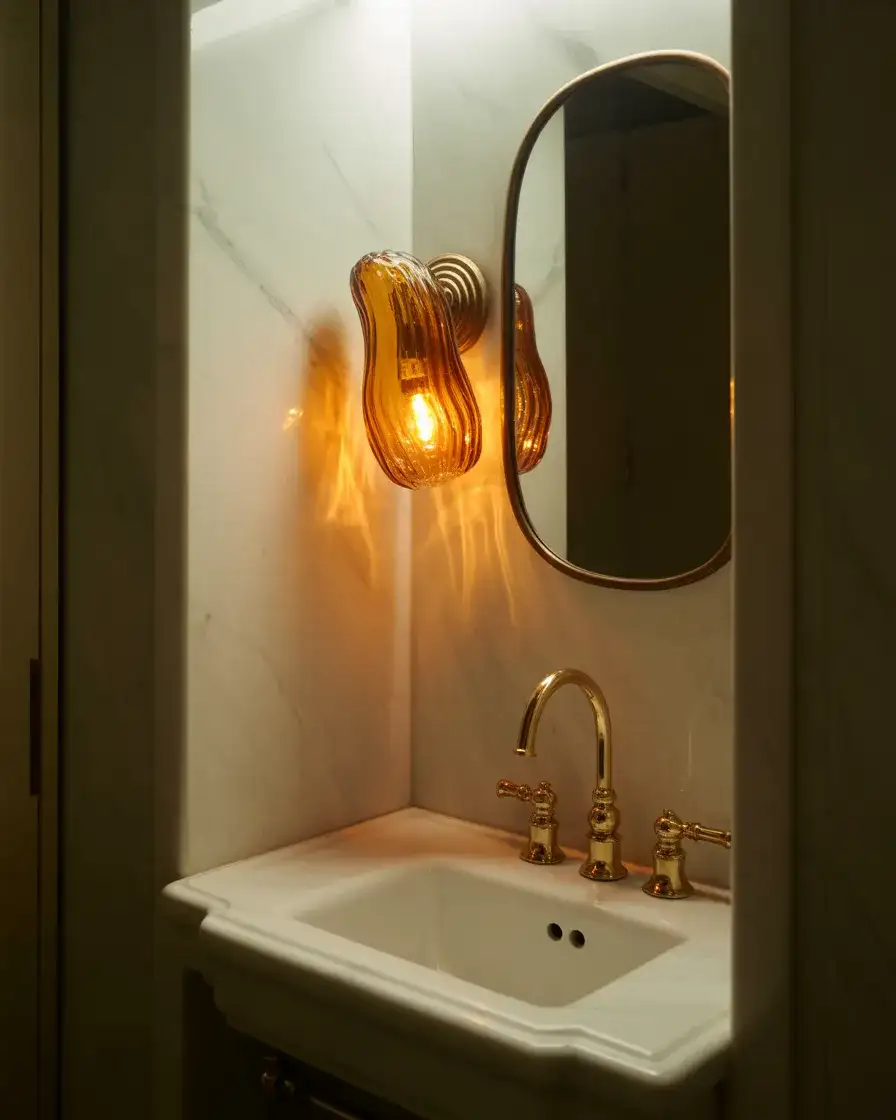
A common mistake in powder room lighting is treating it as an afterthought—choosing whatever builder-grade bar light the contractor specified and never revisiting it. Replacing this single fixture is often the highest-impact, lowest-effort change available in the room. Electrically, it’s usually a straightforward swap that most homeowners can do themselves. The budget range is wide: you can find genuinely beautiful sconces in the $80–$150 range from accessible retailers, while sculptural designer options start around $400 and create the kind of impact typically associated with full renovations.
14. Textured Plaster Walls for Organic Depth
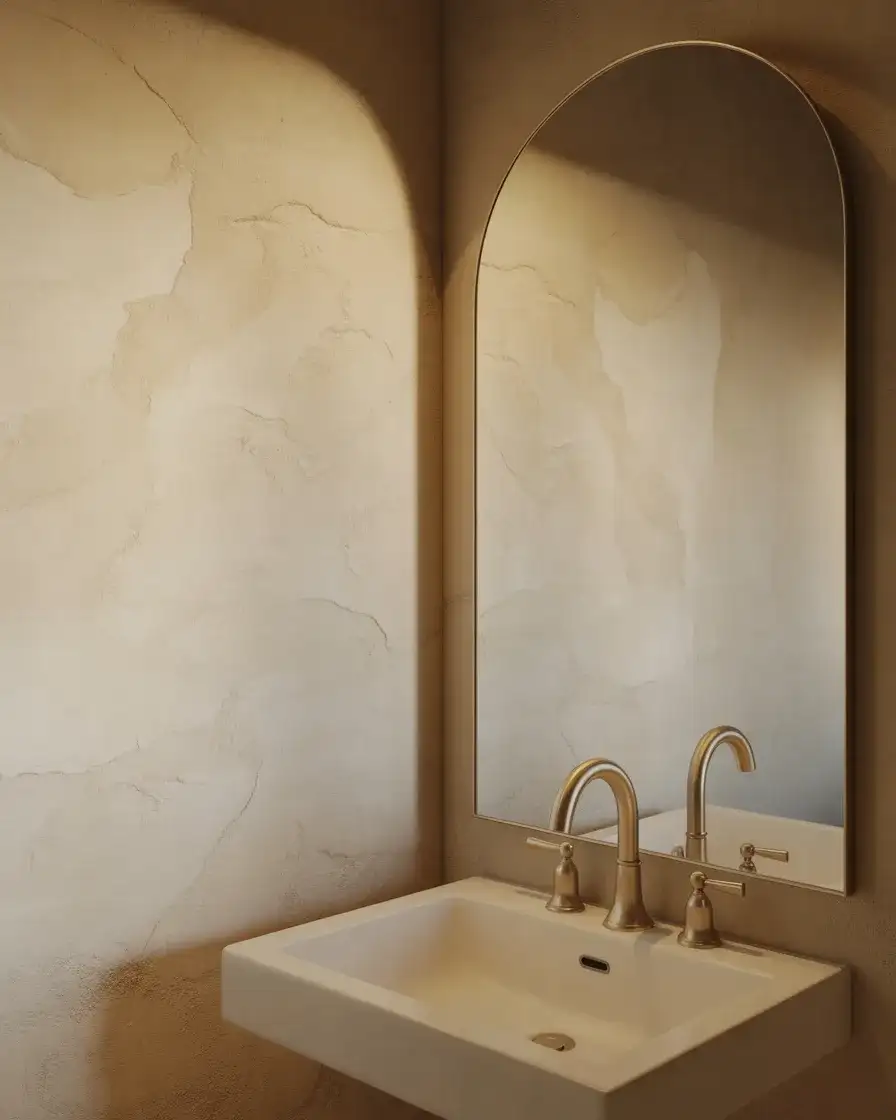
Smooth, painted drywall is increasingly the boring choice in a design landscape that’s rediscovering the appeal of imperfect, tactile surfaces. Limewash paint, Venetian plaster, and tadelakt—a Moroccan waterproof plaster traditionally used in hammams—have all found their way into American powder rooms as walls that breathe and shift under light. This approach pairs naturally with the organic modern aesthetic and anchors any decor ideas centered on natural materials. The surface variation means the room looks slightly different at every hour of the day, which is exactly the kind of aliveness that flat paint simply cannot deliver.
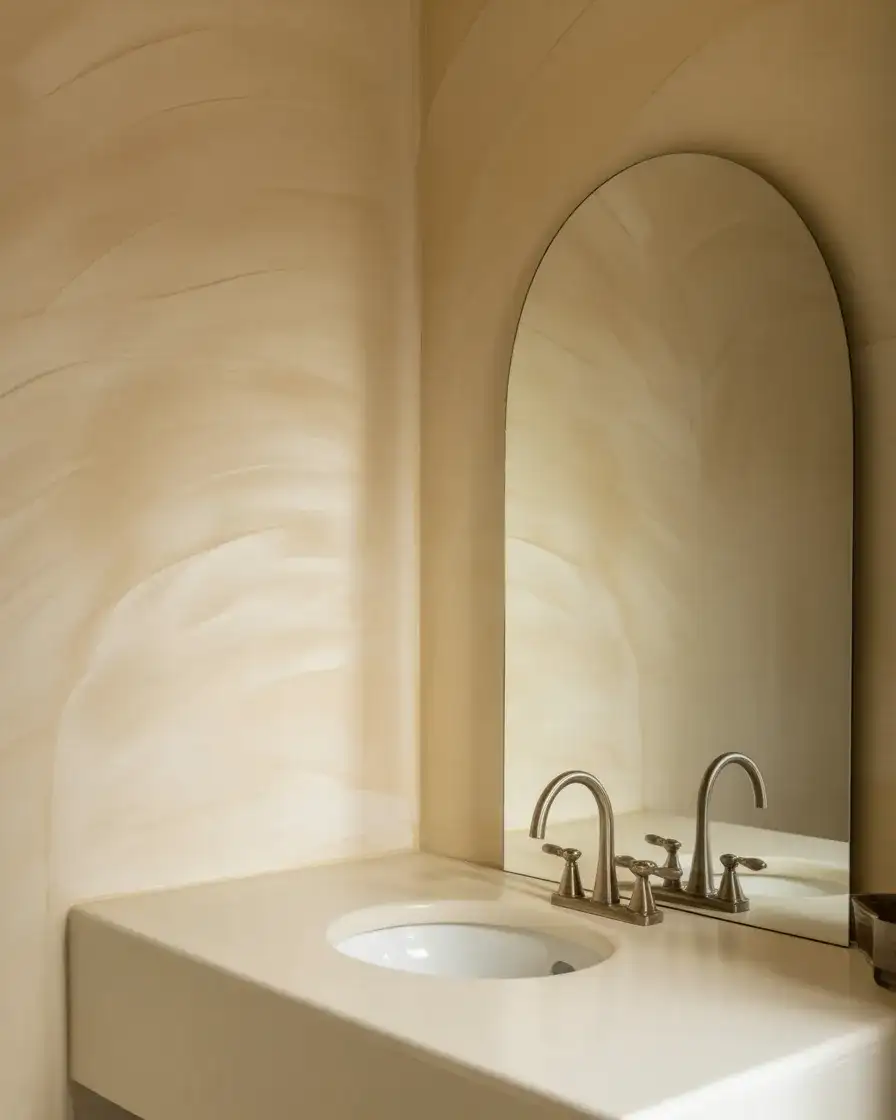
If hiring a professional plasterer feels outside the budget, limewash paint is an accessible DIY alternative that delivers significant textural interest with a sponge and a brush. Major paint brands now carry their own limewash formulas, and YouTube tutorials have made the application process genuinely learnable for someone with a free weekend. The key is layering—two thin coats applied in different directions and gently buffed before fully dry—which produces that characteristic depth that looks like the wall has been there for centuries.
15. Half Bath with Art Gallery Wall
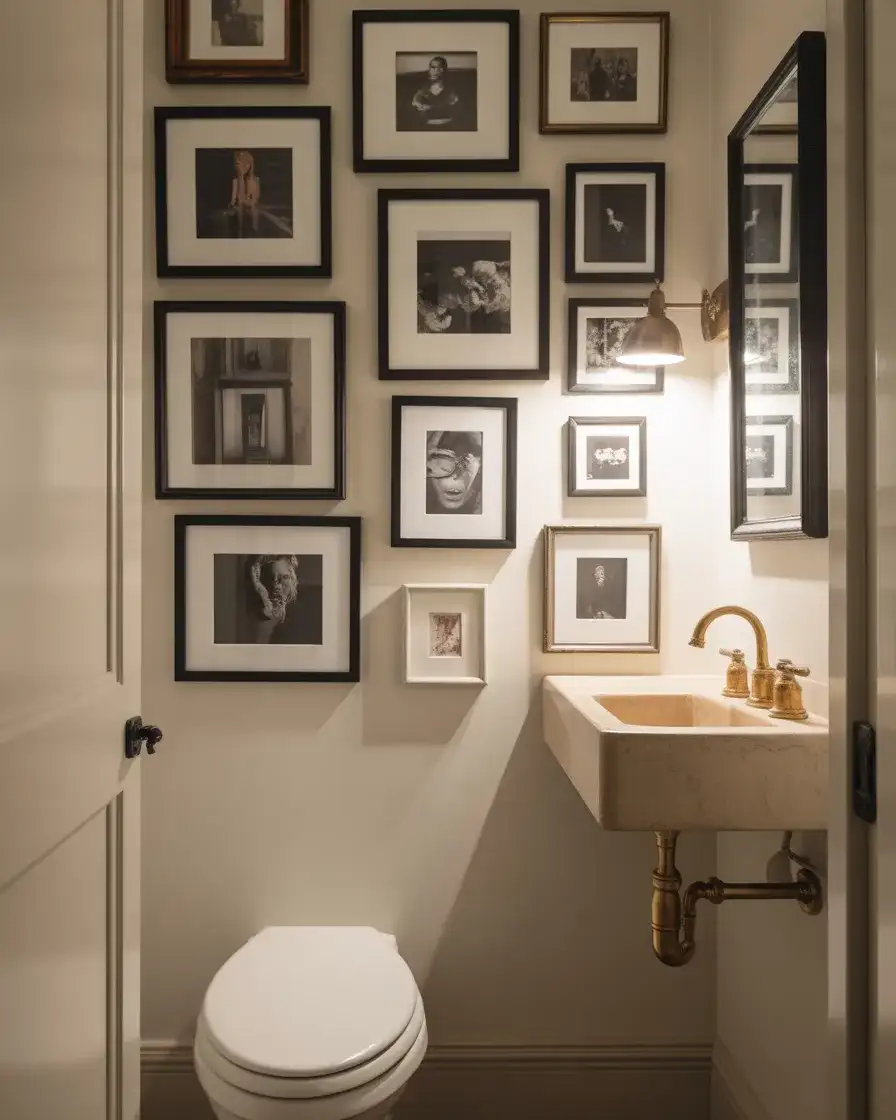
Some of the most memorable powder rooms on current inspo boards aren’t memorable because of the tile or the fixtures—they’re memorable because of the art. Treating the powder room as a micro-gallery, with a carefully curated group of framed prints, photography, or original work, gives the room a dimension that purely material-driven design can’t replicate. Because the space is so intimate and the viewing distances so short, even small-scale works read with enormous impact here. The design logic is straightforward: guests are briefly, privately in the room and have nothing to do but look at what’s on the walls.
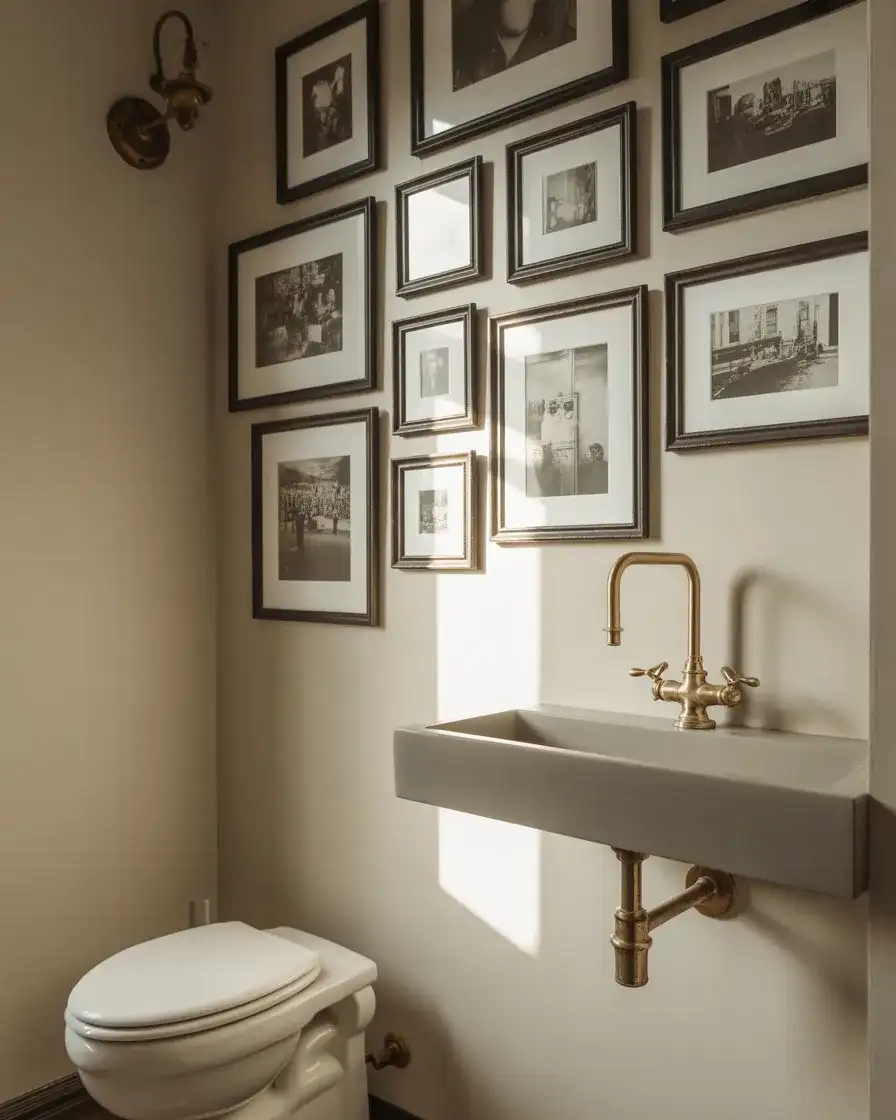
American lifestyle context: the powder room art gallery is particularly well-suited to the growing number of homeowners who collect original art but struggle to find wall space in living areas already dominated by large-scale pieces. The powder room becomes a way to display smaller, more personal works that might be lost in a larger room—a first purchase from a local artist, a piece of family photography printed large and framed simply, or a series of vintage botanical illustrations sourced from antique shops. The curation itself becomes a conversation starter with guests, which is exactly what great hospitality design is supposed to do.
16. Earthy Terracotta and Rust Powder Room
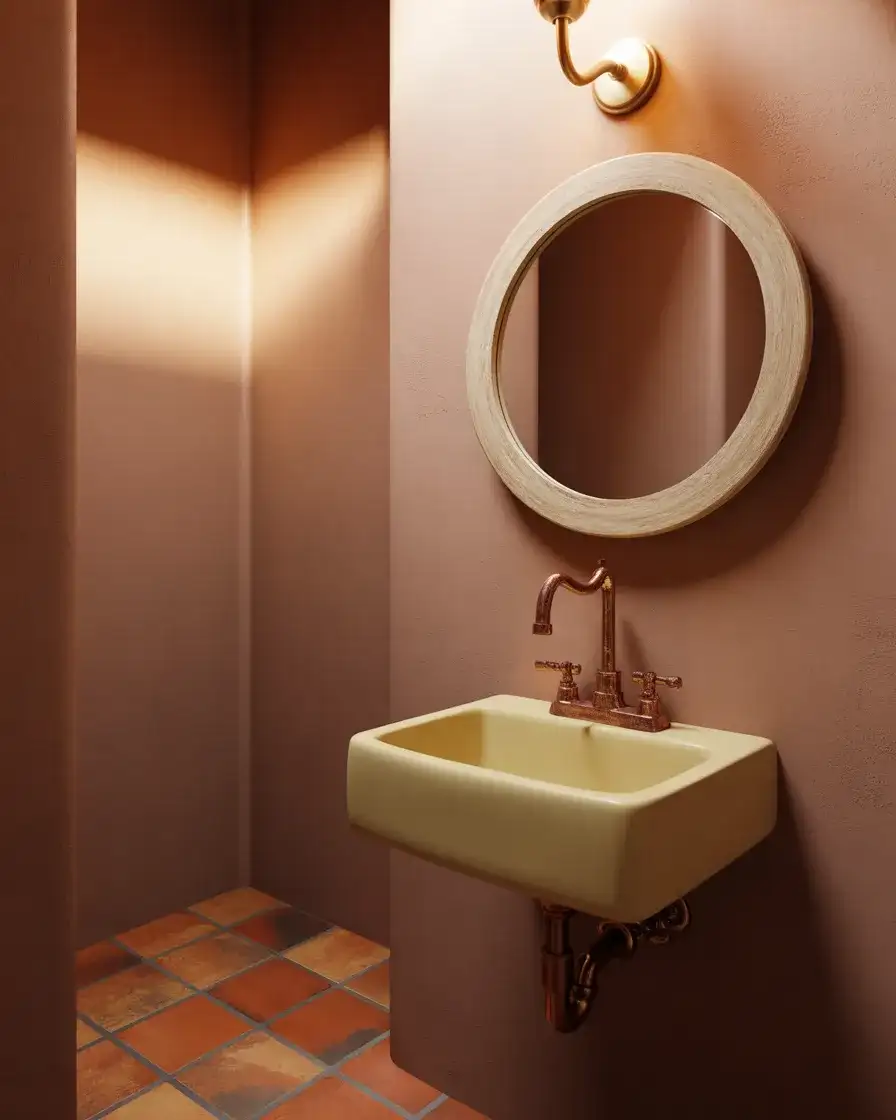
Terracotta has moved well beyond the trendy phase and into the enduring category—and in a powder bathroom setting, it delivers a warmth that few other color families can match. Whether it’s terracotta-painted walls in a matte finish, handmade terracotta floor tiles with visible variation, or both layered together into a tonal, immersive experience, the rust and burnt-orange palette reads as simultaneously ancient and completely contemporary. Add unlacquered brass or aged copper fixtures, and the room starts to feel like a private corner of Oaxaca or coastal Spain—somewhere deeply organic, modern in spirit, and deeply human in feel.
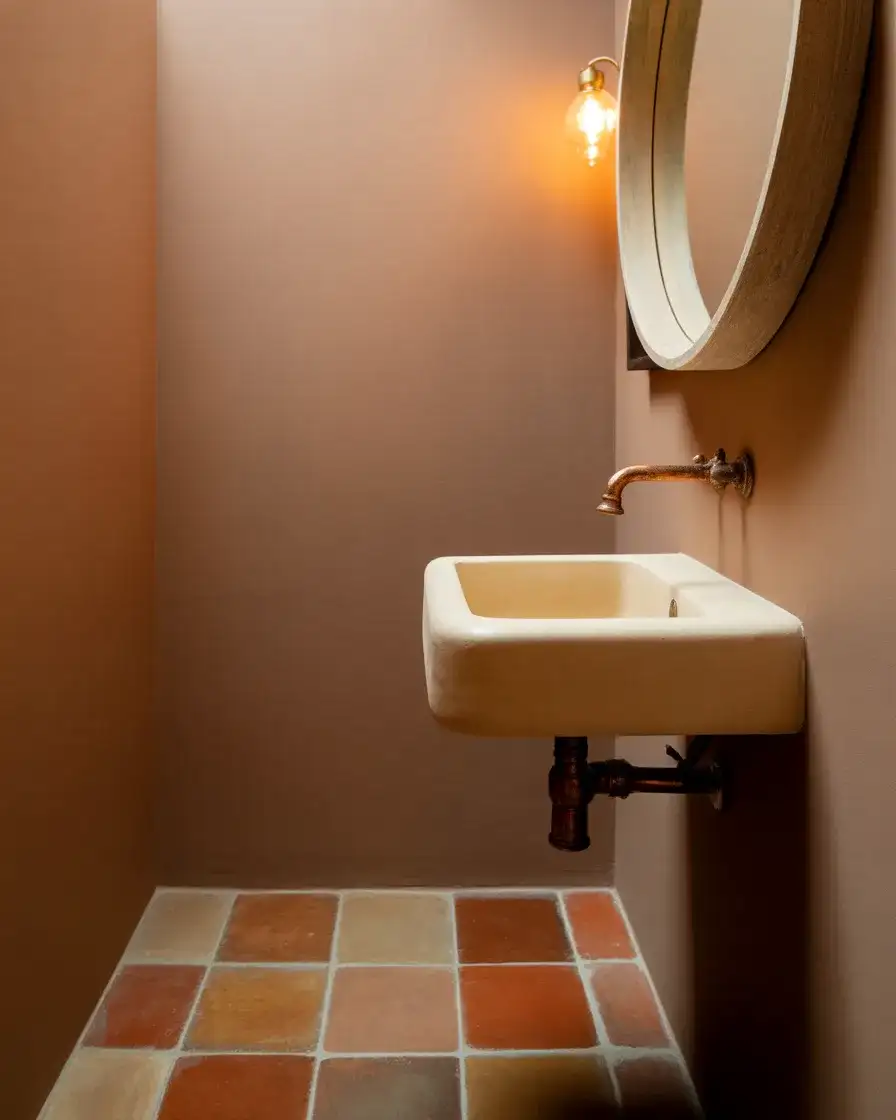
For homeowners who love this palette but worry about commitment, terracotta is one of the most forgiving of the earth tones—it responds warmly to both warm and cool lighting conditions and pairs well with almost every wood species and natural stone available. It’s also one of the rare warm colors that reads as sophisticated rather than casual in a small space. The common mistake is going too orange rather than staying in the true terracotta range—look for shades described as “clay,” “adobe,” or “rust” rather than “orange” in paint color names to stay in the right tonal register.
17. Black and White Classic Powder Room
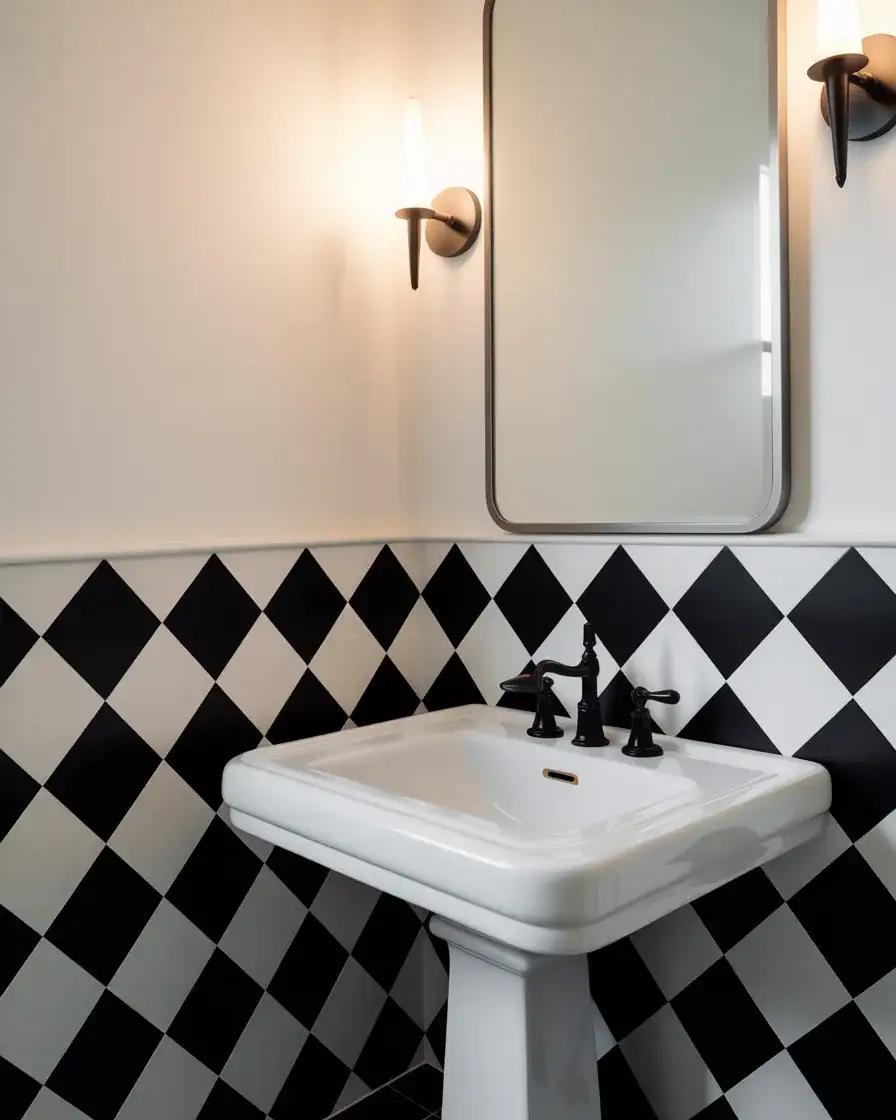
The black and white powder room is a design classic that resets itself every decade, and in 2026 the reset comes in the form of sharper graphic contrast and more intentional pattern placement. We’re talking bold harlequin floors in polished marble tile, stark white walls against matte black fixtures, or a floor-to-ceiling black and white photographic mural that turns the room into an immersive experience. This is the kind of idea for a modern half bath that ages well and sells houses, because it occupies the rare territory of being simultaneously classic and of-the-moment. The key is committing to the contrast rather than softening it with warm or neutral accents that dilute the impact.
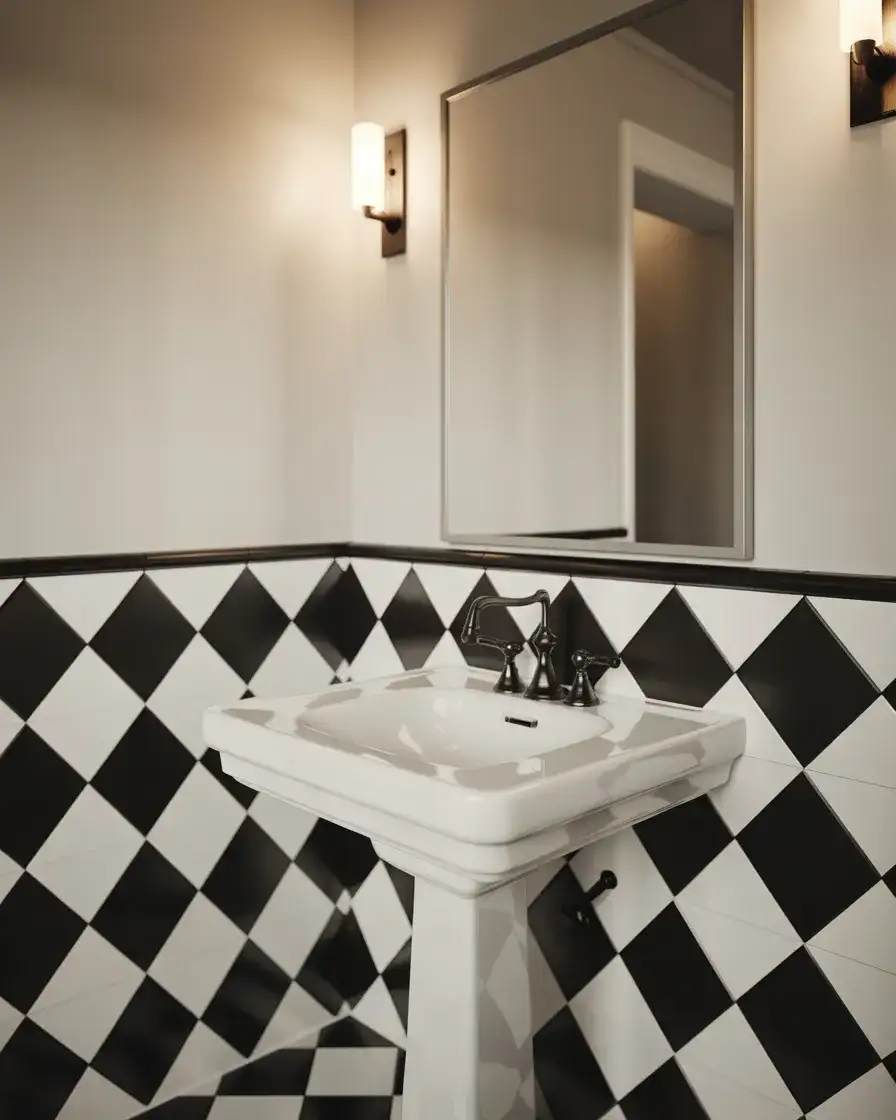
This palette is a particular favorite among professional real estate stagers because it photographs exceptionally well in the small, often poorly lit spaces that characterize most powder rooms. Black and white images—both of the rooms and photos of them—compress and simplify beautifully, which is why this look consistently overperforms on listing photos. If you’re preparing a home for sale and the powder room hasn’t been touched in years, a can of black paint on the vanity, matte black fixture swaps, and a graphic tile removable floor decal can transform the room in a weekend for under $200.
18. Scallop and Arch Details for a Whimsical Touch
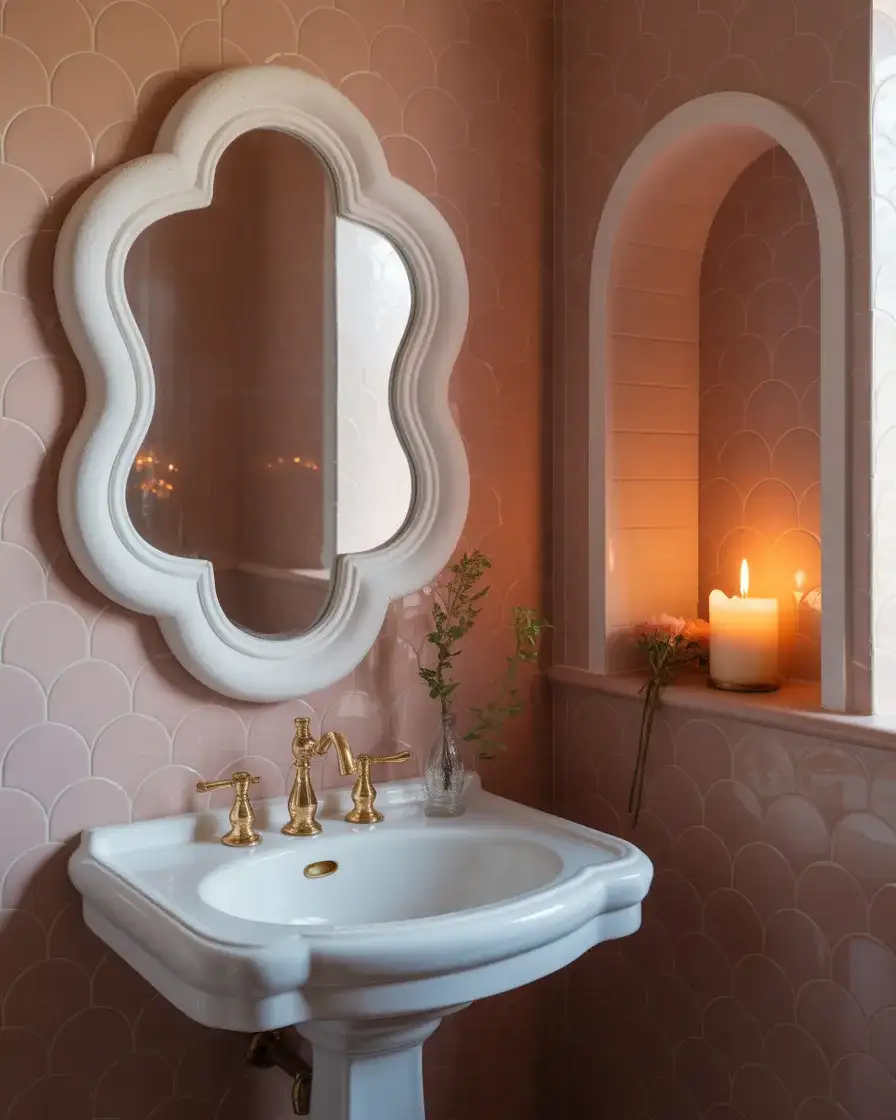
Arches and scallops have saturated the broader interior design conversation for a couple of years now, but their application in the powder room feels particularly right—especially when executed with genuine playfulness. Scallop-edge mirrors, arched niches carved into the wall, scalloped tile in soft pink or seafoam green, and arched door trim painted a contrasting color—each of these elements brings a fun, almost storybook quality that makes the powder room feel like a destination rather than a corridor stop. Paired with a romantic pink or soft sage palette, the result is unapologetically charming and deeply appealing to the kind of visual inspiration that performs best on Pinterest.
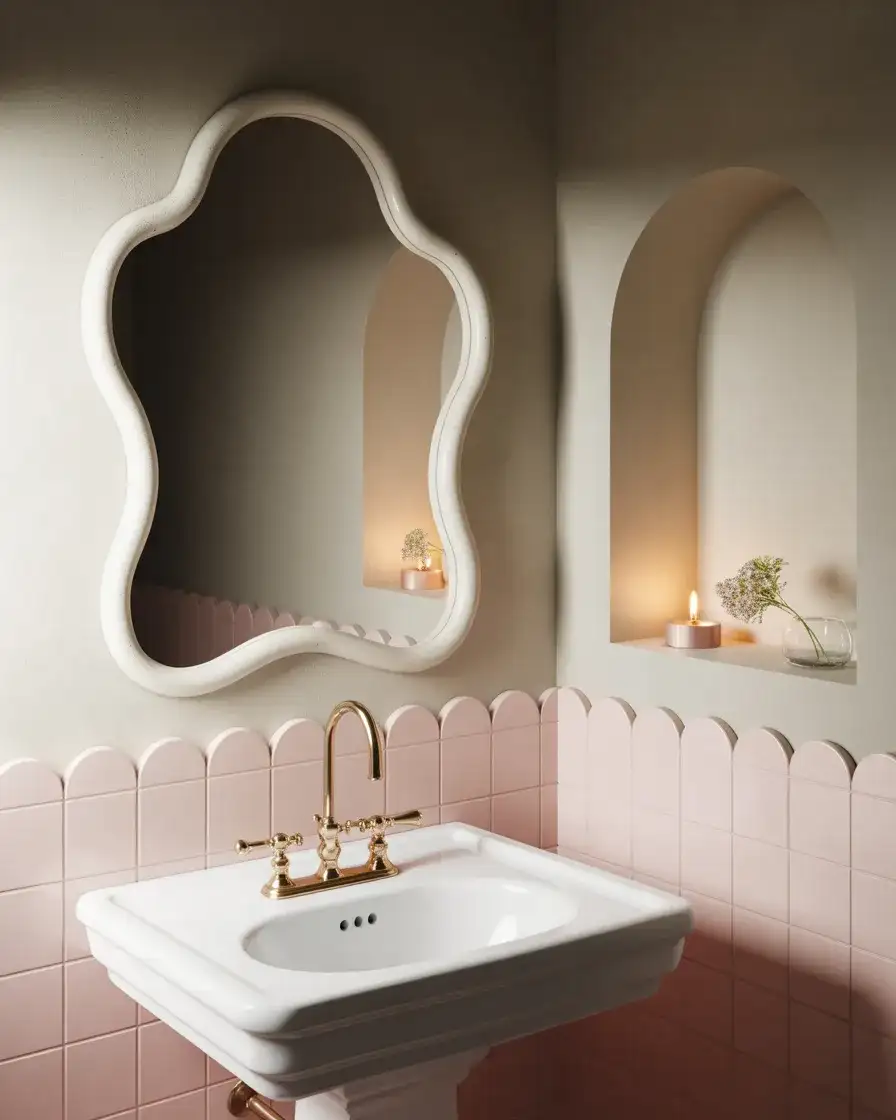
Scallop and arch details are particularly well-suited to older homes—Craftsman bungalows, Victorian row houses, and 1920s colonials—where the existing architectural language already includes curved and decorative elements. Rather than feeling grafted on, the scallop reads as an extension of the home’s original character. In newer construction where the architecture is entirely rectilinear, these soft curves create a welcome tension—the kind of considered contrast that reads as intentional rather than mismatched, especially when the rest of the room’s palette and materials are otherwise restrained.
19. Powder Room with Dramatic Floor-to-Ceiling Tile
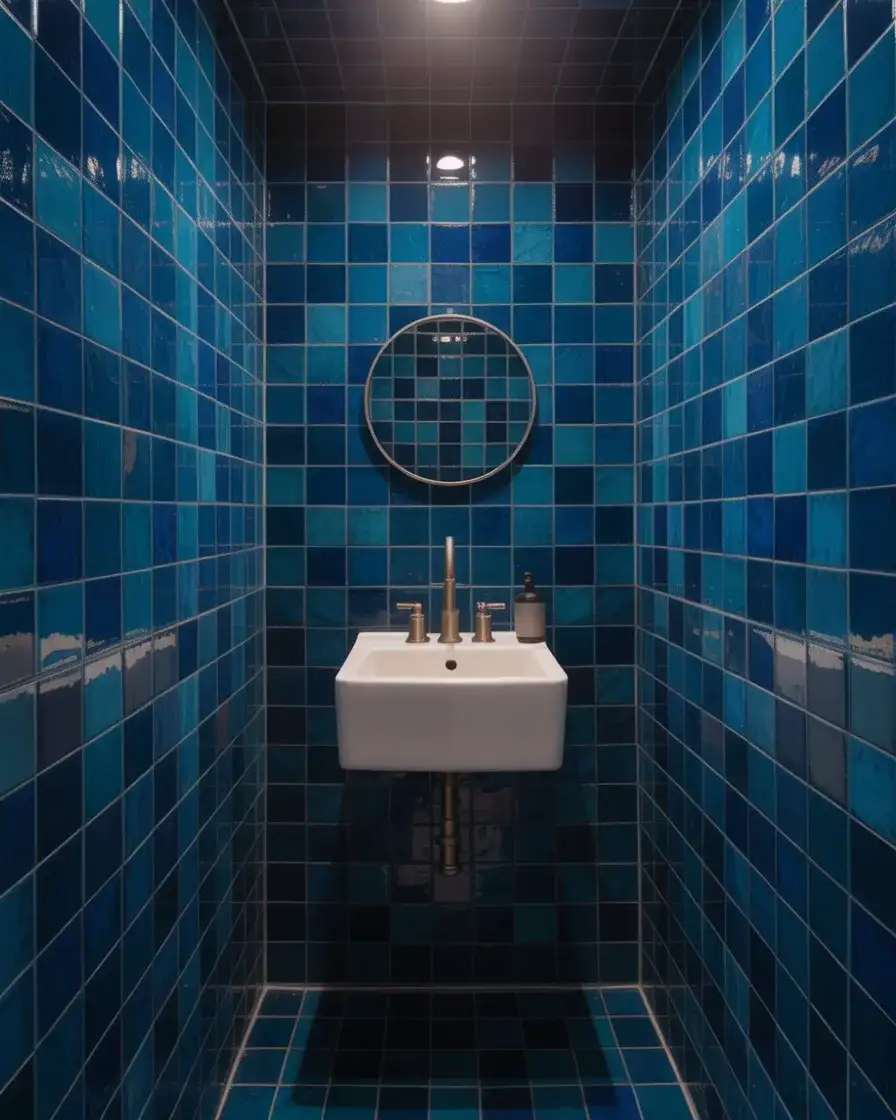
When you commit fully to tile—not just on the floor or the wainscoting but floor-to-ceiling on every wall—the powder room transforms into something approaching a spa or a Roman bath, depending on the material you choose. Large-format stone-look porcelain in a warm travertine tone, zellige tile in deep ocean blue, or handmade terracotta running vertically up the walls: all of these create an immersive, architectural experience that feels quietly luxurious even when the actual material cost is modest. The visual weight of all-tile rooms tends to feel rich and intentional in a way that painted drywall simply cannot replicate, regardless of the paint color chosen.
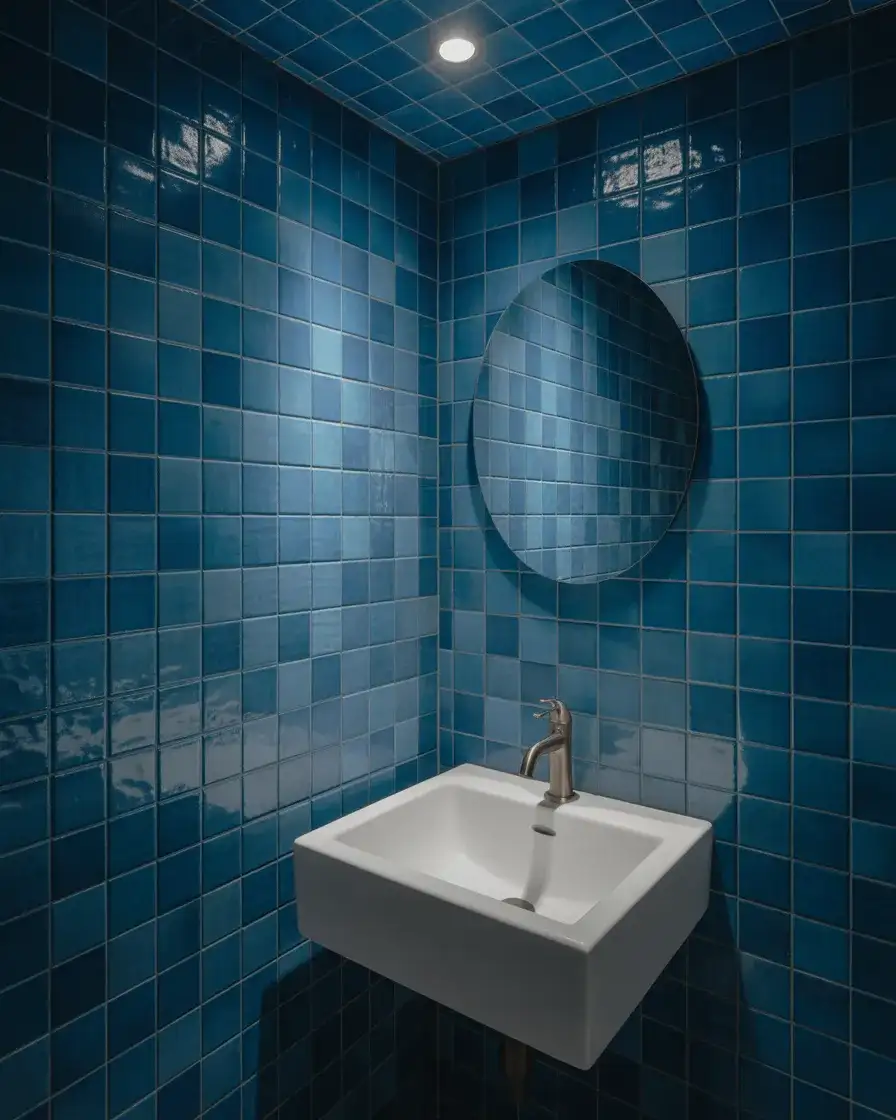
The practical consideration most homeowners overlook with full-tile rooms is the grout. In a floor-to-ceiling installation, the grout lines become a major visual element—running across every surface—so color selection matters enormously. Tone-on-tone grout (closely matching the tile color) creates a seamless, almost geological effect where the tile pattern reads as a surface rather than a grid. Contrasting grout in a full-tile room, on the other hand, can create a busy, dizzying effect that undermines the immersive quality you’re trying to achieve. Choose wisely before the first trowel goes in.
20. Powder Room with Wainscoting and Bold Upper Walls
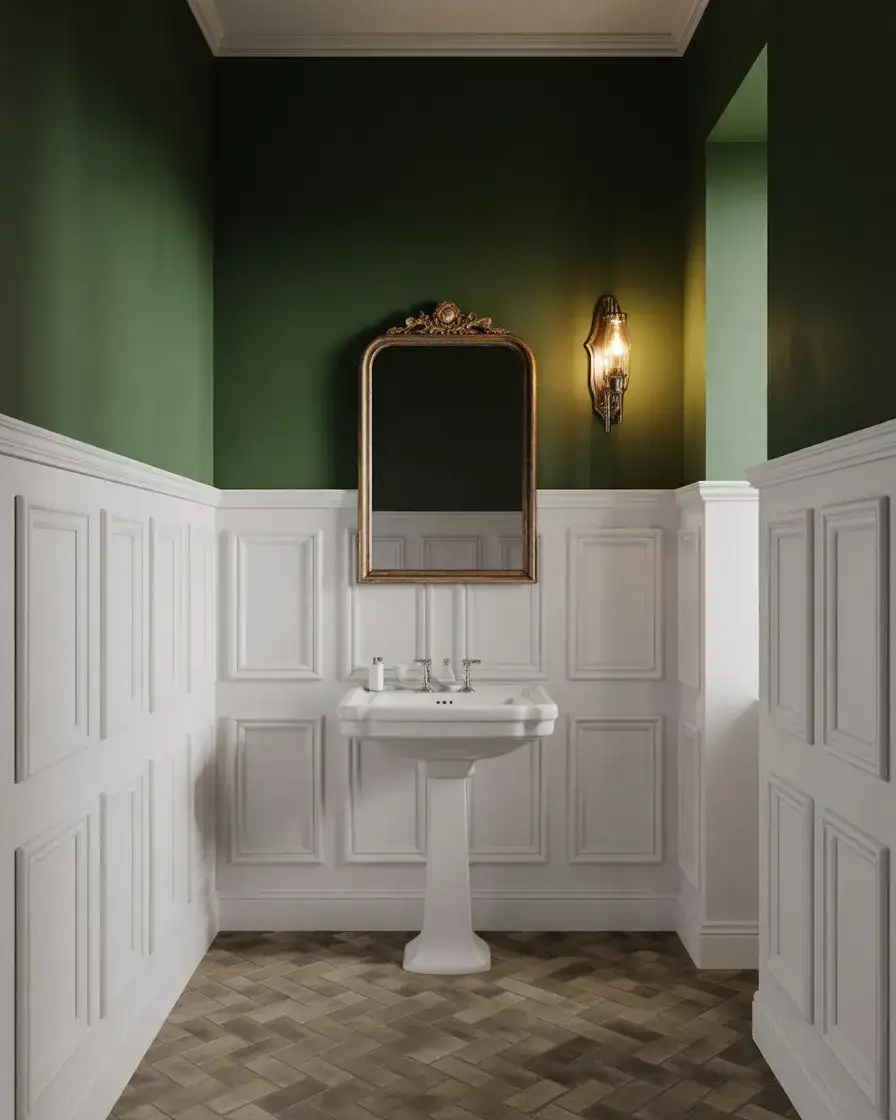
Classic wainscoting—the paneled lower third of the wall—might sound traditional, but when the upper wall above it is painted in a deeply saturated, unapologetically bold color, the combination reads as anything but conventional. This is one of the most effective structural tricks in powder room decor ideas: the wainscoting anchors. the room visually provides tactile interest at the level where hands and towels interact with the wall and makes the bold color choice above it feel deliberate and architectural rather than impulsive. In dark, moody applications—inky navy above white paneling or forest green above painted-to-match wainscoting—the effect is particularly striking.
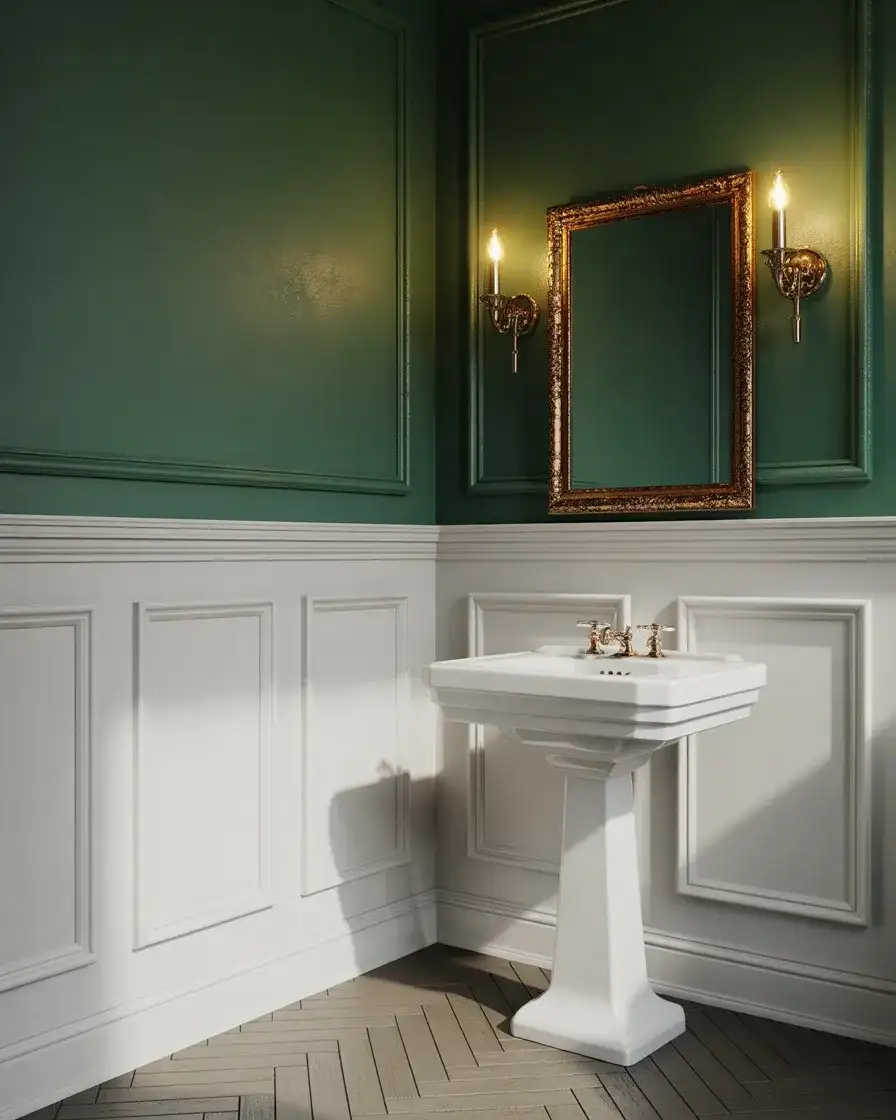
One of the real pleasures of wainscoting as a design element is its adaptability to different historical styles within American residential architecture. It feels completely at home in a Victorian row house, a Federal colonial, a 1960s ranch, and a new construction craftsman alike. The paneling profile—raised panel, flat panel, beadboard, or shiplap—can be calibrated to match the home’s existing language, while the paint color choice above it is where personality can run free. For renters, MDF wainscoting panels with adhesive backing have become a convincing and removable option worth exploring.
21. Spa-Inspired Neutral Powder Room
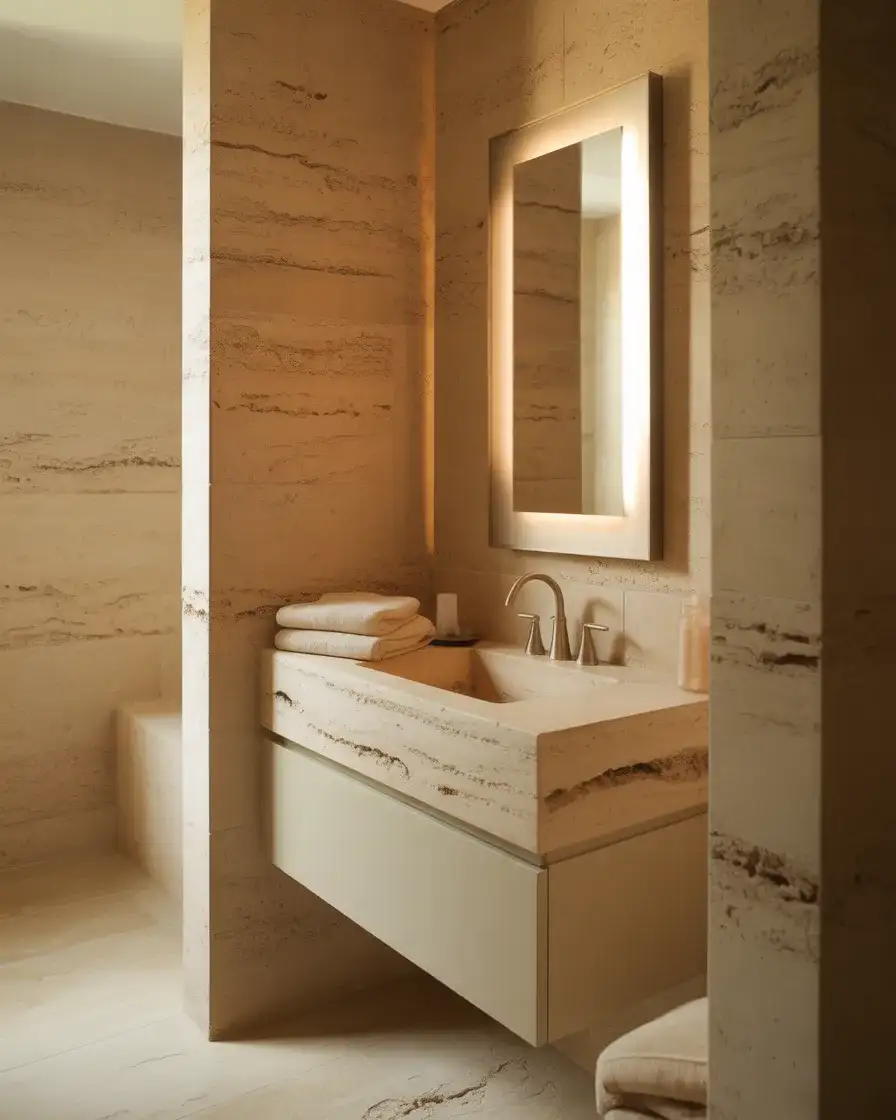
Not every powder room needs drama—sometimes the most memorable guest bath is one that creates a feeling of profound calm. The spa-inspired neutral powder room achieves this through material quality and restraint: honed limestone tiles in warm greige, a single slab of book-matched travertine as a vanity top, organic linen towels folded with hotel precision, and lighting calibrated to the most flattering temperature possible. This is where modern and luxury intersect without the weight of dark color—where the room’s intelligence lives in what was left out rather than what was included. The material investment goes further here because every surface is visible and uncovered.
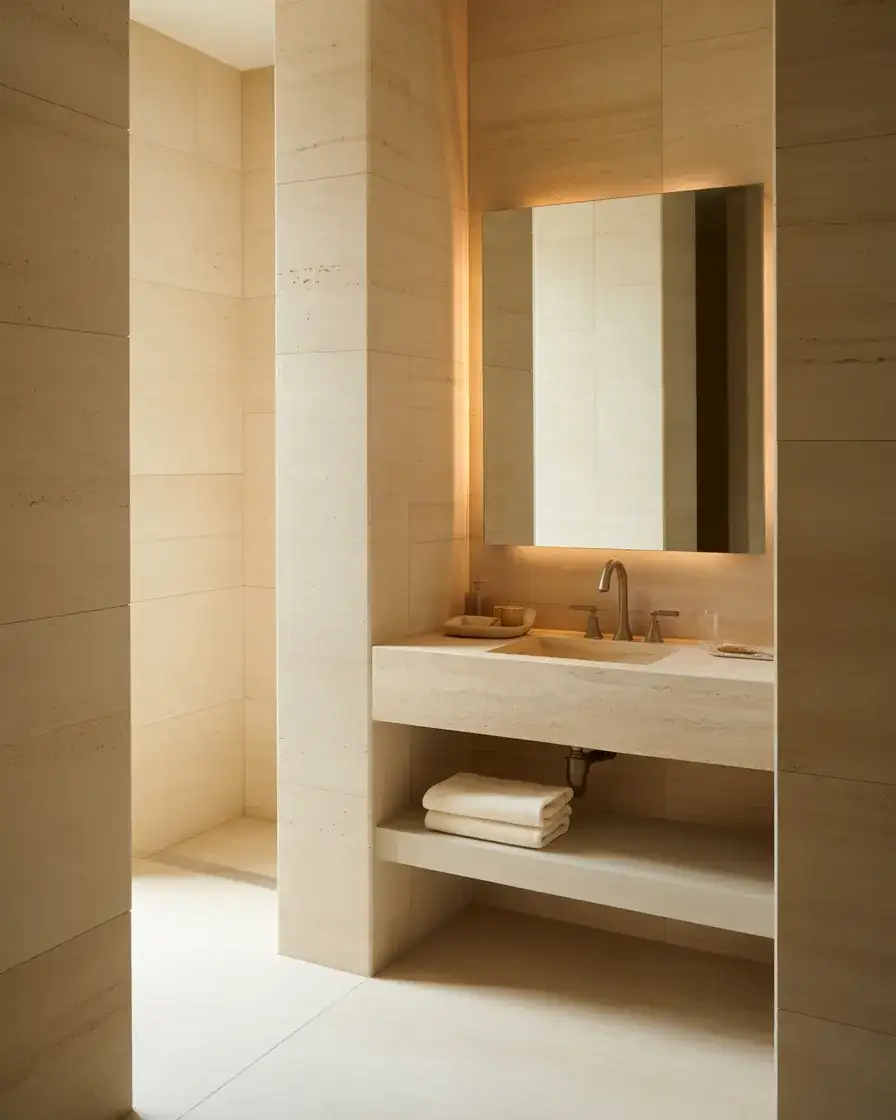
The spa aesthetic works best in homes where the overall design language is already leaning toward calm and material quality—not because it can’t stand alone, but because the effect is most convincing when the powder room reads as a continuation of a broader intentionality rather than an isolated moment of restraint. For homeowners who love color and pattern throughout the rest of the house, this approach can feel oddly out of place. The question to ask is, do I want the powder room to be the calm within the storm or another dimension of the home’s overall personality?
22. Eclectic Collected Powder Room with Global Finds
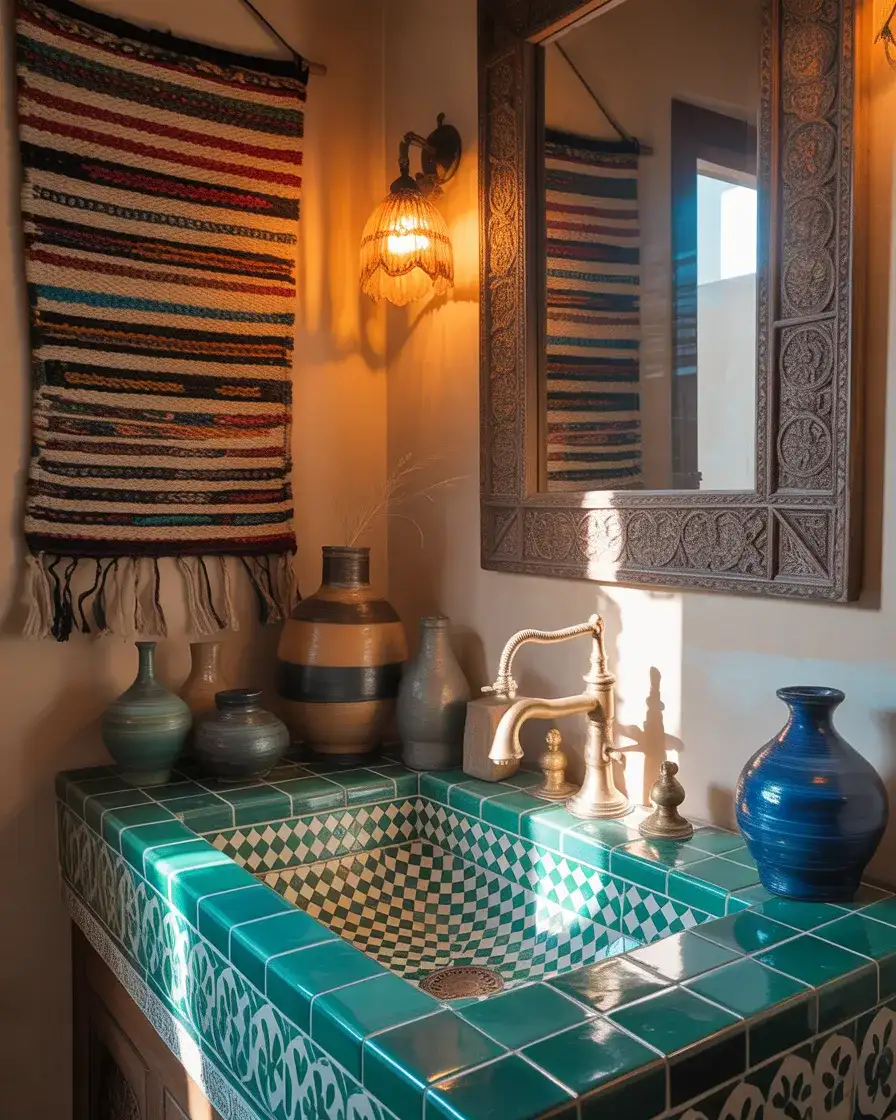
The most personal powder rooms don’t look designed—they look collected. A Moroccan zellige sink purchased on a trip abroad, a Nigerian indigo textile hung as art, a hand-thrown Mexican ceramic soap dish found at a farmer’s market, a mirror from an estate sale in upstate New York: when these elements share a room, the result is something no interior designer could have specified from a catalog. This eclectic, globally inspired approach is one of the most exciting currents in 2026 powder bathroom ideas, because it reflects how Americans are actually living and traveling and accumulating the material evidence of a life well-explored. The vanity might be IKEA; the mirror might be priceless. That tension is exactly the point.
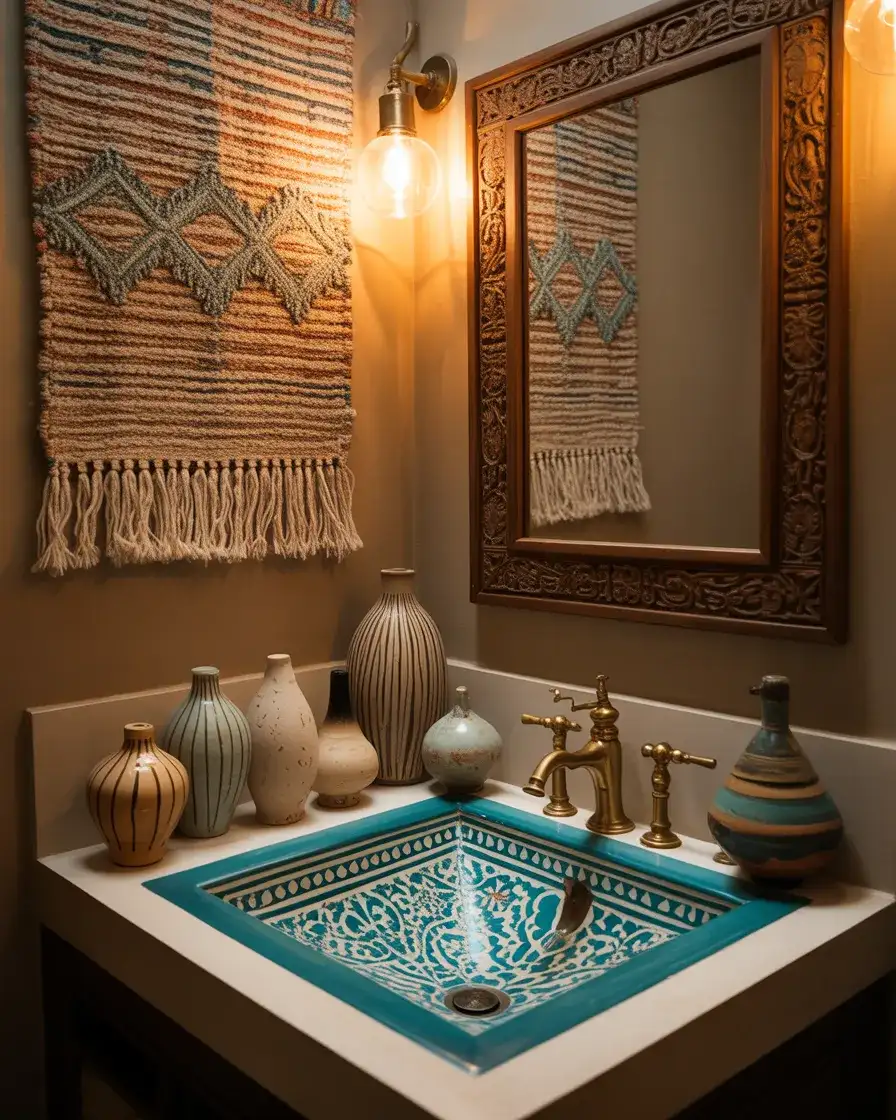
The collected approach to powder room design is genuinely inclusive of different budgets and timelines—it rewards patience and accumulation over the kind of one-weekend shopping trip that produces rooms where everything matches but nothing surprises. The best-executed eclectic powder rooms tend to have one unifying element running through all the objects: a consistent metal tone, a shared color family, or a similar scale of decorative detail. Without this thread, even genuinely interesting individual objects can feel random rather than curated. Find your common denominator, then let the rest be free.
Conclusion
The powder room might be the last room you remodel and the first one your guests remember—and that paradox is exactly why it deserves this much attention. Whether you’re drawn to a moody, dark jewel box or a breezy coastal escape, a maximalist wallpaper story or a spa-quiet neutral retreat, the half bath is where your design instincts get to run without the practical constraints that govern every other room in the house. We’d love to hear which of these ideas resonated most with you—drop your favorites in the comments below, share photos of your own powder room transformations, and let us know what directions you’re considering for your own space. The conversation is just getting started.