Herb gardens are having a major moment in 2025, and for good reason. More Americans are turning to fresh, homegrown ingredients as a way to elevate their cooking, cut grocery costs, and add life to their living spaces. Pinterest is flooded with searches for creative ways to grow herbs at home—whether you have a sprawling backyard or just a sunny windowsill. From vertical planters to repurposed containers, there’s a setup that works for every space and lifestyle. In this guide, you’ll find herb garden ideas that blend style, function, and a little bit of green-thumb magic.
1. Tiered Wooden Planter Stand for the Porch
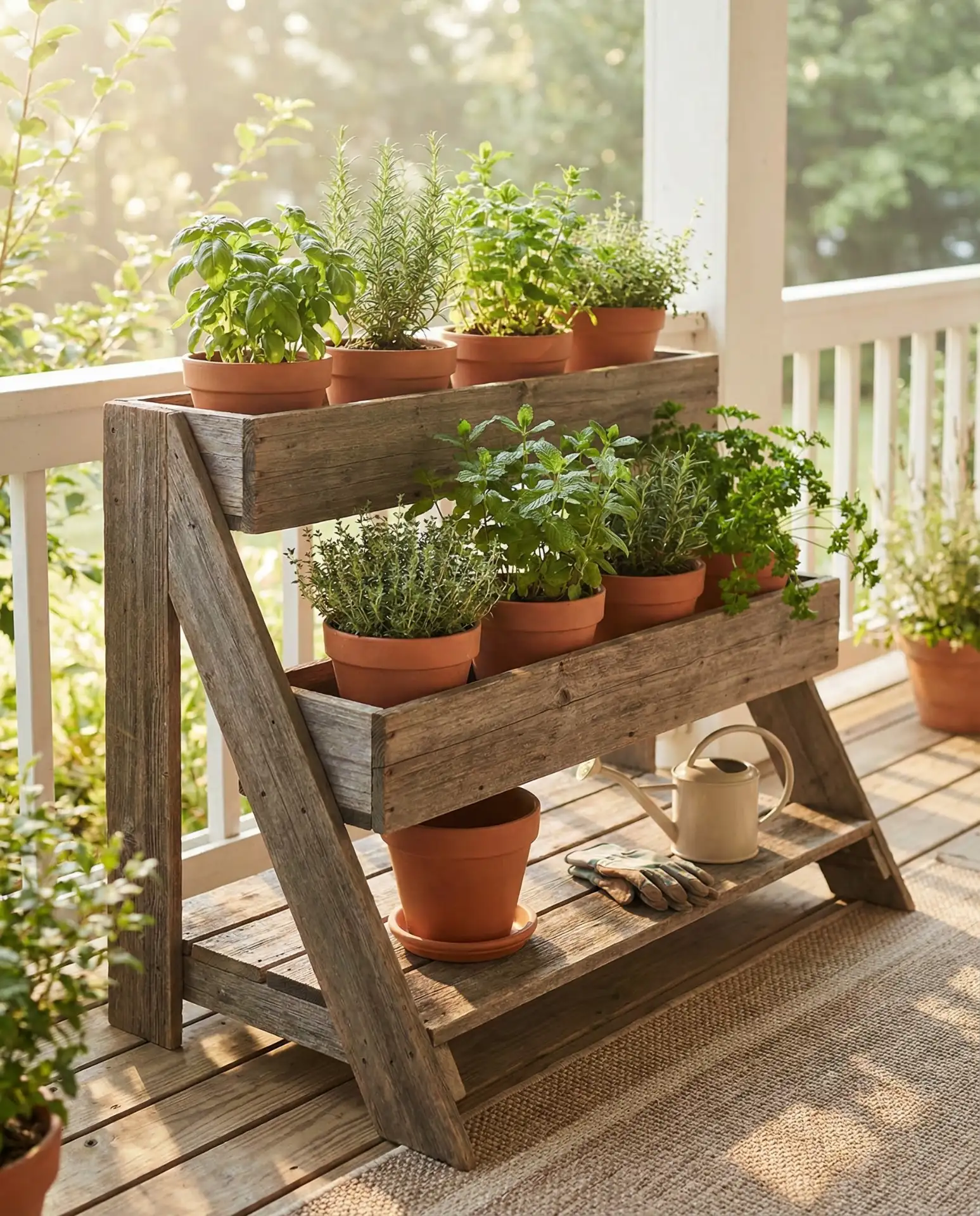
A tiered wooden planter stand is perfect for anyone looking to maximize porch space while keeping herbs within arm’s reach. This setup allows you to grow basil, thyme, and rosemary in stacked layers, creating visual interest and making the most of vertical space. It’s ideal for outdoor settings where sunlight is abundant and you want a rustic, farmhouse-style touch. The natural wood blends seamlessly with most home exteriors, and the open design ensures proper drainage and air circulation. 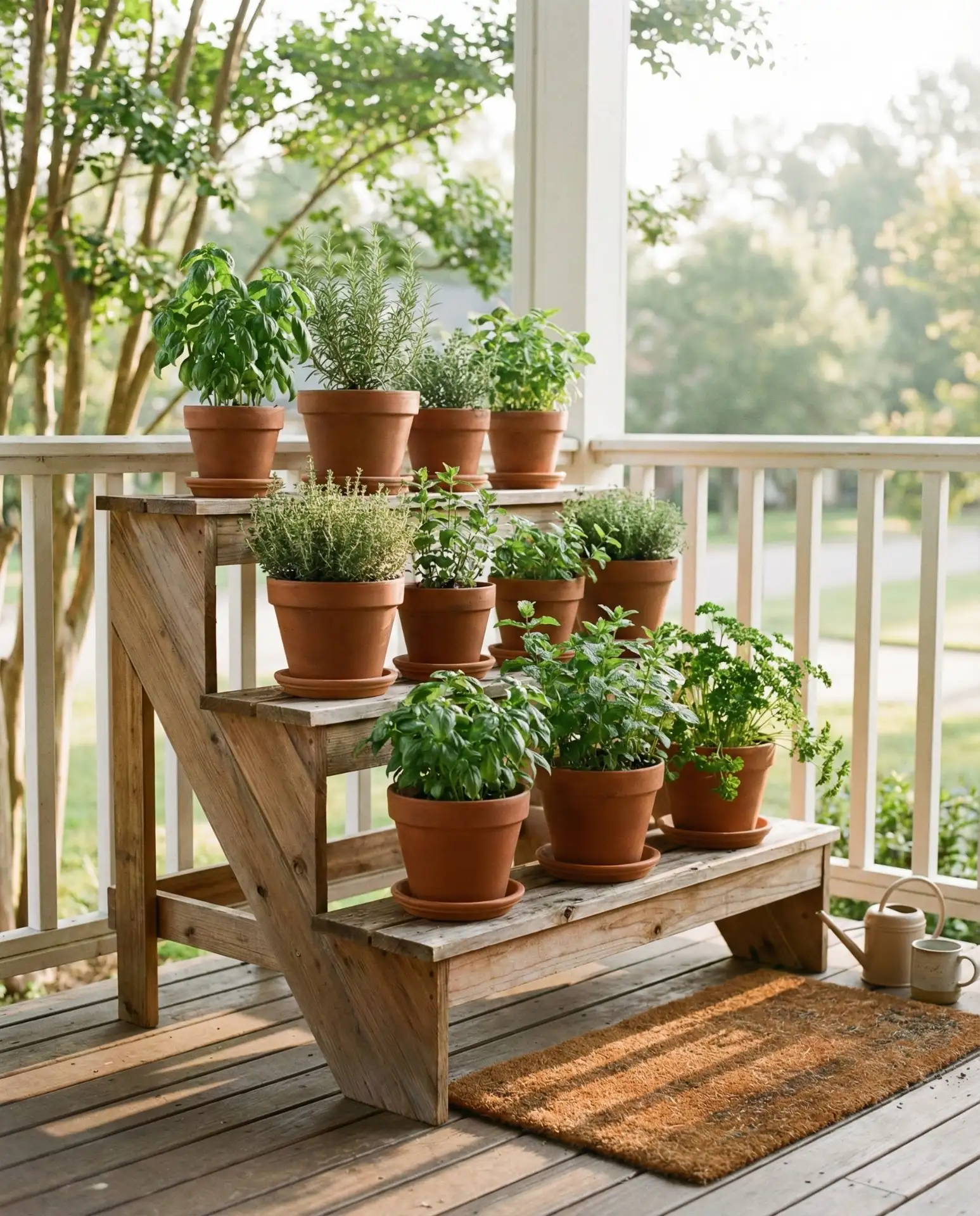
This setup works best on covered porches where herbs get morning sun but are protected from harsh afternoon heat. In the South, where humidity can cause mold, the tiered design promotes airflow and keeps plants healthier. You can find affordable tiered stands at hardware stores, or build your own with reclaimed wood for a custom look. Just make sure the structure is stable enough to hold the weight of multiple pots and soil.
2. Hanging Baskets Along a Fence Line
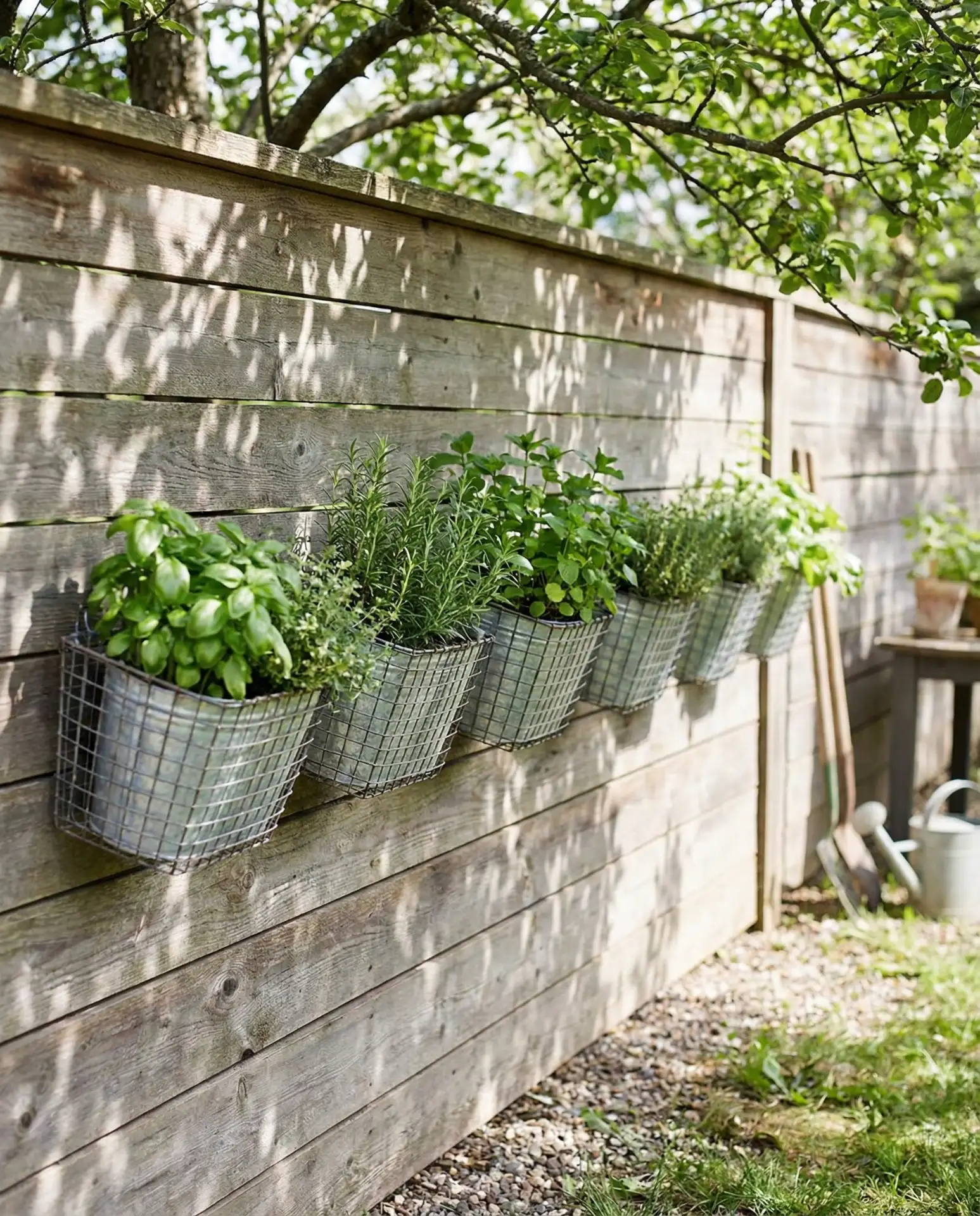
Hanging baskets along a fence line turn an ordinary boundary into a productive garden feature. This idea is especially popular in backyard spaces where ground planting isn’t possible due to patios or pool decks. Mint, oregano, and parsley thrive in these conditions, and the cascading growth adds softness to hard lines. The baskets are easy to water with a hose, and you can move them around as the sun shifts throughout the season. 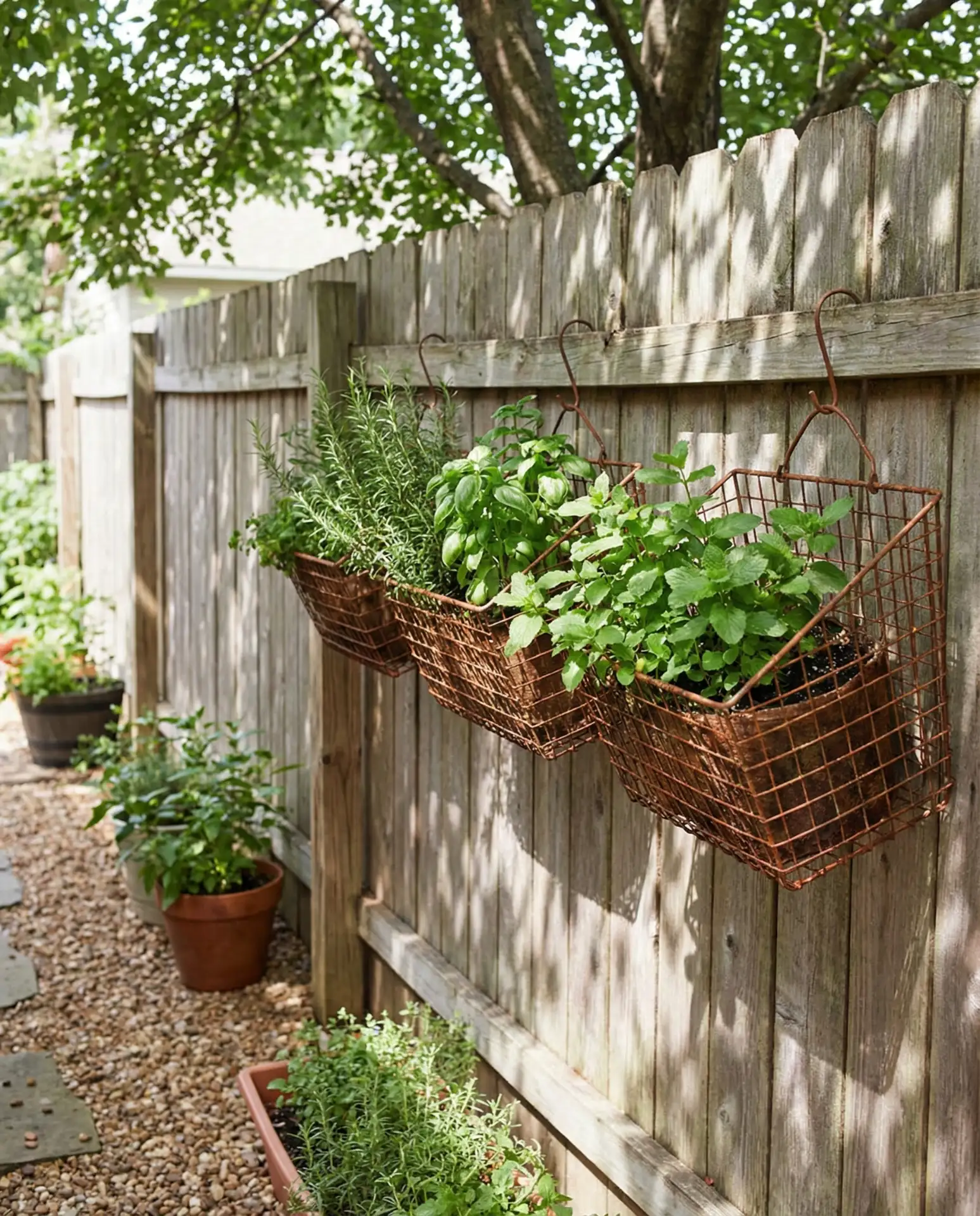
One common mistake is overcrowding the baskets, which limits airflow and encourages pests. Leave a few inches of space between each basket and choose varieties that won’t outgrow their containers too quickly. If you’re in a windy area, use heavier ceramic or resin baskets instead of lightweight plastic to prevent tipping. This setup also doubles as a privacy screen if you choose trailing herbs like creeping thyme.
3. Galvanized Trough for Raised Herb Beds
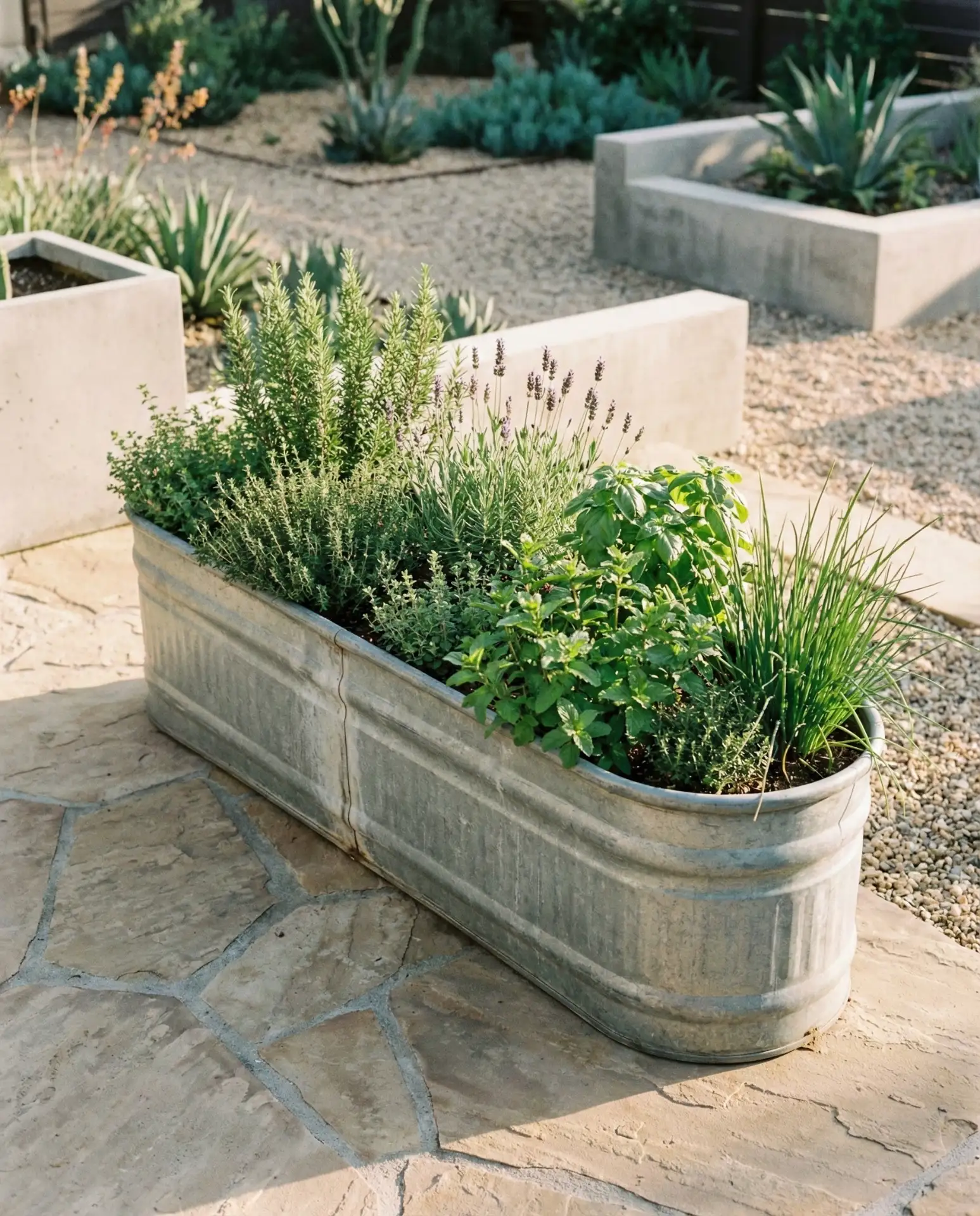
Galvanized metal troughs bring an industrial-chic look to raised herb gardens, and they’re incredibly durable. These troughs work well in outdoor backyards or on patios, offering excellent drainage and a modern aesthetic. You can plant a mix of culinary herbs like cilantro, dill, and chives, and the elevated height makes tending to plants easier on your back. The metal also heats up in the sun, which Mediterranean herbs like lavender and sage appreciate. 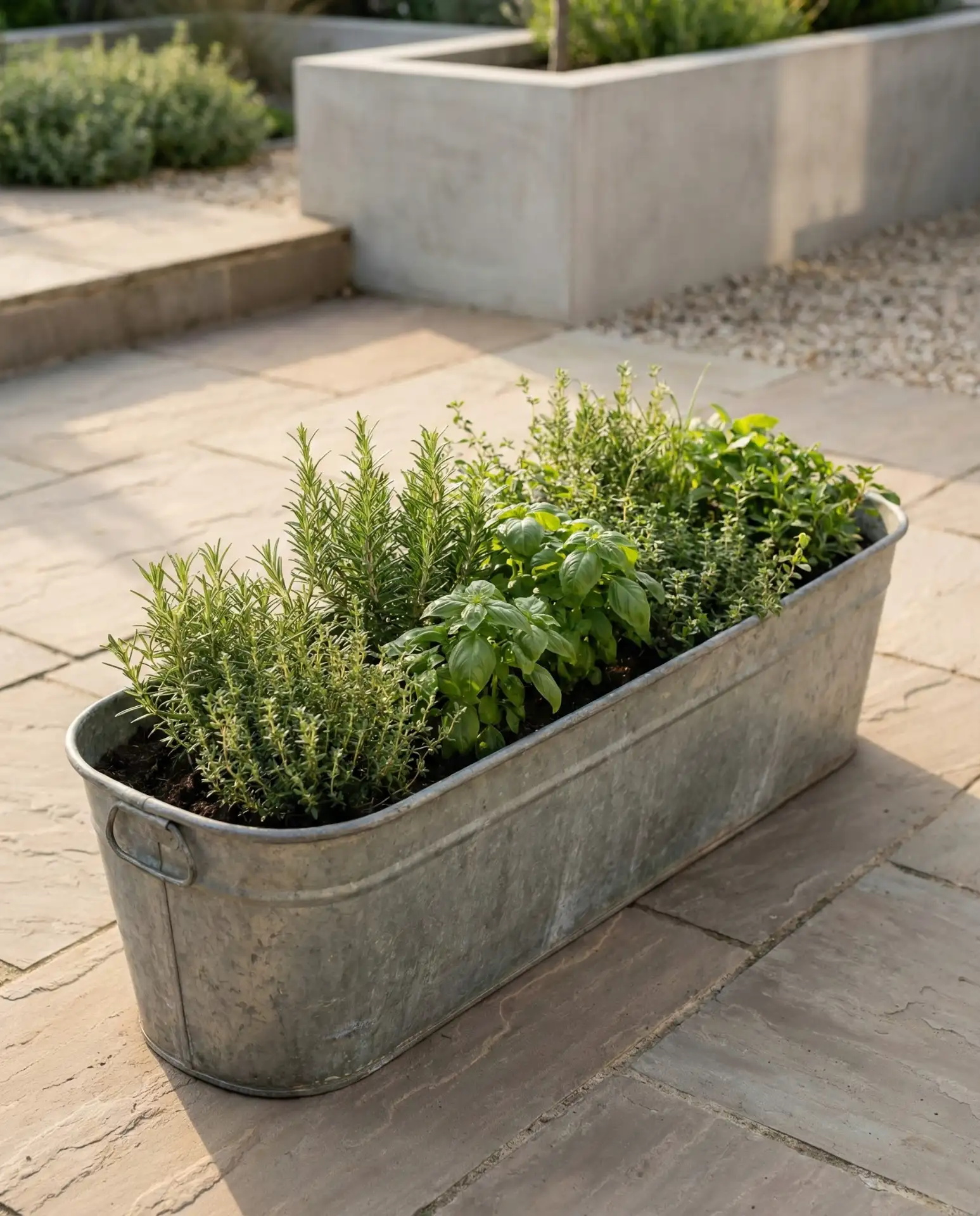
In the Midwest, where spring comes late, galvanized troughs warm up faster than traditional wood beds, giving you a head start on the growing season. They’re also rodent-resistant, which is a bonus in rural areas. Budget-wise, you can find these troughs at farm supply stores for under $50, making them a cost-effective alternative to custom-built raised beds. Just drill drainage holes in the bottom if they don’t already have them.
4. Mason Jar Wall Mount for Kitchen Herbs
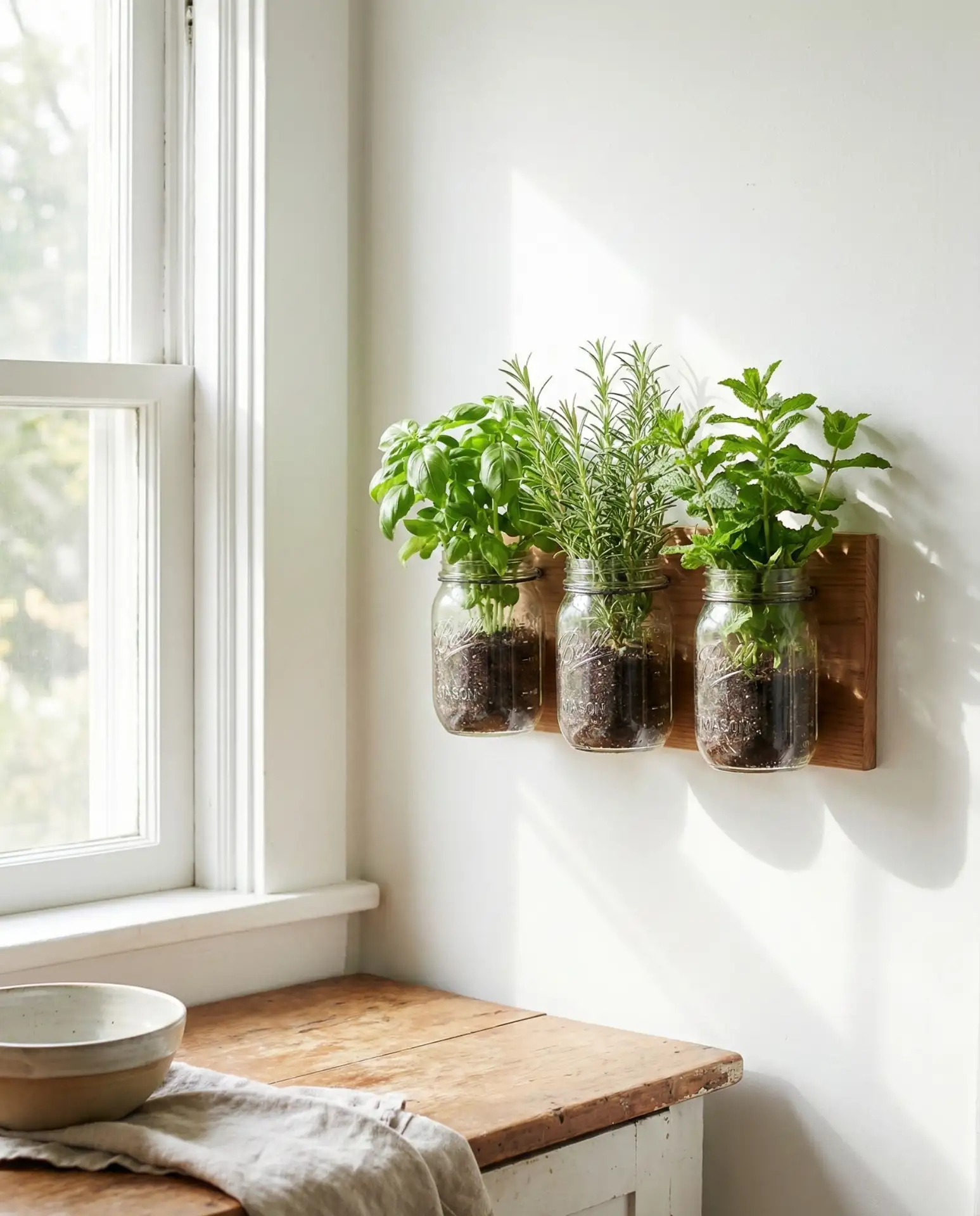
A mason jar wall mount turns your kitchen wall into a living spice rack. This setup is ideal for indoor herb gardens, especially in apartments or homes with limited counter space. Small herbs like basil, cilantro, and parsley grow well in jars with proper drainage, and having them within reach while you cook is incredibly convenient. The vintage look of mason jars adds charm to any kitchen style, from modern farmhouse to industrial loft. 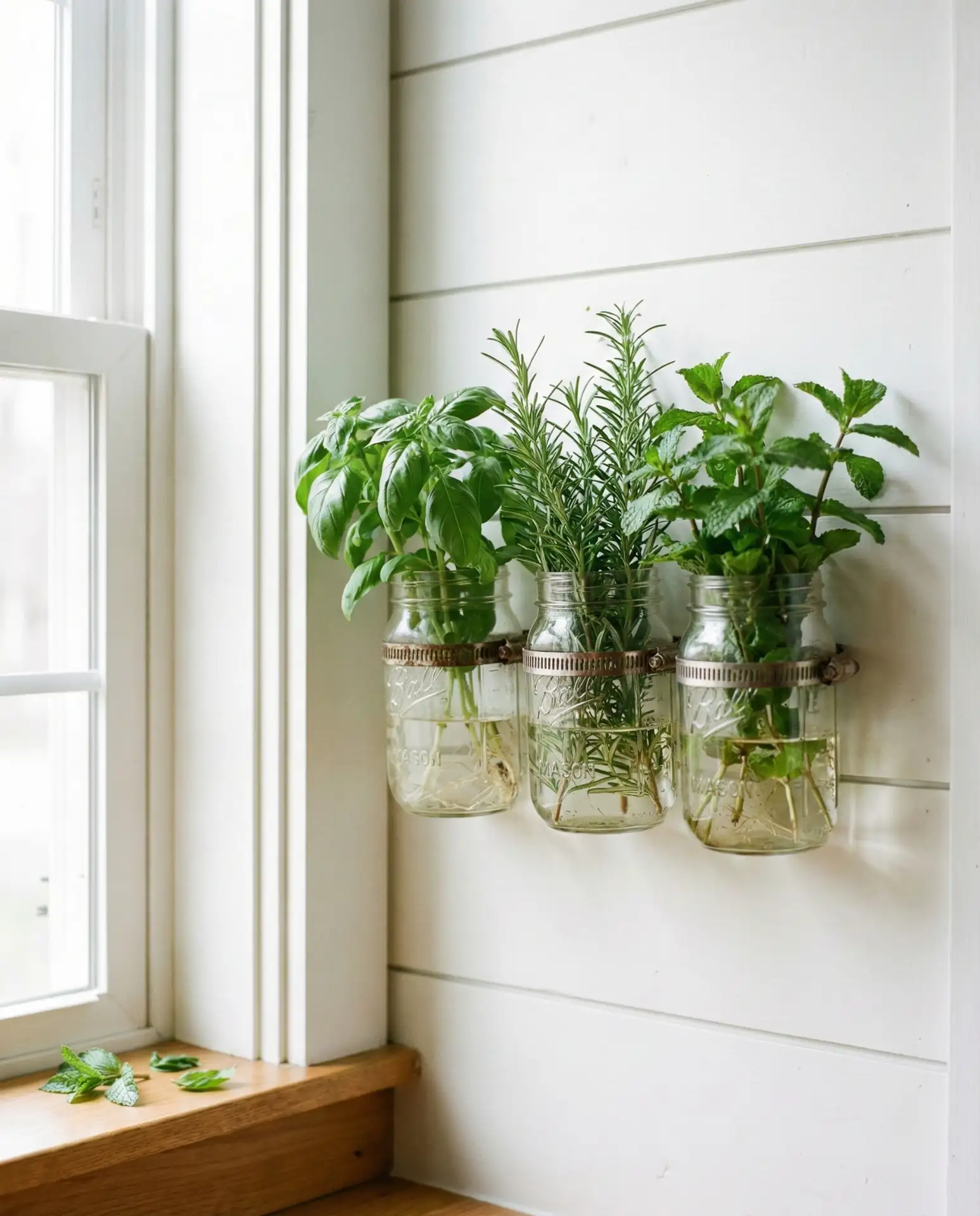
Many homeowners forget that herbs in jars need more frequent watering than those in traditional pots, since the smaller volume of soil dries out faster. Check daily and water lightly to avoid root rot. If your kitchen doesn’t get much natural light, consider adding a small LED grow light above the jars. This setup also makes a great gift for a friend who loves to cook but doesn’t have outdoor space.
5. Rolling Cart for Flexible Patio Herb Garden
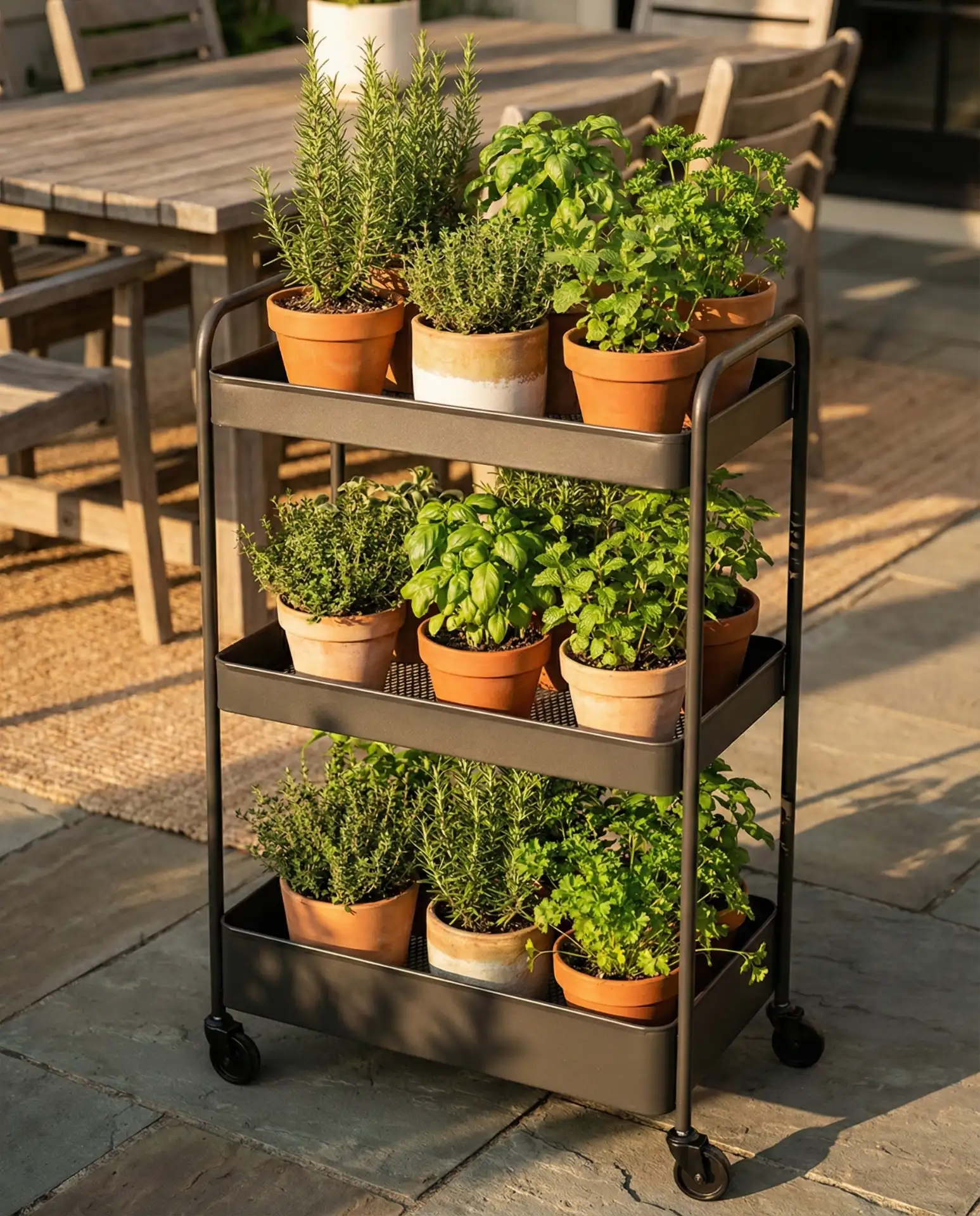
A rolling cart offers flexibility for patio herb gardens, letting you move plants to follow the sun or bring them indoors during unexpected weather. This is especially useful for container gardening in climates with unpredictable springs or early frosts. Stack potted herbs like mint, lemon balm, and thyme on the shelves, and use the bottom tier for watering cans and tools. The mobility makes this setup a favorite for renters who want a garden they can take with them. 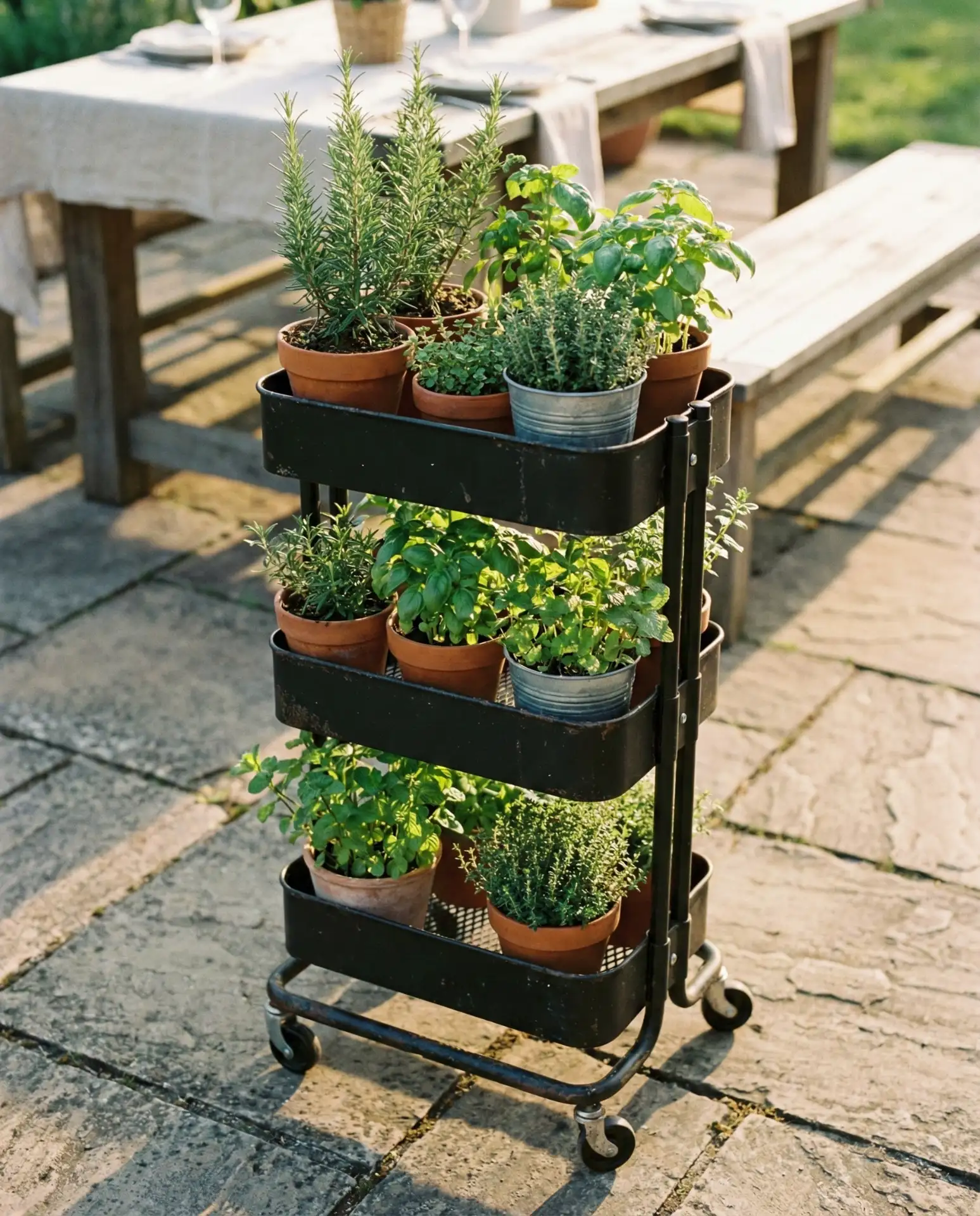
This setup works best on small decks or balconies where space is at a premium. You can roll the cart to the sunniest spot in the morning, then move it to shade during the hottest part of the day. Metal carts are more durable than wood and can handle the elements, but check for rust-resistant finishes if you live in a humid area. Prices range from $30 to $80 depending on size and material.
6. Vertical Pallet Garden for Small Balconies
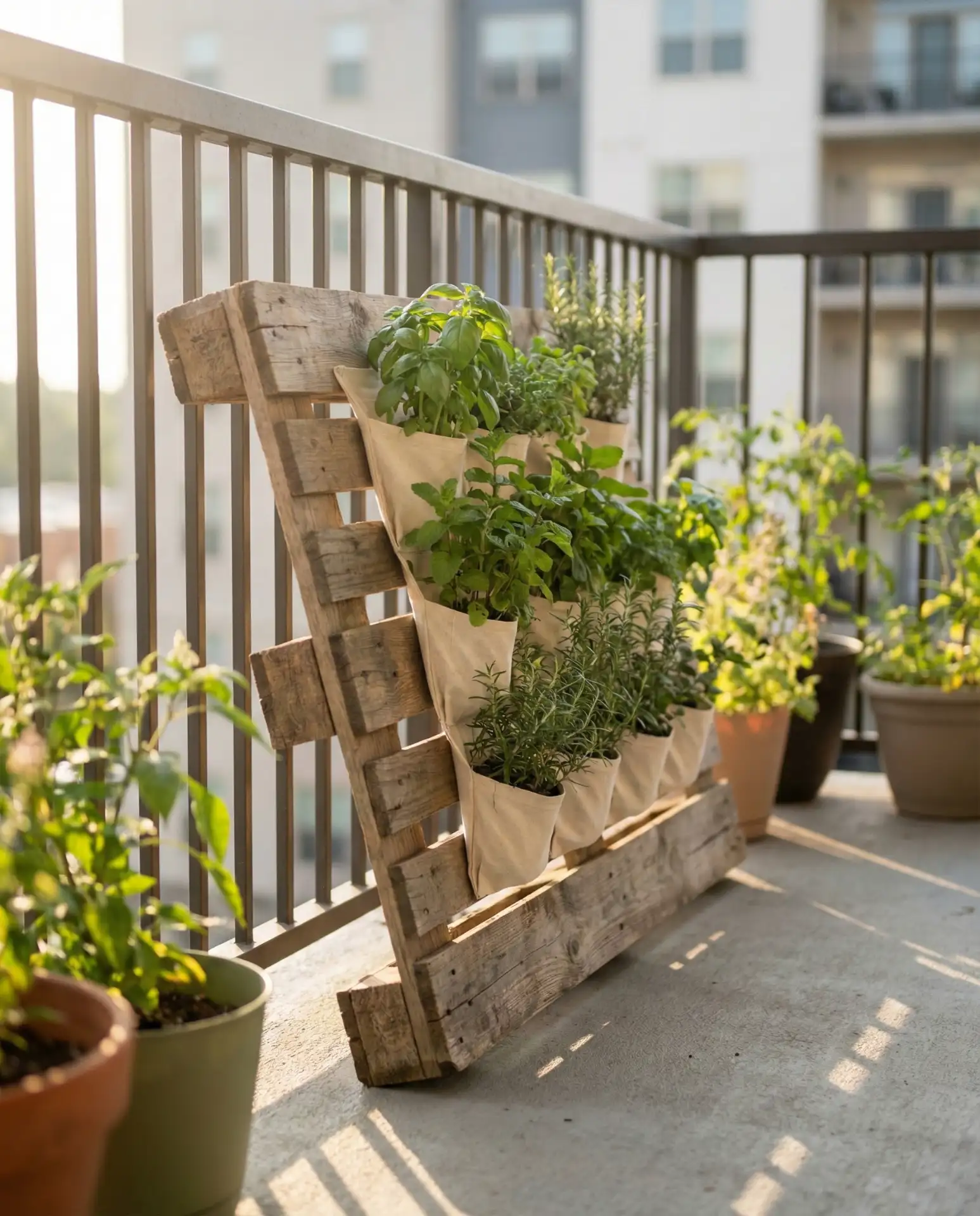
A vertical pallet garden transforms a narrow balcony into a productive green space. By leaning a wooden pallet against a wall and filling the slats with soil and herbs, you create a living wall that’s both functional and beautiful. This setup is perfect for apartment balcony dwellers who want to grow their own herbs but don’t have floor space for traditional pots. Basil, oregano, and chives do especially well in this arrangement. 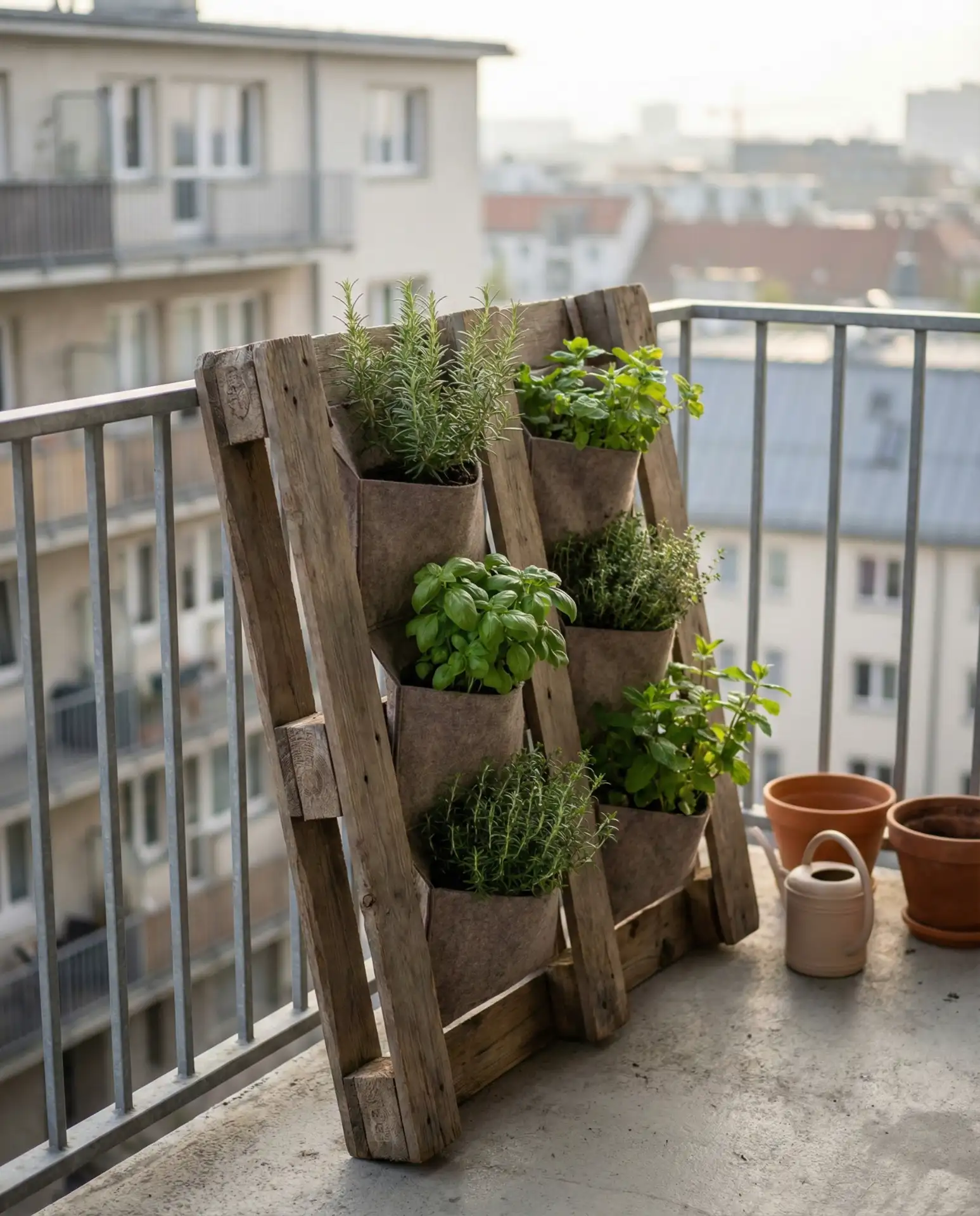
In urban areas like New York or Chicago, where balconies are small but balcony gardening is popular, this idea maximizes every inch. Make sure to line the back of the pallet with landscape fabric to hold the soil in place, and water from the top so moisture trickles down through all the levels. A friend in Brooklyn tried this last spring and said it doubled her herb yield compared to traditional pots, all while taking up less than a square foot of floor space.
7. Windowsill Herb Garden in Vintage Tins
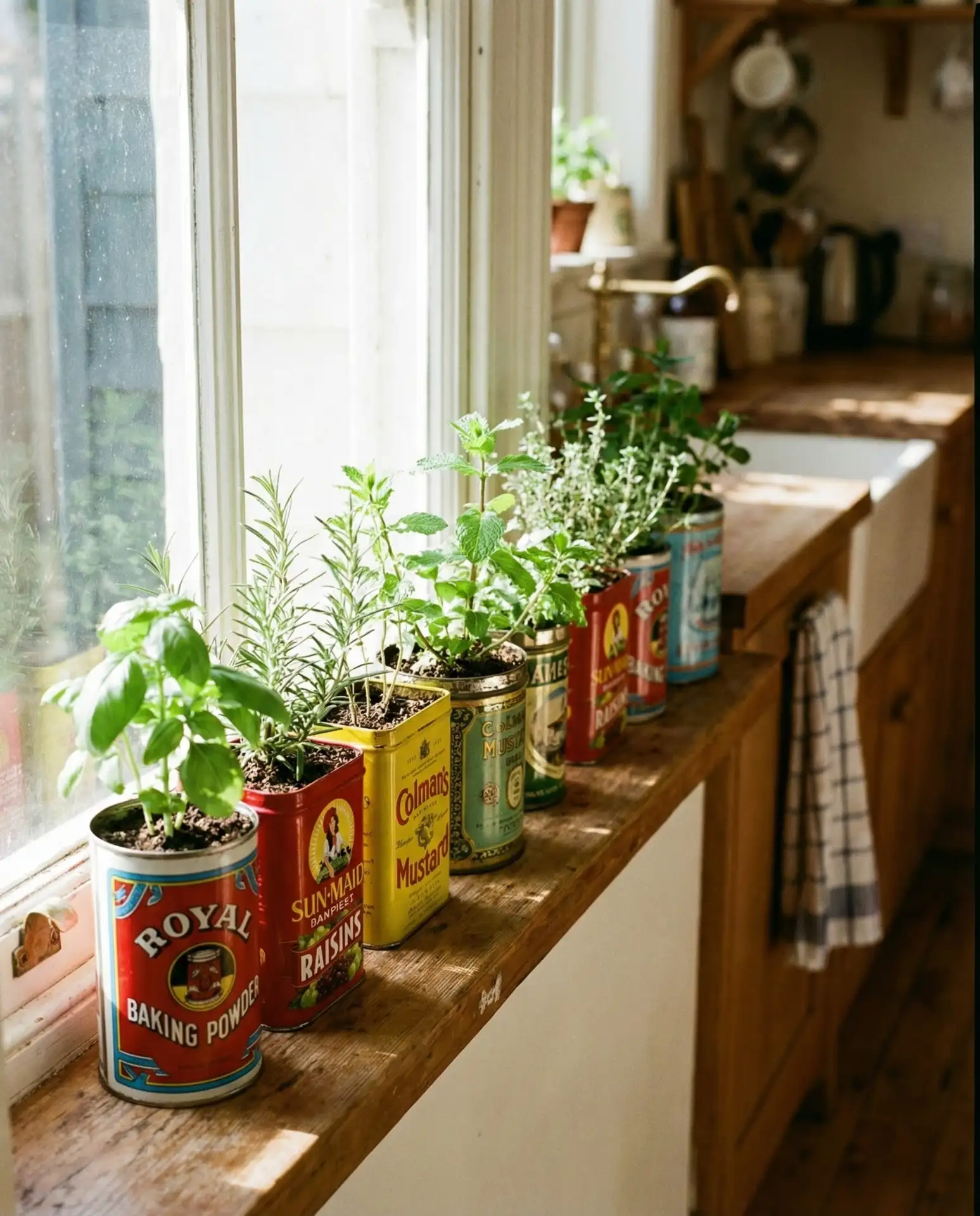
Vintage tins bring nostalgia and personality to a windowsill herb garden, and they’re surprisingly functional. This is an easy way to start an inside herb garden if you’re short on space or just testing your green thumb. Small herbs like thyme, chives, and parsley grow well in shallow containers, and the tins add a pop of color and character to your kitchen window. Drill drainage holes in the bottom and set the tins on a tray to catch excess water. 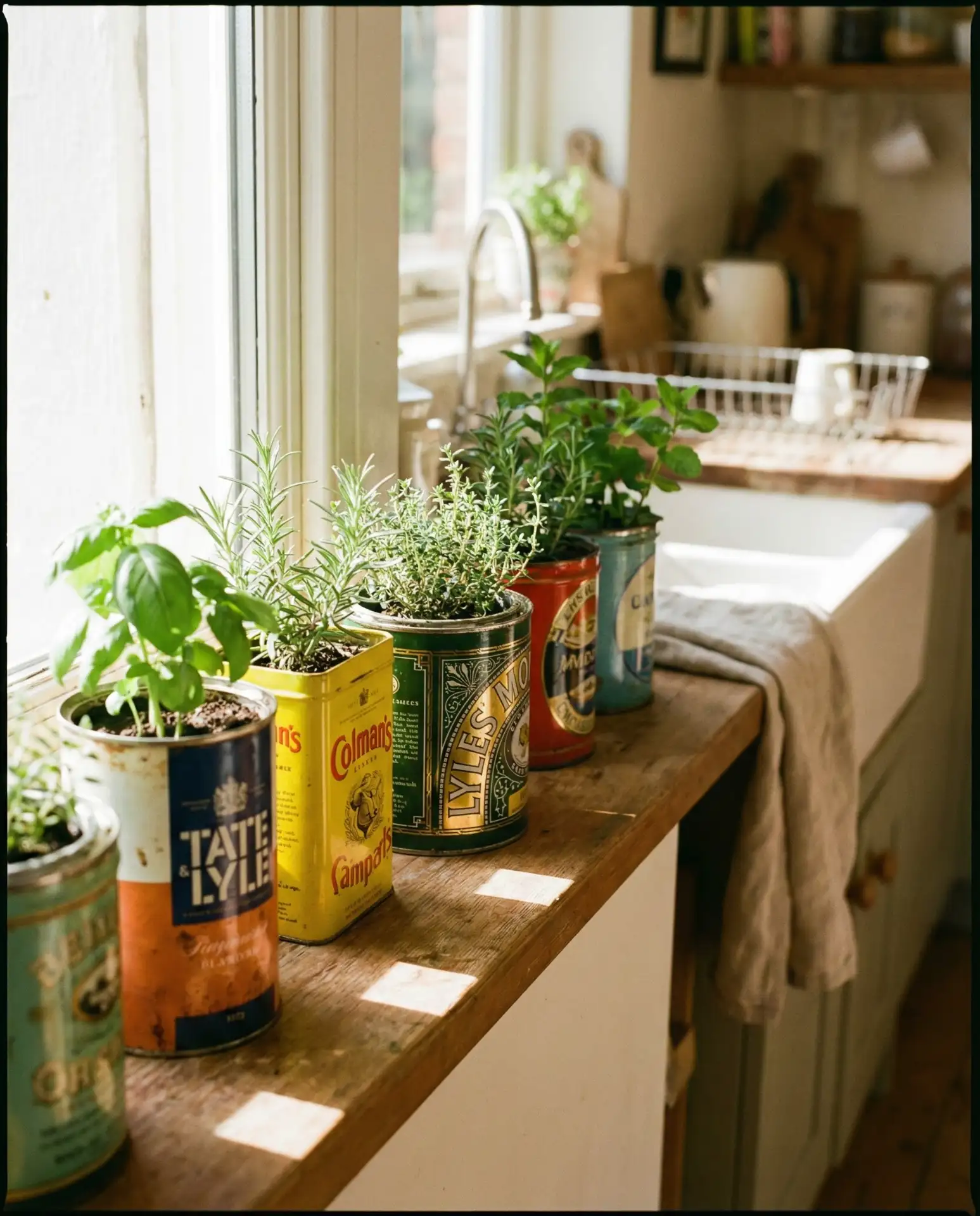
Vintage tins are easy to find at flea markets or thrift stores, often for just a few dollars each. The key is choosing tins that are deep enough for root growth—at least three inches. If your windowsill doesn’t get six hours of sun, rotate the tins every few days or supplement with a small grow light. This setup also makes a charming gift for a host or a new homeowner.
8. Spiral Herb Garden in a Raised Stone Bed
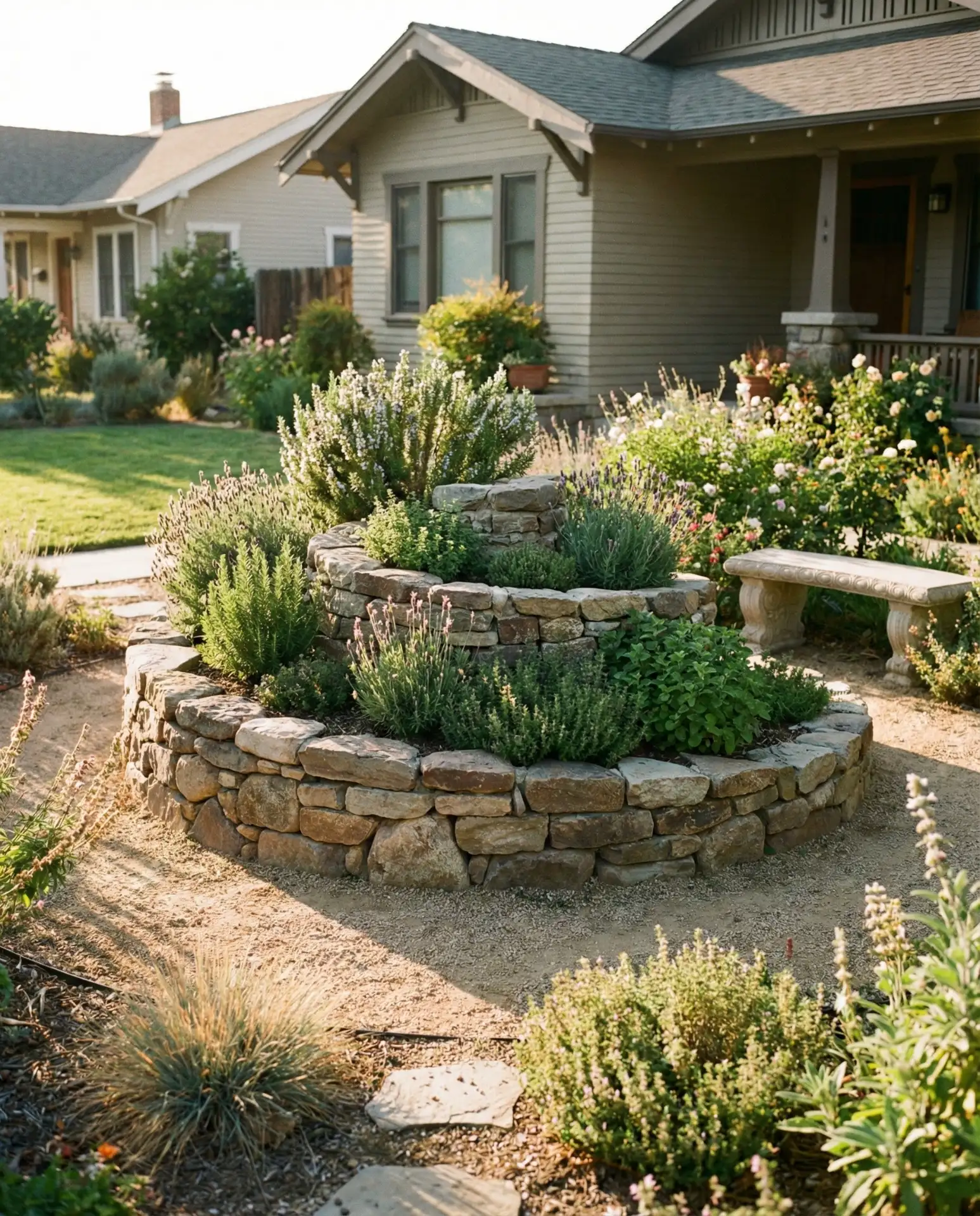
A spiral herb garden is both a design statement and a smart growing solution for outdoor raised beds. The spiral shape creates microclimates, with the top being drier and sunnier for herbs like rosemary and thyme, while the base stays cooler and moister for parsley and cilantro. This setup works beautifully in front yard gardens where you want to add visual interest and curb appeal. The stone construction also retains heat, extending the growing season. 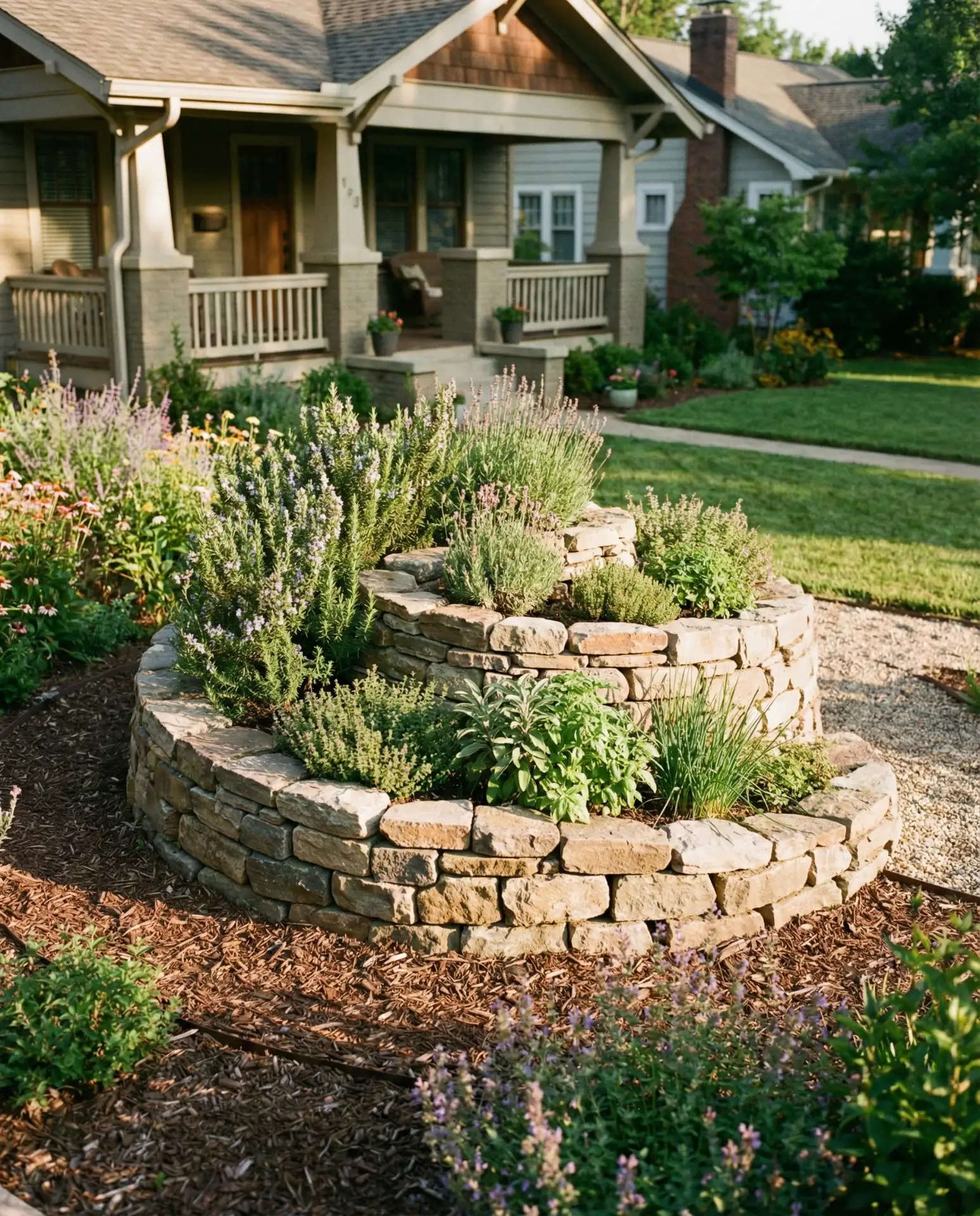
In the Southwest, where water conservation is critical, spiral gardens are especially practical because they allow you to water efficiently based on each plant’s needs. The stone also helps regulate soil temperature during extreme heat. Building one takes a weekend and around $100 in materials if you source stones locally. The result is a conversation-starting garden that performs as well as it looks.
9. Hanging Gutter Planters for Deck Railings
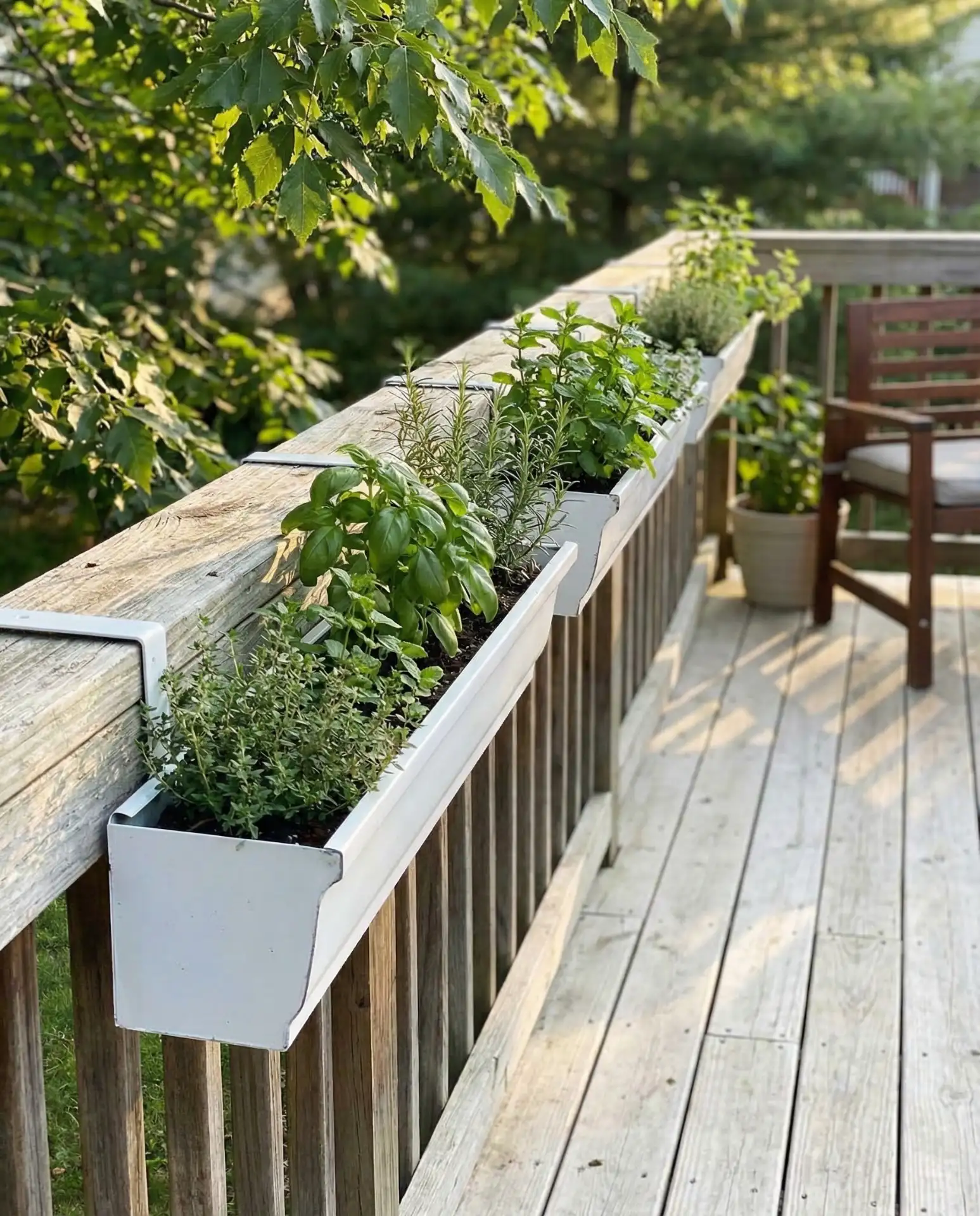
Repurposed rain gutters make surprisingly effective planters when mounted to small deck railings. This setup is perfect for outdoor potted herbs in long, narrow strips, allowing you to grow a variety of herbs without sacrificing deck space. The gutters provide excellent drainage and can be painted to match your deck’s color scheme. Herbs like mint, basil, and cilantro thrive in this linear arrangement, and harvesting is easy when everything is at arm’s reach. 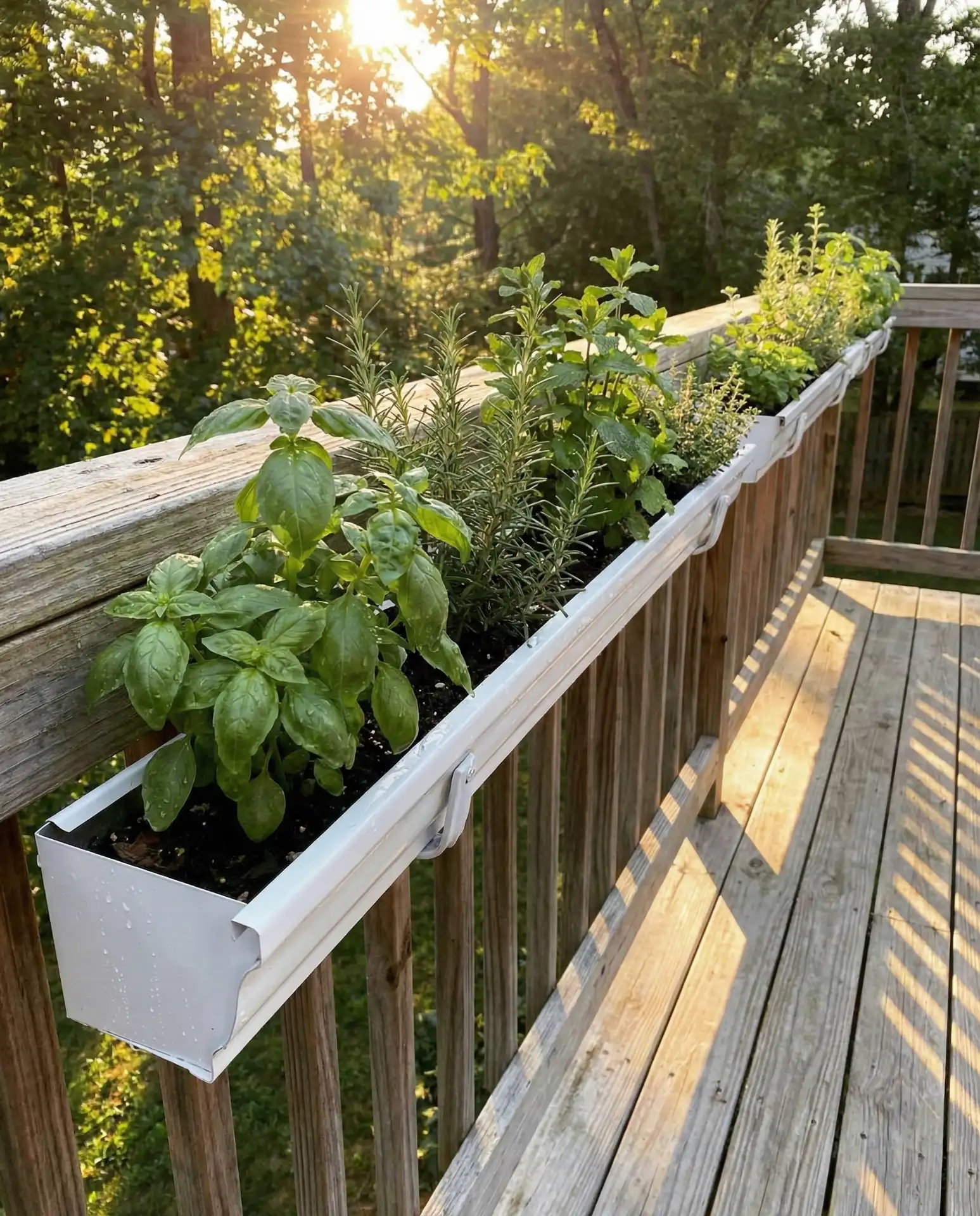
Experts recommend using vinyl gutters rather than metal, as they’re lighter and won’t rust. Drill drainage holes every six inches and use brackets designed for gutter installation to secure them firmly to the railing. In coastal areas where salt air can corrode metal, this is an especially smart choice. The entire project can be completed for under $40 if you buy gutters on sale at a home improvement store.
10. Terra Cotta Pot Tower for Outdoor Corners
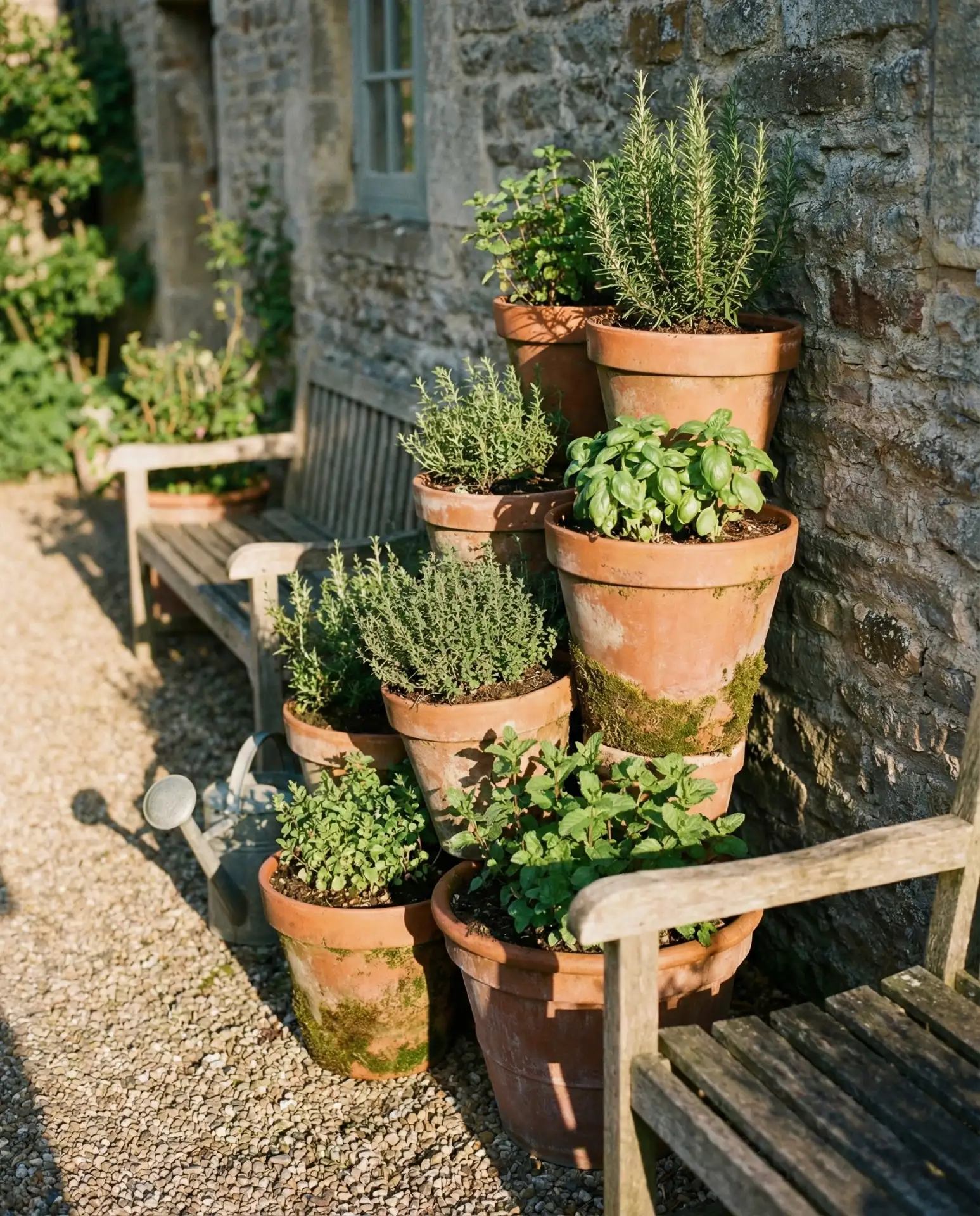
A terra cotta pot tower transforms an unused outside corner into a thriving herb garden. By stacking pots of decreasing sizes on a central rod or rebar, you create a vertical growing space that’s both artistic and productive. This works especially well in outdoor spaces where ground planting isn’t ideal, such as near fences or beside sheds. The classic look of terra cotta complements any garden style, and the porous material promotes healthy root growth. 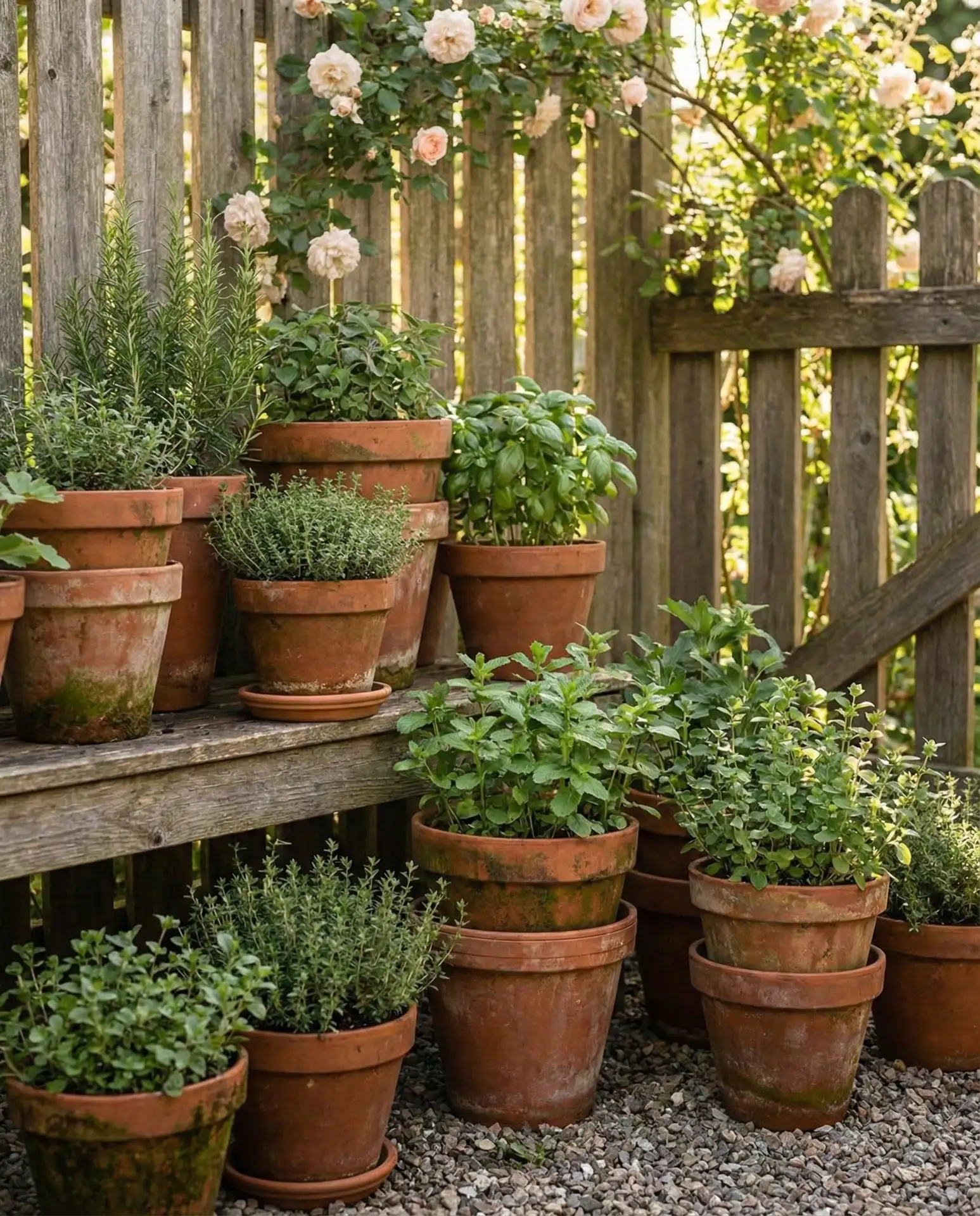
This setup is popular in Southern California and Arizona, where the heat-absorbing properties of terra cotta actually benefit herbs that prefer warm soil. Water from the top and let it trickle through each level, ensuring every plant gets moisture. One tip: use a mix of herbs with similar water needs in each tower to simplify maintenance. If you’re worried about stability, anchor the bottom pot in the ground or use a wider base pot.
11. Wooden Crate Planter for Patio Tables
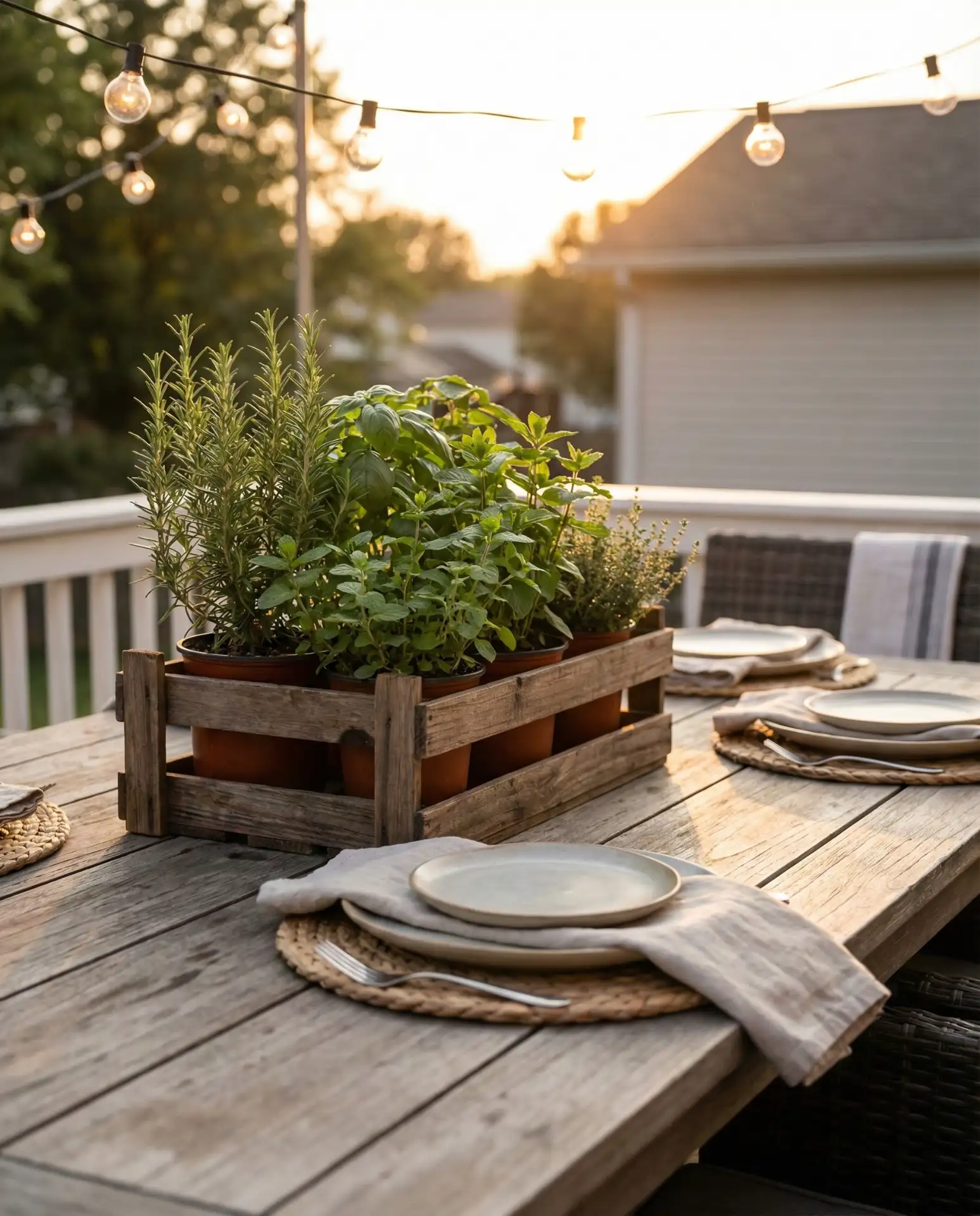
Wooden crates make excellent centerpiece planters for patio dining tables, bringing fresh herbs right to where you eat. This idea is ideal for potted herb arrangements that are both decorative and functional. Line the crate with plastic or landscape fabric, fill with soil, and plant herbs like basil, cilantro, and parsley. The rustic wood adds warmth to outdoor dining spaces, and having herbs within reach means you can snip fresh garnishes mid-meal. 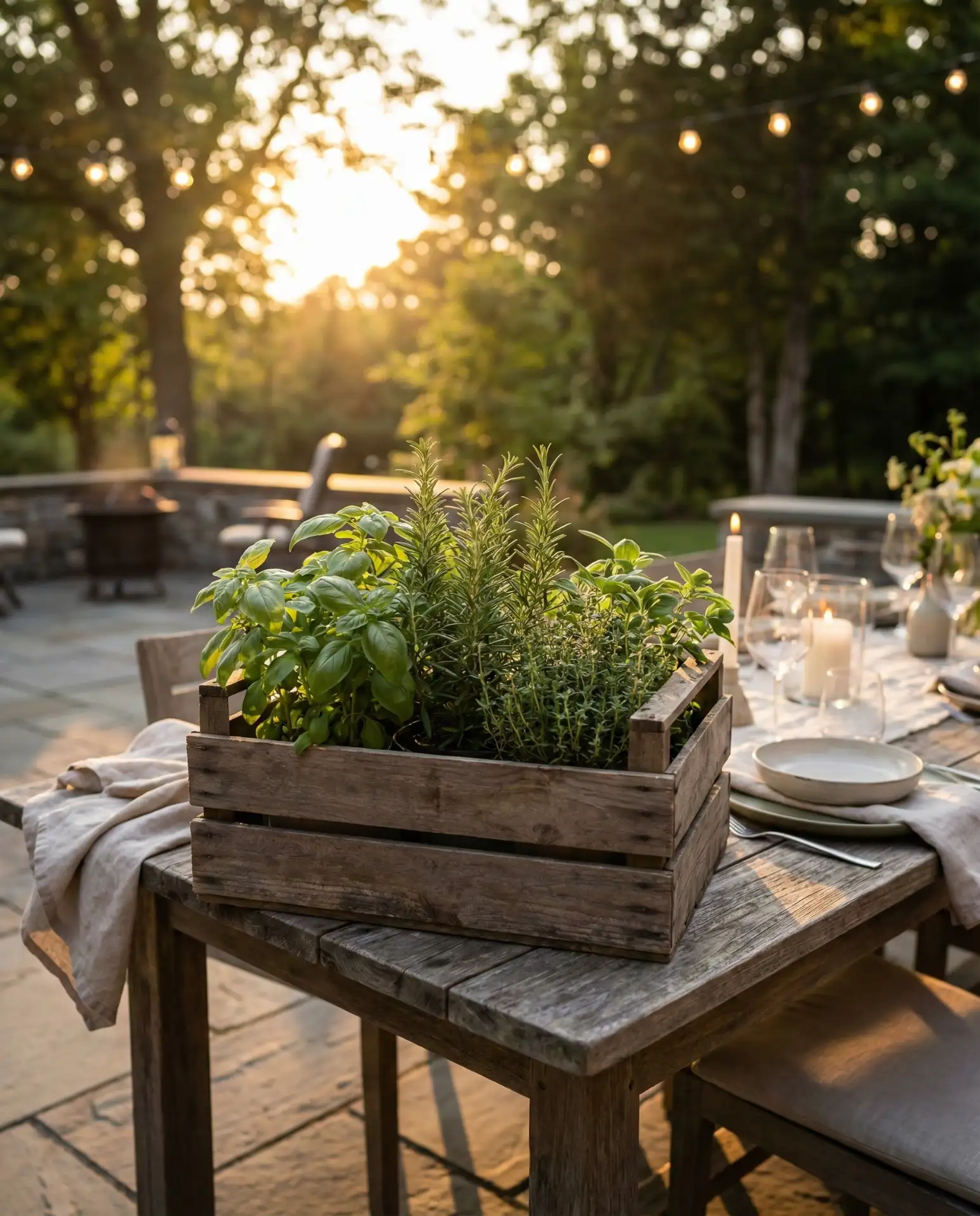
Where this works best is on covered patios where the crate stays dry between waterings. In regions with heavy summer rain, bring the crate under an overhang during storms to prevent waterlogging. You can find wooden crates at craft stores or reclaim them from grocery stores for free. Seal the wood with a food-safe finish to extend its life, and replace the liner each season to prevent rot.
12. Ladder Shelf Herb Garden for Balconies
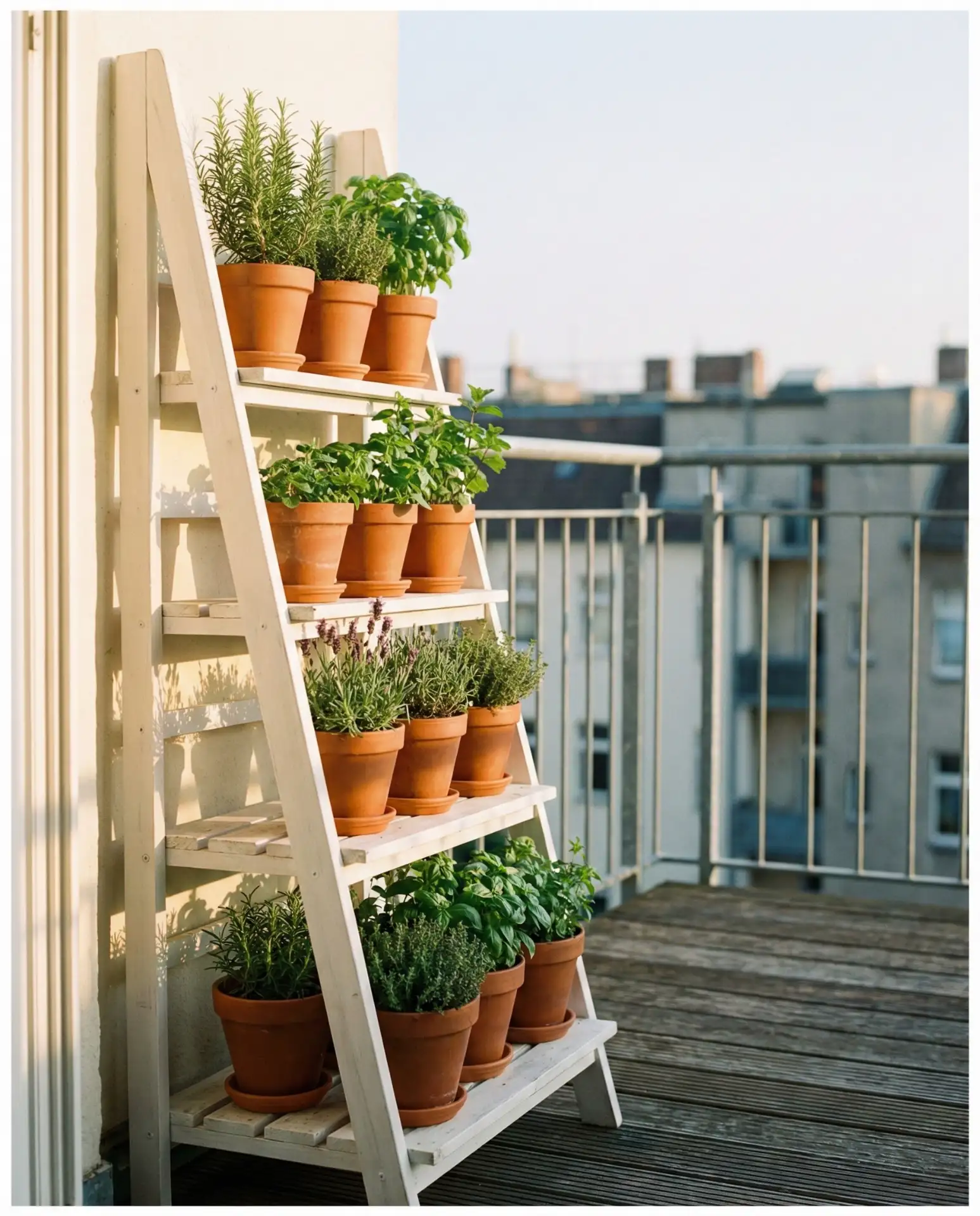
A ladder shelf is a stylish way to grow herbs on an apartment balcony without taking up much floor space. The tiered design allows you to display multiple potted herbs at different heights, which adds visual interest and makes the most of vertical space. Lean the ladder against a wall or railing, and use each rung to hold small pots of basil, thyme, oregano, and mint. The open structure ensures good airflow and easy access to every plant. 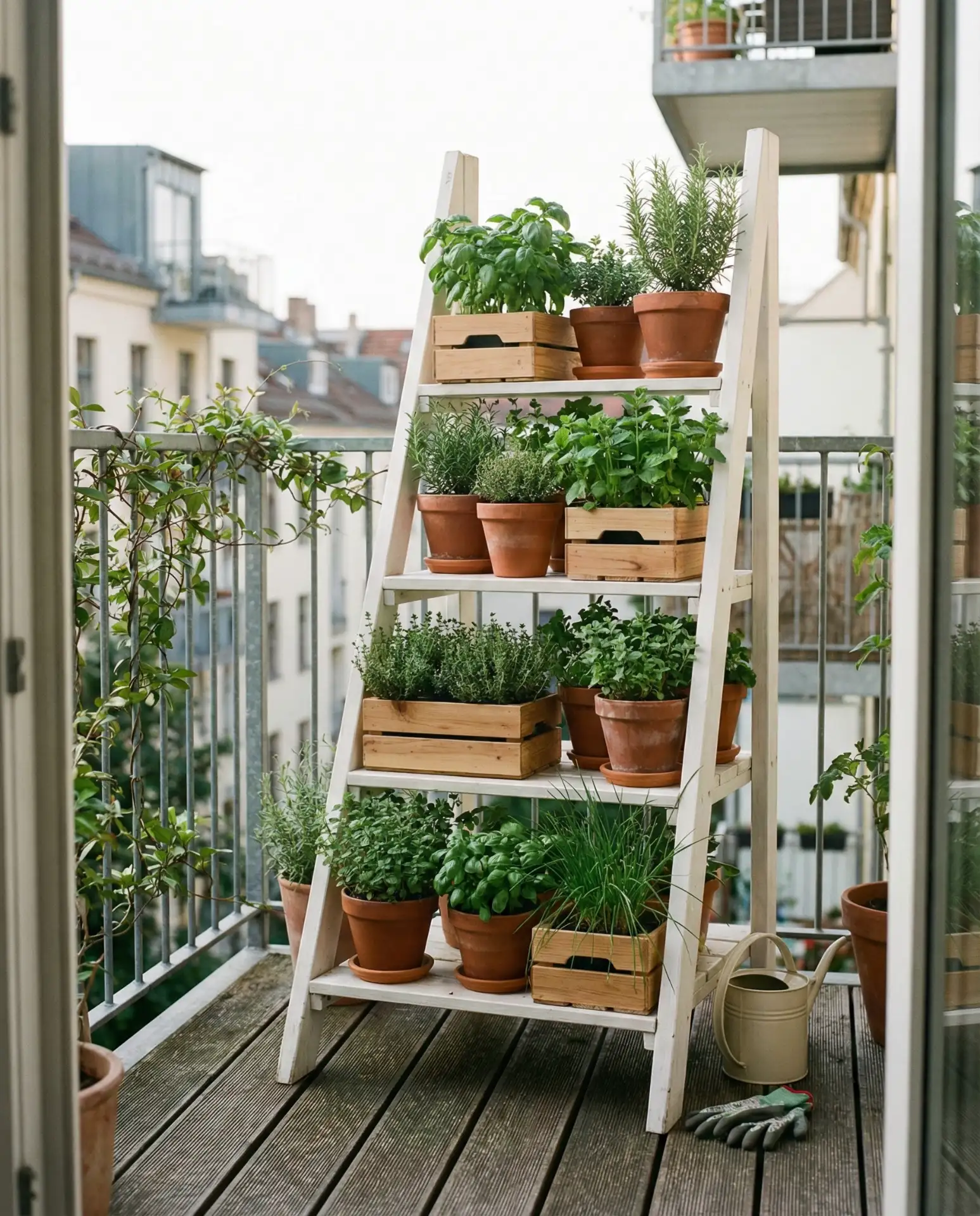
Real homeowners often use old ladders from flea markets or garage sales, giving them new life with a coat of weather-resistant paint. Make sure the ladder is stable—secure it to the wall if you’re in a windy area. This setup is especially popular in cities where balcony space is limited but the desire for fresh herbs is strong. Budget-conscious gardeners can complete this project for under $30 if they repurpose materials.
13. Hanging Macrame Planters for Indoor Kitchens
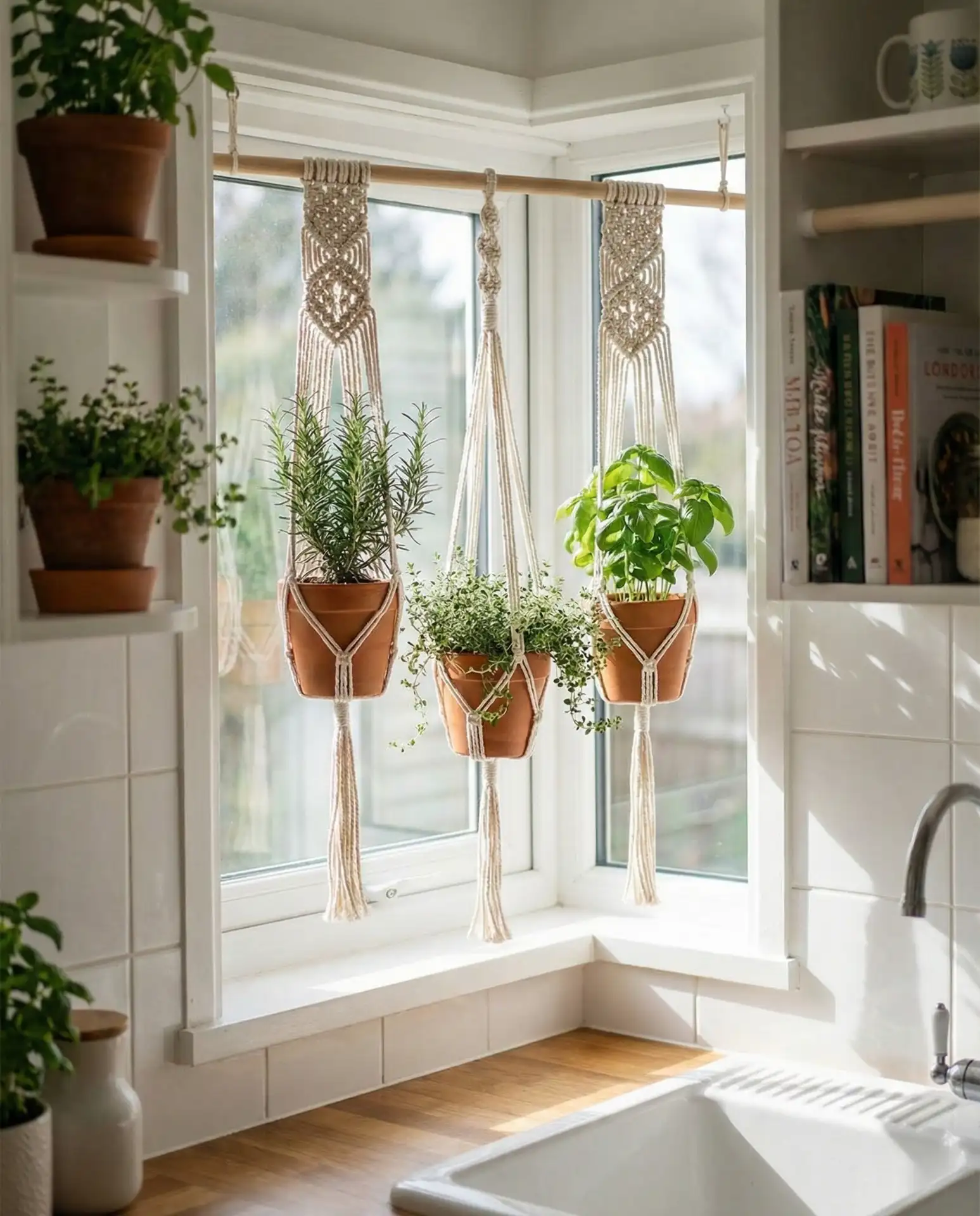
Macrame planters bring bohemian style to indoor herb gardens, turning your kitchen into a lush, functional space. Hang them near a sunny window and plant small herbs like basil, cilantro, and mint. The woven texture adds softness and warmth to modern kitchens, and the hanging design keeps herbs off counters while still within easy reach. This is a great option for renters who can’t install permanent shelving but still want a thriving herb garden. 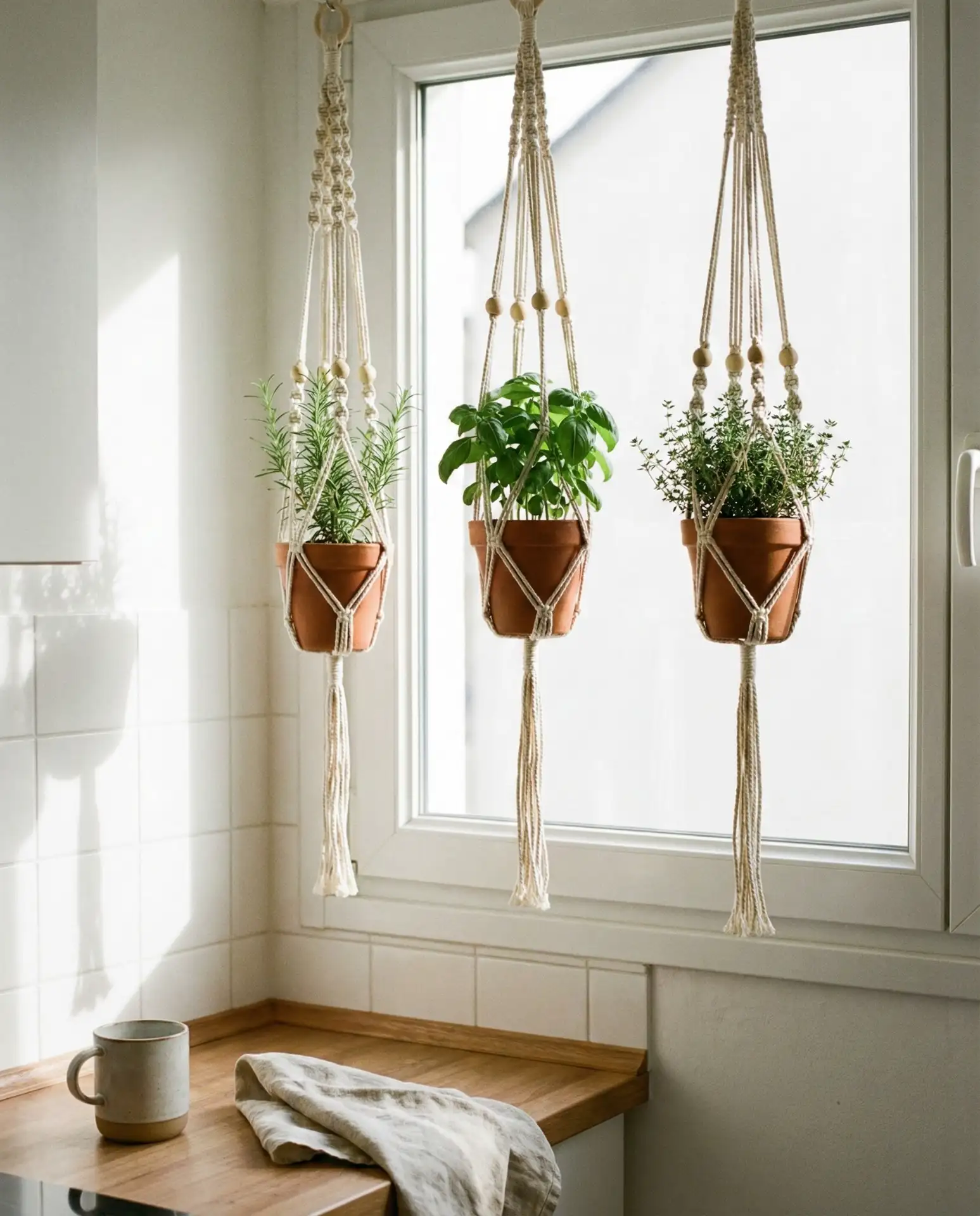
One mistake to avoid is hanging the planters too far from a water source—dripping water after watering can damage floors. Place a small tray underneath or water over the sink, then rehang once drained. Macrame planters are widely available online or at home goods stores, typically ranging from $10 to $25 each. They’re also surprisingly easy to make if you enjoy crafts, requiring only basic knots and rope.
14. Repurposed Colander Planters for Porches
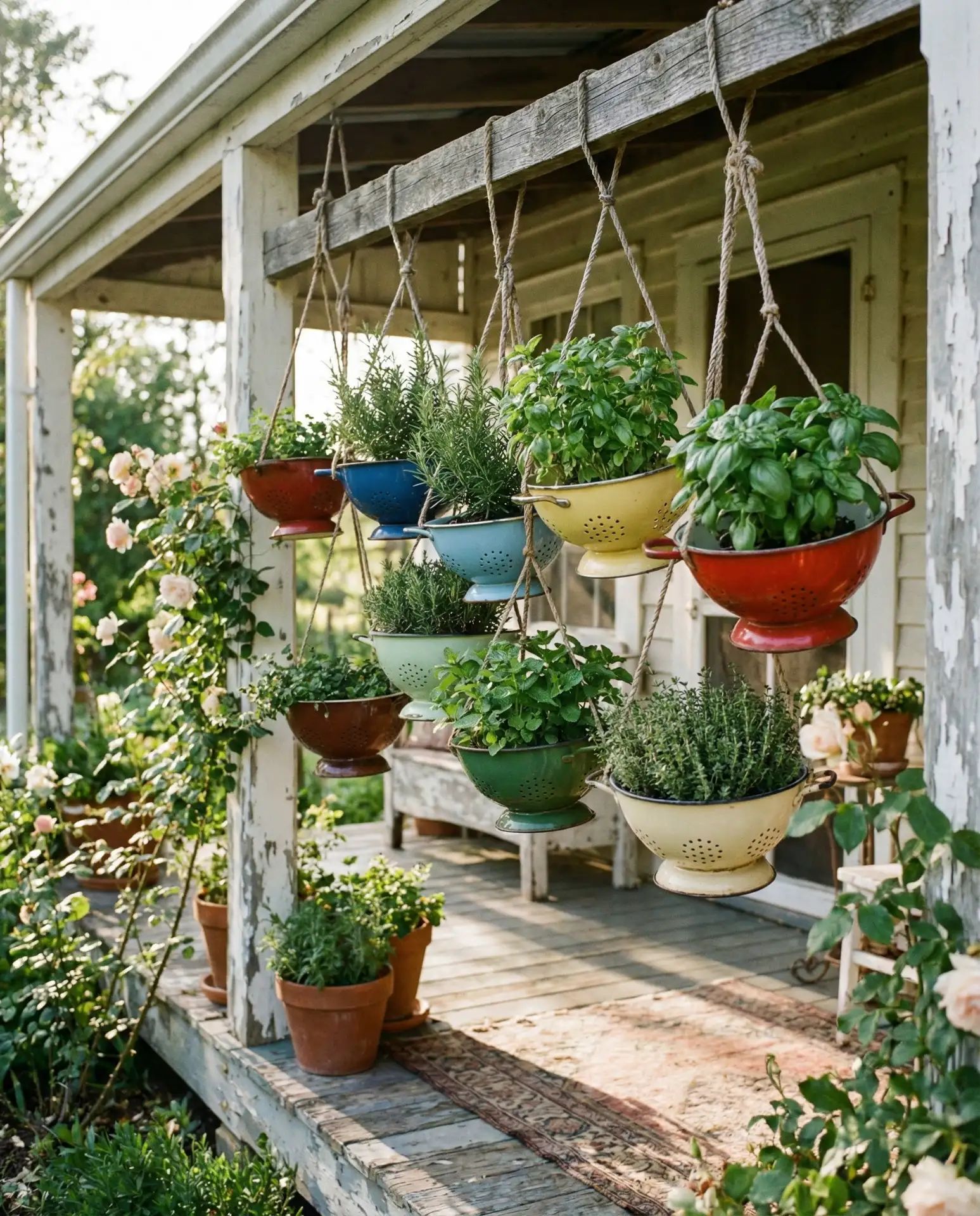
Old colanders make charming and functional planters for porch herb gardens. The built-in drainage holes are perfect for herbs that don’t like wet feet, and the vintage enamel colors add a playful touch to outdoor spaces. Hang them from hooks or set them on a shelf, and plant herbs like thyme, oregano, and sage. This setup is ideal for casual, cottage-style porches where personality matters as much as performance. 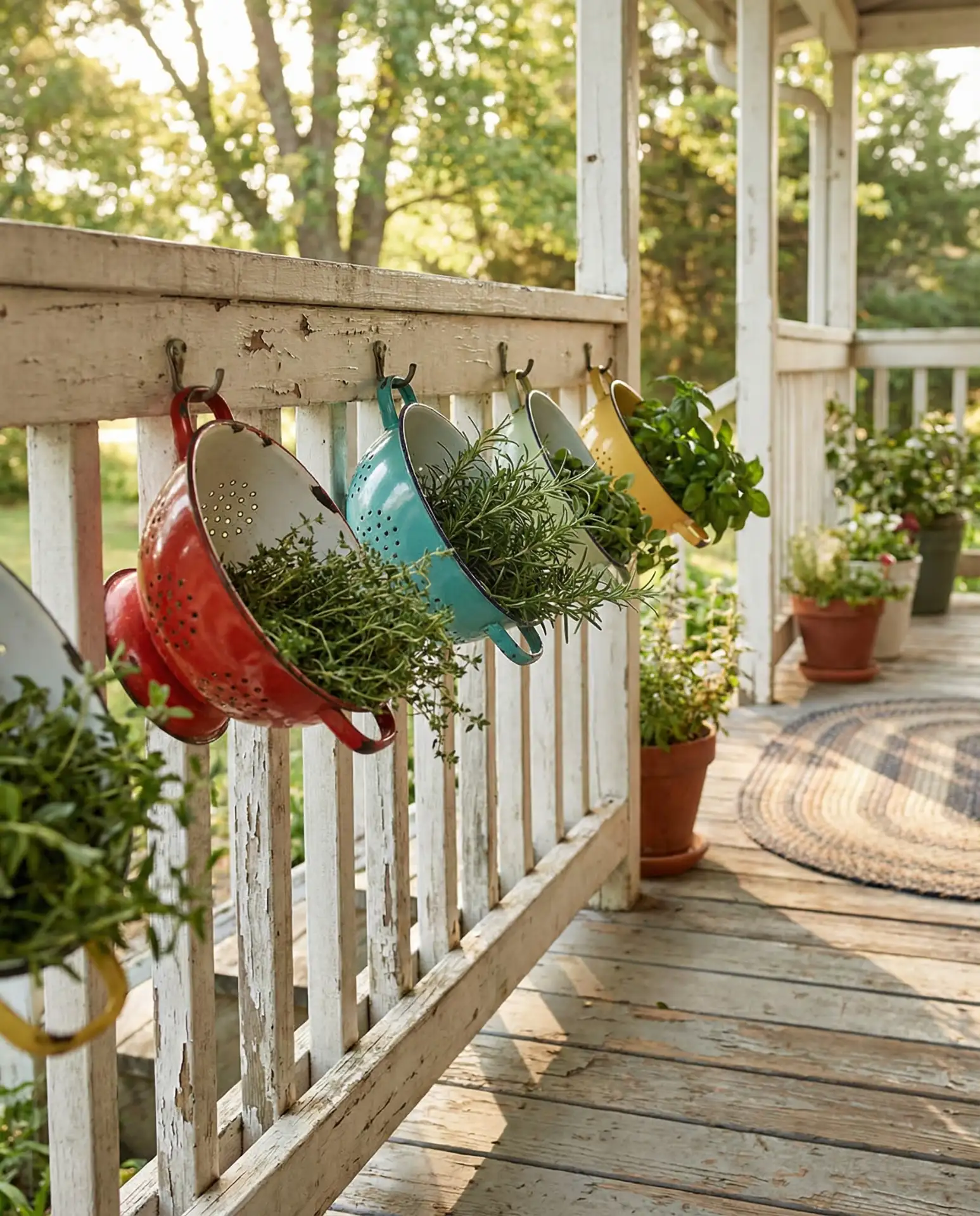
This is a budget-friendly option that costs next to nothing if you already have old colanders in your kitchen. If not, thrift stores are full of them for just a couple of dollars. The key is choosing metal or enamel colanders rather than plastic, as they hold up better outdoors. This idea also makes a great conversation starter when guests ask about your creative planters.
15. Built-In Raised Bed Along Deck Edge
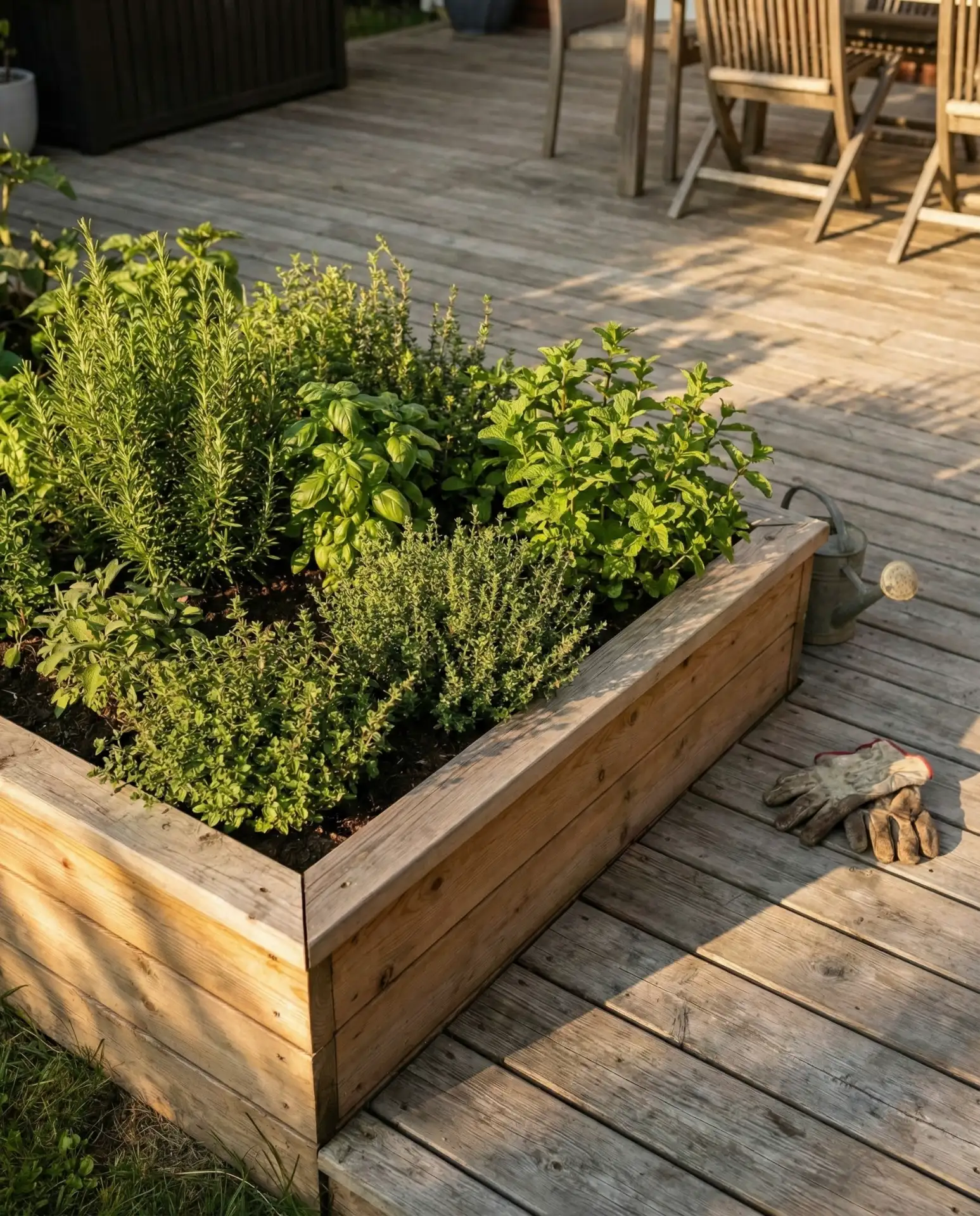
A built-in raised bed along the edge of a deck integrates herbs seamlessly into your outdoor living space. This custom approach works beautifully for outdoor raised beds that double as design features, softening the transition between deck and yard. Plant a mix of culinary herbs like basil, rosemary, and chives, and enjoy easy access while grilling or entertaining. The raised height also deters pests and makes maintenance more comfortable. 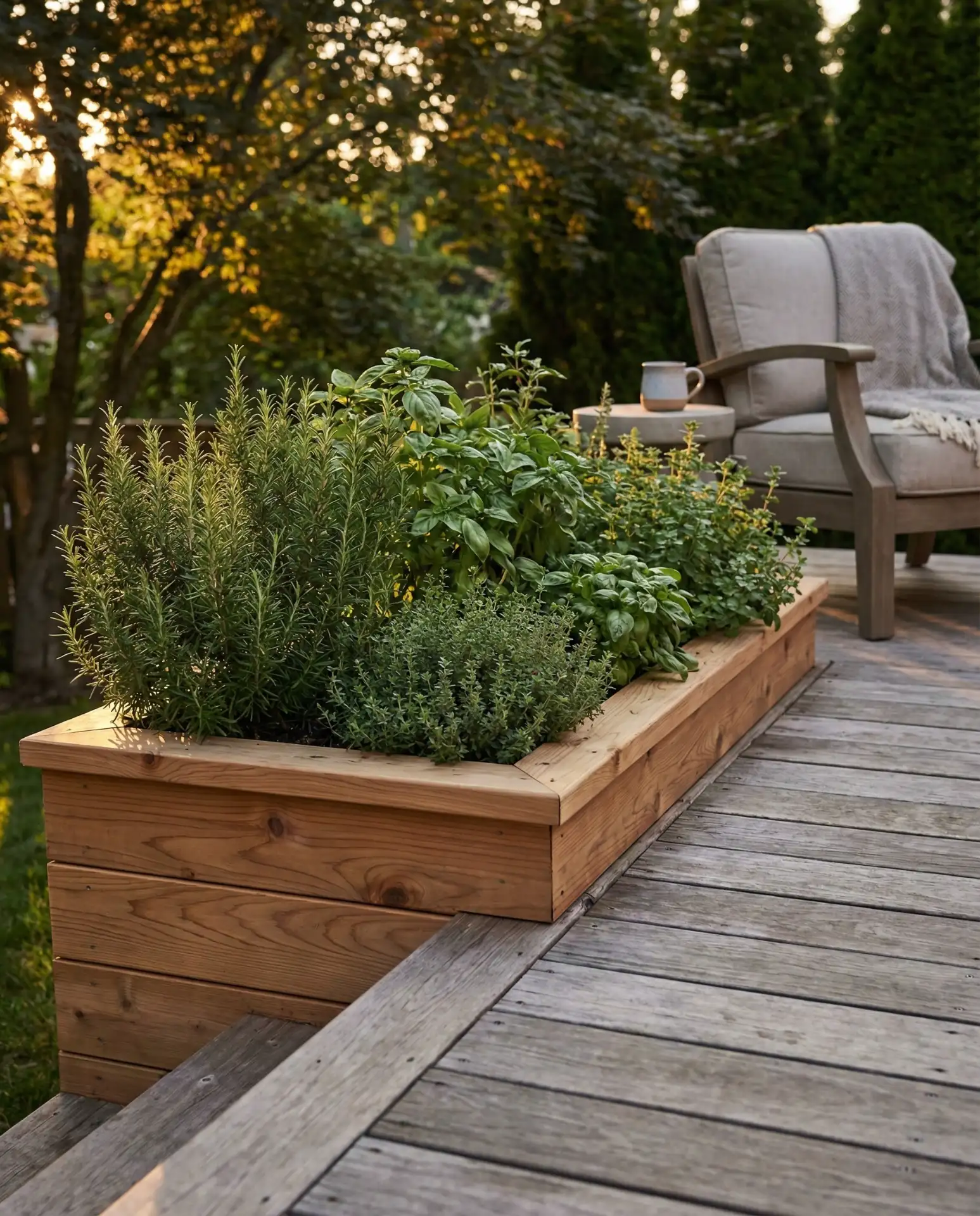
In the Pacific Northwest, where decks are a primary outdoor living space, this setup is both practical and beautiful. Use rot-resistant wood like cedar or redwood, and line the interior with landscape fabric to protect the deck structure. This is a higher-investment project, typically costing $150–$300 depending on size, but it adds value to your home and creates a permanent herb garden that requires minimal annual setup.
16. Window Box Herb Garden for Front Windows
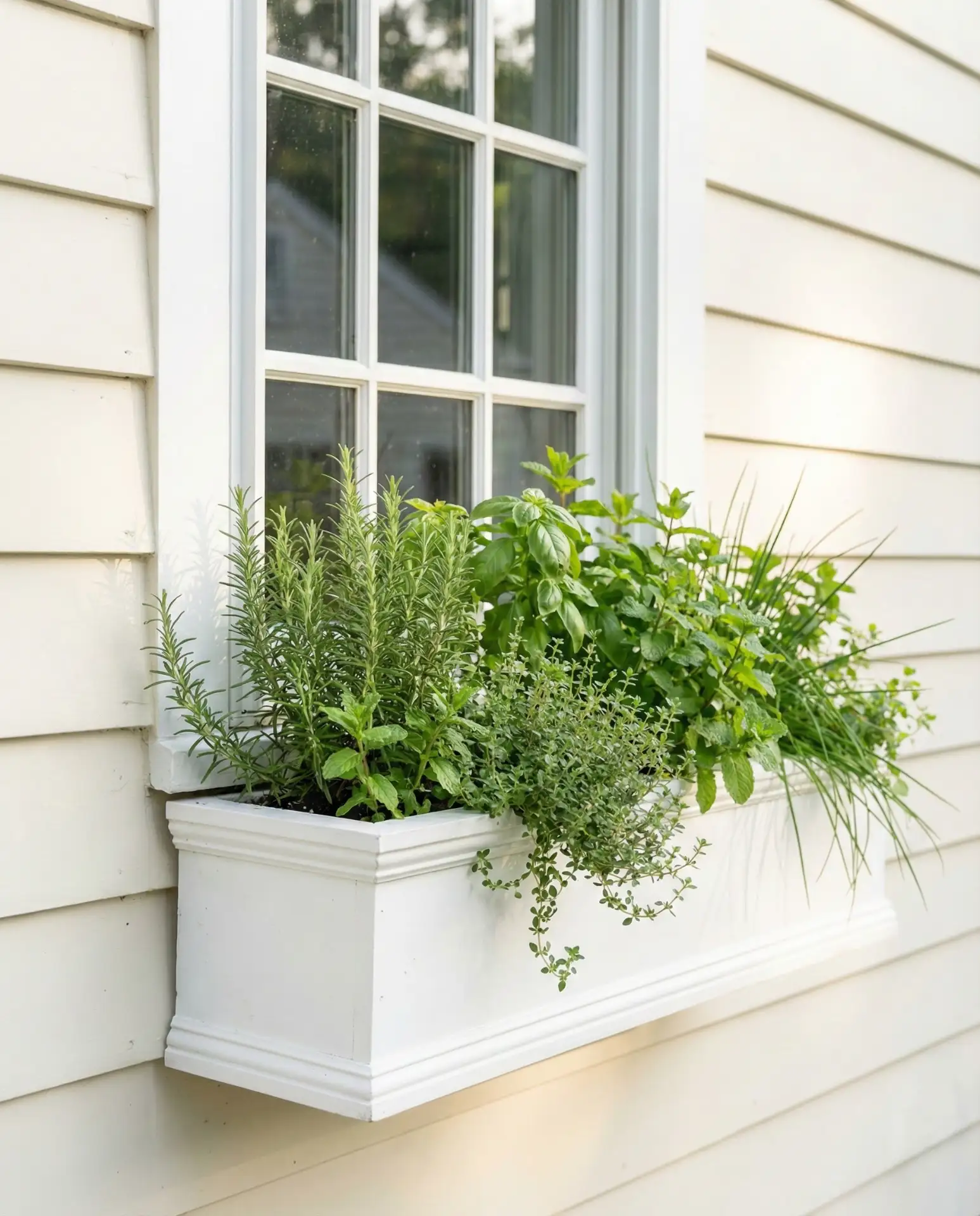
Window boxes aren’t just for flowers—they’re perfect for growing herbs right outside your front windows. This idea works especially well for outdoor herb gardens in townhouses or homes where yard space is limited. Plant a mix of cascading herbs like thyme and upright varieties like basil, and enjoy the curb appeal they add to your home. The proximity to the house makes watering easy, and you can harvest herbs without stepping off the porch. 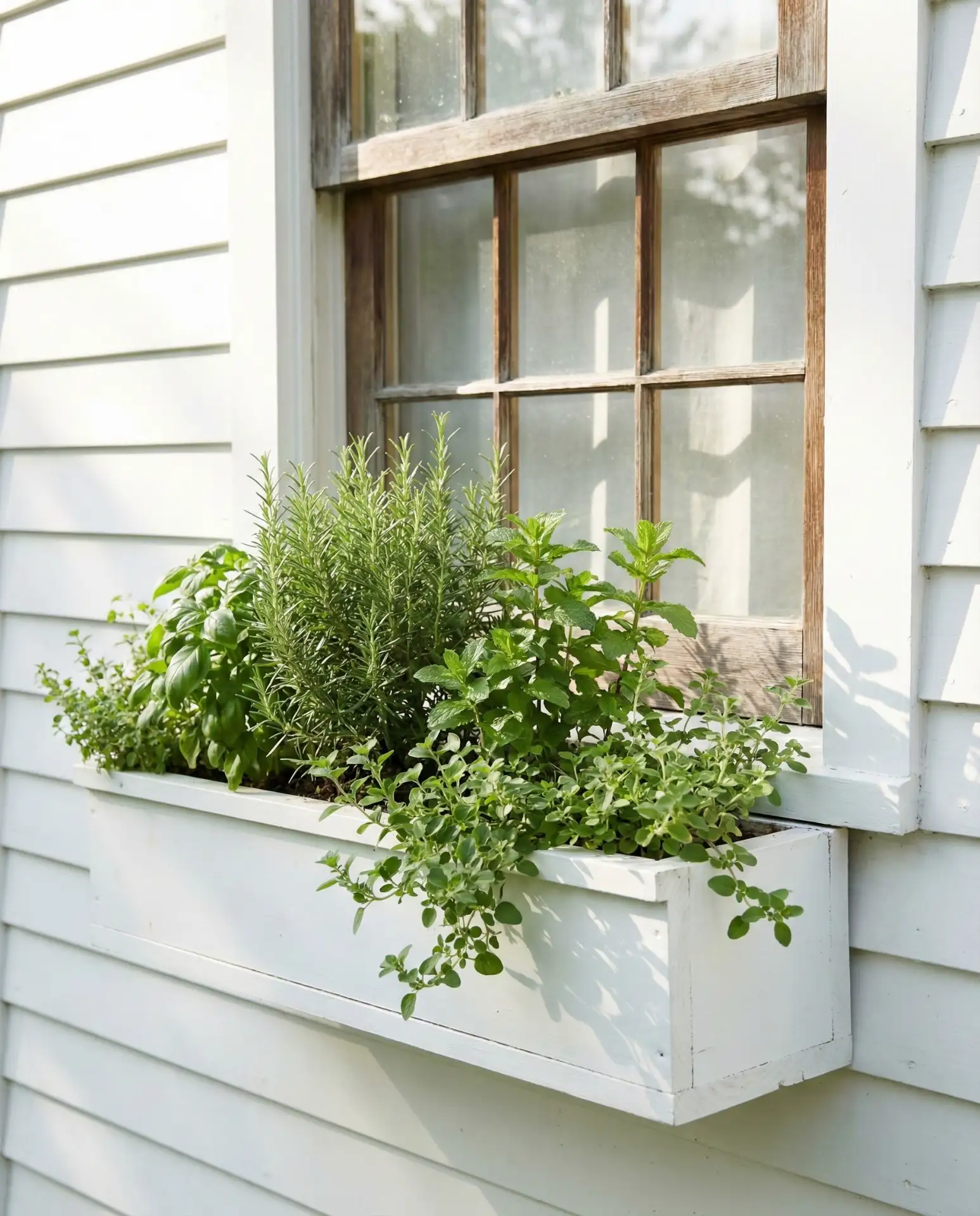
Window boxes should be securely mounted to support the weight of soil and plants when wet. Use sturdy brackets and check them seasonally for wear. In areas with hot summers, choose heat-tolerant herbs like oregano and sage, and water daily during peak heat. This setup is also a great way to deter pests from entering windows, as many herbs naturally repel insects.
17. Stacked Cinder Block Herb Garden
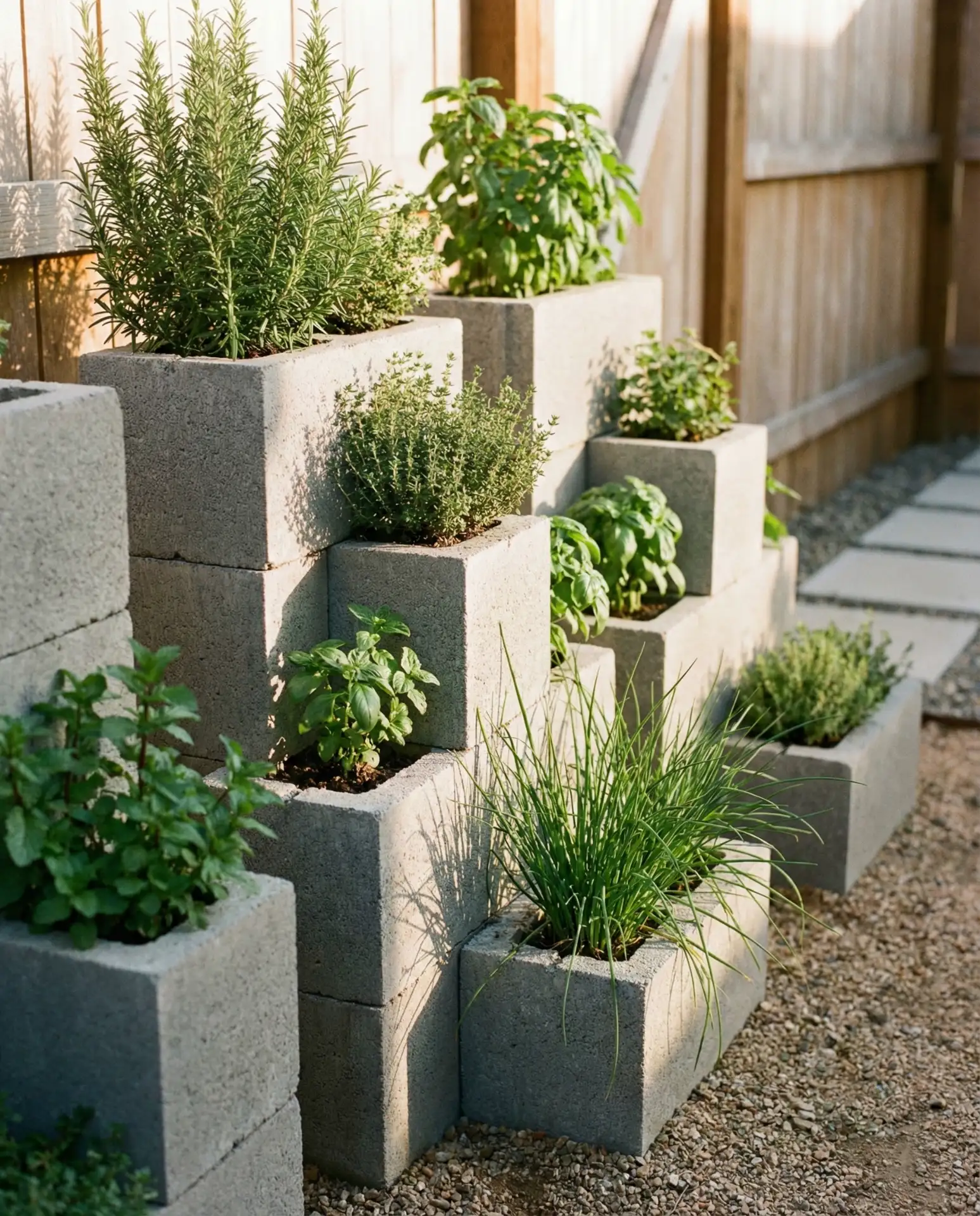
Cinder blocks offer a modular, budget-friendly solution for outdoor diy herb gardens. Stack them in various configurations to create planting pockets, using the hollow centers to hold soil and herbs. This setup is ideal for backyard spaces where you want a modern, industrial look without the cost of custom planters. Herbs like rosemary, thyme, and sage thrive in the well-draining environment, and the blocks absorb heat to extend the growing season. 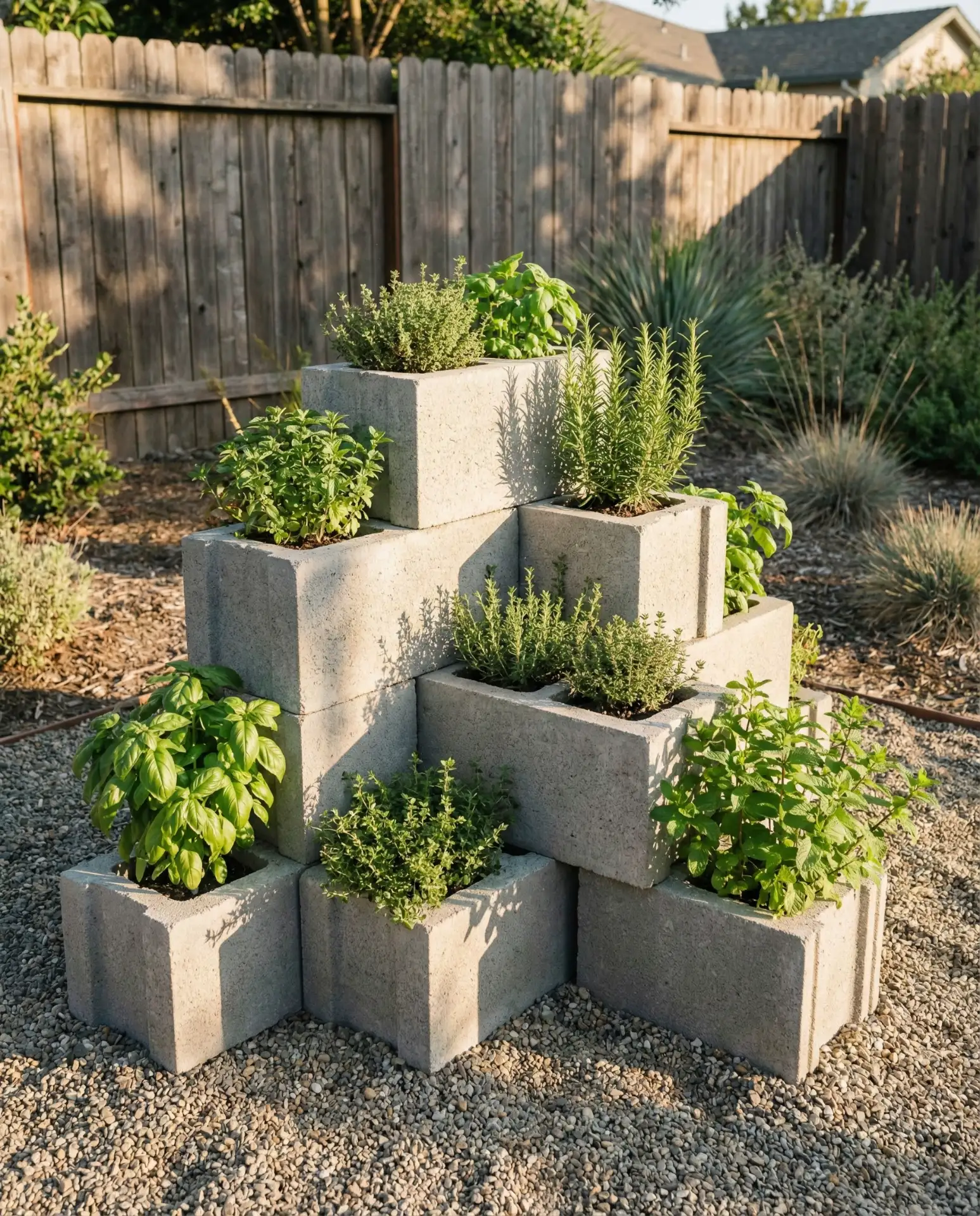
A common mistake is forgetting to drill drainage holes in the bottom of each block pocket—without drainage, roots will rot. Cinder blocks are inexpensive, usually under $2 each, making this one of the most affordable herb garden setups. In the desert Southwest, the heat-retaining properties are especially beneficial, though you’ll need to water more frequently. You can also paint the blocks to match your outdoor decor.
18. Wicker Basket Herb Garden for Patios
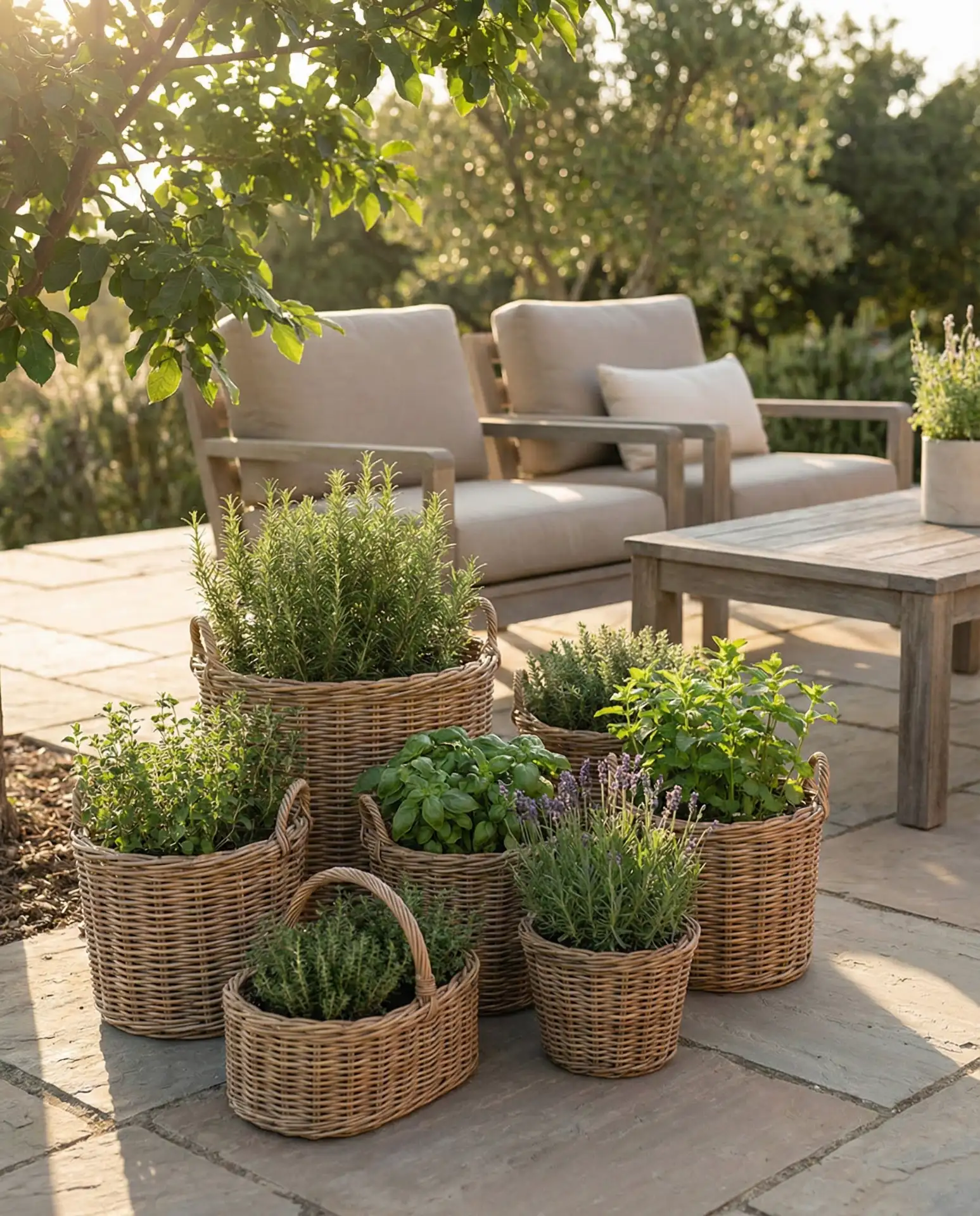
Wicker baskets add a natural, textured look to patio herb gardens and work beautifully for container setups. Line the basket with plastic or burlap to hold soil, and plant a variety of herbs like basil, parsley, and cilantro. The woven texture complements outdoor furniture, and the lightweight construction makes it easy to move baskets around as the sun shifts. This is a great option for those who want a softer, more organic aesthetic than traditional pots provide. 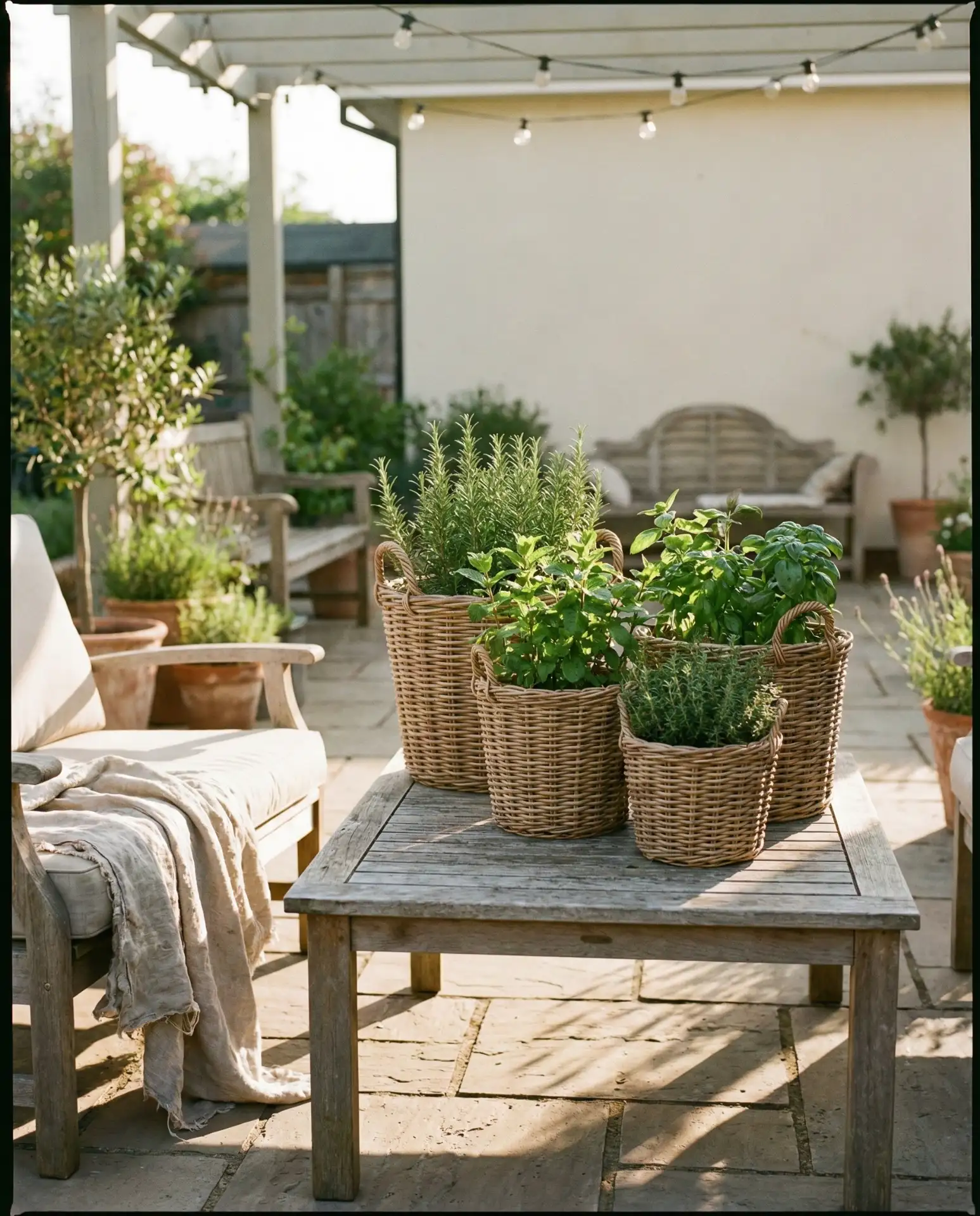
Wicker baskets work best on covered patios or under eaves where they stay dry, as prolonged moisture exposure can cause the wicker to break down. Seal the baskets with a waterproofing spray to extend their life. This setup is especially popular in coastal areas where natural materials fit the relaxed aesthetic. You can find affordable wicker baskets at home goods stores, typically for $15–$30 depending on size.
19. Tiered Plant Stand for Kitchen Corners
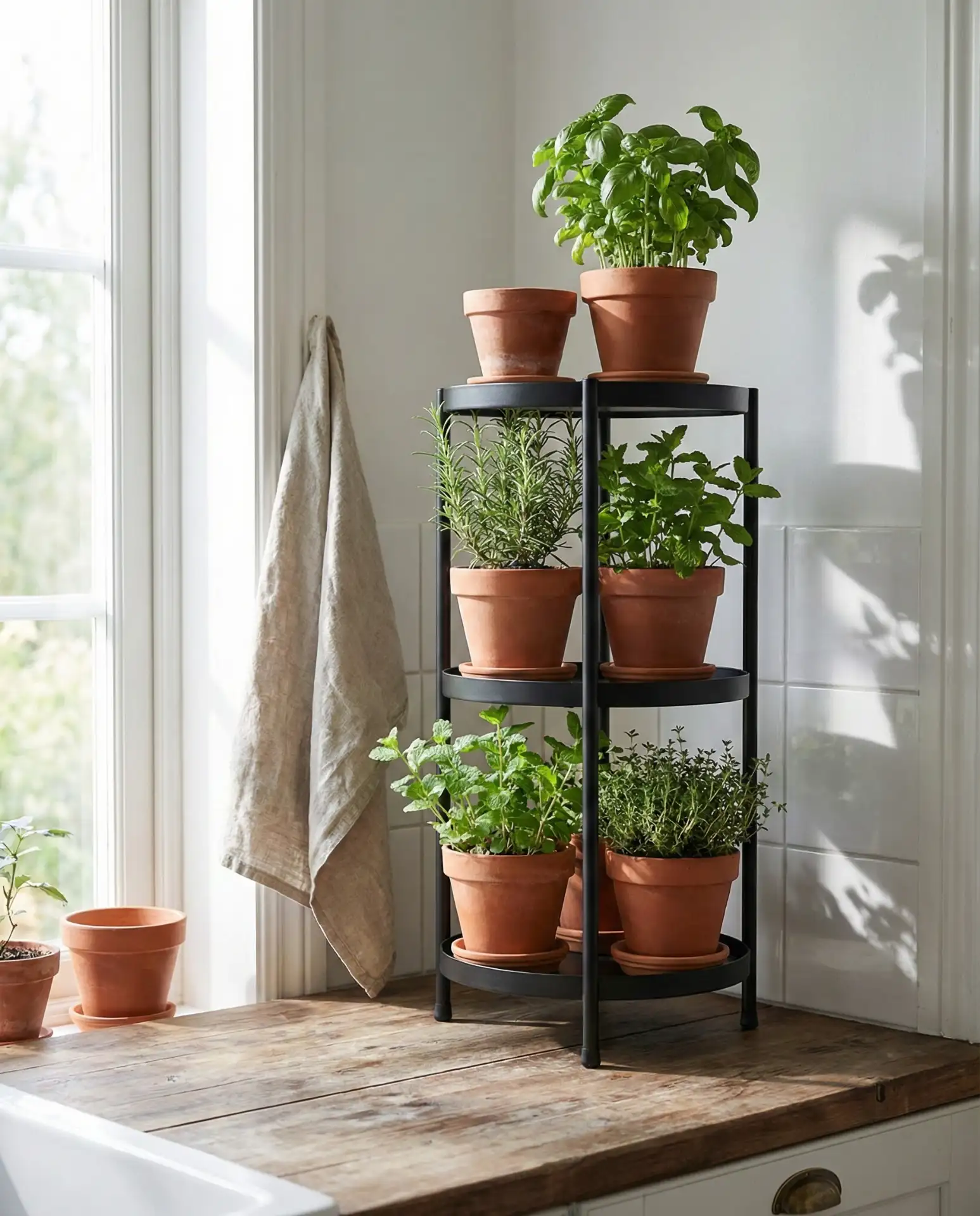
A tiered plant stand turns an empty kitchen corner into a productive herb garden. This indoor setup is perfect for small spaces where counter space is limited but natural light is available. Place potted herbs like basil, thyme, and mint on each level, and enjoy having fresh ingredients within arm’s reach while cooking. The vertical design maximizes growing space without cluttering countertops, and the open structure allows light to reach every plant. 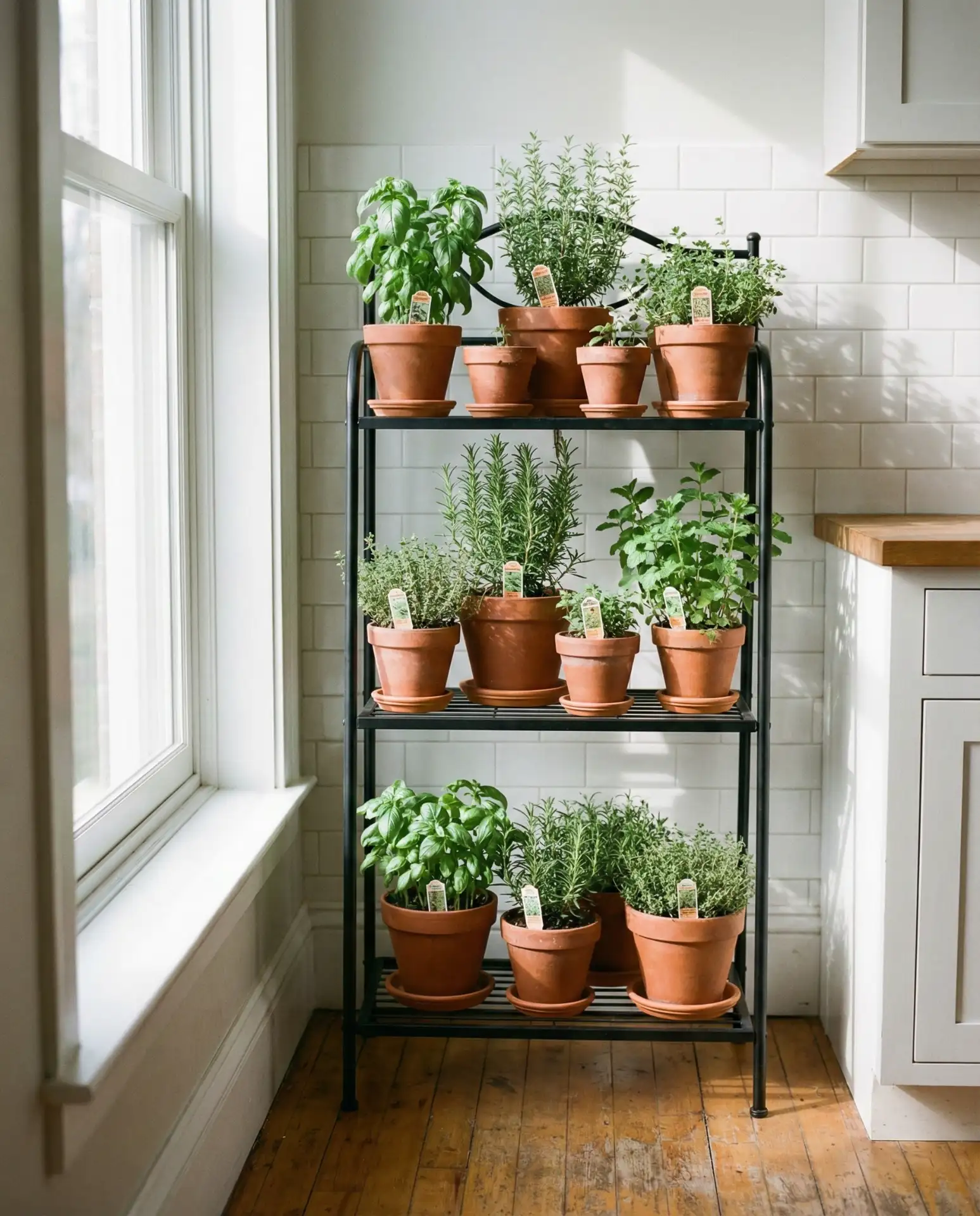
This setup is particularly smart in urban apartments where kitchen windows are small but south-facing. The stand can be rotated slightly each week to ensure even light distribution. Metal stands are more durable than wood for kitchen environments where humidity and spills are common. Prices range from $25 to $60, and the investment pays off quickly when you stop buying overpriced fresh herbs at the grocery store.
20. Repurposed Drawer Planter for Outdoor Shelves
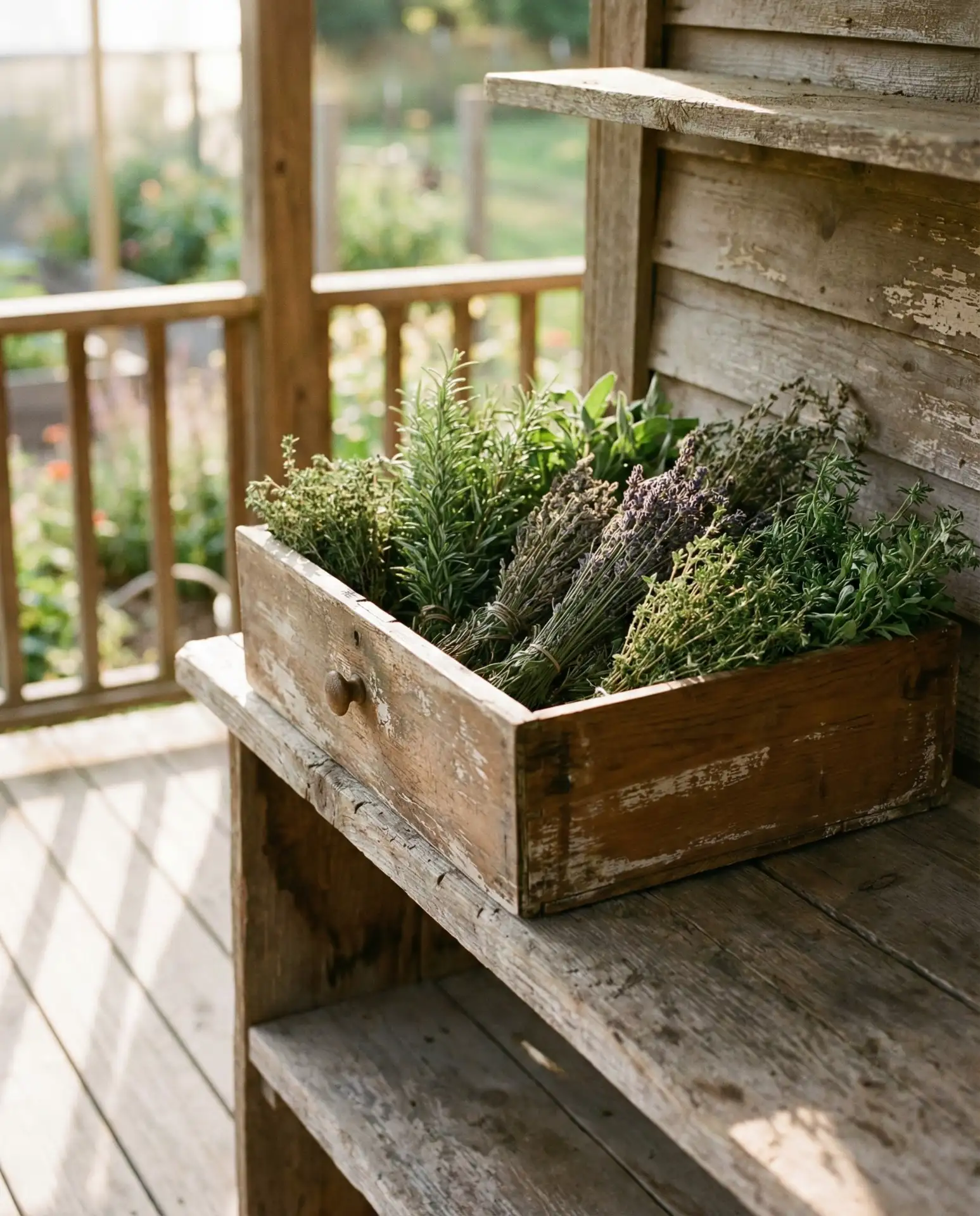
Old dresser drawers make unique planters for outdoor herb gardens, adding vintage charm to porches and patios. This is a creative container option for those who love upcycling and want a one-of-a-kind look. Line the drawer with plastic, drill drainage holes in the bottom, and fill with soil and herbs like oregano, sage, and rosemary. The shallow depth is perfect for herbs with compact root systems, and the drawer’s handles make it easy to move around. 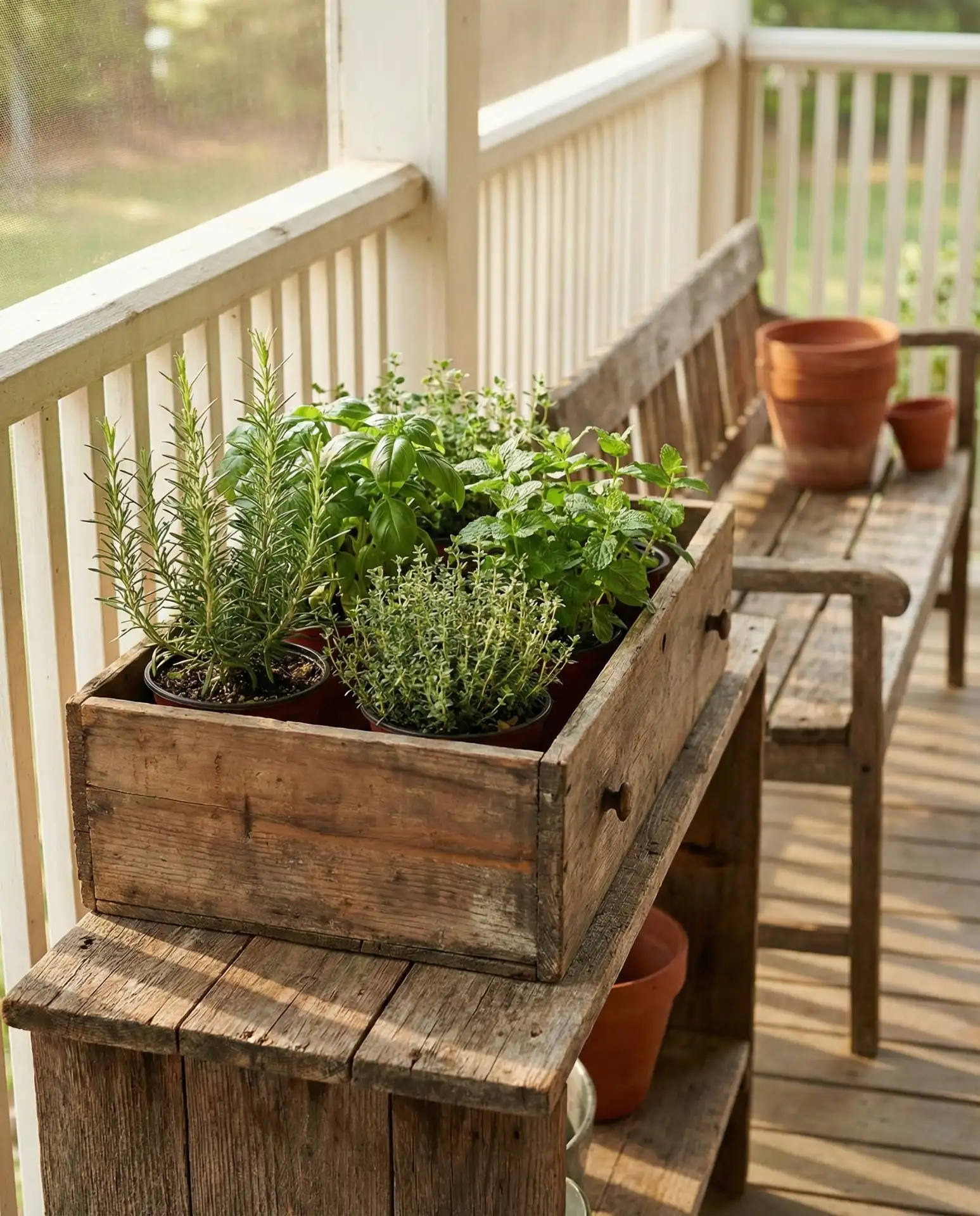
This idea works best in covered outdoor areas where the wood stays relatively dry. Seal the wood with exterior-grade finish to prevent rot, and replace the plastic liner each season. Drawers from old furniture can often be found for free on curbsides or for a few dollars at thrift stores. The weathered look adds character that new planters simply can’t match, making this a favorite for farmhouse-style gardens.
21. Hanging Bottle Herb Garden for Fences
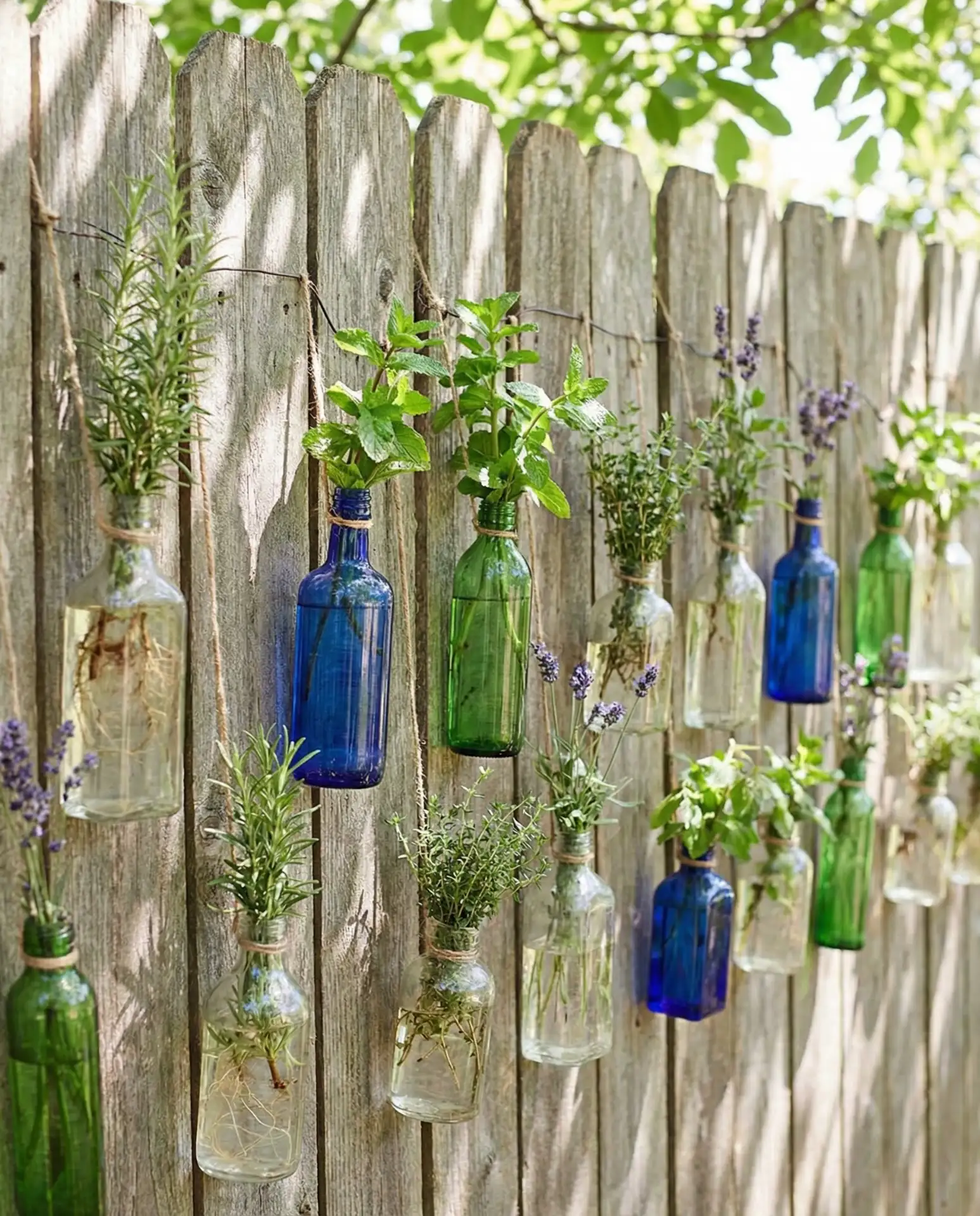
Repurposed glass bottles hung on a fence create a unique and eco-friendly herb garden. This is a space-saving solution for vertical gardens in small backyards or along property lines. Cut the bottles horizontally, fill with soil, and plant small herbs like thyme, oregano, and chives. The glass allows you to monitor soil moisture, and the variety of bottle shapes and colors adds artistic flair to an otherwise plain fence. 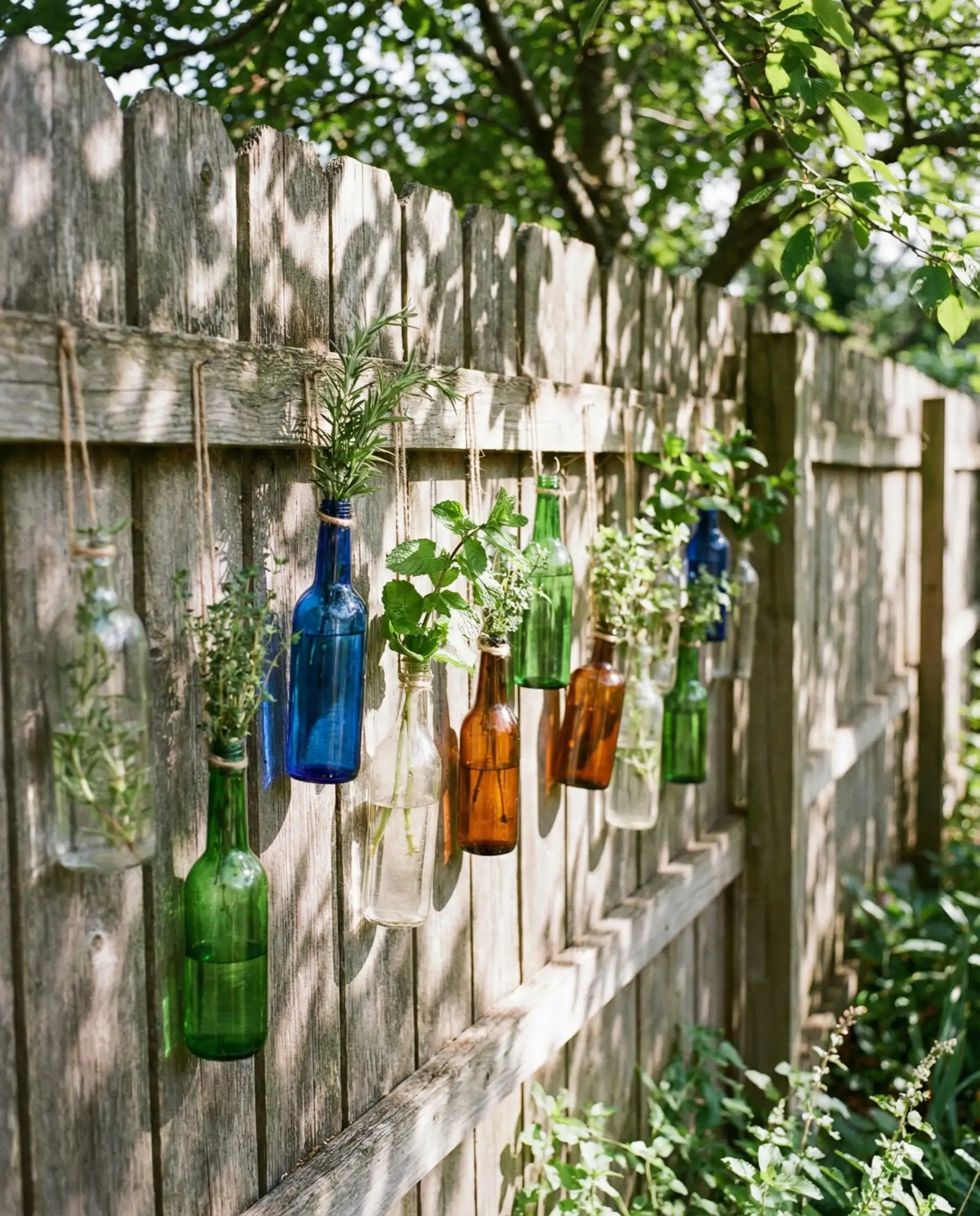
Expert commentary: This setup requires careful cutting to avoid sharp edges—use a bottle cutter or have a glass shop do it for safety. The bottles heat up quickly in direct sun, so this works best in partial shade or with heat-tolerant herbs. In areas with cold winters, bring the bottles indoors before the first frost, as glass can crack in freezing temperatures. This project costs almost nothing and makes a striking visual statement.
22. Raised Cedar Box for Front Yard Curb Appeal
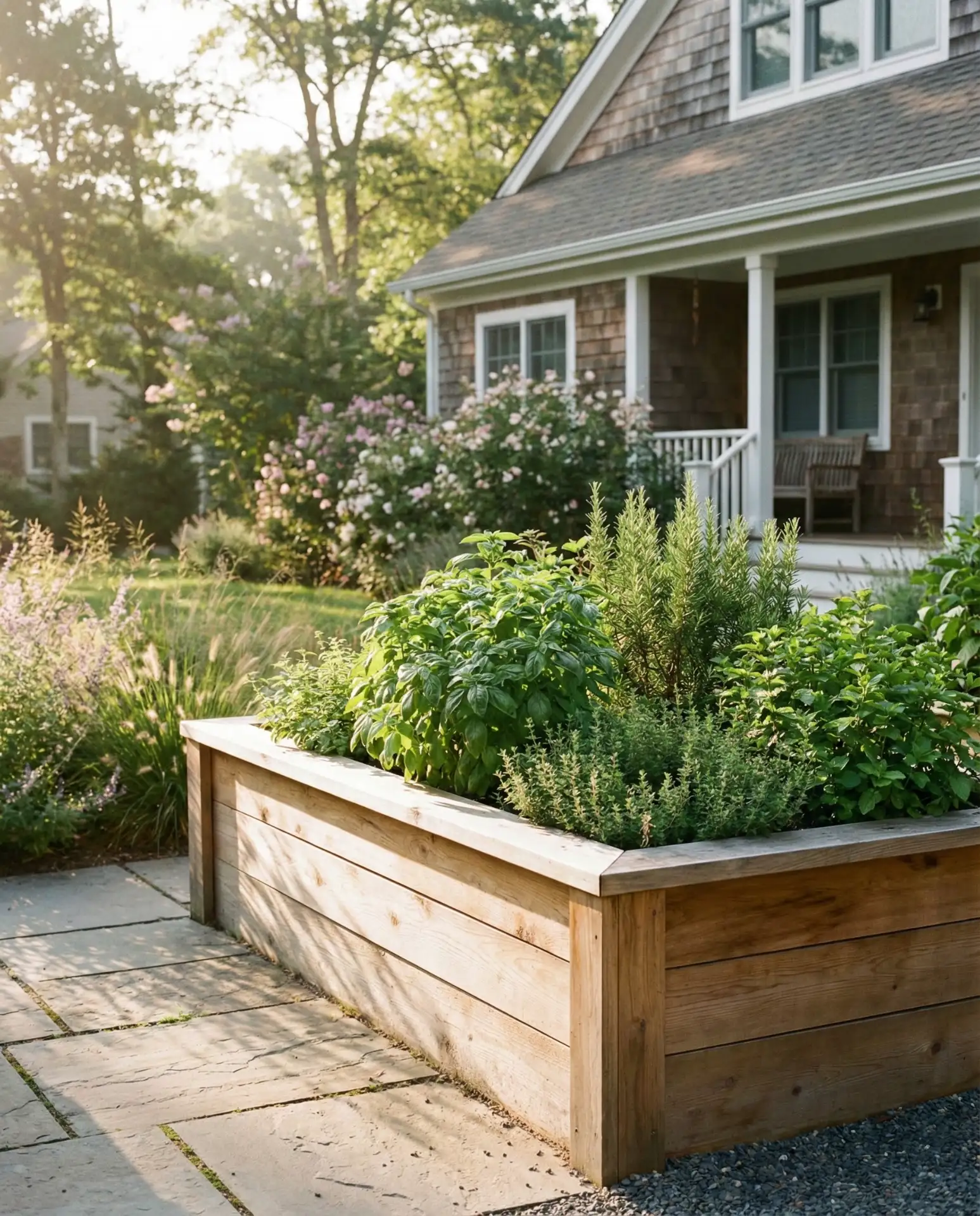
A raised cedar box in the front yard elevates both the herbs and your home’s curb appeal. This raised garden setup is perfect for displaying culinary herbs like basil, rosemary, and lavender in a way that welcomes guests and adds structure to the landscape. Cedar naturally resists rot and insects, making it a long-lasting investment. The clean lines work with both traditional and modern home styles, and the raised height makes the garden a focal point. 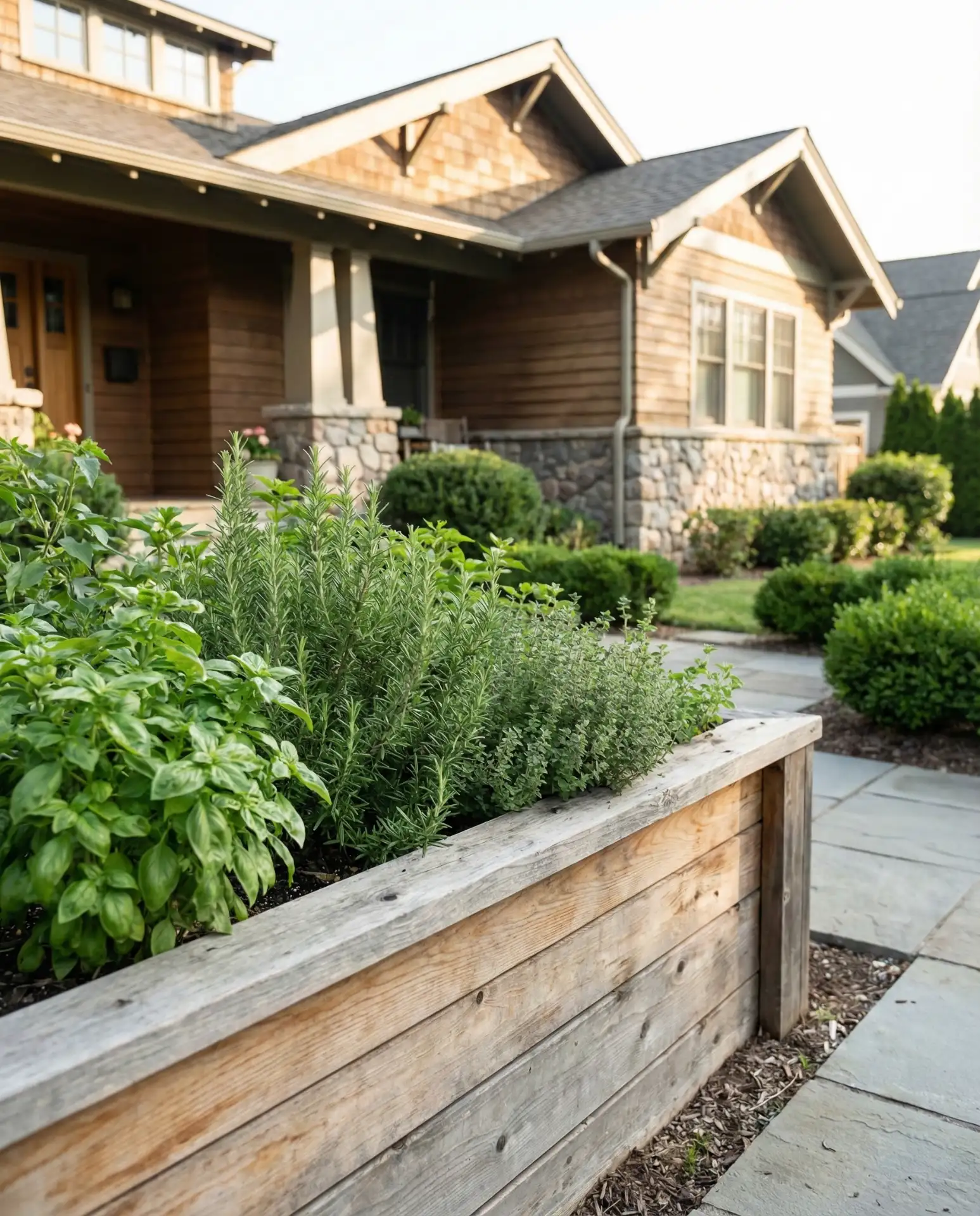
In suburban neighborhoods, a well-maintained front yard herb garden can inspire neighbors and increase property value. Cedar boxes can be built for $75–$150 in materials, or purchased pre-made for a bit more. The key is placement—choose a spot that gets at least six hours of sun and is visible from the street to maximize impact. This garden requires more commitment than portable containers, but the payoff in both aesthetics and herb production is substantial.
Conclusion
These herb garden ideas prove that fresh herbs are within reach no matter your space, budget, or experience level. Whether you’re drawn to the rustic charm of repurposed materials or the clean lines of modern planters, there’s an approach here that will fit your home and lifestyle. Now it’s your turn—which idea are you most excited to try? Share your thoughts, photos, or questions in the comments below. Happy planting!