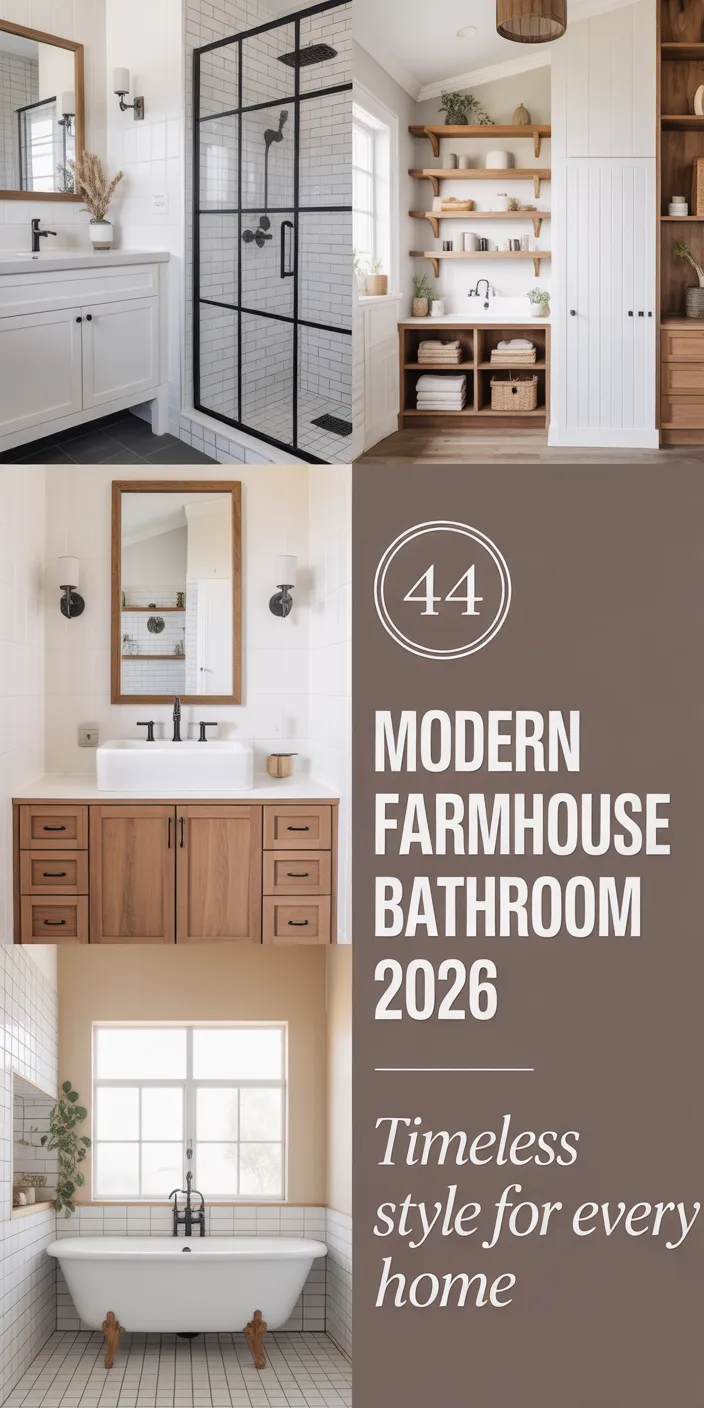
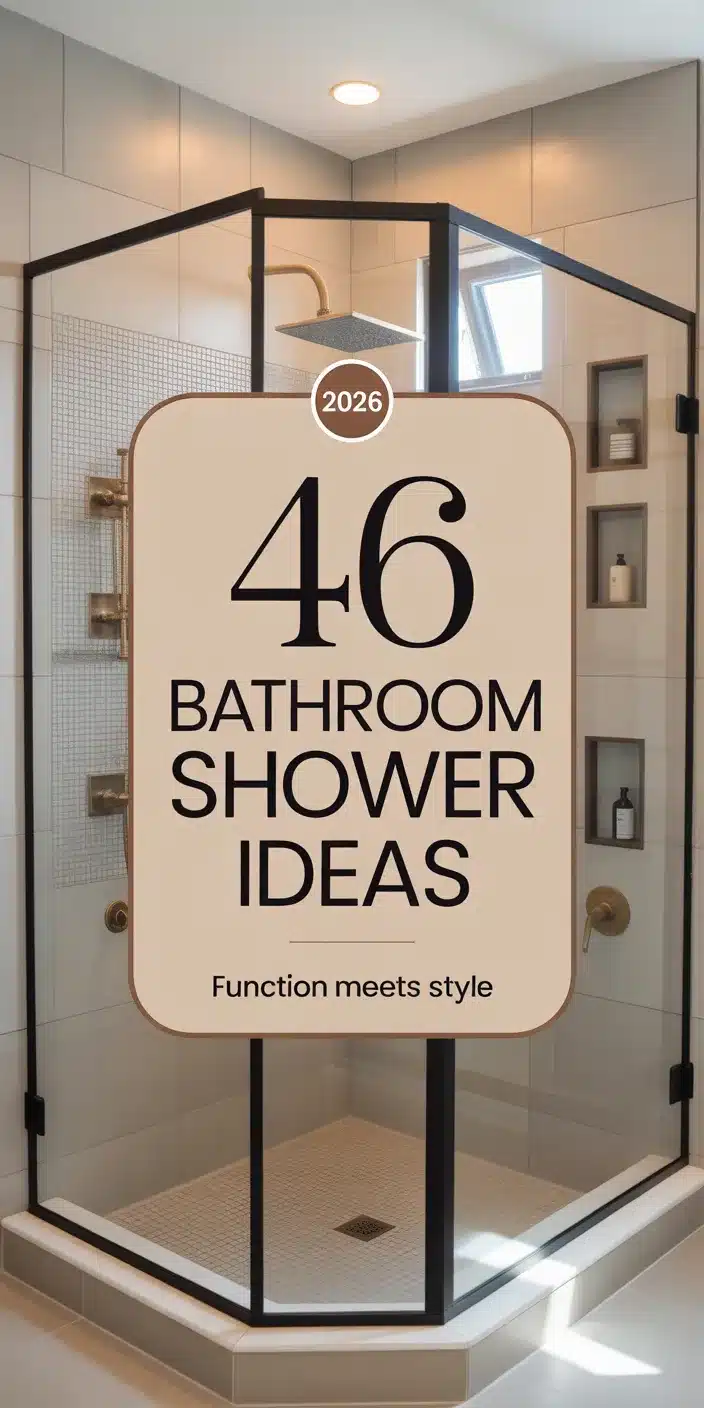
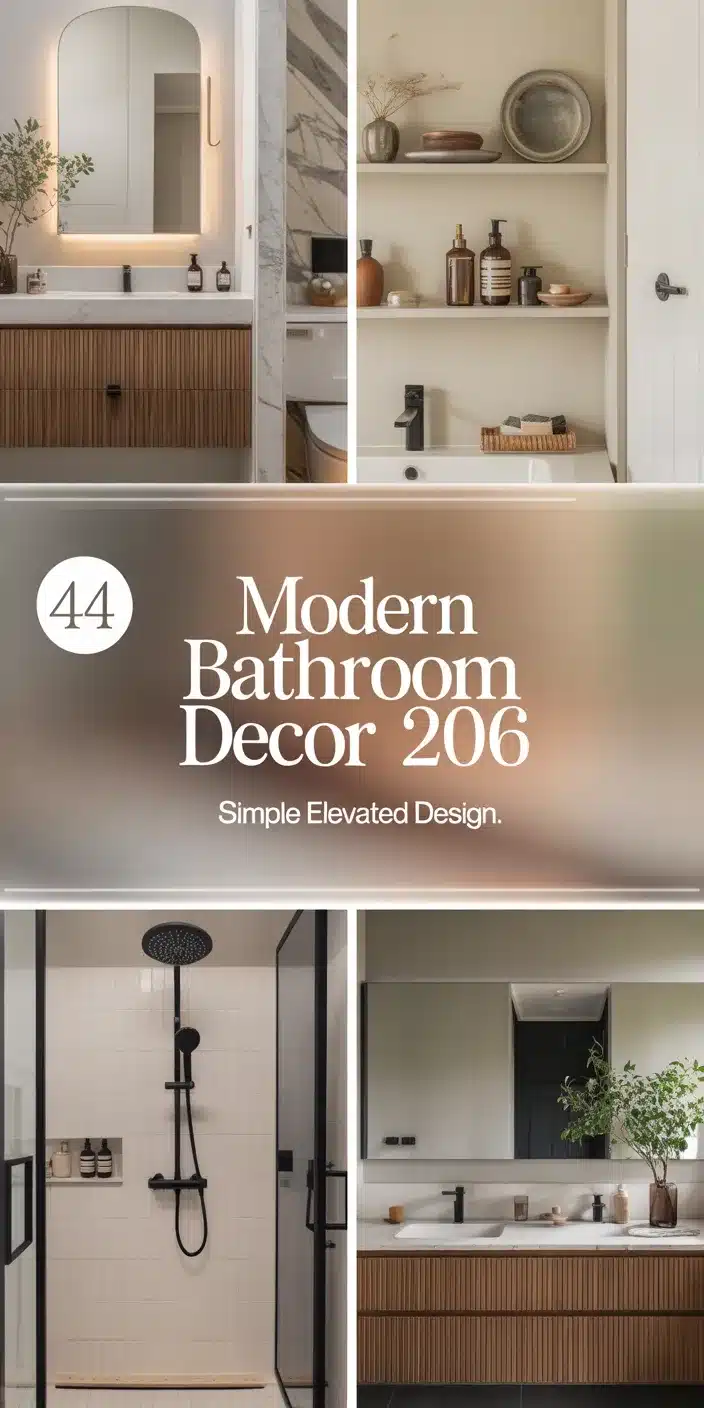
Bathroom design is having a serious moment, and 2026 is shaping up to be the most exciting year yet for interior reinvention. Americans are spending more time at home than ever—and that means the bathroom has officially graduated from purely functional to deeply personal. Whether you’re pinning inspiration at midnight or mid-renovation, there’s a shift happening: people want spaces that feel luxurious, intentional, and still livable. From dark moody palettes to nature-forward textures, this roundup covers fresh bathroom interior ideas that are gaining serious traction right now. Keep reading—your next favorite look is almost certainly in here.
1. Warm Wooden Accents with Minimalist Fixtures
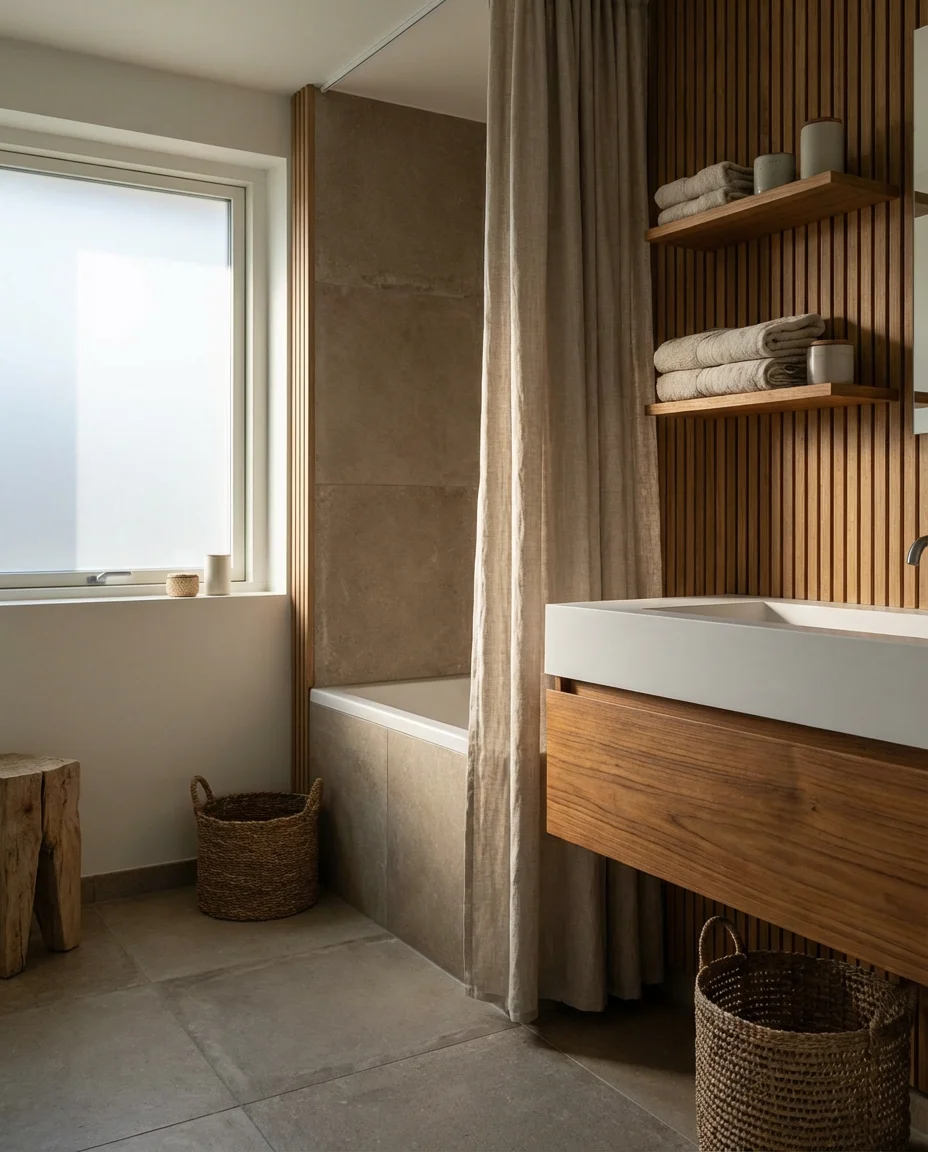
There’s something quietly grounding about stepping into a bathroom where wooden elements take center stage—warm teak shelves, a live-edge vanity, and slatted panels that bring the spa straight to your home. This approach blends modern design sensibility with organic texture, creating spaces that feel serene rather than sterile. It works beautifully in both open-plan loft bathrooms and compact apartments where you need every detail to pull double duty. The wood introduces warmth that white tile alone simply cannot achieve.

The biggest rookie mistake here? Using the wrong wood species in a high-humidity bathroom. Always opt for teak, cedar, or properly sealed bamboo—woods that can genuinely handle moisture exposure without warping. A floating teak vanity paired with matte black hardware is one of the most effective combinations you can invest in right now for a polished, enduring result.
2. Dramatic Dark Walls with Matte Black Hardware

If you’ve been on the fence about going dark in your bathroom, 2026 is the year to commit. Deep charcoal, forest green, or near-black navy walls transform even a mid-sized bathroom into something that feels genuinely cinematic. Pair it with black matte fixtures, and the result is one of the most cohesive, high-impact looks in contemporary interior design right now. This isn’t just a trend—it’s a full design philosophy that prioritizes atmosphere over brightness.
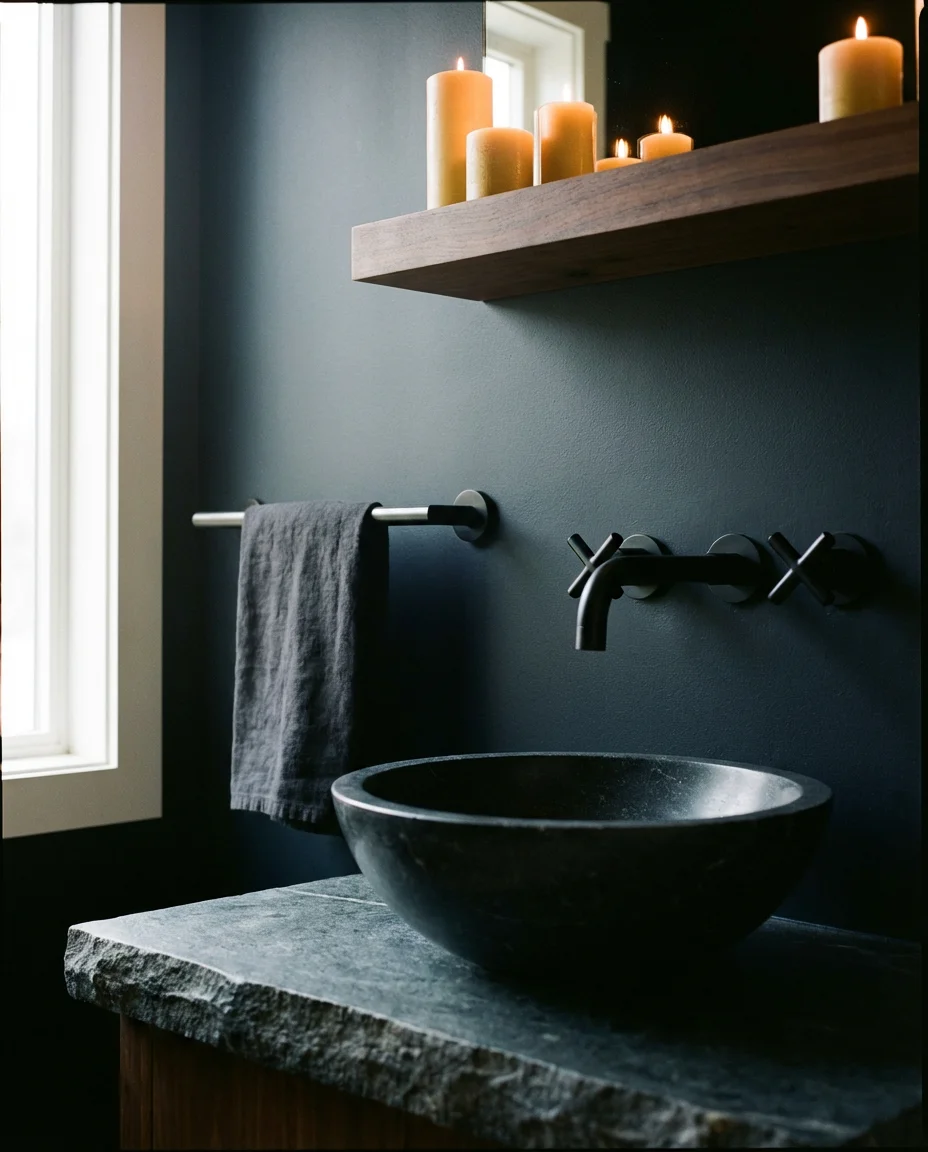
Dark bathrooms actually work hardest in windowless or north-facing rooms—leaning into the low light rather than fighting it creates an intentional moody atmosphere that feels cozy instead of cramped. Keep grout lines tight and surfaces clean, because in a dark room, everything shows. Layer in a large backlit mirror to add depth and the sense of more space without sacrificing the dramatic mood you’re going for.
3. Statement Tiles from Floor to Ceiling
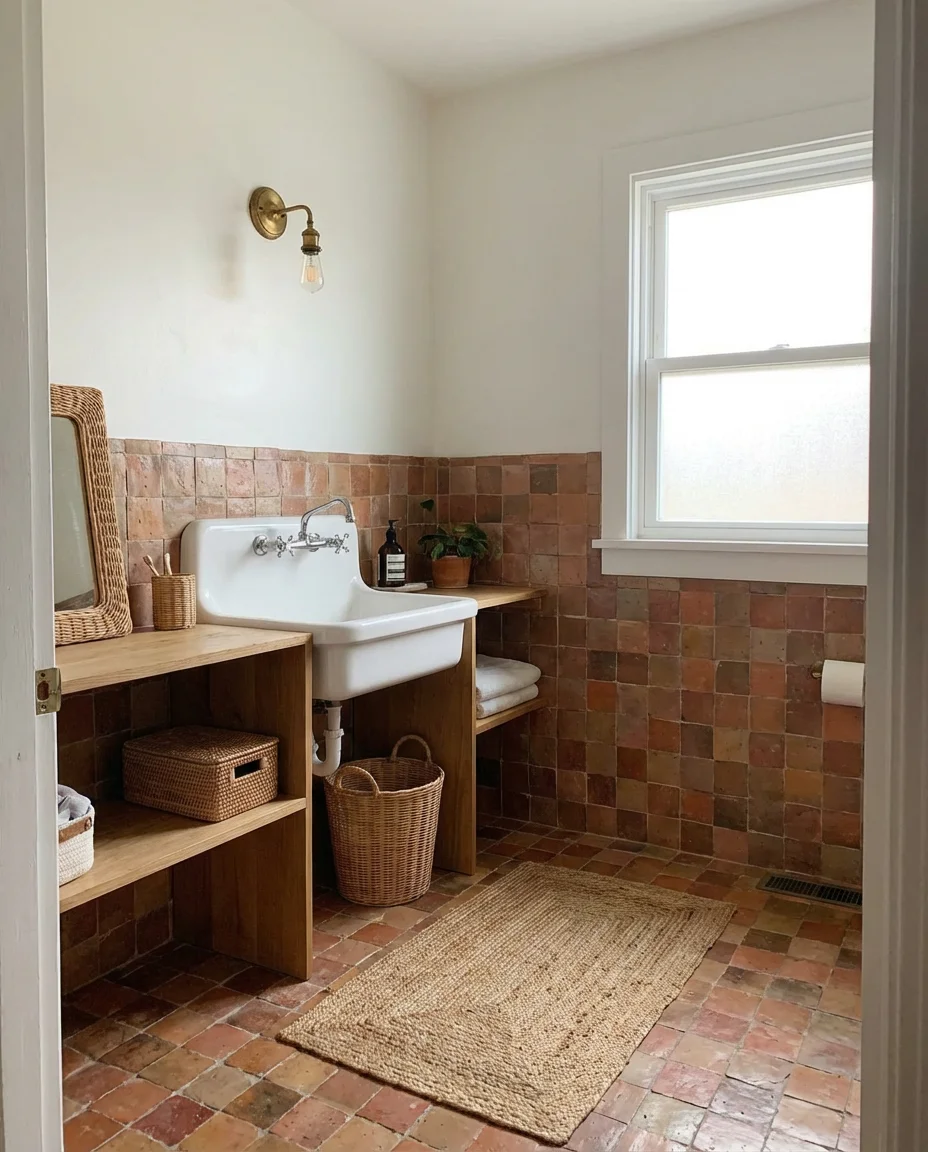
Bold tiles are one of the fastest ways to define a bathroom’s entire personality, and running them floor to ceiling amplifies that effect dramatically. Think zellige in warm terracotta, graphic encaustic patterns, or large-format marble-look porcelain—the options feel nearly endless. This is a technique that interior designers have been championing for years, but it’s finally trickling down into everyday American homes thanks to accessible tile pricing and the explosion of design ideas circulating on Pinterest. Done right, it requires almost no other decoration.

A designer once told me that if you’re afraid of a tile, it’s probably the right choice—and there’s real wisdom in that. Bathrooms are small enough that even a very bold tile won’t overwhelm the way it might in a living room. Where this works best is in powder rooms and guest bathrooms, where you want an immediate visual punch that guests remember long after they’ve left your home.
4. Freestanding Bathtub as the Focal Point
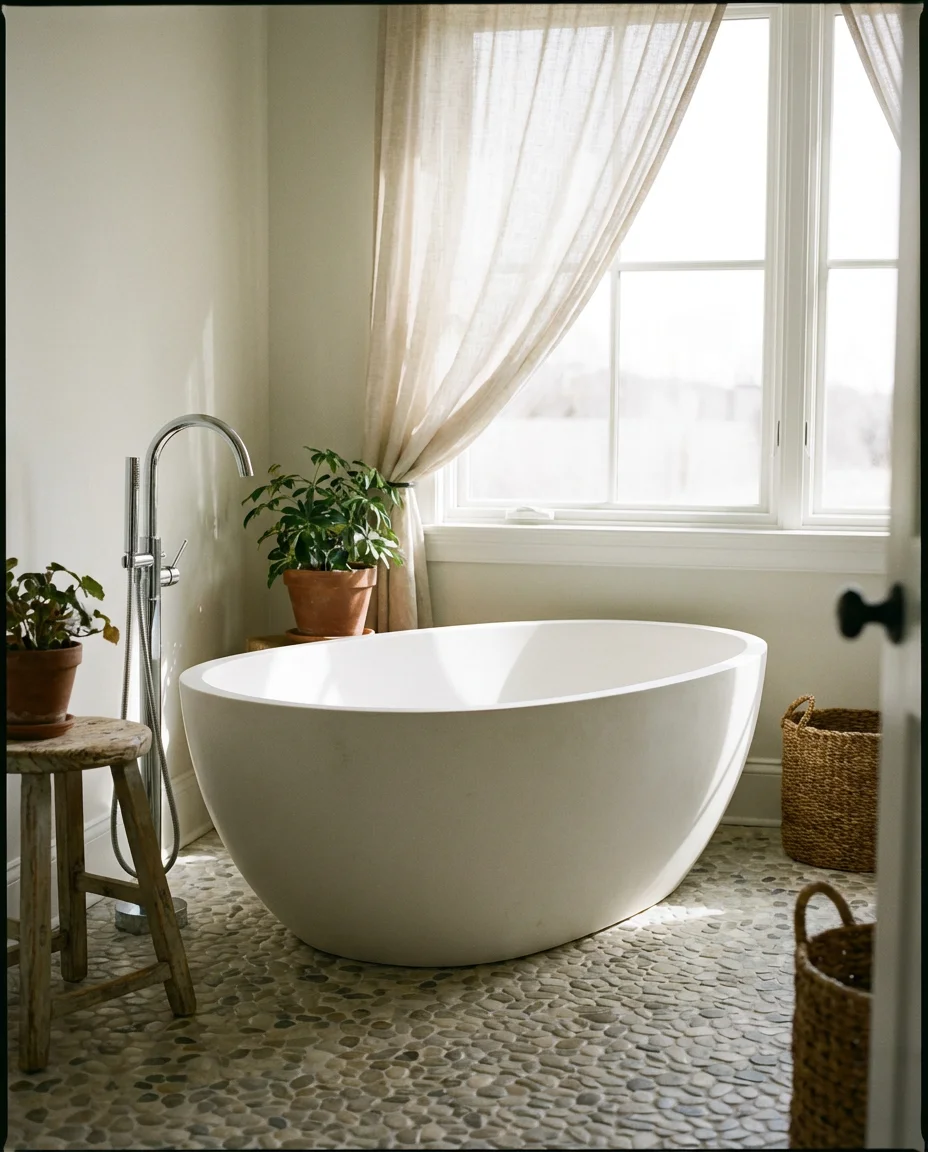
Few things telegraph luxury in a bathroom quite like a freestanding bathtub positioned to be seen and appreciated the moment you walk in. Whether it’s a sculptural stone resin oval, a classic clawfoot update, or a sleek Japanese soaking tub, the freestanding form turns bathing into something closer to ritual. These pieces are increasingly appearing in American master bathrooms across all price ranges—the market has expanded significantly with beautiful options that don’t require a six-figure renovation budget.
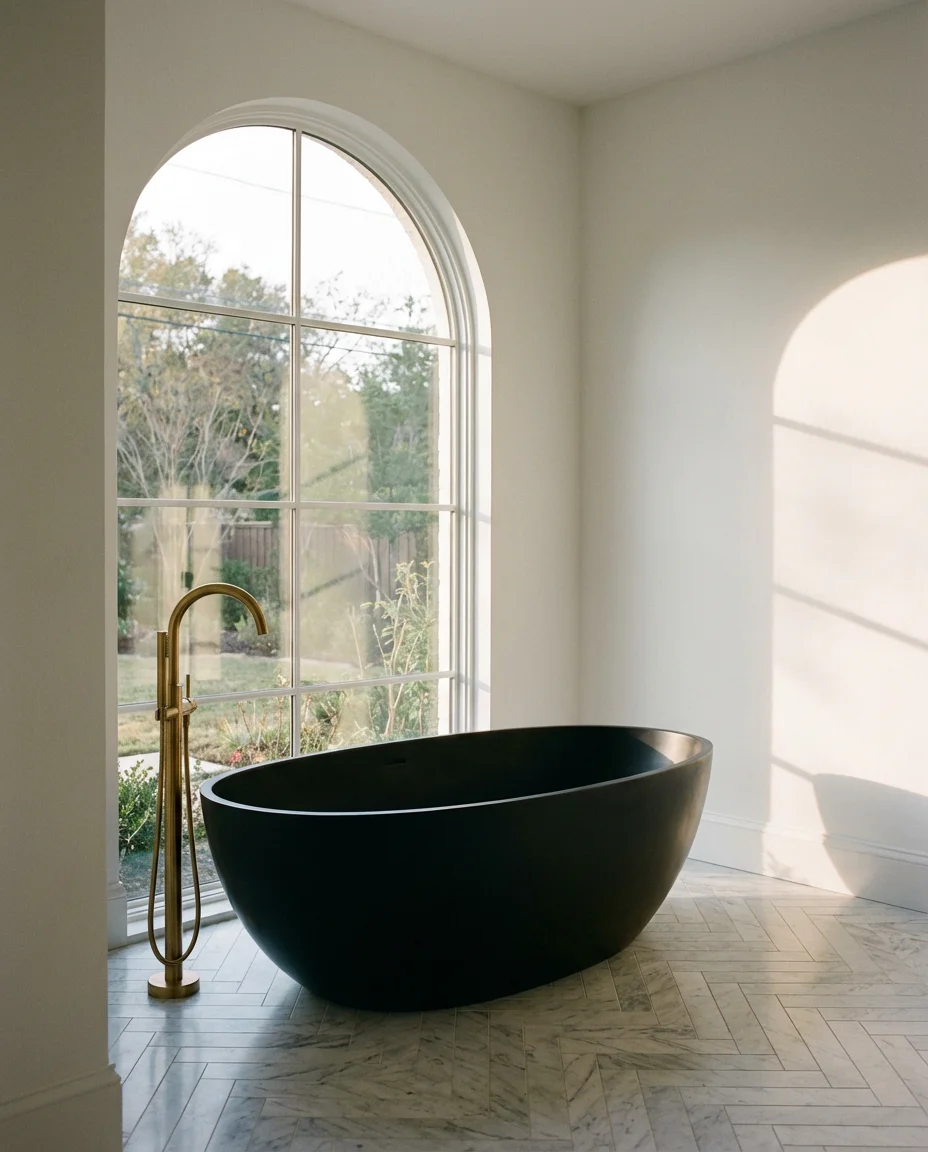
Entry-level freestanding tubs now start around $800–$1,200 for acrylic models that look genuinely impressive, while mid-range stone resin options land between $2,500 and $5,000. You don’t need to spend at the top of that range to get a stunning result—what matters more is placement, the floor material underneath it, and the floor-mount filler you pair with it. Get those three things right and you’ve got a bathroom centerpiece that looks like it belongs in a design magazine.
5. Sage Green Walls with Natural Stone Details
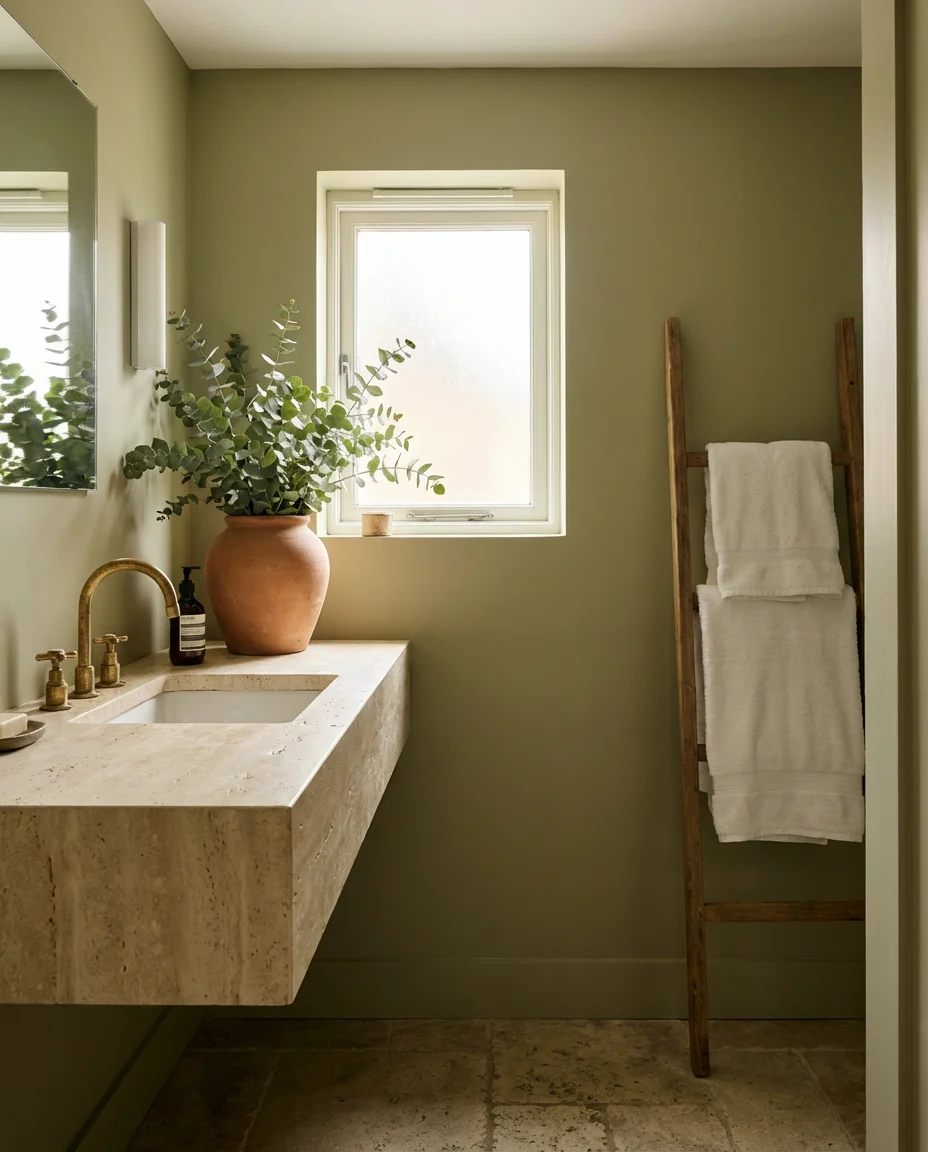
Sage and eucalyptus greens have proven to be far more than a passing moment—they’ve become a genuine staple in bathroom design precisely because they complement so many other materials so naturally. Pair green walls with creamy travertine, warm limestone, or sandy concrete, and the combination immediately reads as sophisticated and organic. The color is calming in a way that’s actually backed by research, making it a particularly smart choice for the one room in your home where you truly decompress.
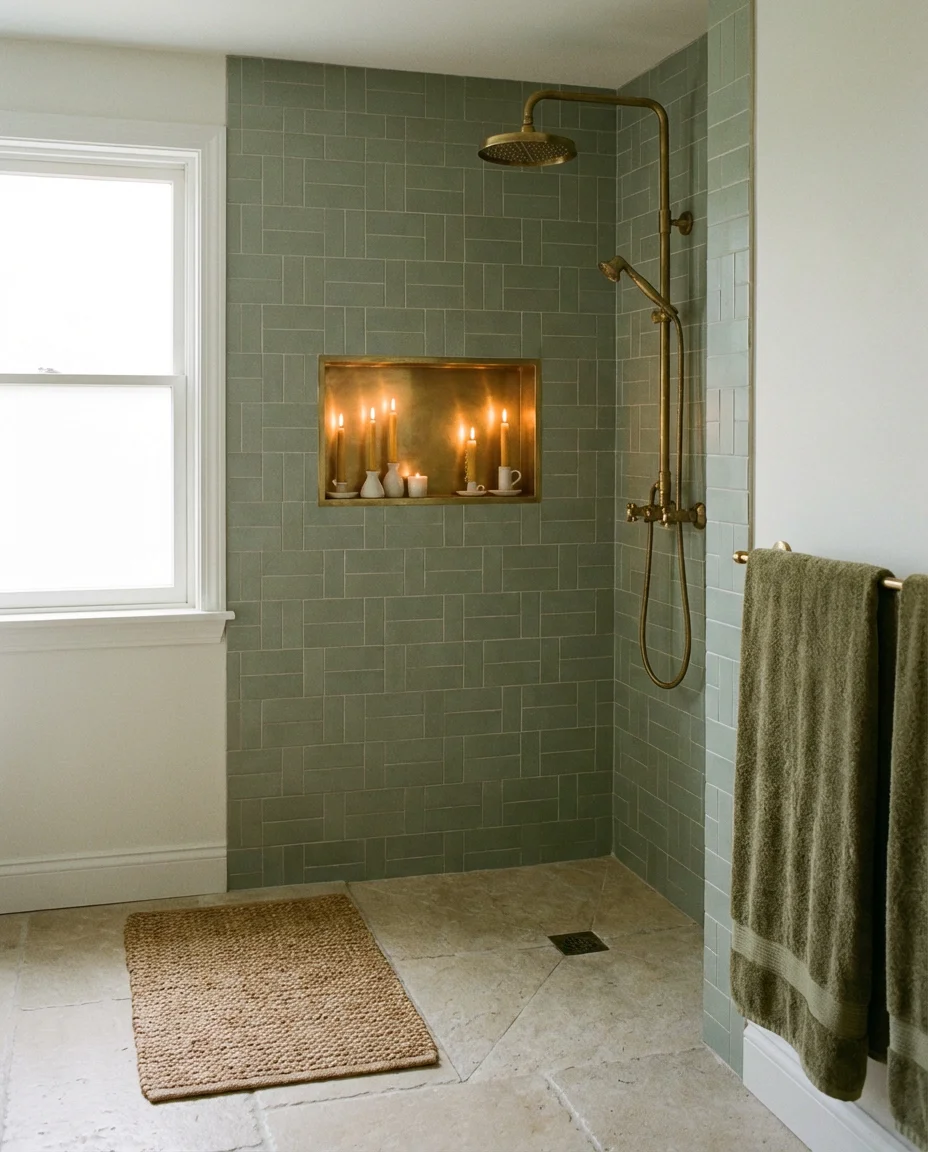
One homeowner in Portland shared that switching her bathroom from stark white to a warm sage changed the entire morning energy of her household—her words, not a designer’s pitch. It sounds small, but color genuinely affects mood at a biological level. Brass or unlacquered hardware elevates the green palette further, aging beautifully alongside the stone to create a bathroom that only improves over time.
6. Small Space Indian-Inspired Bathroom with Intricate Patterns

The Indian aesthetic is making a sophisticated entrance into Western bathroom design, and it translates remarkably well into small space environments. Think handmade geometric tiles in cobalt and ivory, jali-inspired lattice panels, carved stone basins, and the kind of layered ornamentation that transforms even a compact half-bath into something that feels richly cultural and utterly distinctive. Designing small indian spaces benefits enormously from this approach because pattern draws the eye rather than highlighting the room’s size limitations.

This look works best in powder rooms and dedicated toilet rooms—the smaller the space, the more the intricate detailing rewards close attention. Brass accents, a hand-hammered copper sink, and a simple wooden stool complete the picture without overcrowding. Keep the ceiling and upper walls neutral to let the patterned lower zone breathe, and the overall result is a room that feels curated rather than cluttered.
7. Luxury Modern Bathroom with Integrated Lighting
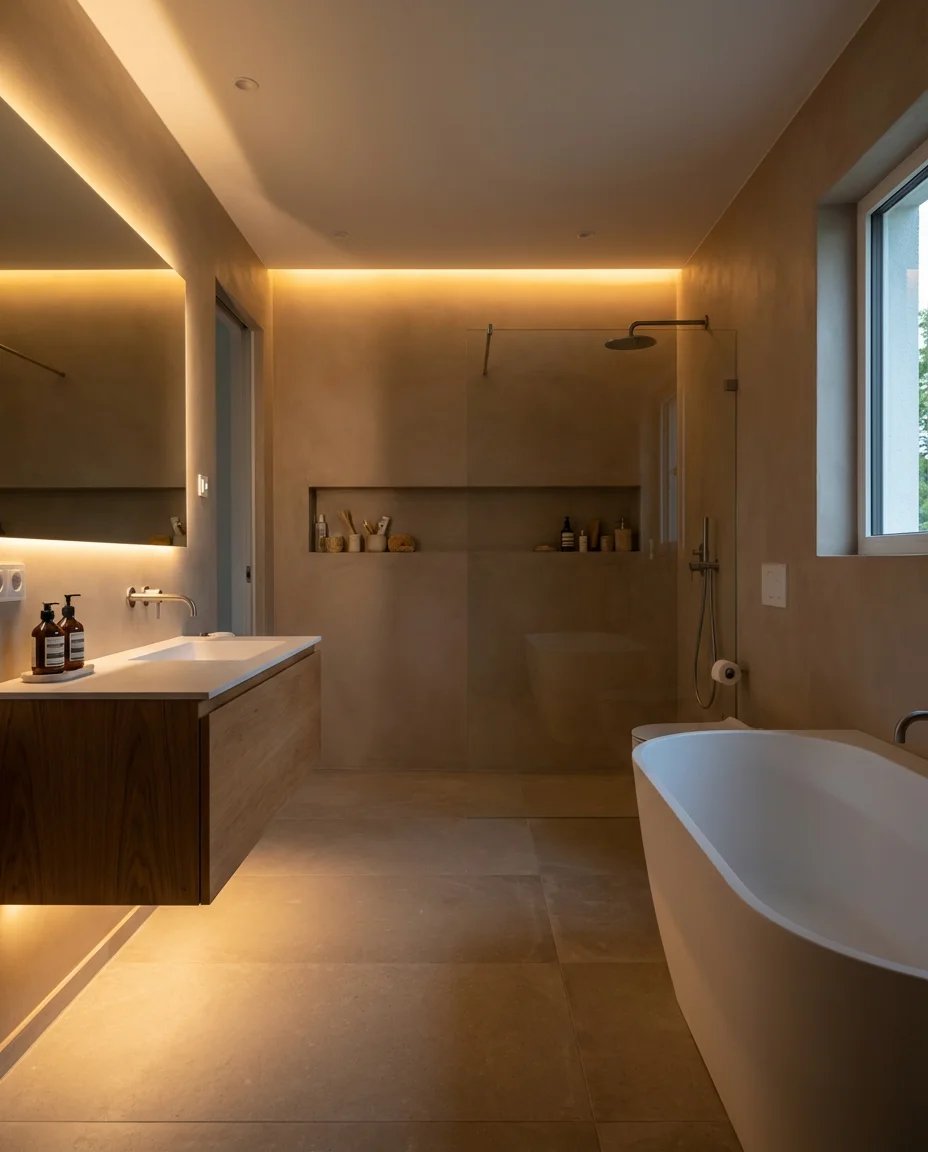
Lighting is genuinely the most underused design tool in American bathrooms, and luxury modern spaces are proving how transformative it can be when treated with real intention. LED strips recessed into toe kicks, backlit mirrors that diffuse light flatly and evenly, and cove lighting above the shower niche—these are the details that separate a beautiful bathroom from a truly exceptional one. Modern bathroom lighting has moved well beyond the single overhead fixture, and the results speak for themselves.
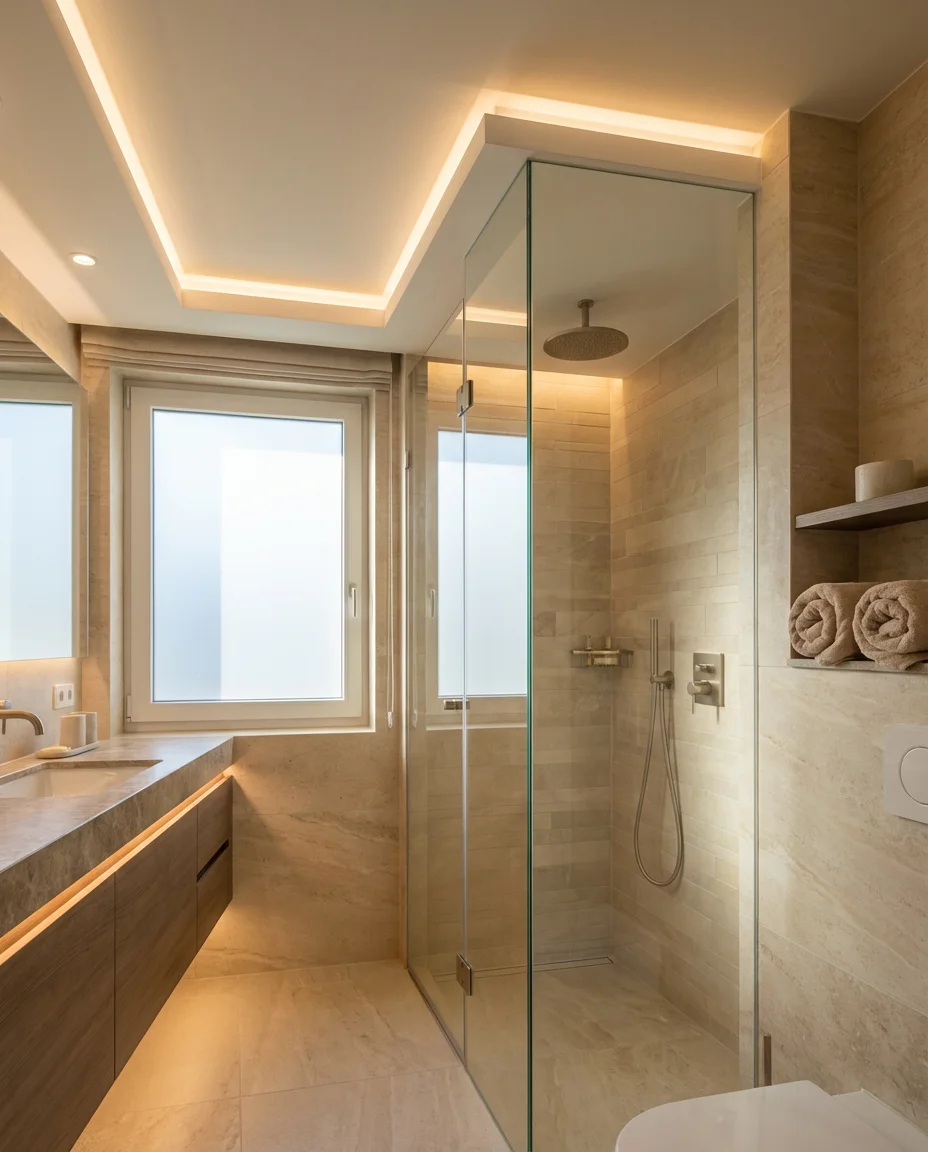
Interior designers consistently point to layered lighting—ambient, task, and accent—as the single highest-ROI upgrade in bathroom renovation. A backlit mirror alone can run as little as $300–$600 and will immediately make your space feel more intentional and elevated. Dimmer switches on every circuit allow you to shift from bright morning prep mode to a warm, low-key evening atmosphere without changing a single fixture.
8. Simple White Aesthetic with Textured Surfaces

There’s a reason the all-white bathroom refuses to go away—done with enough texture and material variation, it remains one of the most timeless looks in interior design. The key in 2026 is moving away from the flat, plasticky white of the early 2010s and embracing simple palettes that are rich in surface interest: fluted plaster walls, tactile boucle accessories, rough linen hand towels, and ribbed ceramic vessels. Aesthetic coherence comes not from color contrast but from the push and pull of different textures against each other.

The all-white bathroom is particularly well suited to rental situations and homes with frequent resale considerations—it photographs beautifully and appeals to the widest possible audience. But the version worth living with adds dimension through material choices: a matte subway tile, a slightly warm off-white paint, and a vessel sink with an organic rim. Those micro-decisions are what separate a thoughtful white bathroom from a clinical-looking one.
9. Moody Blue Bathroom with Brass Details

Deep navy, slate, or inky midnight blue walls paired with warm brass hardware is one of the most compelling combinations in bathroom design right now—and it’s one of those pairings that genuinely photographs better than it sounds on paper. The cool depth of the blue creates a grounding backdrop that makes every brass element pop with warmth and richness. This design ideas approach works across scales, from a small powder room to a generous master bath suite.

Americans in coastal cities—think Charleston, Portland, and Seattle—have been particularly drawn to this palette because it echoes the water and sky tones they already love. Unlacquered brass is the better choice here over polished because it develops a natural patina that complements the moody blue without feeling too precious. Keep the vanity light warm in color temperature—around 2700K—and the whole room will feel like a boutique hotel suite.
10. Compact Luxury for Small Space Indian Bathrooms
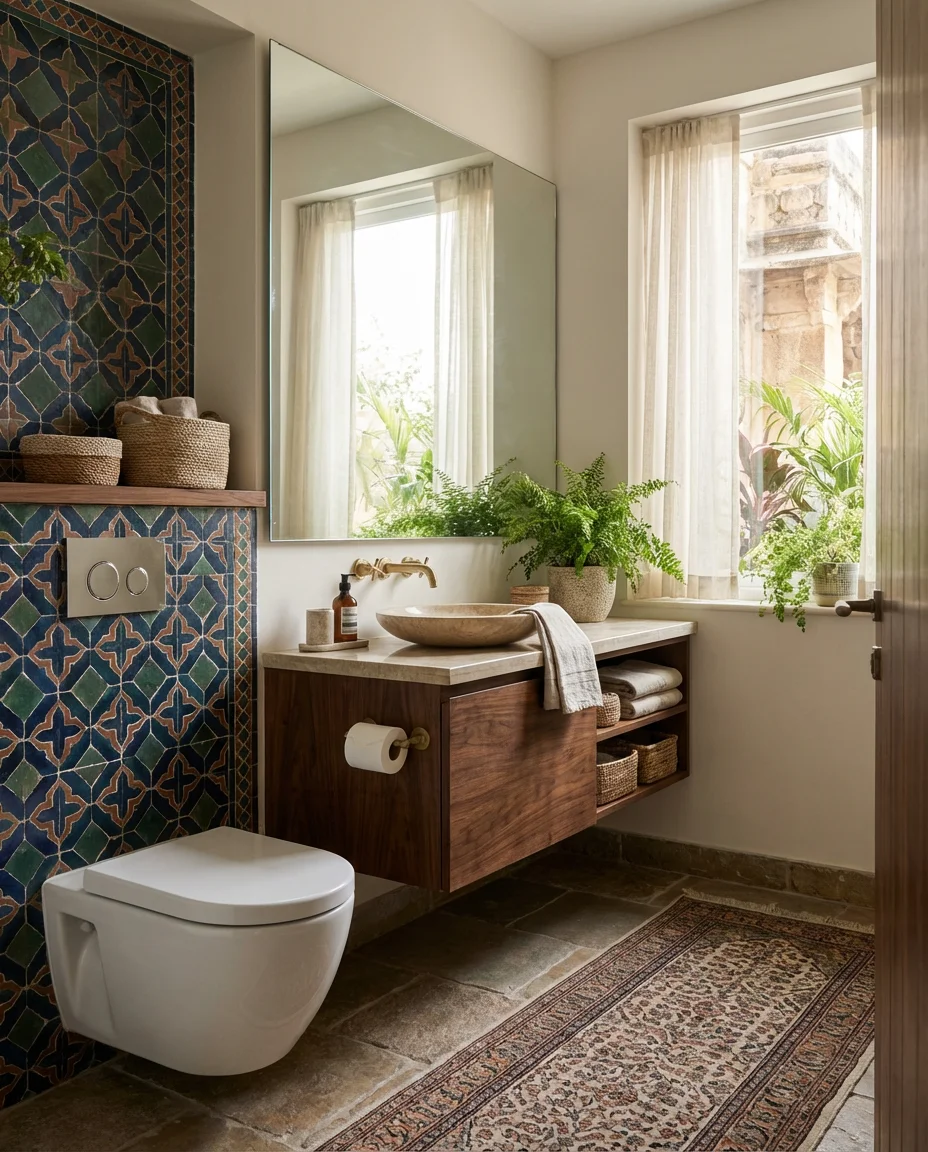
The challenge of creating a luxury modern small-space bathroom is not about fitting everything in—it’s about editing ruthlessly until only the most impactful elements remain. Small-space indian bathroom designs navigate this brilliantly by using vertical space, wall-mounted fixtures, and richly decorative surfaces to create the feeling of luxury without the square footage that usually comes with it. A single stunning handmade tile, a wall-hung vanity, and a frameless glass partition can deliver a high-end result in under 50 square feet.
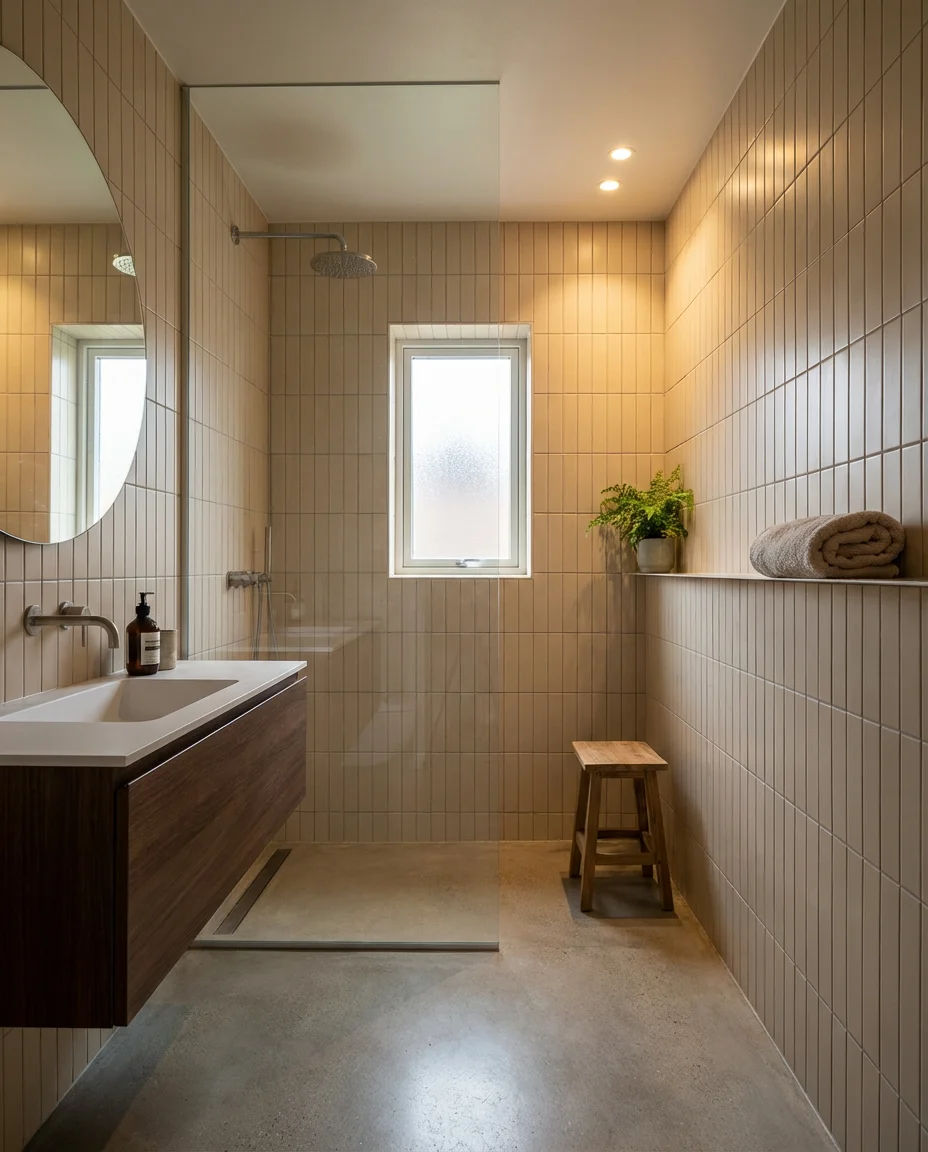
Wall-mounted toilets and floating vanities are the two single most effective moves in small bathroom renovation—they visually extend the floor plane, making any space feel immediately larger. Combine them with a large-format mirror that fills the entire wall above the vanity, and you’ll gain the sense of double the square footage without touching a single structural wall. Smart, efficient, and genuinely beautiful when executed with care.
11. Nature-Forward Bathroom with Live Plants and Stone
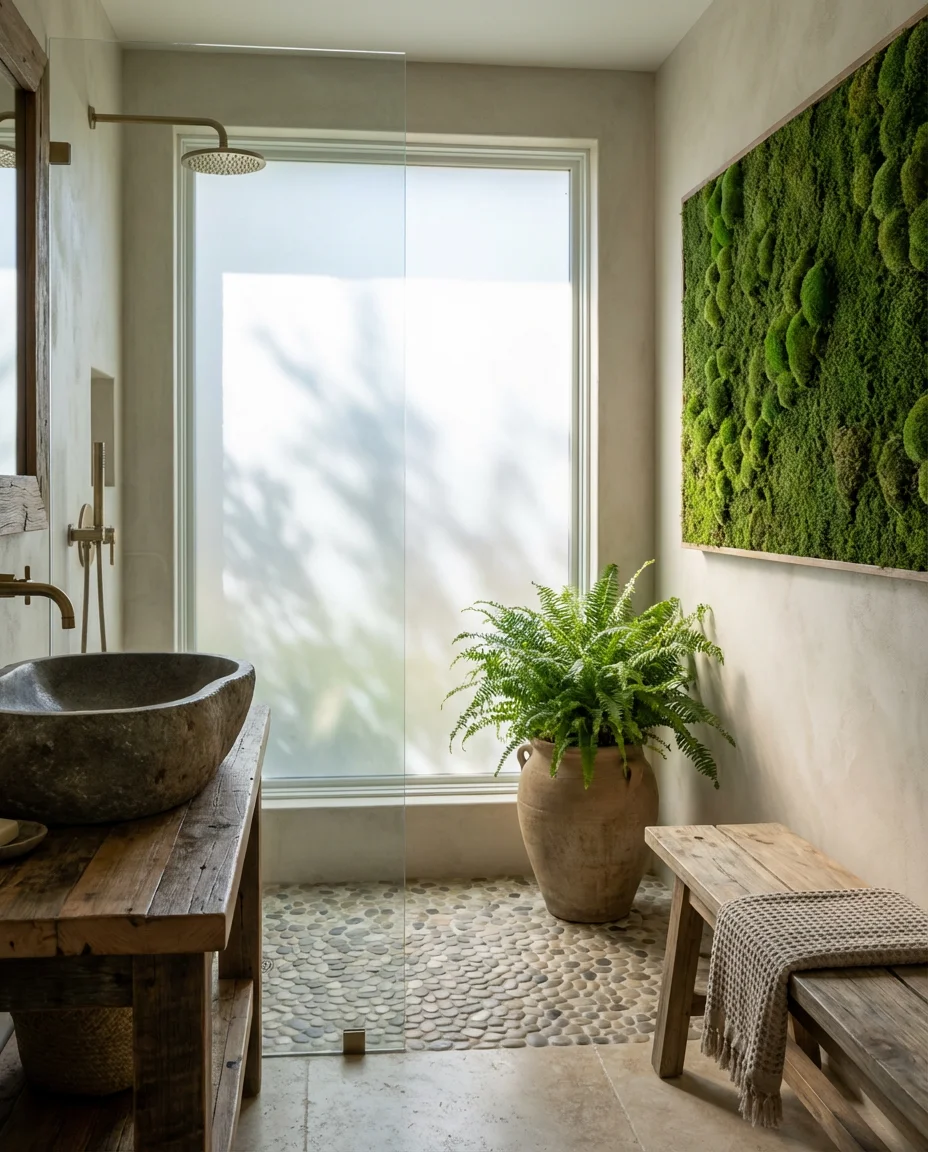
Biophilic design has fully arrived in American bathrooms, and it’s easy to understand why—incorporating natural materials and living plants into a space you use daily has measurable positive effects on stress and mood. Raw stone basins, pebble flooring in the shower, preserved moss wall panels, and carefully chosen humidity-loving plants like pothos, ferns, or orchids bring a garden-like tranquility into the most private space in your home. This approach suits modern design sensibilities while staying deeply rooted in the natural world.

A surprisingly common mistake is choosing plants that can’t handle the actual light conditions of your bathroom—low-light plants like ZZ plants or cast iron plants will survive a windowless bathroom far better than orchids, which need bright indirect light. Assess your bathroom’s light honestly before committing to any greenery. Get the plant selection right and you’ll have a low-maintenance living installation that makes the room feel entirely unique.
12. Fluted Glass and Ribbed Surfaces Everywhere
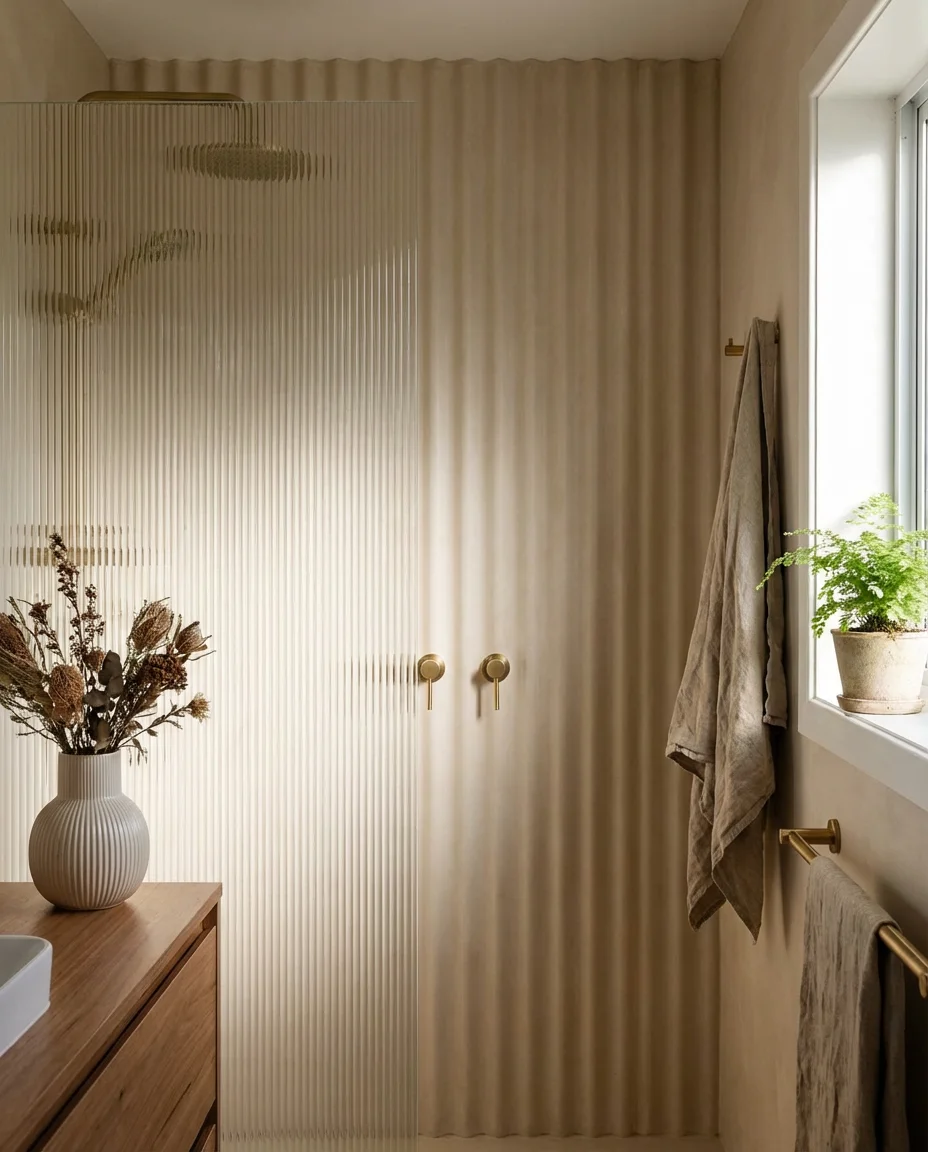
Fluted and ribbed surfaces have quietly taken over bathroom design in a way that feels both modern and nostalgic at once—there’s a tactile quality to these textures that photographs beautifully and feels genuinely luxurious in person. Fluted glass shower screens, ribbed ceramic vases, corrugated plaster walls, and grooved vanity fronts all contribute to a bathroom that rewards close attention. The repetition of the vertical line creates a sense of order and rhythm that many other decorative approaches simply can’t achieve. This is luxury design without relying on expensive materials.

This aesthetic works best when the color palette stays restrained—natural whites, warm creams, and light stone tones let the texture itself become the star of the show. Introduce too many competing colors, and the ribbed surfaces lose their visual impact. A single fluted glass shower screen costs between $400 and $1,200 installed and is one of the most effective single-item upgrades you can make in a bathroom refresh.
13. Terrazzo Revival in Floors and Countertops

Terrazzo’s comeback has been one of the most sustained design revivals of the past decade, and it shows absolutely no signs of slowing down heading into 2026. The speckled composite surface—marble, granite, or glass chips set in cement or resin—offers a playfulness and personality that standard stone simply can’t match. Used as bathroom flooring, countertops, or even wall cladding, terrazzo instantly gives a space a collected, artistic quality. It fits within the modern 2025 design aesthetics while carrying genuine historical depth as a material.

Terrazzo tile—as opposed to poured-in-place—is the practical choice for most American home renovations, running anywhere from $5 to $25 per square foot depending on quality and origin. It’s highly durable, water-resistant, and genuinely easy to maintain once sealed. The key is choosing a chip color palette that works with the rest of your bathroom rather than fighting it—warm chips in cream and terracotta read quite differently from cool grey and white combinations.
14. Dark Luxury Bathroom with Black Marble and Velvet Accents
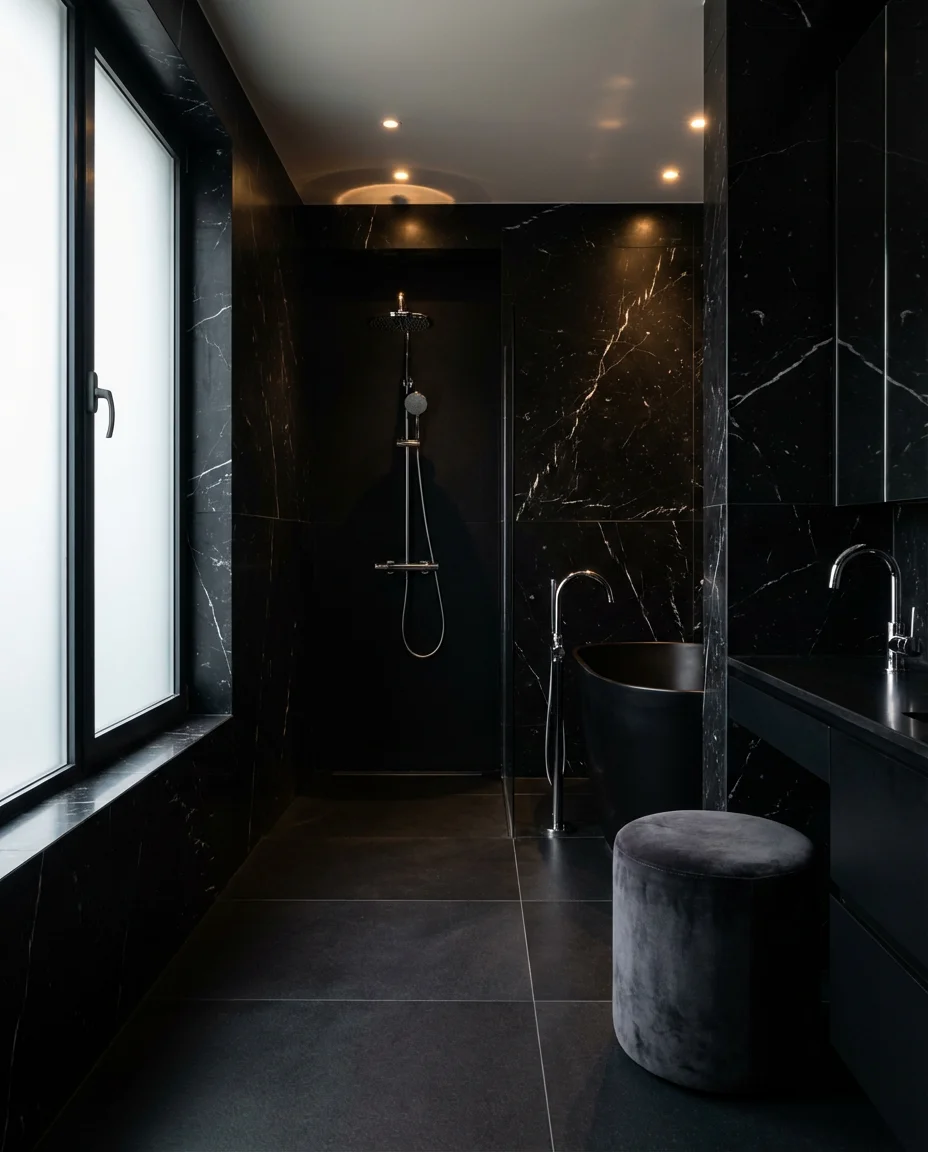
The design of luxury black bathrooms is having an undeniable moment, and the best examples take it well beyond simple dark paint—they layer dark materials in ways that feel genuinely opulent. Black Marquina marble walls with their striking white veining, matte obsidian floor tiles, a back-painted glass vanity, and small touches of deep charcoal velvet on a stool or bath mat—together these create a bathroom environment that feels like a private retreat in a high-end hotel. The overall effect is indulgent, unapologetic, and completely captivating.
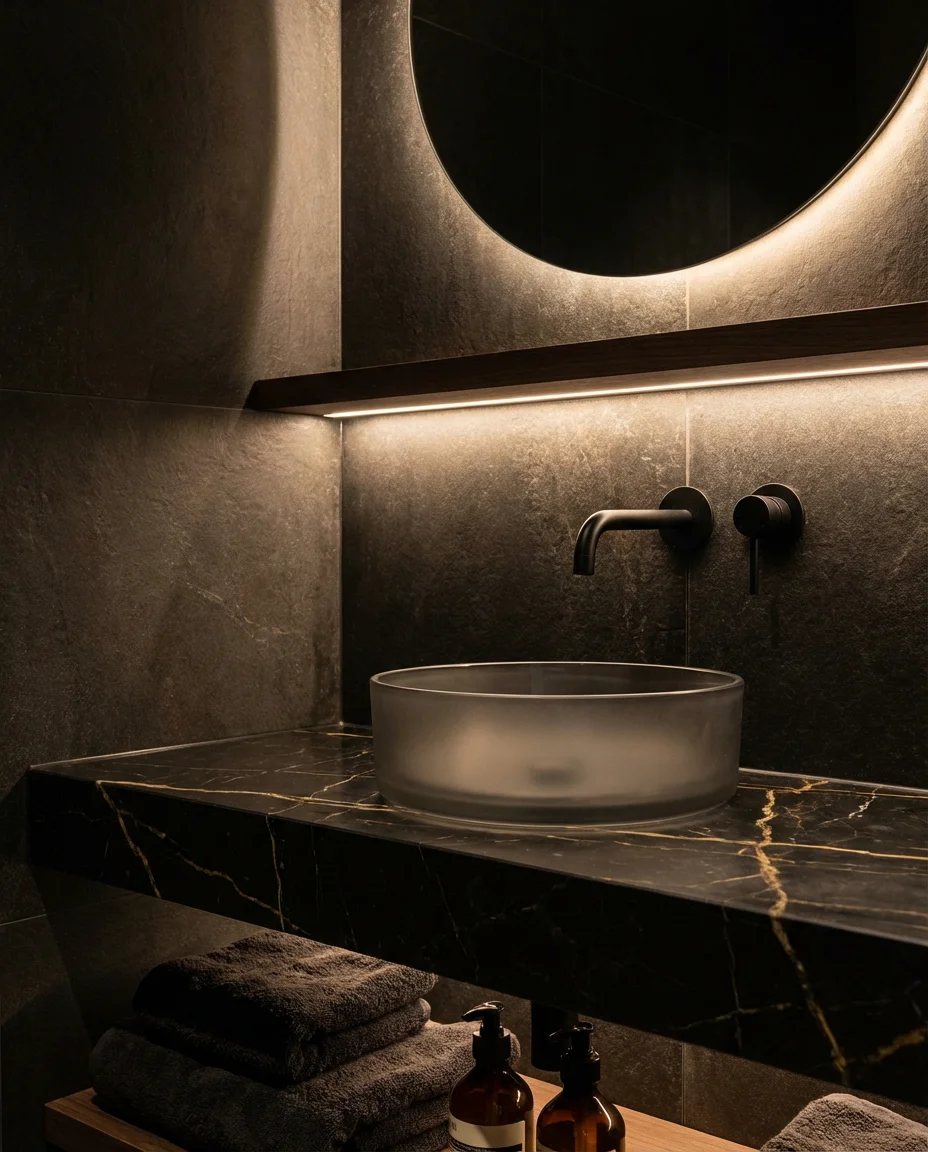
Maintaining a dark marble bathroom requires commitment—it shows water spots and soap residue more readily than lighter stone. Daily light wiping with a microfiber cloth and weekly application of a stone-safe cleaner will keep it looking pristine. The trade-off in visual drama and atmosphere is absolutely worth the maintenance, but going in with clear eyes about the upkeep requirements will save you frustration down the line.
15. Open Wet Room Concept with Curbless Shower

The curbless, barrier-free wet room has become one of the defining features of contemporary modern bathroom design—and its popularity reflects something important about how Americans want to live. Removing the shower threshold creates a seamless floor plane that makes any bathroom feel dramatically larger and more considered. It’s also genuinely accessible design, which resonates with homeowners planning for aging in place or welcoming guests with mobility needs. The design of small space applications is particularly compelling when every visual boundary matters.
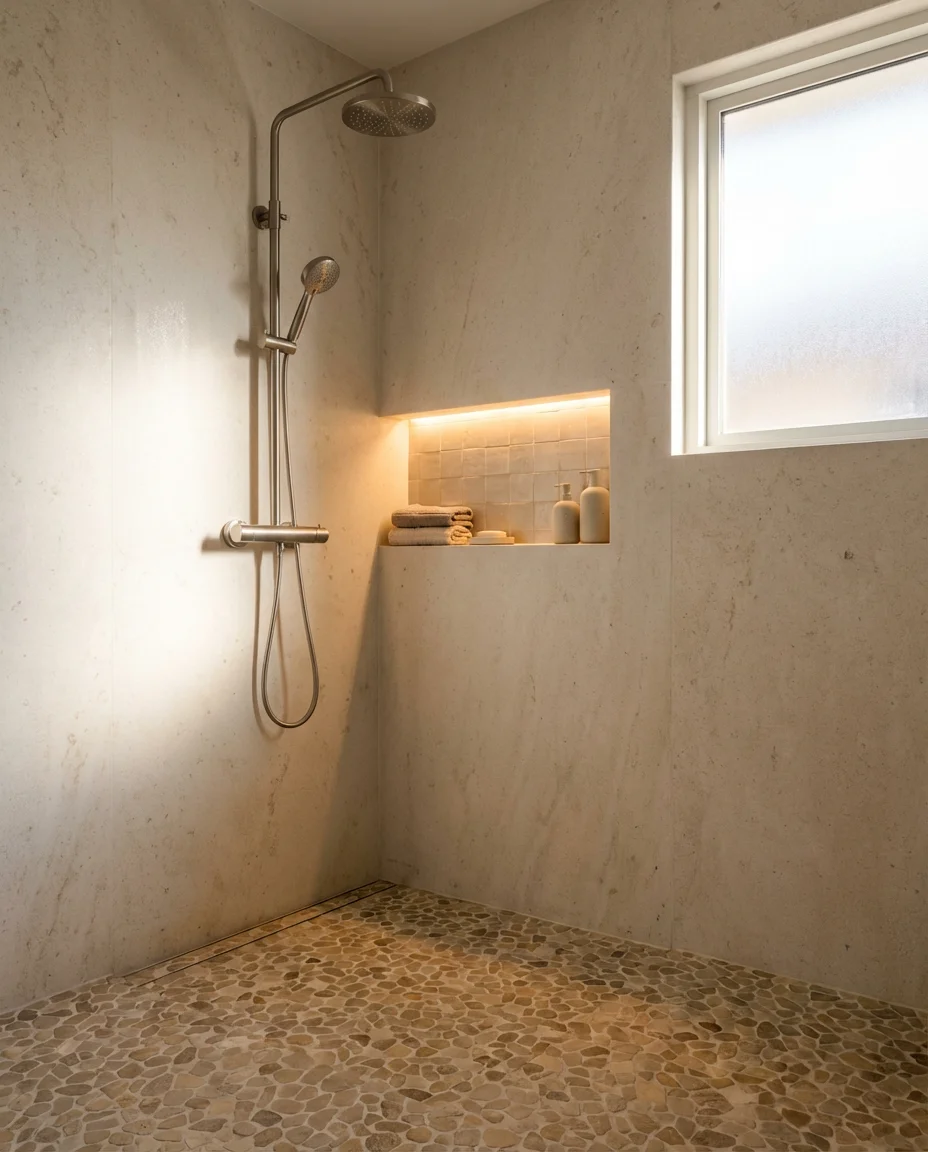
A wet room requires a linear drain—either wall-mounted or a long, narrow floor channel—and proper waterproofing of the entire wet zone, not just the shower footprint. Hiring a tile contractor with specific wet room experience is non-negotiable here; improper waterproofing is the number one source of expensive bathroom failures. Done right, this is a renovation that will feel modern and relevant for decades to come.
16. Warm Terracotta and Clay Tones
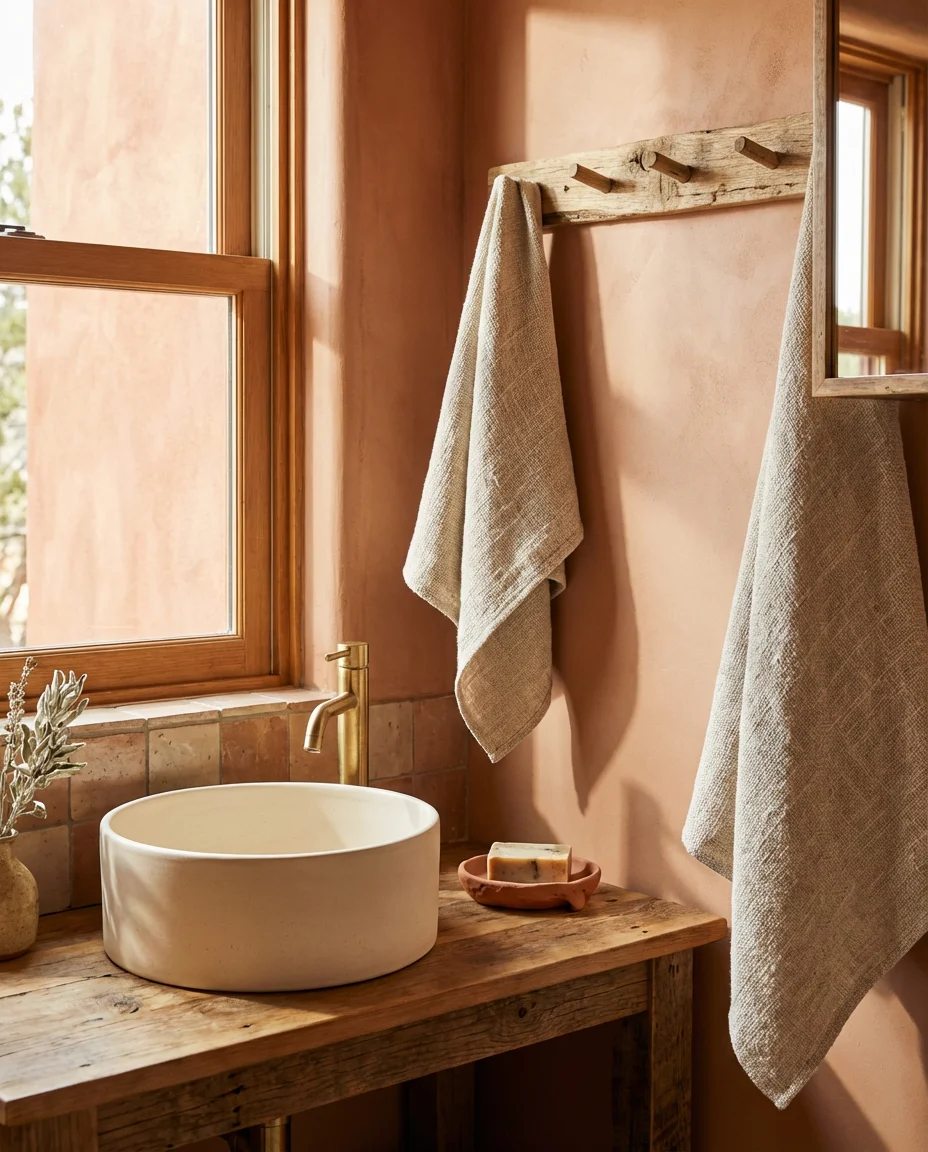
Terracotta and warm clay tones are one of the strongest color stories emerging for bathrooms in 2026 — earthy, warm, and endlessly versatile. They pair beautifully with raw linen, unglazed ceramics, and natural wood, creating bathrooms that feel grounded and richly textured. The aesthetic reads as both contemporary and deeply rooted in craft traditions from Mexico, Morocco, and the American Southwest—cultures that Americans have been drawing on enthusiastically in interior design for several years now. These colors also photograph extraordinarily well in warm natural light.
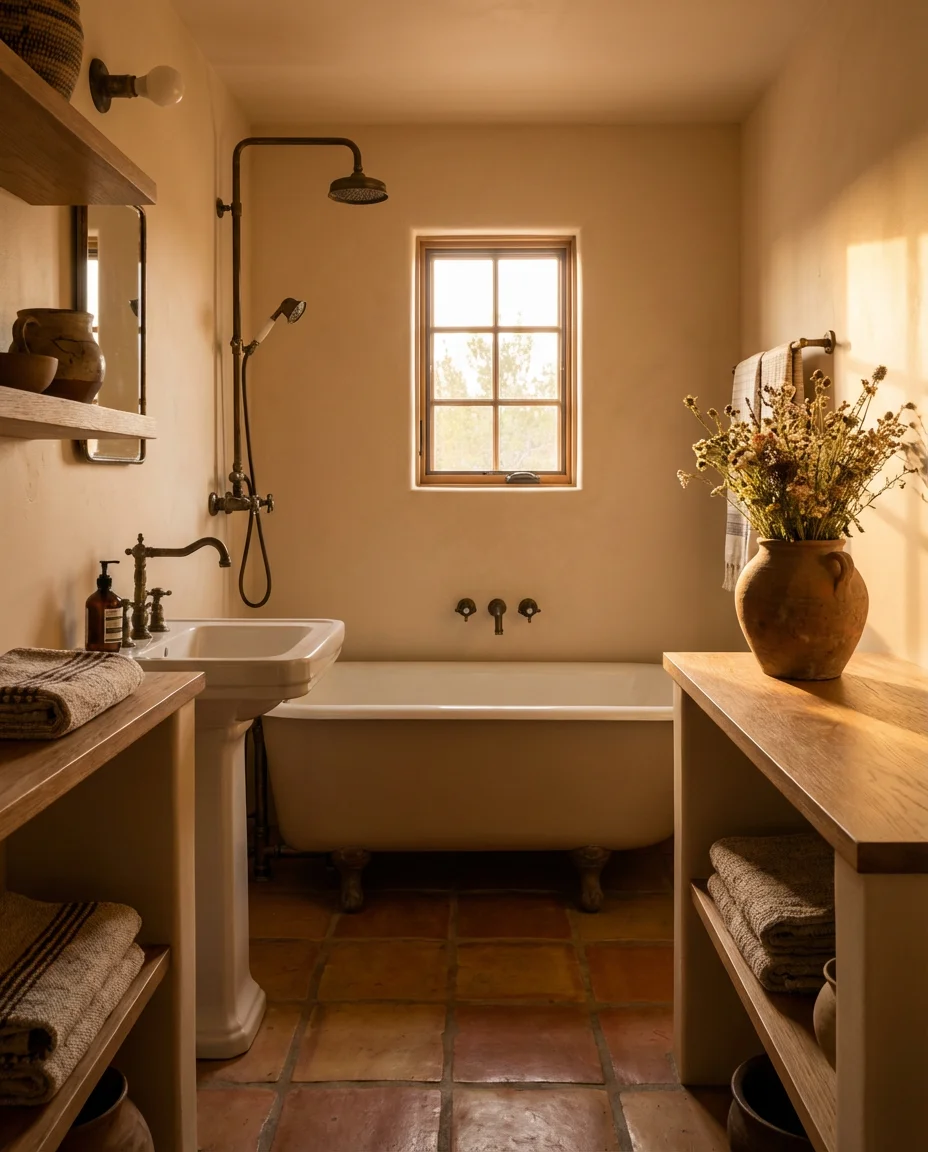
This palette works across virtually every bathroom style and budget—from a simple terracotta paint applied over existing tile to a fully renovated bathroom clad in handmade Mexican Saltillo tile. What matters most is keeping the supporting colors in the warm family: cream, sand, ochre, and warm white rather than cool grey or bright white. The moment you introduce cool tones, the earthy warmth of the terracotta loses its power.
17. Arched Niches and Curved Architectural Details

Curved architecture has been one of the defining moves in interior design for several years now, and bathrooms are finally catching up. Arched shower niches, rounded vanity mirrors, barrel-vault ceilings in powder rooms, and curved wet walls—these softly architectural details introduce a sense of warmth and considered craftsmanship that rectangular rooms simply lack. Paired with design luxury materials like honed marble or polished plaster, a single curved element can transform an ordinary bathroom into something that feels genuinely architectural. This is the kind of ideas-driven design that gets pinned thousands of times.
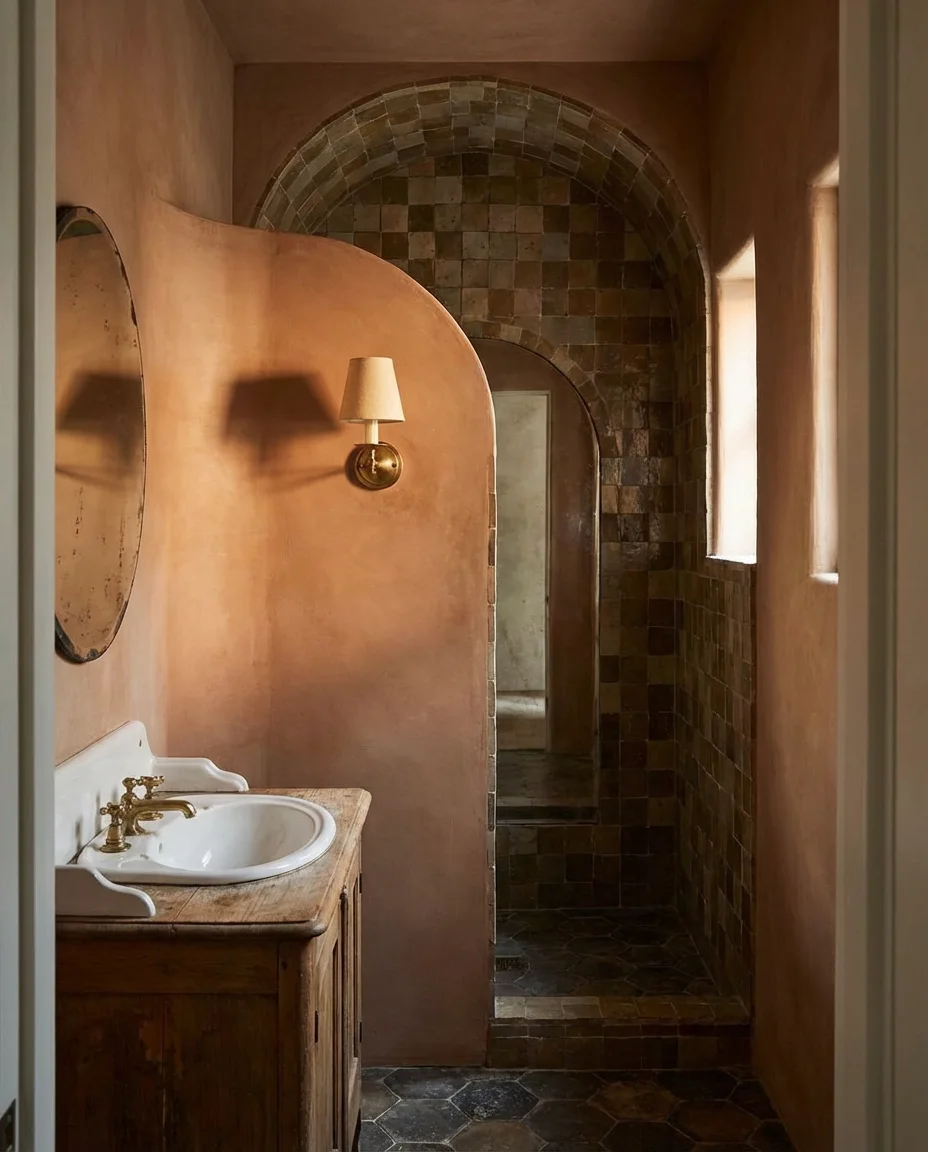
Adding an arched niche to an existing bathroom doesn’t necessarily require structural work—a skilled tile setter can create the illusion of a recessed arch using tile and mortar without breaking into the wall. For shower niches specifically, a pre-formed niche kit with an arched profile runs between $80 and $200 and can be installed in a single day. Small architectural gestures like these deliver outsized visual returns for relatively modest investment.
18. Japanese Wabi-Sabi Bathroom with Raw Materials

The Japanese concept of wabi-sabi—finding beauty in imperfection and transience—has deeply influenced modern bathroom design thinking in ways that feel increasingly relevant to American homeowners tired of overly polished, high-maintenance spaces. Raw concrete walls with subtle imperfections, unfinished wood with visible grain, handmade ceramics with irregular edges, and a single ikebana arrangement—together these create a bathroom of profound stillness. The beauty is in what’s missing as much as what’s present. This is simple design at its most sophisticated and considered.

Wabi-sabi interiors are actually among the more forgiving to live with—the materials are meant to age and develop character rather than look perpetually pristine. Unsealed concrete requires a penetrating sealer specifically formulated for wet areas, but beyond that, the maintenance is minimal, and the natural aging process only deepens the aesthetic. It’s a bathroom philosophy as much as a design direction, and that’s precisely what makes it endure.
19. Spa-Style Bathroom with Steam Shower and Heated Floors

The home spa bathroom has moved from aspirational to genuinely attainable for a broader range of Americans, and the features driving this shift—steam showers and radiant heated floors—are more accessible than ever. Luxury design doesn’t have to mean untouchably expensive: a steam generator can be added to an existing shower enclosure for $2,000–$5,000 installed, and electric radiant floor heating for a standard master bath runs $500–$1,500. These features fundamentally change how a bathroom feels to use on a cold Tuesday morning in February, and that daily experience is the real luxury.
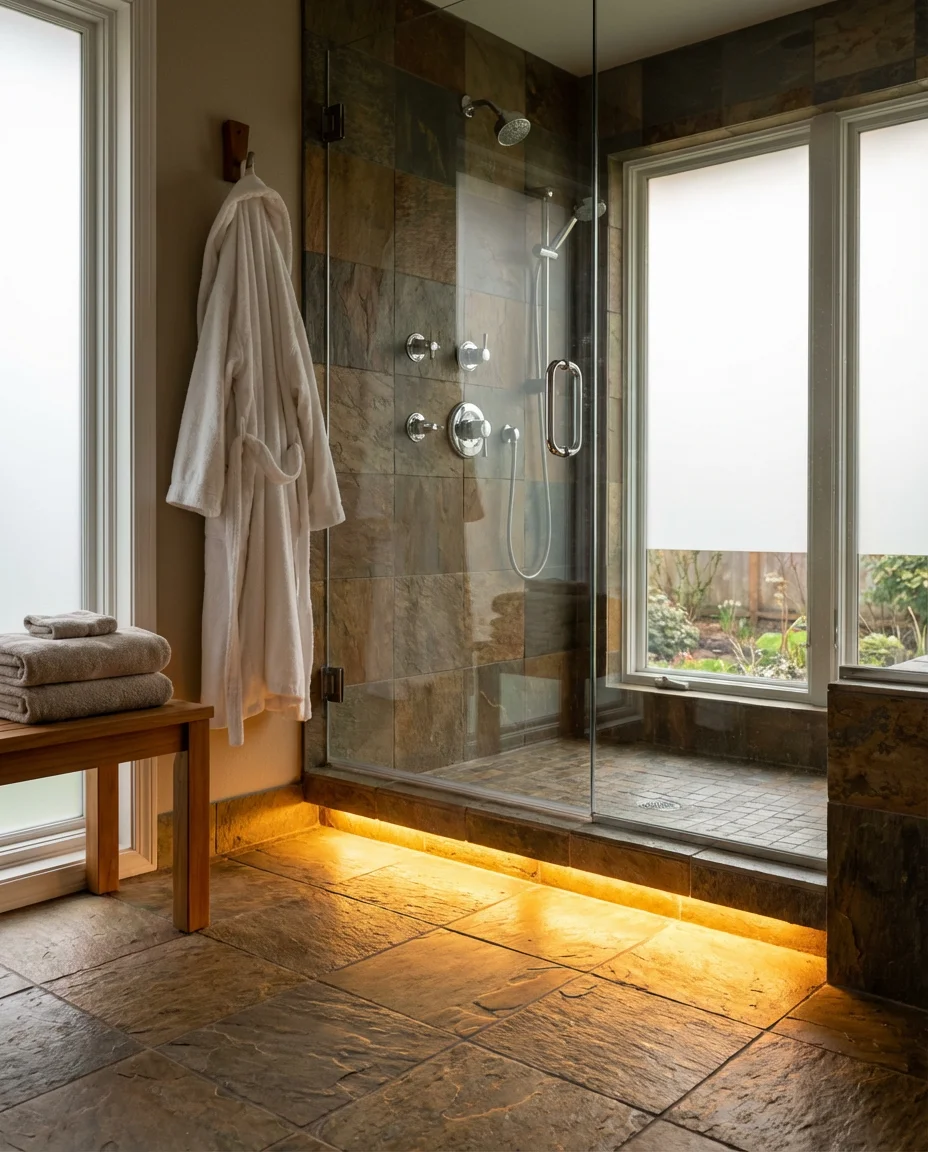
Americans increasingly prioritize wellness at home rather than relying on gym memberships and spa visits, and the bathroom is the natural center of that shift. A steam shower used even twice a week delivers measurable relaxation benefits comparable to a professional spa session—without the appointment, the drive, or the hourly rate. Design the space around the ritual: bench seating, good lighting control, an eucalyptus essential oil diffuser, and thick towels within easy reach.
20. Maximalist Gallery Wall Bathroom
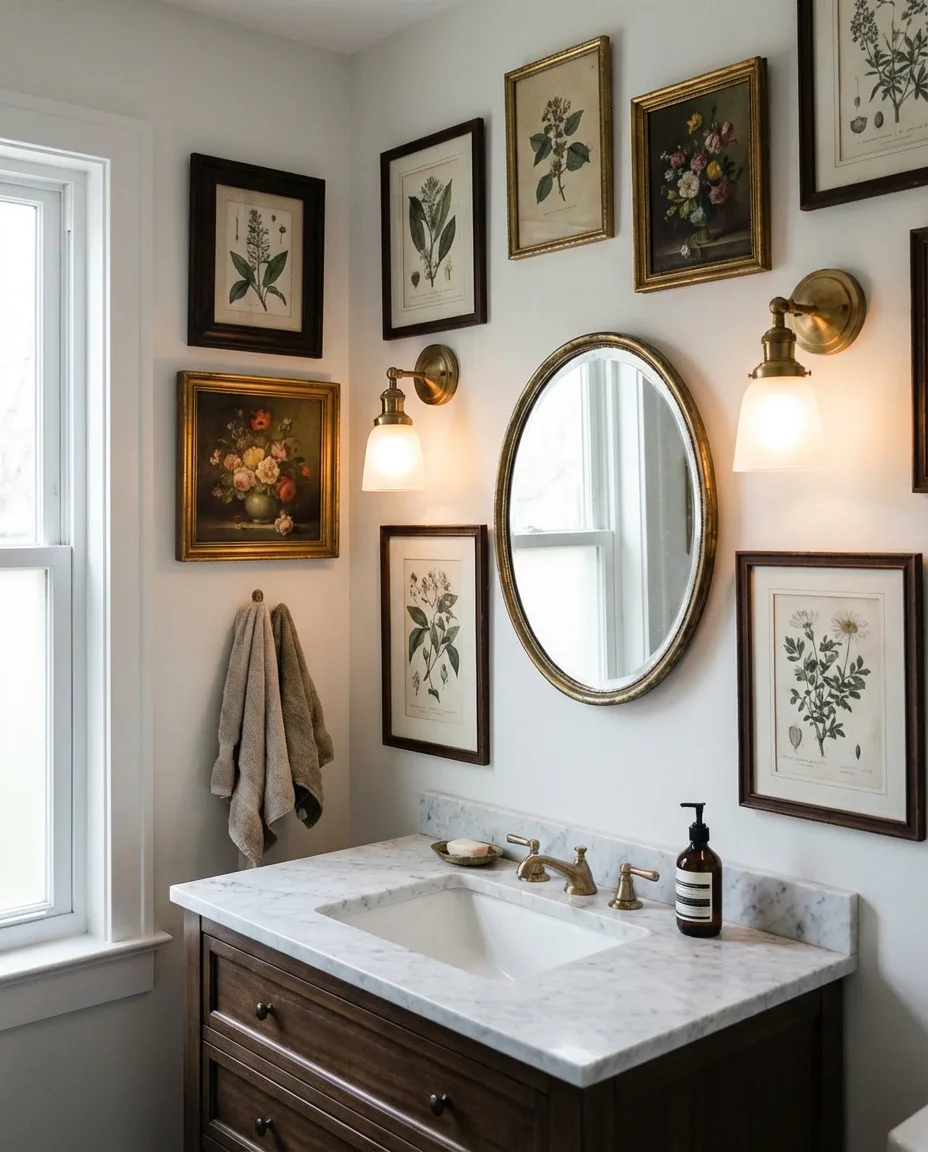
The bathroom gallery wall is one of the most personality-forward moves in interior design right now—and it goes against virtually every minimalist rule that dominated the previous decade. Art prints, vintage botanical illustrations, small oil paintings, and framed mirrors arranged in deliberate clusters on bathroom walls create a space that feels genuinely inhabited and personal. It’s an aesthetic direction that performs brilliantly on Pinterest precisely because it’s so visually distinct from the sea of white-and-grey bathrooms that preceded it. The mix of art and design ideas signals a confident, individualistic homeowner.
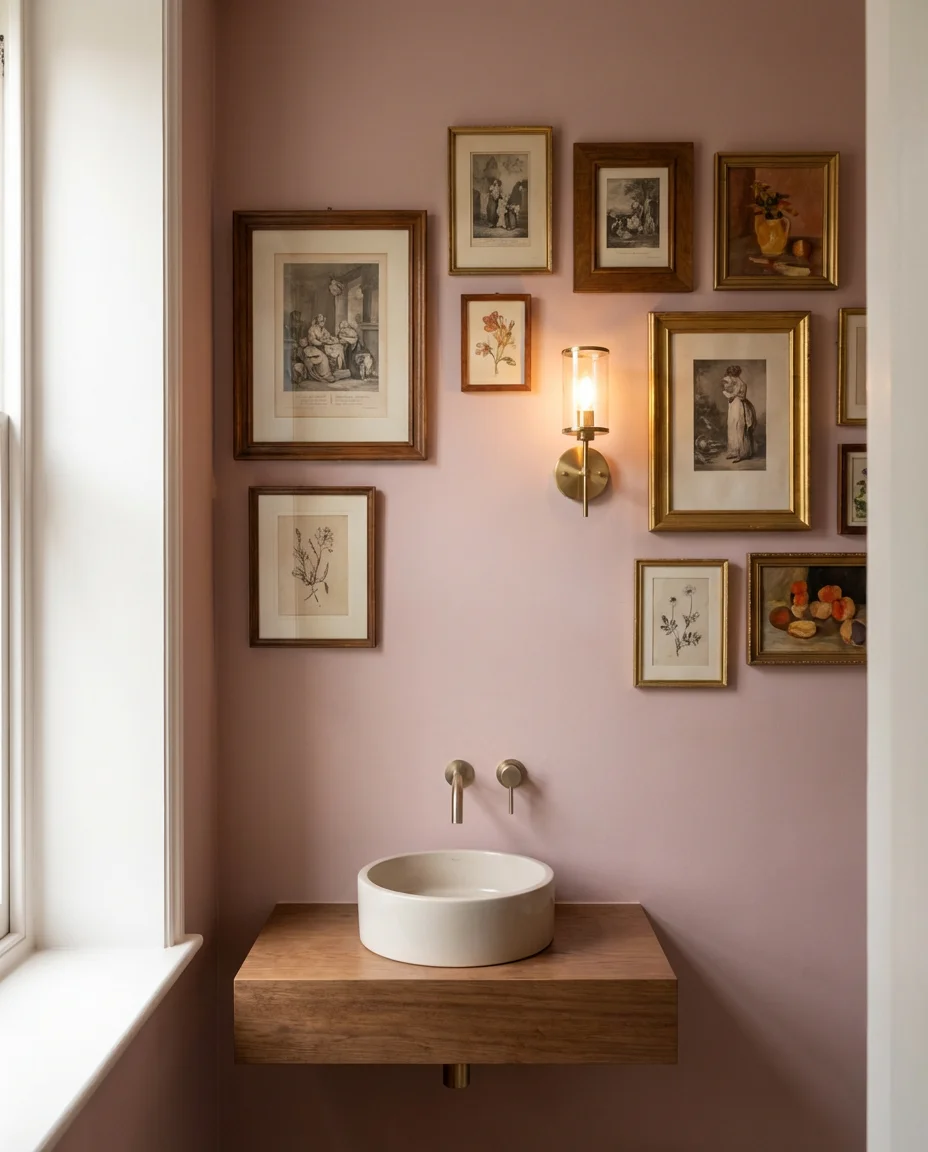
The practical concern most people have—art in a humid bathroom—is easily managed. Keep art away from direct spray zones and ensure your bathroom has adequate ventilation. Art behind glass is perfectly protected, and unframed canvas prints with a UV-protective varnish are surprisingly durable. Plan your gallery layout on the floor before committing to wall holes—it takes twenty minutes of extra effort upfront and saves significant patching and repainting later.
21. Checkerboard Floor Revival in Black and White

The black and white checkerboard floor is one of those perennial patterns that cycles back into design consciousness every decade or so—and its current iteration feels fresher than ever, particularly when scaled up to larger format tiles or rendered in unexpected materials like cement or terrazzo. Paired with black fixtures and crisp white walls, it creates a graphic, high-contrast bathroom that reads as both classic and thoroughly contemporary. This is the kind of modern design approach that respects historical precedent while executing it with a thoroughly current sensibility.

The tile size you choose dramatically changes the overall feel: A 2-inch mosaic checkerboard feels vintage and detailed, while a 12-inch or 18-inch square checkerboard reads bold and modern. Setting tiles on a 45-degree diagonal adds even more dynamism and can make a narrow bathroom feel wider. Matte finish is preferable to glossy for both safety and the way it absorbs light more softly—a glossy black-and-white checkerboard can feel stark and institutional rather than chic.
22. Mixed Metal Fixtures Done Right

Mixing metal finishes in a bathroom was considered a design faux pas for years—but that rule has been retired, and the interiors world is better for it. Combining brushed nickel with warm brass, or matte black with aged bronze, creates a collected, layered quality that single-metal bathrooms lack. The key is intentionality: choose one dominant metal and one accent metal, and stick to that pairing consistently. Design luxury modern bathroom designs use this technique to add visual complexity without introducing additional colors or materials—a sophisticated move that rewards a discerning eye.

The most effective mixed-metal approach uses the secondary metal sparingly—as towel hooks, cabinet pulls, or the shower drain cover rather than as the dominant plumbing fixture. Think of it like jewelry: you wouldn’t wear gold earrings, a silver necklace, and a rose gold bracelet all at once. Two metals, thoughtfully placed, create intentional richness. Three or more starts to read as indecisive. Keep the ratio roughly 70/30 and the result will always look deliberate.
Conclusion
There’s never been a better time to invest real thought and creativity into your bathroom—and as you’ve seen here, the possibilities for 2026 range from bold and dramatic to quietly serene. Whether you pull inspiration from one of these ideas or layer several together, the most important thing is that the final space genuinely reflects how you want to feel in it every single day. Which of these directions are you considering for your own bathroom? Drop your thoughts and questions in the comments below—we’d love to hear what’s inspiring you.