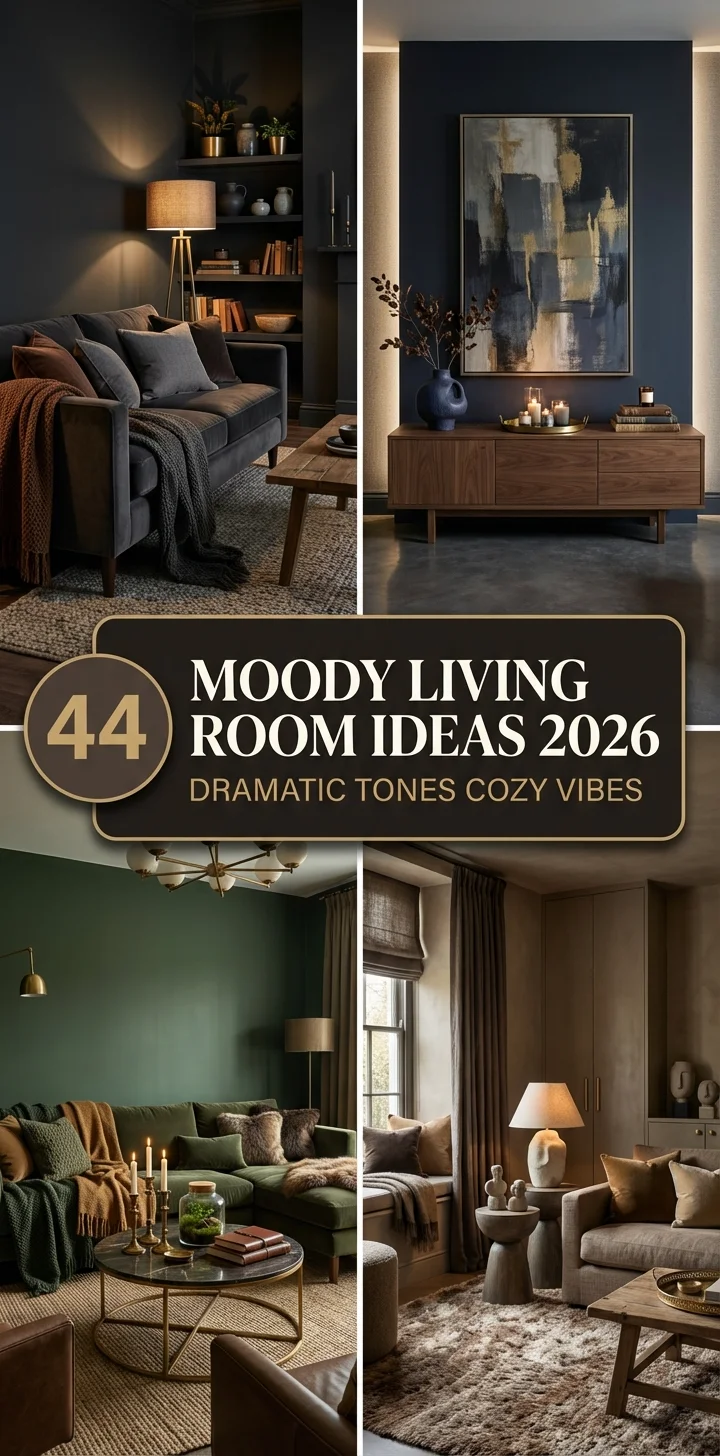
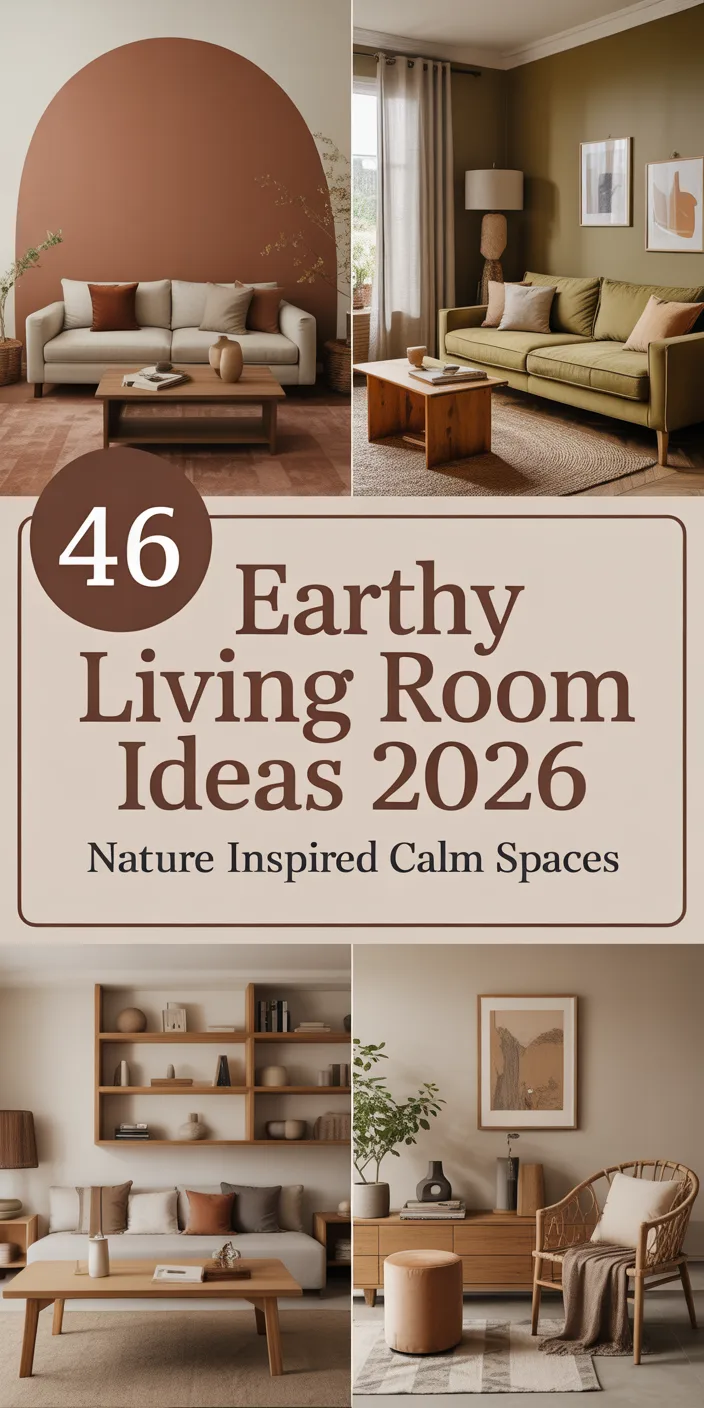
Farmhouse living rooms have had a serious moment on Pinterest for the past few years—and they’re not slowing down. There’s something about the combination of worn wood, layered textiles, and relaxed charm that feels both nostalgic and completely current. Whether you live in a sprawling rural home or a compact city apartment, the farmhouse aesthetic is endlessly adaptable. In this guide, we’re walking through 22 fresh and genuinely livable farmhouse living room ideas that span everything from modern rustic to coastal to full-on moody drama—so you can find the exact vibe that fits your home and your life.
1. Modern Rustic With Exposed Beams
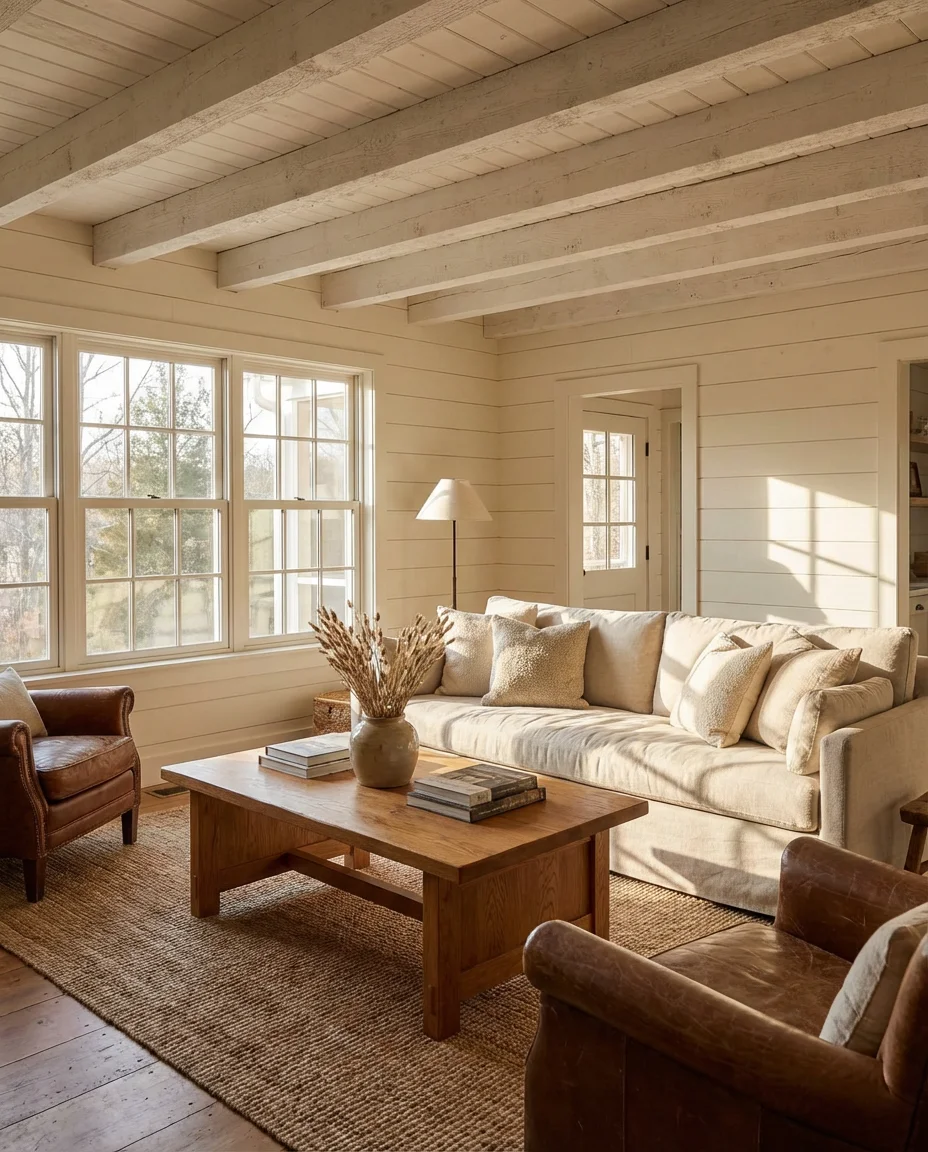
There’s a reason modern rustic dominates farmhouse inspiration boards: it threads the needle between raw and refined in a way that feels genuinely livable. Exposed ceiling beams—whether original to the home or added as decorative details—instantly ground a space in warmth and texture. Pair them with a neutral palette, clean-lined furniture, and a few natural wood accents, and you’ve got a living room that feels like it grew organically rather than being designed to death. This look works especially well in homes with higher ceilings or open floor plans where the architecture can do some of the heavy lifting.
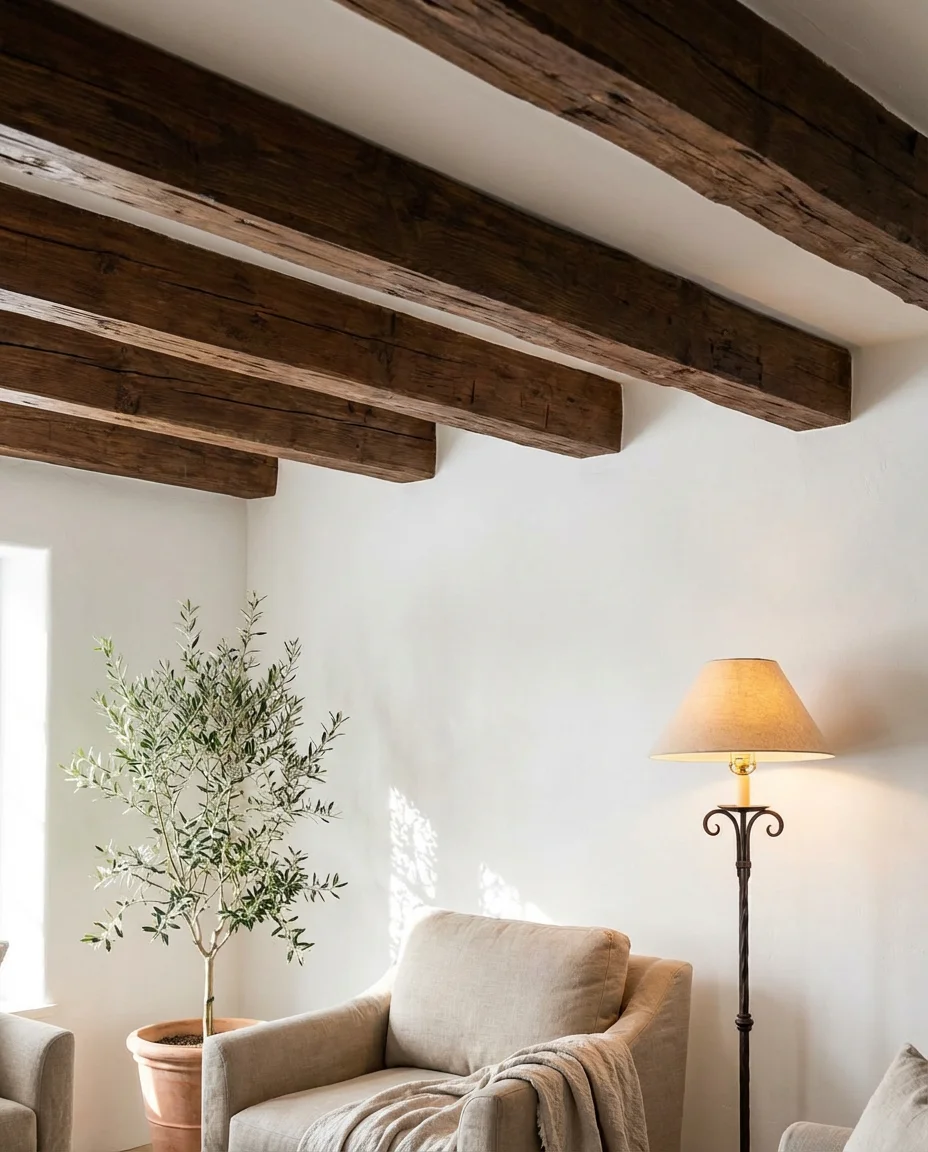
If you’re working with a newer build that doesn’t have original beams, faux wood beams have come a long way—modern versions are made from lightweight polyurethane and are virtually indistinguishable from the real thing once painted or stained. They’re also a fraction of the cost of structural timber installation, making this look achievable on a real budget. Anchor the room with a linen sofa in warm ivory or oatmeal, and let the beams be the statement piece rather than competing with a busy rug or gallery wall. Keep it simple, and the architecture will reward you.
2. Cozy Layered Textiles and Soft Lighting
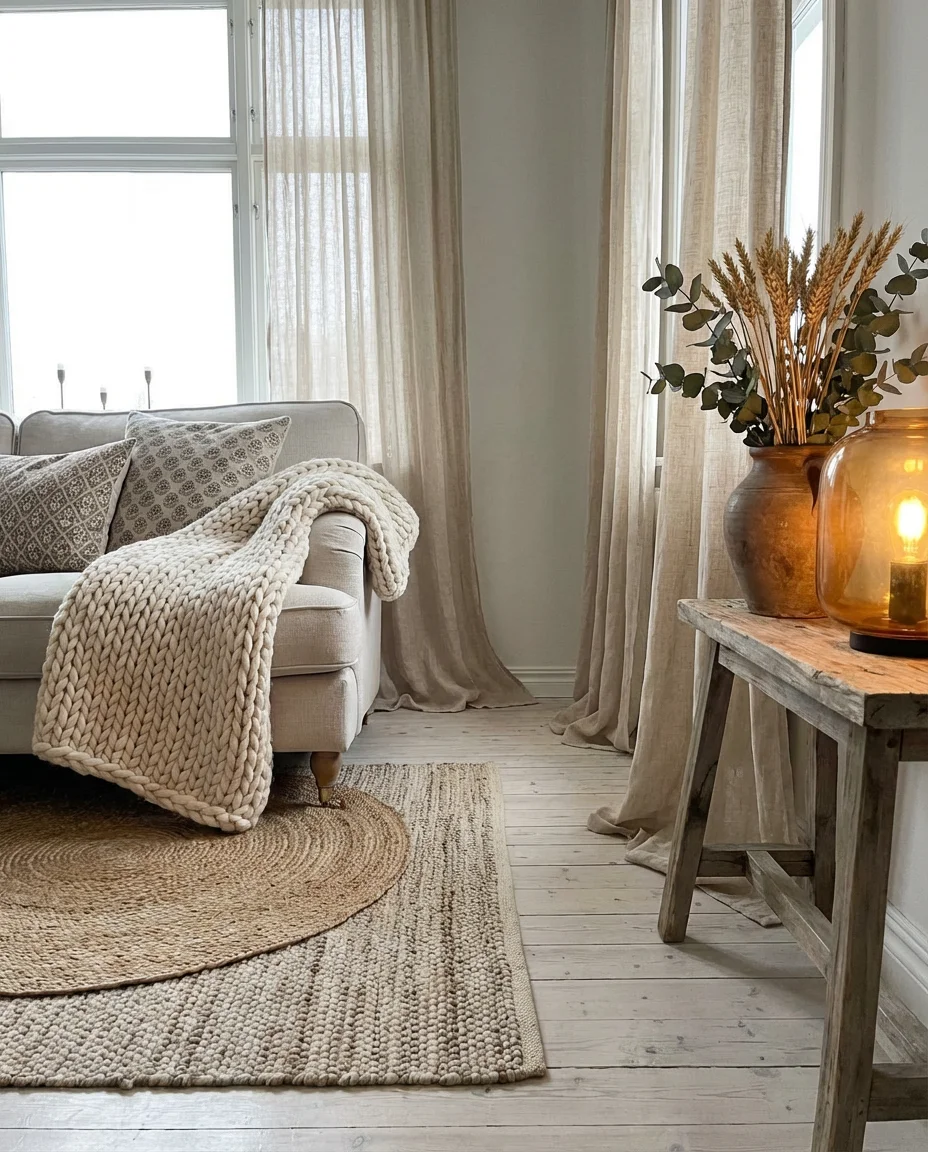
If there’s one thing the cozy farmhouse aesthetic does better than almost any other interior style, it’s creating a room that genuinely invites you to slow down. The secret is in the layering—a chunky knit throw over a linen sofa, a braided jute rug layered over a softer wool base, and linen curtains that pool slightly on the floor. None of these elements alone makes the magic; it’s the accumulated softness that does it. Warm-toned earthy shades like terracotta, camel, and dusty sage are your friends here, giving the room a grounded, lived-in quality that cool grays simply can’t replicate.
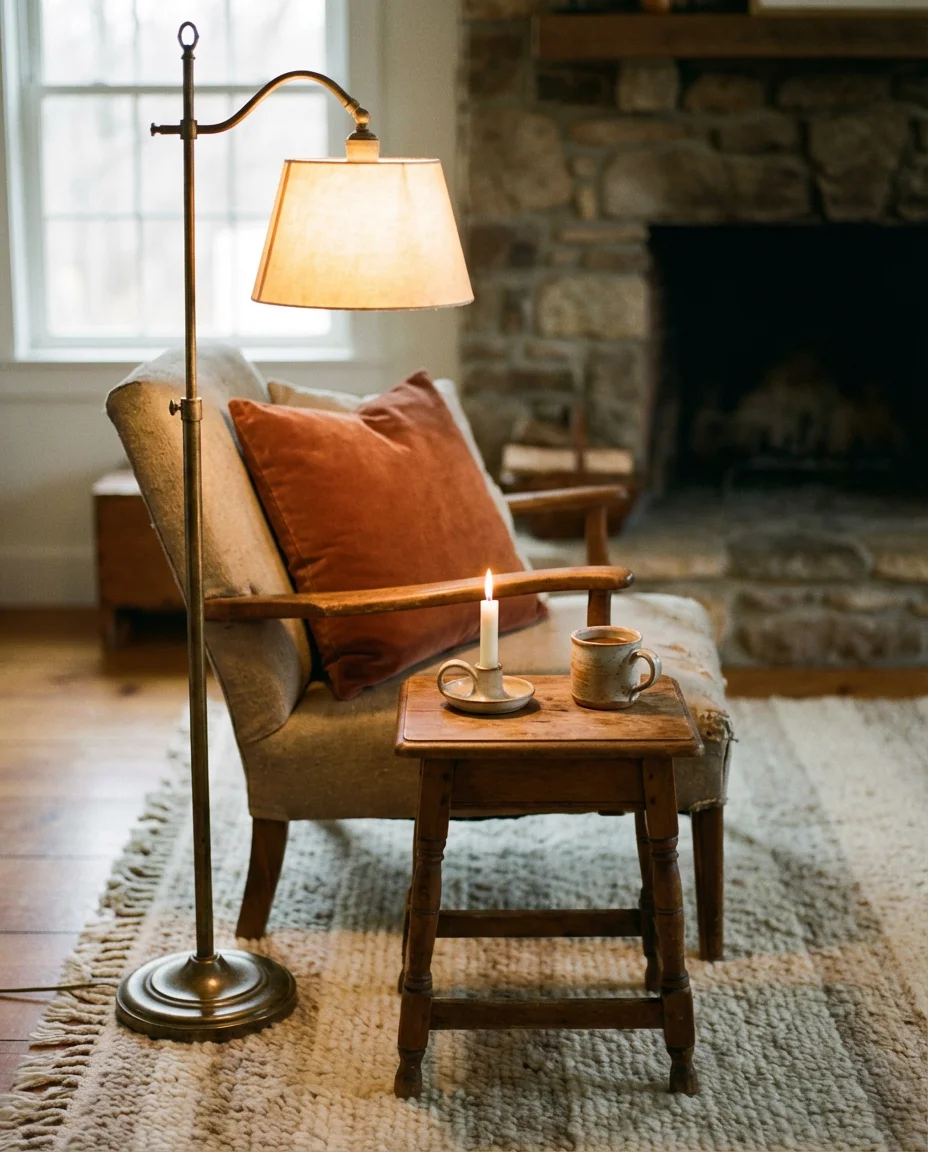
Lighting is the unsung hero of a cozy farmhouse room. Overhead recessed lighting is often too harsh and flat—instead, think about building a layered lighting plan with floor lamps, table lamps, and even a few strategically placed candles or pillar candles on a tray. Amber-toned bulbs (around 2700K) cast the kind of warm, golden glow that makes every textile look richer and every corner feel more inviting. Many interior designers recommend having at least three distinct light sources in a living room—one for ambient, one for task, and one purely for mood.
3. Vintage Finds and Antique Accents

The best vintage farmhouse living rooms don’t look like they were decorated in a single weekend shopping trip. They look like a family actually lived there—like that antique milk glass lamp came from a grandmother’s estate sale, and the oak side table was hauled out of a barn in central Ohio. That sense of accumulated history is exactly what gives this style its soul. Mixing genuine old pieces with newer items is both practical and stylish: a Victorian-era settee reupholstered in modern linen, a worn leather armchair beside a contemporary floor lamp. The contrast is the point.
One homeowner in rural Tennessee described her approach this way: she never buys anything for her farmhouse living room that she wouldn’t be happy to find at a flea market. That mindset keeps the collection feeling honest rather than performative. eBay, Facebook Marketplace, and local estate sales are goldmines for architectural salvage, old clocks, ironstone pitchers, and primitives that bring genuine patina. The trick is restraint—give each piece room to breathe rather than crowding every surface. A single stunning antique in an otherwise simple room will always land harder than a shelf packed wall-to-wall.
4. Country Charm With Shiplap Walls
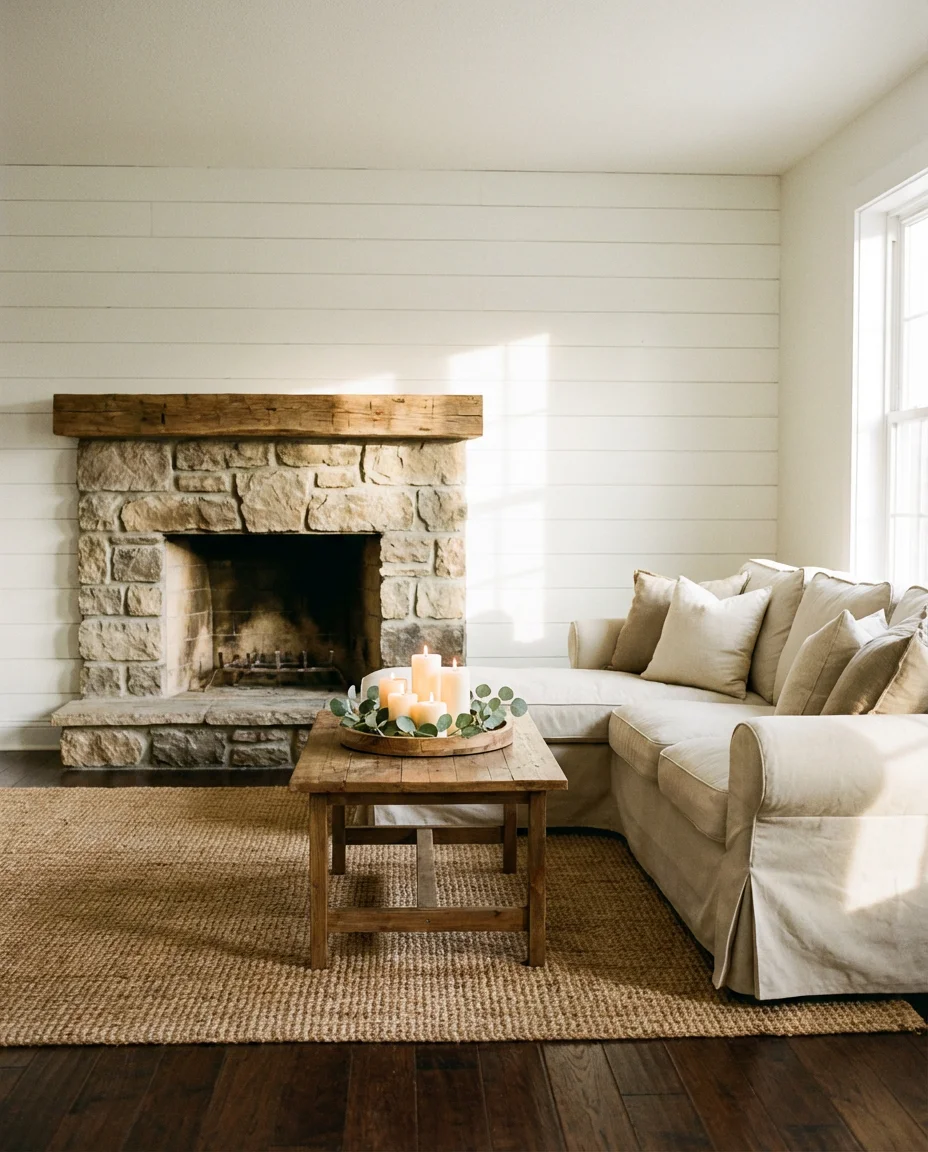
Shiplap became so synonymous with the country farmhouse look that it almost went from trend to cliché—but done right, it still delivers. The horizontal lines of painted white or soft greige shiplap give a room immediate architectural interest without the weight of heavy paneling. It reads as casual and unpretentious, which is exactly the spirit of a country living room. Pair it with a stone or brick fireplace surround, a wood mantel decorated with greenery and ironstone, and a sectional slipcover sofa, and the result feels genuinely rooted in American rural tradition rather than a staged TV set.
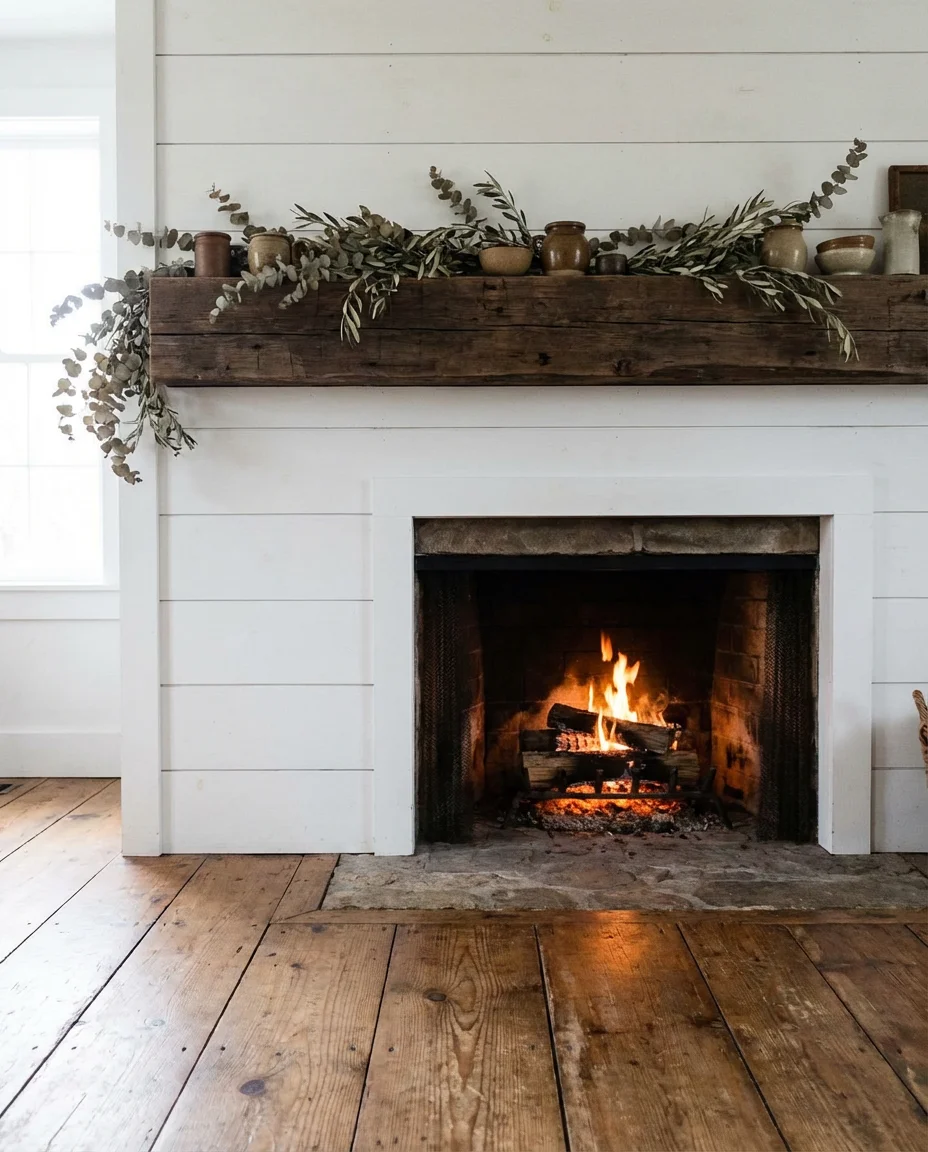
Shiplap doesn’t have to cover every wall to make an impact—in fact, using it on a single accent wall behind the sofa or around the fireplace is often the smarter call. Full-room shiplap can feel like a set piece; a single shiplap wall reads as an intentional architectural detail. If your budget is tight, MDF shiplap boards are significantly cheaper than actual tongue-and-groove pine, and once primed and painted, the visual difference is minimal. Keep the rest of the room’s trim work simple to let the texture speak.
5. Coastal Farmhouse With Whitewashed Wood
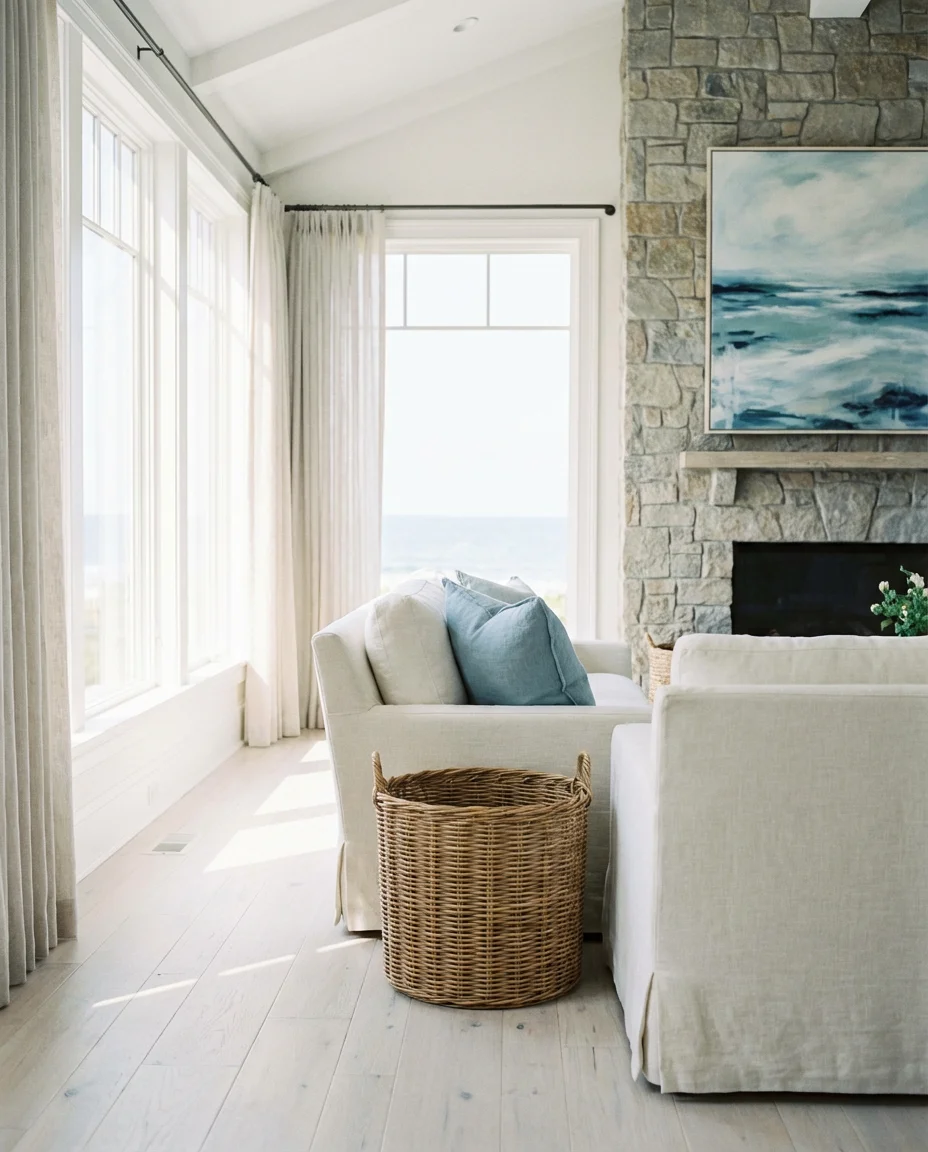
The coastal farmhouse hybrid is one of the most searched living room aesthetics in the country, and it’s easy to see why. It takes the warmth and texture of the farmhouse style and lightens it with the airy, sun-bleached palette of a beach house—think whitewashed oak floors, linen slipcovers in natural white, wicker baskets, and soft blue or seafoam accents. Modern coastal updates the look by keeping the lines cleaner and the accessorizing lighter: instead of shells and driftwood everywhere, you might choose one large piece of abstract ocean-inspired art and let the materials tell the story.
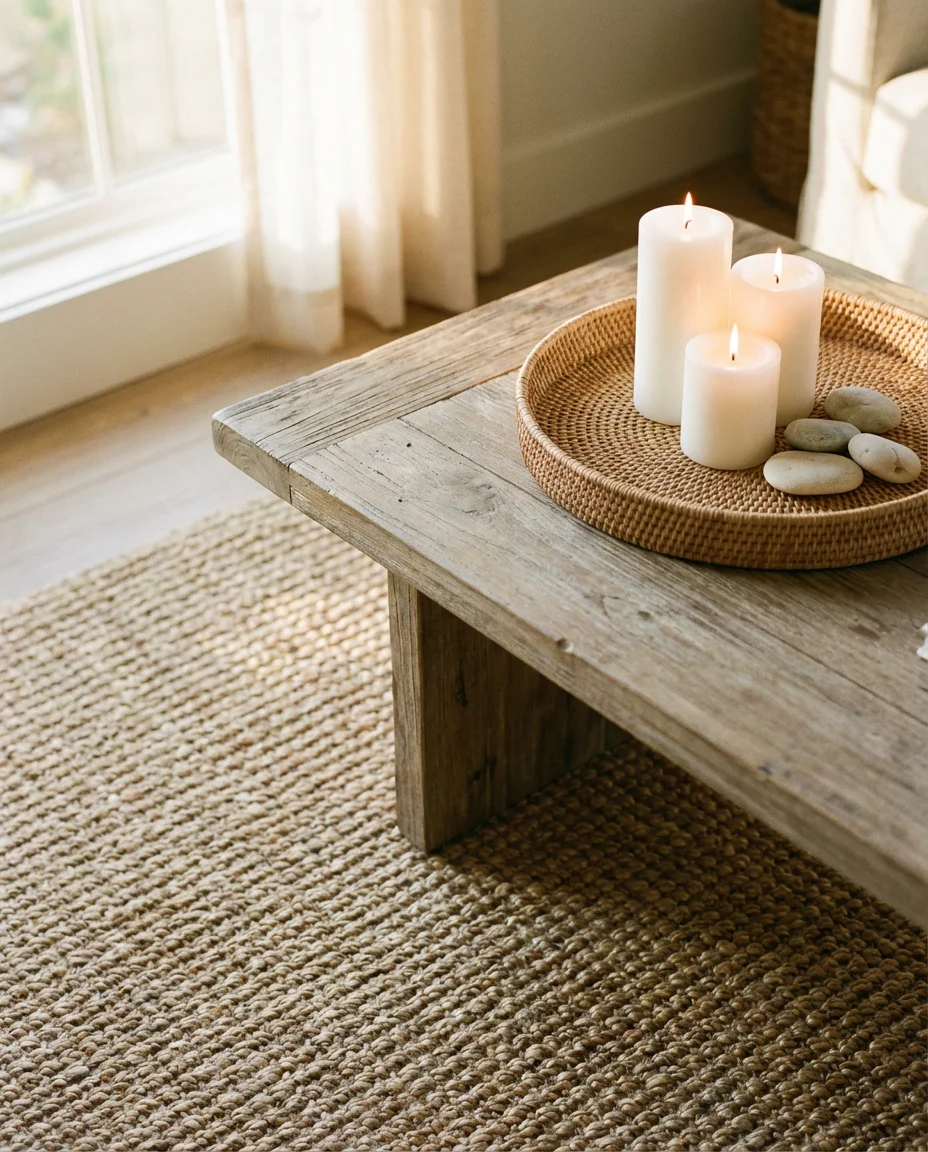
This style works best in homes with good natural light—and if yours is limited, the whitewashed palette will help enormously. Light bounces off pale walls and bleached wood in a way that makes even a north-facing room feel brighter. Stick to a palette of white, warm sand, and one or two soft ocean tones, and avoid the temptation to theme the room too heavily. Seagrass rugs, rattan light fixtures, and linen curtains are the workhorses of this aesthetic and are widely available at accessible price points from retailers like IKEA, World Market, and Serena & Lily.
6. Boho Farmhouse With Macramé and Woven Textures
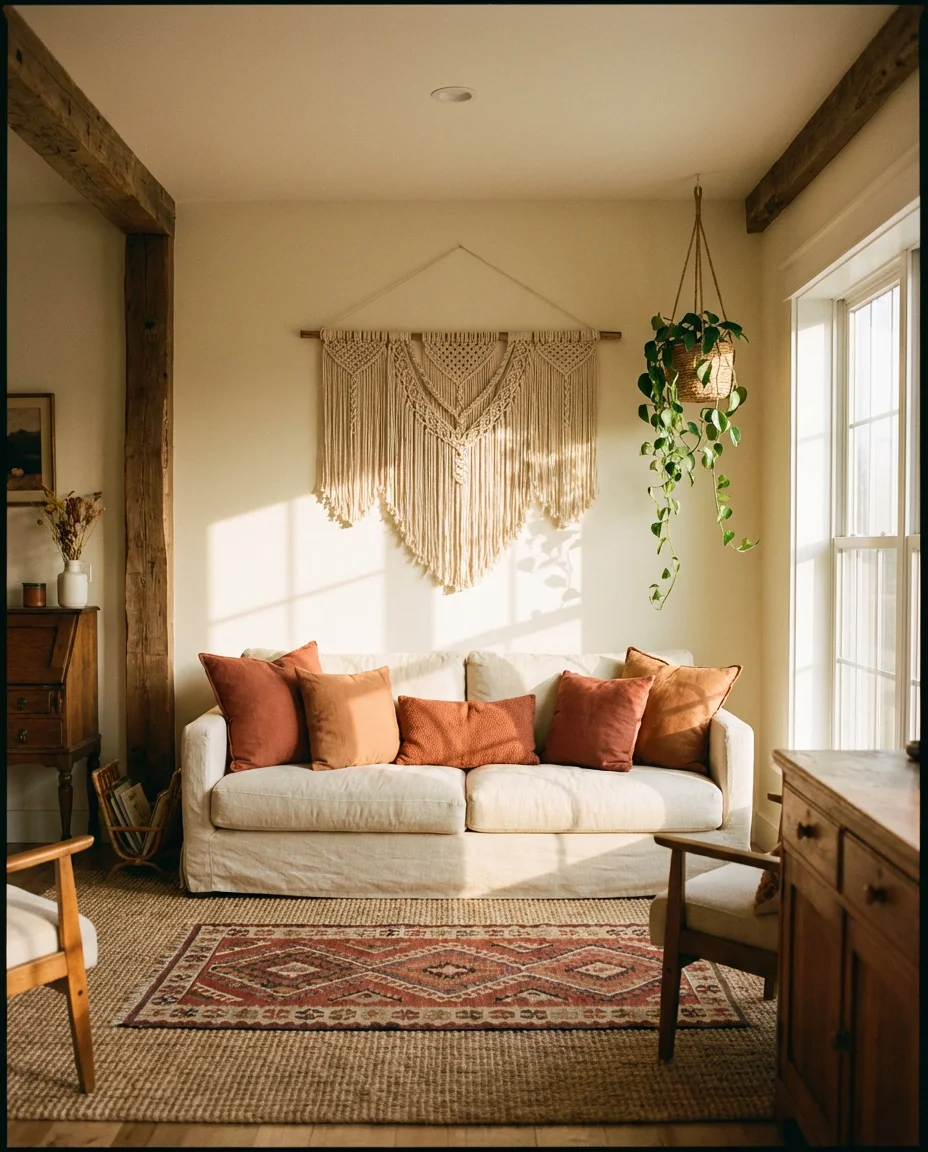
The boho farmhouse mashup sounds like it shouldn’t work—and yet, somehow, it absolutely does. The bohemian love of handmade, globally sourced, heavily textured objects slots beautifully into the farmhouse framework when you keep the foundation neutral. Start with whitewashed walls, a sisal rug, and a low-slung linen sofa. Then layer in the boho elements: a macramé wall hanging, a pile of Moroccan-style throw pillows, and a vintage kilim draped over an armchair. The trick is using a limited, earthy color palette—terracotta, rust, cream, olive—so the mix of patterns and textures feels harmonious rather than chaotic.
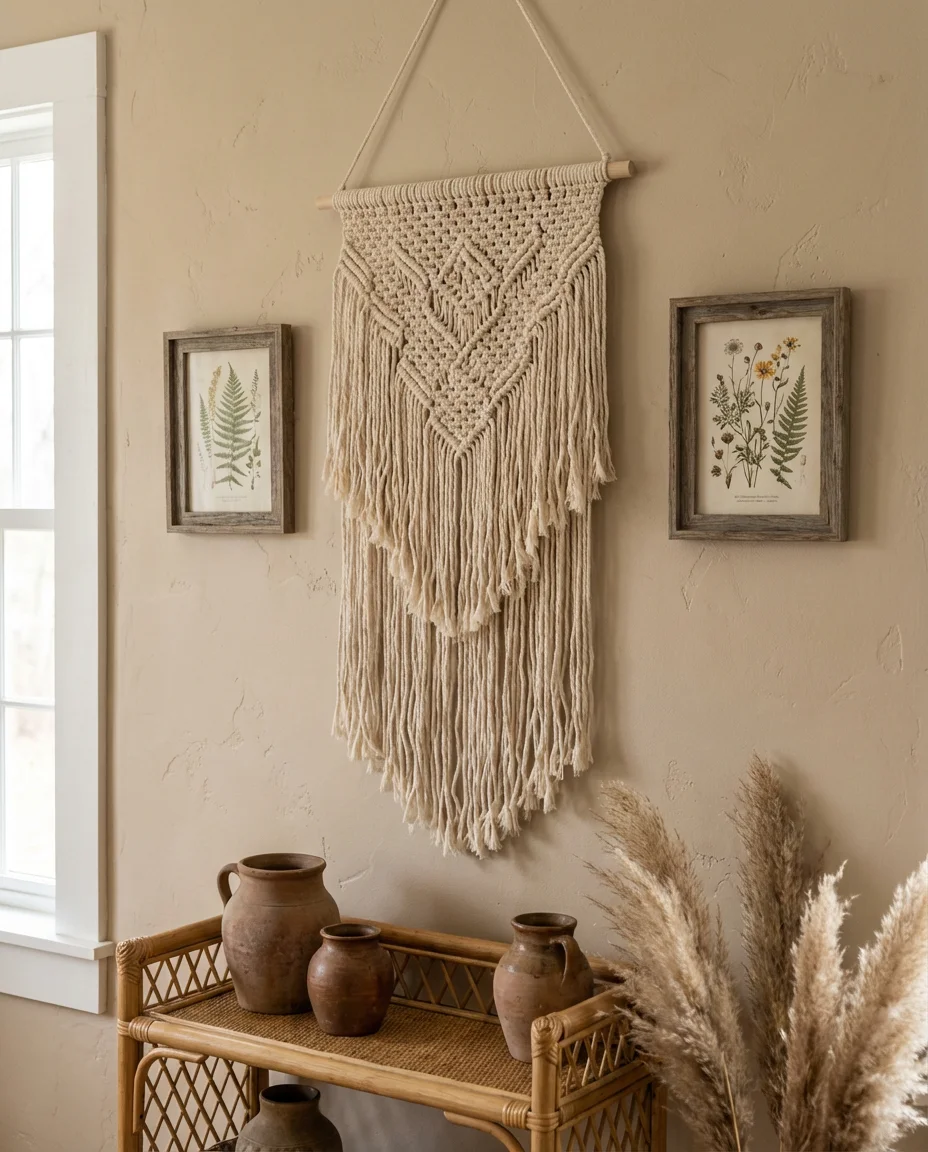
Where it works best: apartments and rental spaces where permanent renovations aren’t possible. The boho farmhouse look is essentially all about the furnishings and décor, not the architecture—so it travels well and adapts to any space. Woven wall art, hanging plants, and layered rugs don’t require a single nail hole. Etsy has become one of the best sources for handmade macramé and woven textile pieces that bring the authentic, artisan quality this look demands. Budget around $150–$300 for a statement macramé piece that can anchor an entire wall.
7. Western Farmhouse With Leather and Rawhide
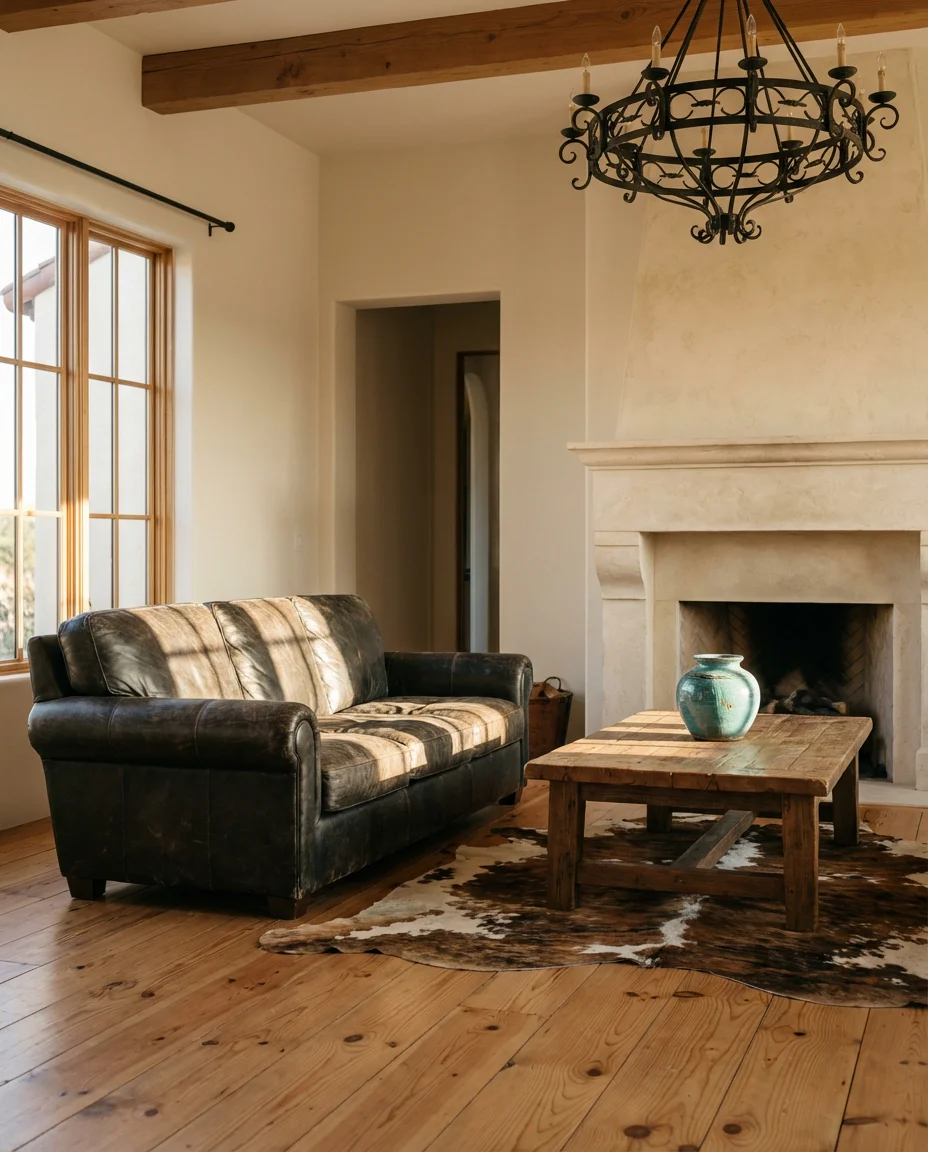
The western farmhouse look channels the rugged, sun-scorched beauty of the American Southwest and Great Plains. This isn’t about kitsch cowboy décor—it’s about genuine materials: aged leather sofas with saddle stitching, cowhide rugs layered over wide-plank pine floors, rough-hewn wood coffee tables, and iron hardware on every cabinet and door. Rustic patina is essential here; anything that looks too new or polished breaks the spell. A turquoise or rust accent—whether in a Navajo-inspired throw or a piece of pottery—ties the space to its geographic and cultural roots without veering into costume territory.
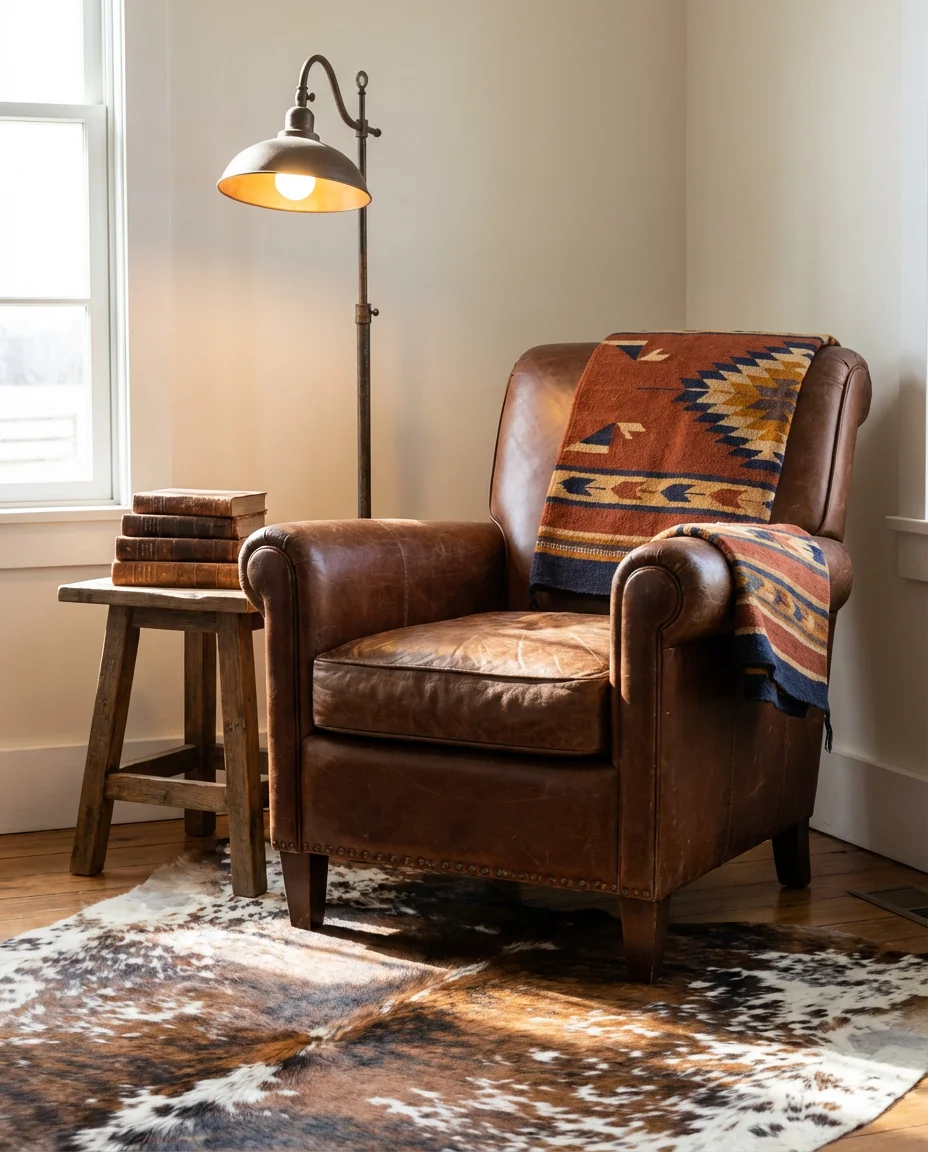
Aged leather is the cornerstone of this look, and it’s one of the few furniture investments that actually gets better with use—developing a rich patina that adds character over time rather than looking worn out. If a full leather sofa is outside the budget, a leather armchair paired with a cowhide rug achieves the same effect at a fraction of the cost. Avoid the common mistake of going too dark with the overall palette; western farmhouse spaces benefit from plenty of warm, natural light and cream or sand walls to balance all that rich, heavy texture.
8. French Farmhouse With Linen and Patina
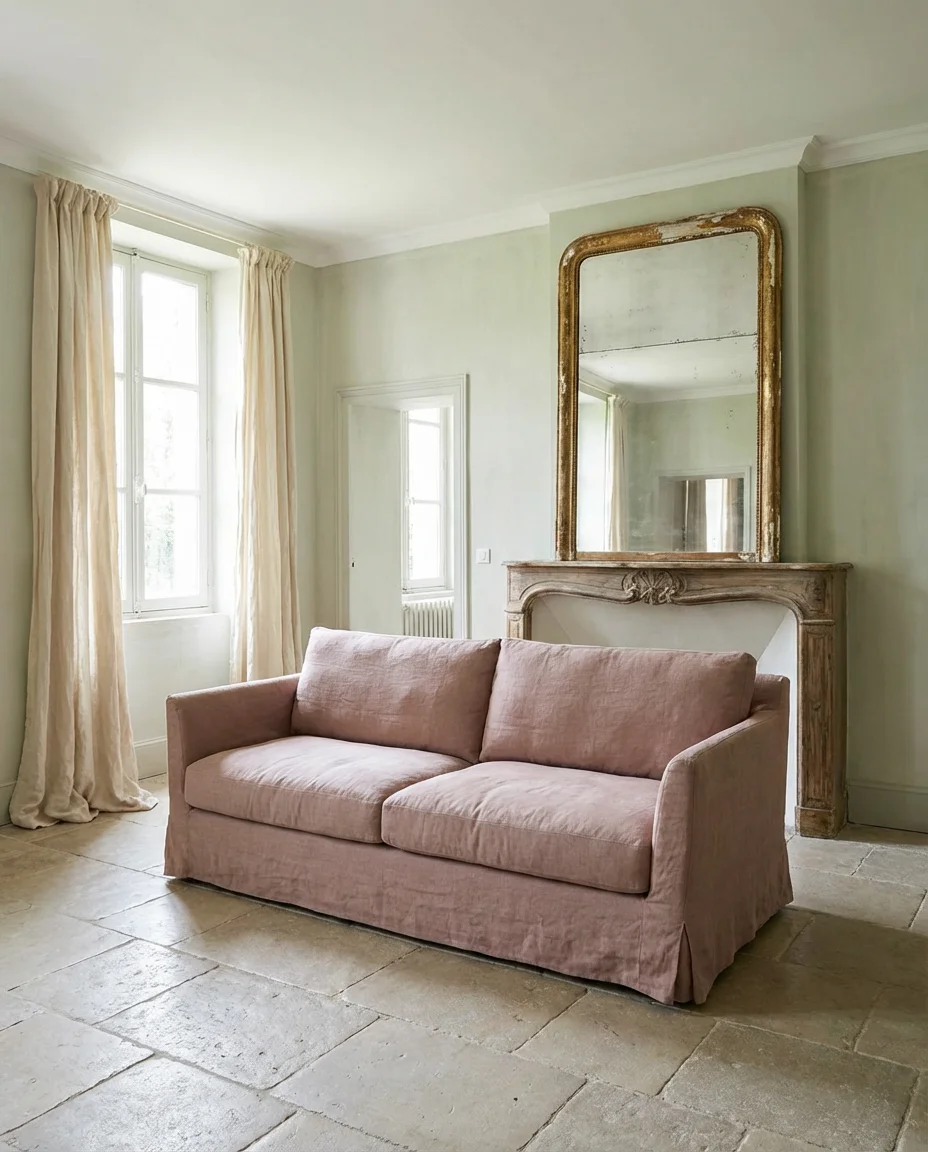
The French farmhouse aesthetic—sometimes called French country—is the quieter, more refined cousin of the American farmhouse style. Think Provence in midsummer: limestone floors worn smooth by centuries of use, linen slipcovers in faded lavender or dusty rose, carved wood details on a mantel, and a large antique mirror with peeling gilt. The color palette leans softer and more muted than the American version—aged whites, dusty blues, pale sage, and soft terracotta—and every piece carries a sense of history and gentle neglect that feels deeply romantic. This is a style that rewards patience and slow accumulation rather than single-trip decorating.
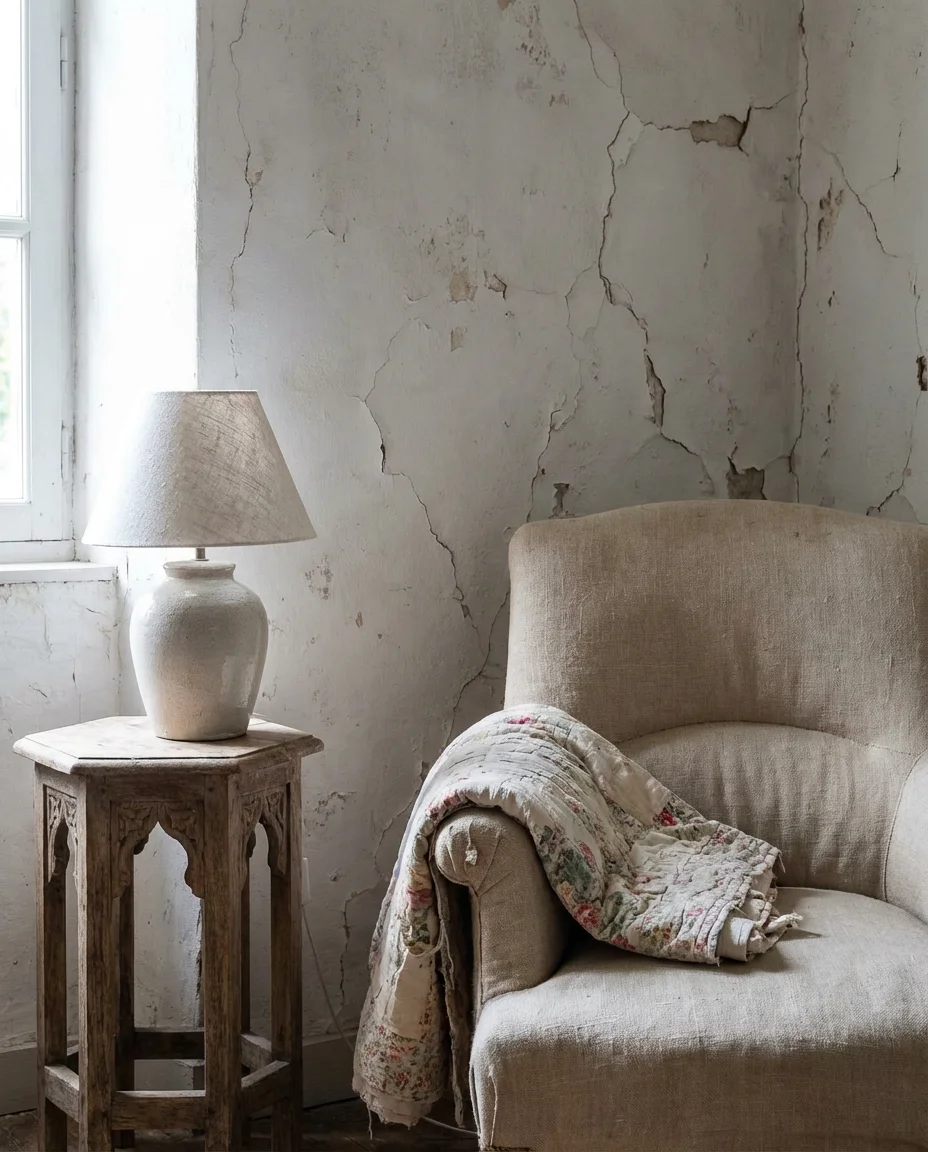
Linen is the defining material of the French farmhouse living room—on the sofa, the curtains, the throw pillows, and even the lamp shades. Its natural slub texture and tendency to wrinkle gracefully are features, not flaws, in this context. Belgian linen is the gold standard and can be expensive, but Rough Linen, Libeco, and even some IKEA options deliver a convincing texture at various price points. The key is avoiding anything synthetic that mimics linen from a distance but loses its character up close. In this style, authenticity of material is everything.
9. Contemporary Farmhouse With Clean Lines
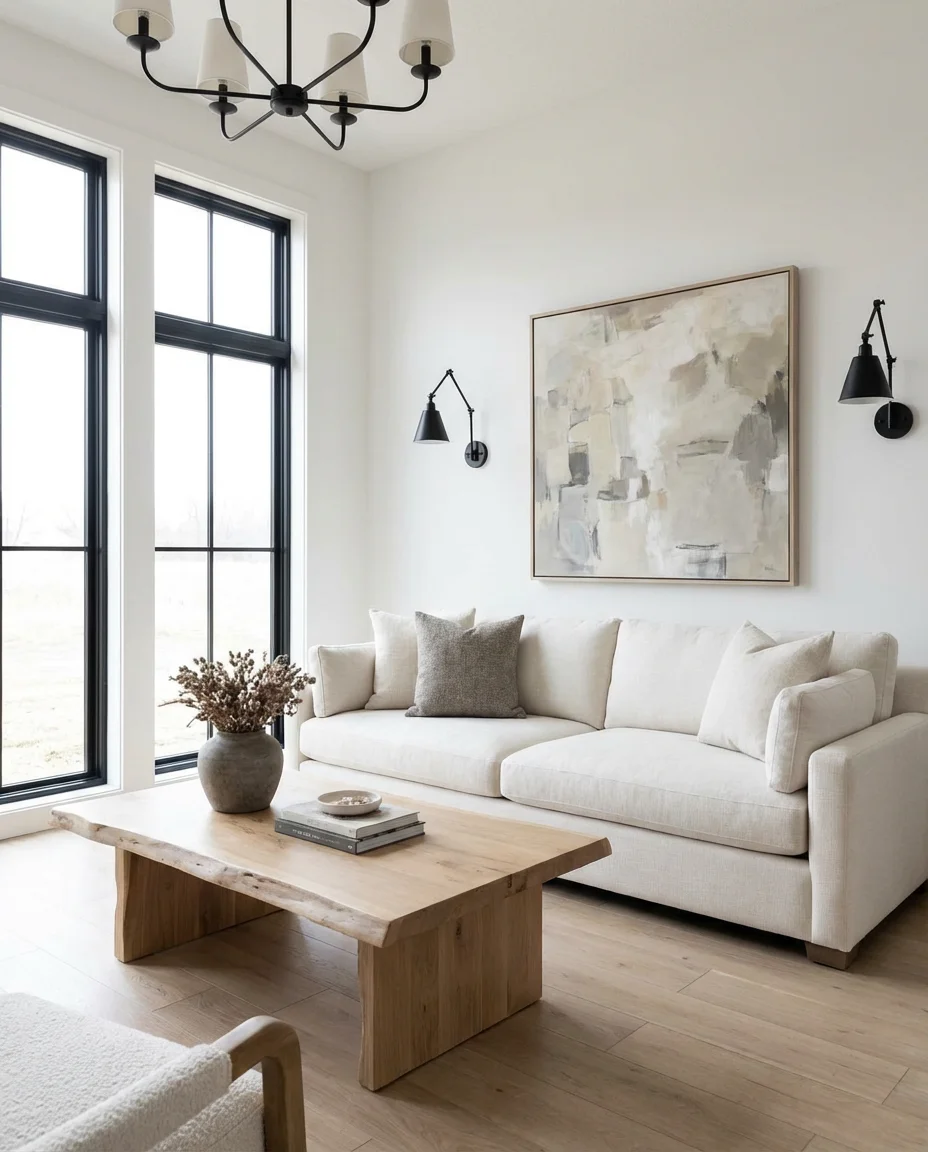
Contemporary farmhouse design strips the style down to its essentials: natural materials, a neutral palette, and honest construction—minus the decorative clutter that can make a traditional farmhouse feel fussy. The furniture is cleaner and more architectural, the accessories are minimal, and the overall effect is sophisticated without being cold. A streamlined linen sofa, a slab-leg coffee table in white oak, matte black hardware, and a single large abstract painting are all this look needs. The farmhouse DNA shows up in the textures and materials—raw wood, linen, and stone—rather than in decorative motifs or country-themed accessories.
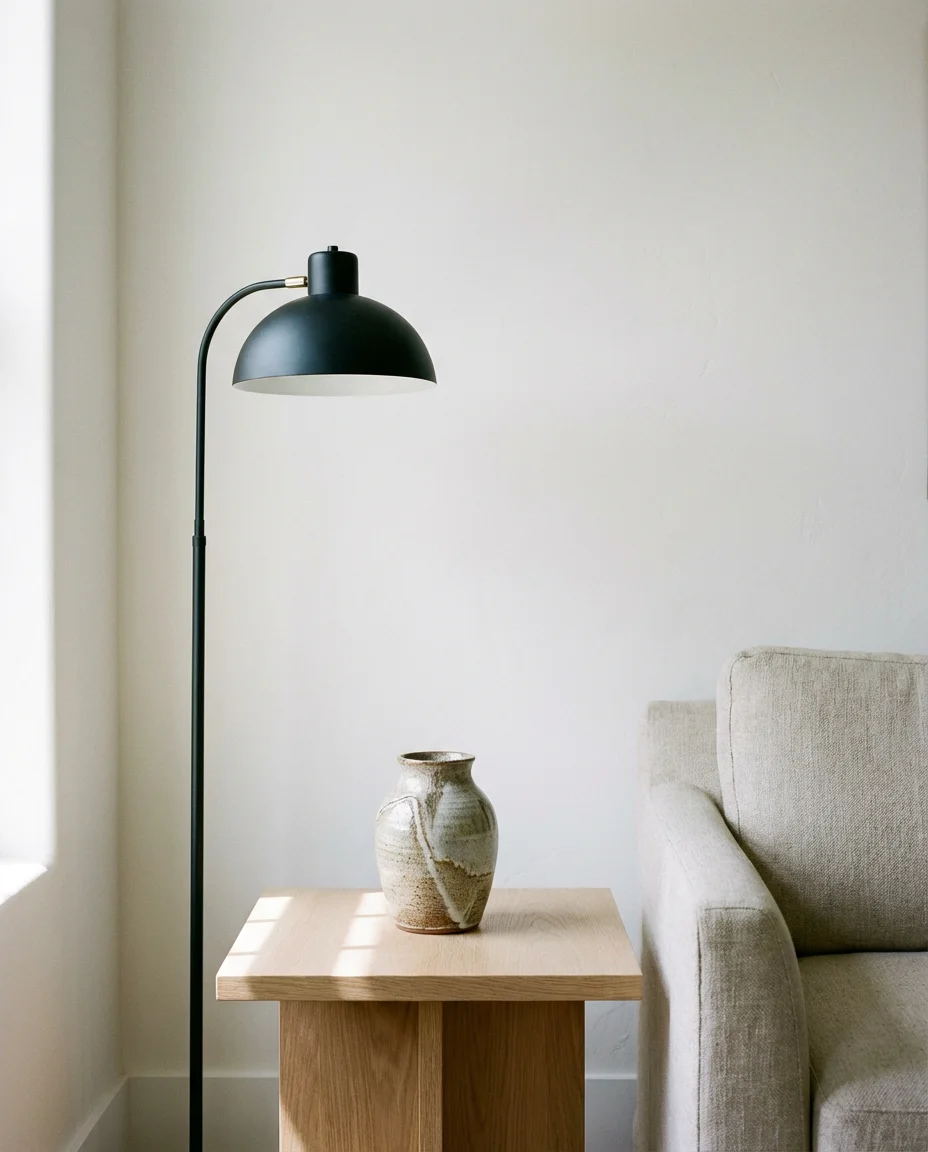
This is the version of farmhouse that works best in new construction homes—spaces where the architecture is clean and modern and traditional farmhouse styling can feel forced. Rather than adding shiplap and barn doors to a house that was built in 2019, contemporary farmhouse leans into the architecture and brings in warmth through materials alone. Article, Rejuvenation, and West Elm all carry furniture lines that thread this needle well, offering the natural material quality of high-end farmhouse at mid-range prices. Think of this as the grown-up, edited version of the style.
10. Cozy Modern Farmhouse With a Gray Couch
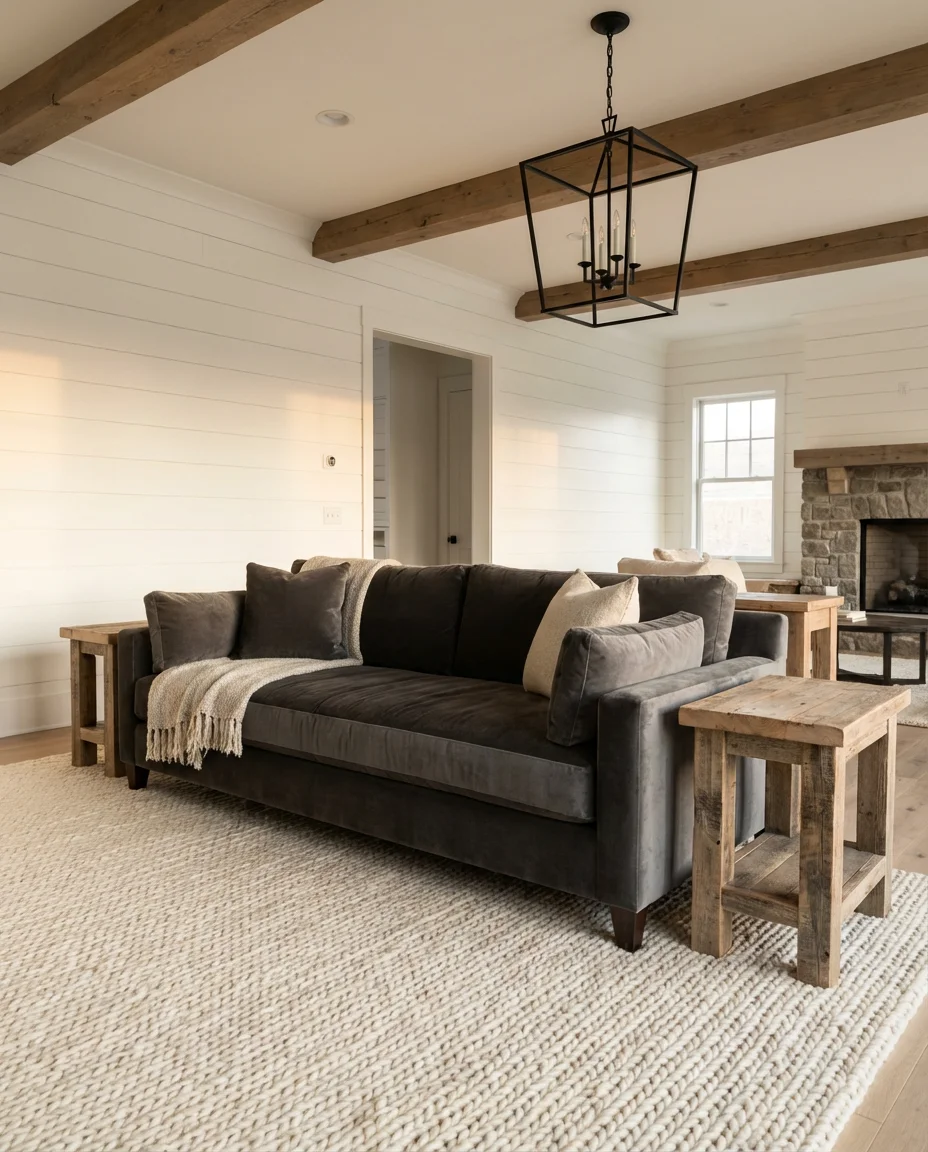
A gray couch is one of the most searched pieces of farmhouse furniture on Pinterest—and for good reason. Warm gray, in particular, is an extraordinarily versatile anchor for a cozy modern living room. It reads as neutral without the stark coldness of white, and it plays beautifully with both warm woods and cooler metals. Pair a warm charcoal or greige velvet sofa with a chunky wool rug, raw wood side tables, and matte black iron light fixtures for a farmhouse living room that feels modern and inviting in equal measure. The gray does the bridging work between the old and the new.
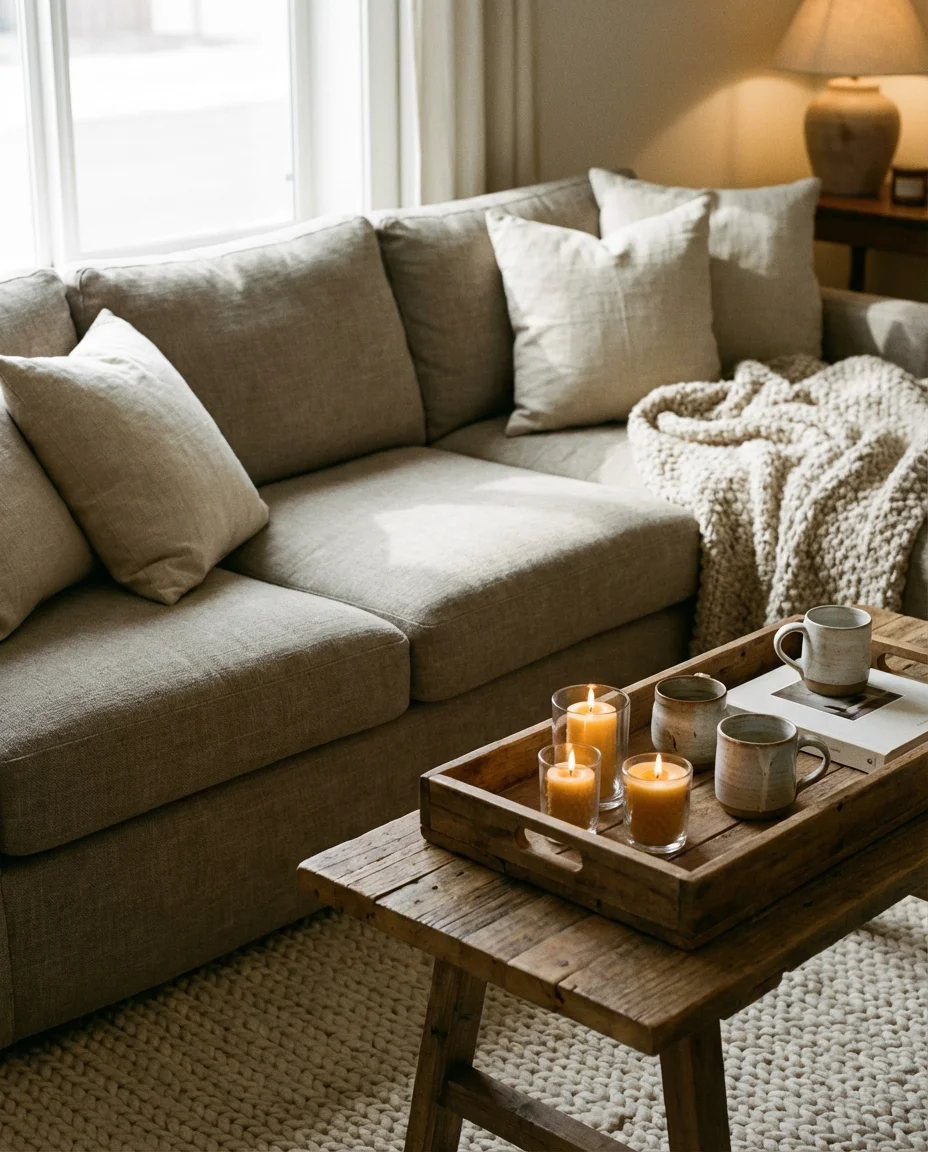
One common mistake people make with gray sofas is choosing a cool blue-gray instead of a warm greige-gray—the cooler tones can make a room feel chilly rather than cozy, especially under warm artificial light. Before committing to a sofa, bring home fabric swatches and look at them in your actual room at different times of day. Warm grays like Benjamin Moore’s Revere Pewter or Sherwin-Williams’ Accessible Beige are good color references for the kind of gray that plays best with farmhouse warmth. Look for sofas with a relaxed, slightly slouchy profile rather than stiff, structured shapes.
11. Industrial Farmhouse With Metal and Reclaimed Wood

The industrial farmhouse look is a natural evolution—both styles share a love of honest materials and utilitarian beauty, so their combination feels organic rather than forced. Reclaimed wood beams, pipe-style shelving, iron factory pendants, exposed brick, and distressed leather all live comfortably in the same room. The key is maintaining enough warmth to prevent the space from tipping into cold loft territory. A large, soft area rug, plenty of throw pillows, and at least one upholstered piece are essential counterweights to all the hard surfaces. The lived-in, unfinished quality of both styles makes them natural partners.
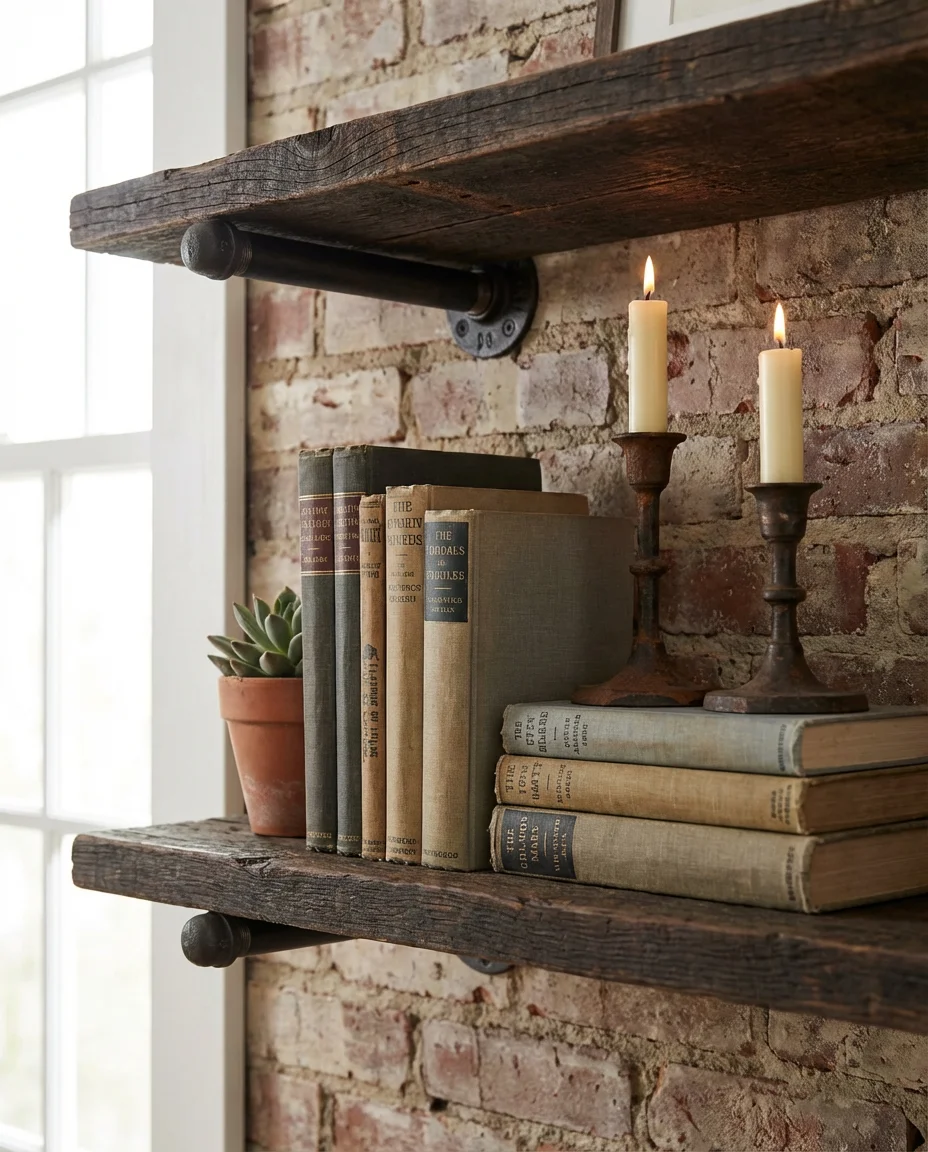
Reclaimed wood is both the hero material and the potential budget challenge of this look. Genuine reclaimed timber—barnwood, old-growth pine, salvaged factory flooring—can be expensive and hard to source. However, many lumberyards and online suppliers now carry “character grade” new wood with similar visual texture at a lower cost. Alternatively, a solid barnwood coffee table or shelving unit can carry the reclaimed element without requiring it everywhere. Etsy and Chairish both carry excellent reclaimed wood furniture from small American craftspeople—and the pieces often have documented provenance, which adds to the story.
12. Moody Farmhouse With Dark Walls and Rich Tones
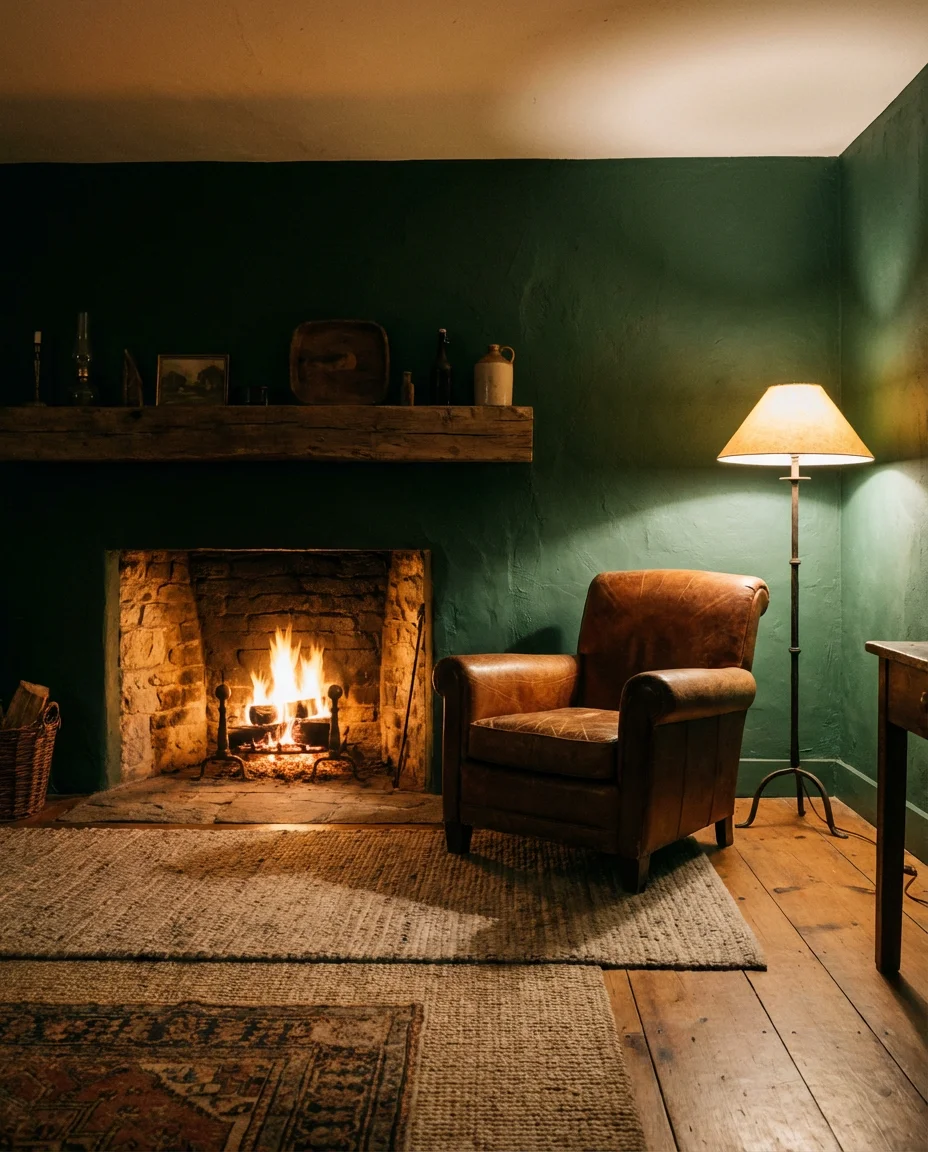
The moody farmhouse living room is the anti-all-white—and it’s having a major moment. Deep, saturated wall colors like forest green, navy, charcoal, or inky black create a dramatic, enveloping atmosphere that feels incredibly grown-up. Dark walls don’t make a room feel smaller when done right; if anything, they create a sense of depth and coziness that light walls simply can’t match. The farmhouse elements—raw wood, layered textiles, and iron hardware—read even more richly against a dark background, and vintage and antique pieces look dramatically better in this context than on a white wall.
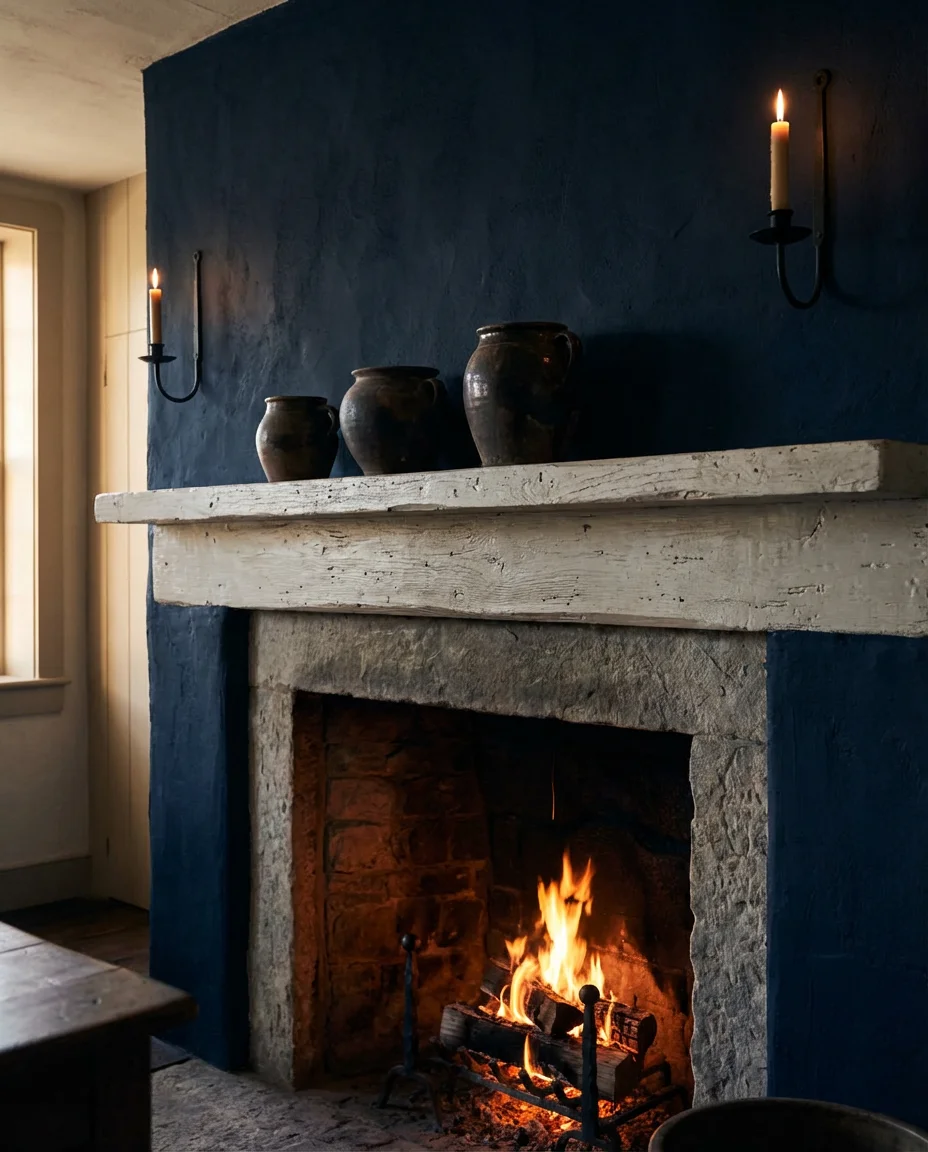
If you’re going dark, commit fully—half-hearted dark walls (stopping at chair rail height or using an overly greyed-out version of a color) often just look dingy rather than dramatic. Choose a saturated, deep tone and take it all the way to the ceiling for maximum impact. Benjamin Moore’s Black Forest Green, Farrow & Ball’s Hague Blue, and Sherwin-Williams’ Tricorn Black are all proven performers in living rooms. Balance the darkness with plenty of warm light sources—sconces, table lamps, and firelight all do the heavy lifting in a moody farmhouse room.
13. Paint Colors That Define the Farmhouse Mood
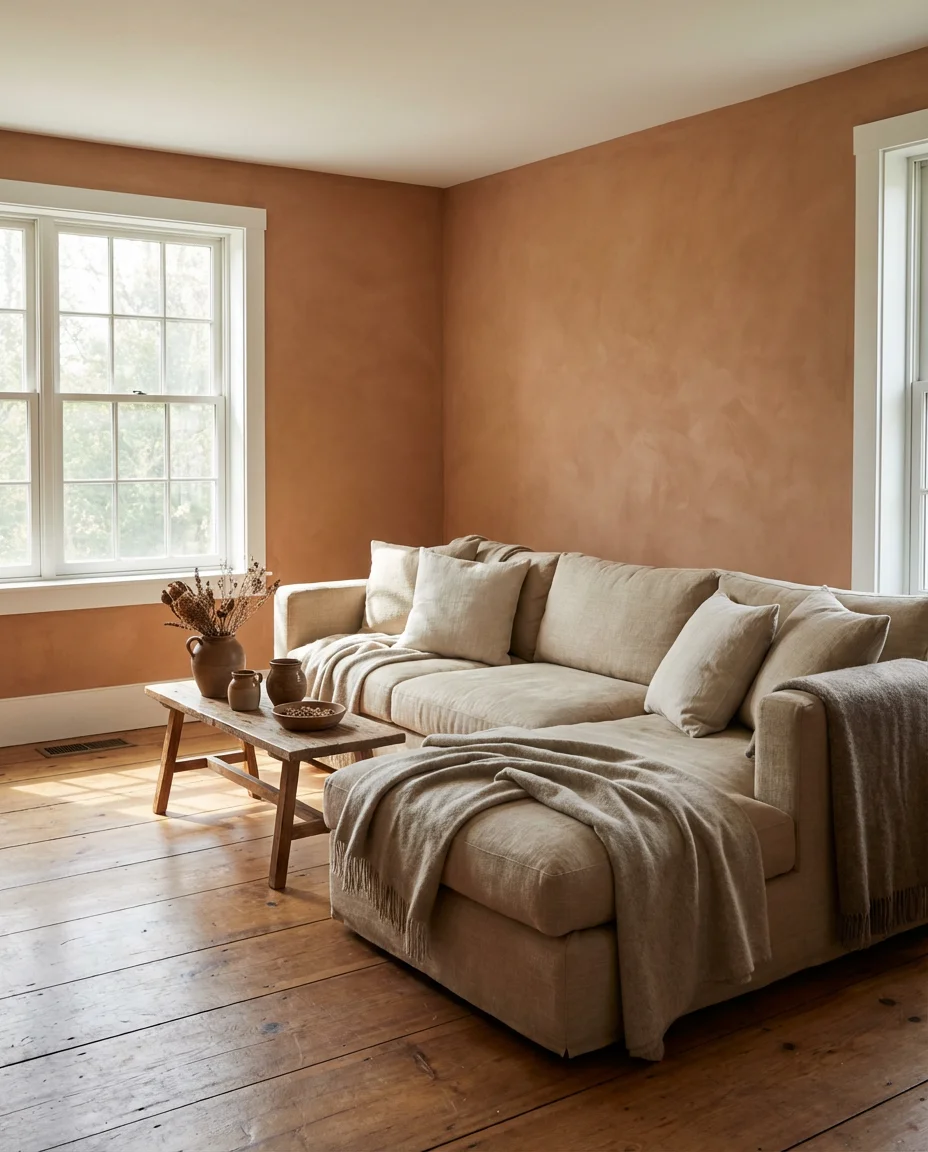
Choosing the right paint colors is arguably the single most impactful decision in a farmhouse living room—and the range is wider than most people realize. Classic farmhouse white (think Benjamin Moore’s White Dove or Sherwin-Williams’ Alabaster) remains the most versatile foundation, but the style supports everything from warm creams and tawny tans to sage greens and slate blues. Earthy tones—terracotta, clay, and warm sand—have surged in popularity as an alternative to the all-white farmhouse, bringing richness and a grounded quality that photographs beautifully on Pinterest.
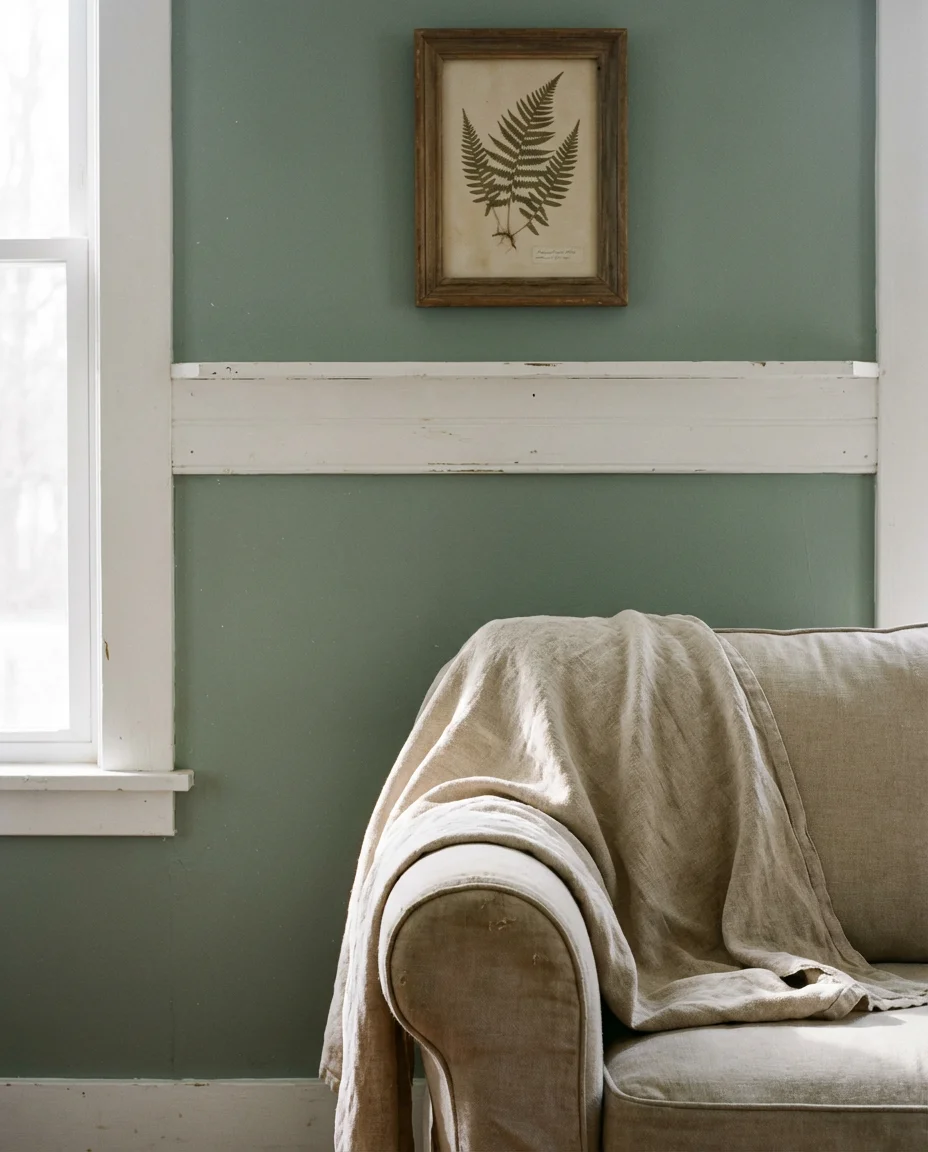
The most common mistake in farmhouse paint selection is choosing a cool white or gray that reads as clinical rather than cozy. Whites with yellow, pink, or beige undertones will always look warmer in the kinds of artificial light most American homes use in the evening. Always test paint colors in your actual room—on a large swatch, at least 12×12 inches—at multiple times of day before committing to a full room. A color that looks perfect in the store’s lighting can look entirely different under warm incandescent light at 7pm in a north-facing room. The extra effort is always worth it.
14. Wall Decor That Tells a Story
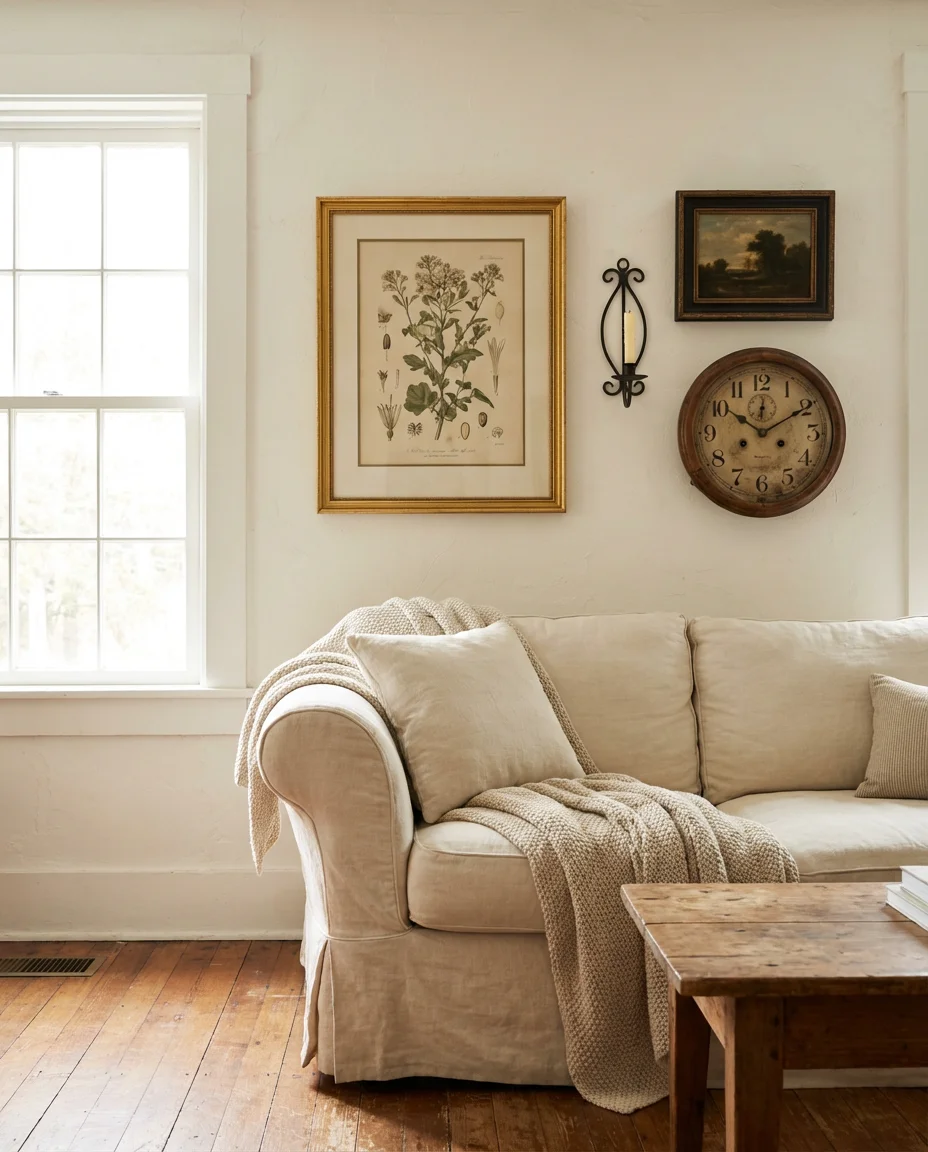
Wall decor in a farmhouse living room should feel curated, not coordinated. Matching wall art sets—three identically framed prints bought as a set—rarely achieve the layered, collected quality that makes a farmhouse room feel authentic. Instead, mix scales, frames, and mediums: a large vintage botanical print in a weathered gold frame beside a small oil painting in a simple white mat, flanked by a wrought iron wall sconce. The arrangement should look like it accumulated over time because pieces were loved, not because they matched a décor theme at a big-box store.
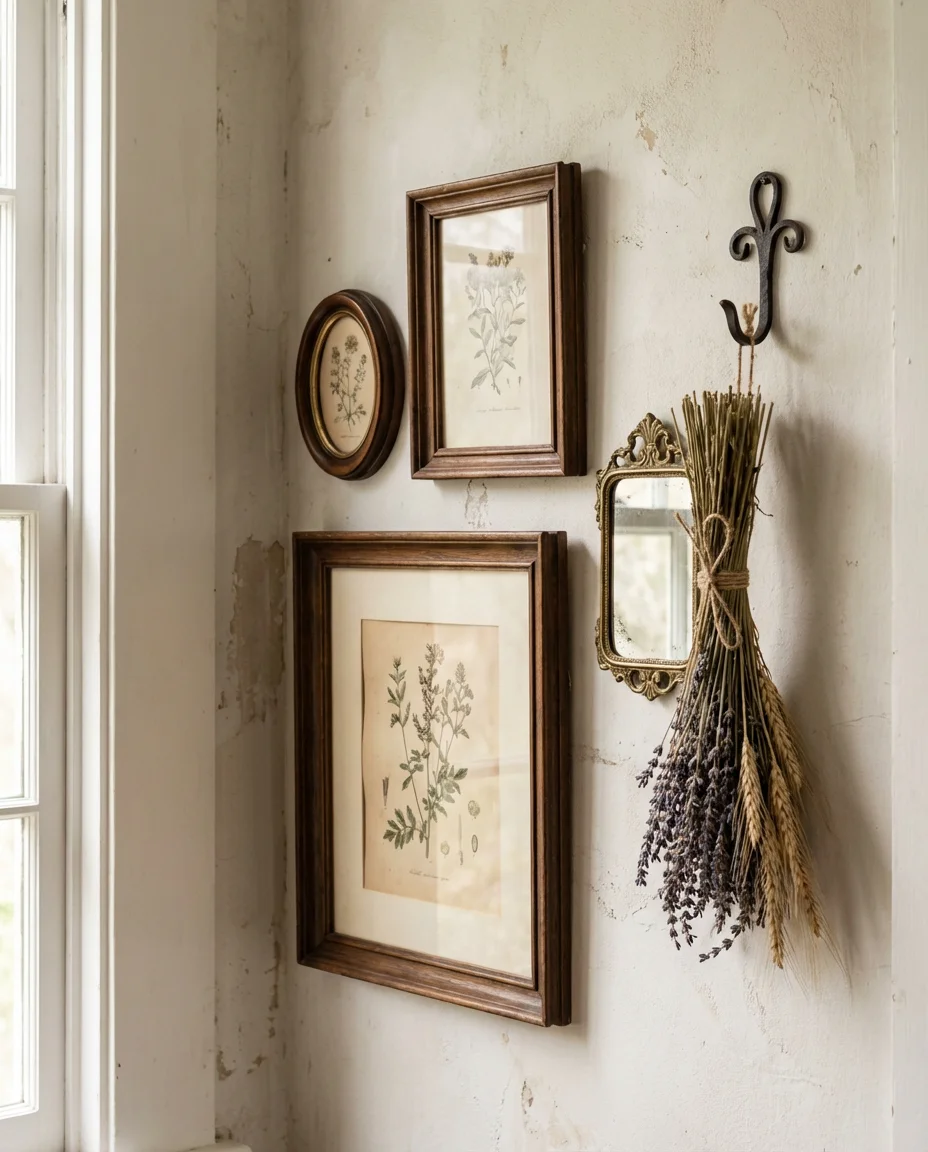
Gallery walls are a farmhouse staple, but they require planning to avoid looking chaotic. Lay your arrangement on the floor first, step back, and photograph it—this gives you a cleaner view of the spacing and composition before anything goes into the wall. Mix family photos (in classic black and white for a cohesive look), vintage prints, small mirrors, and meaningful objects. A worn wooden clock, a vintage window frame, or a piece of architectural salvage can anchor a gallery wall beautifully. Give the arrangement a clear center of visual gravity—typically the largest piece—and build outward from there.
15. European Farmhouse With Stone and Plaster
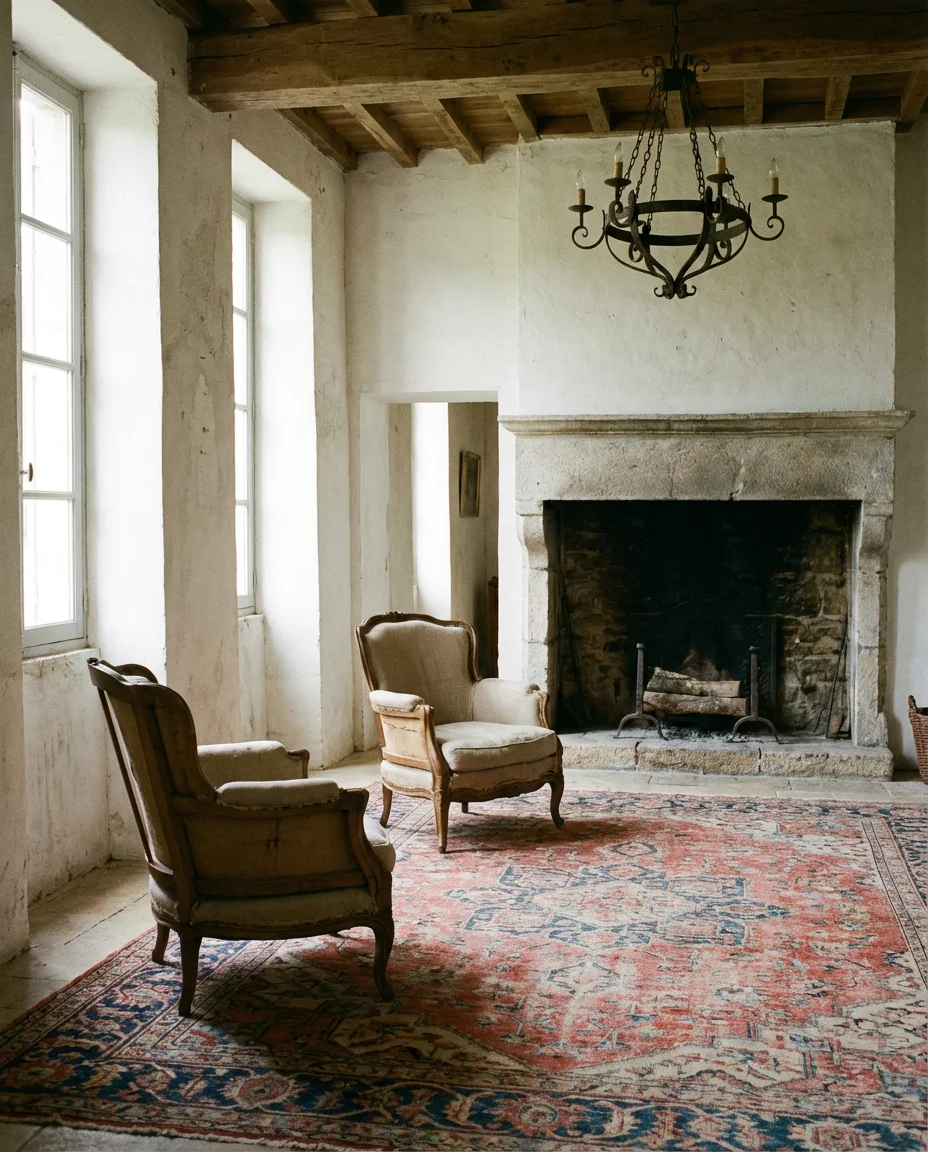
The European farmhouse aesthetic draws on centuries of rural architecture from France, Italy, and the UK — and it’s distinctly different in feel from its American counterpart. Where the American farmhouse tends toward painted wood and shiplap, the European version is defined by raw plaster walls, stone floors and fireplaces, iron chandeliers, and a palette of dusty, aged neutrals. Furniture tends toward the antique or genuinely old—a worn oak farm table repurposed as a coffee table, a pair of linen-covered bergère chairs, and a hand-knotted rug in faded reds and blues. The overall effect is deeply rooted, as if the room has been quietly evolving for generations.
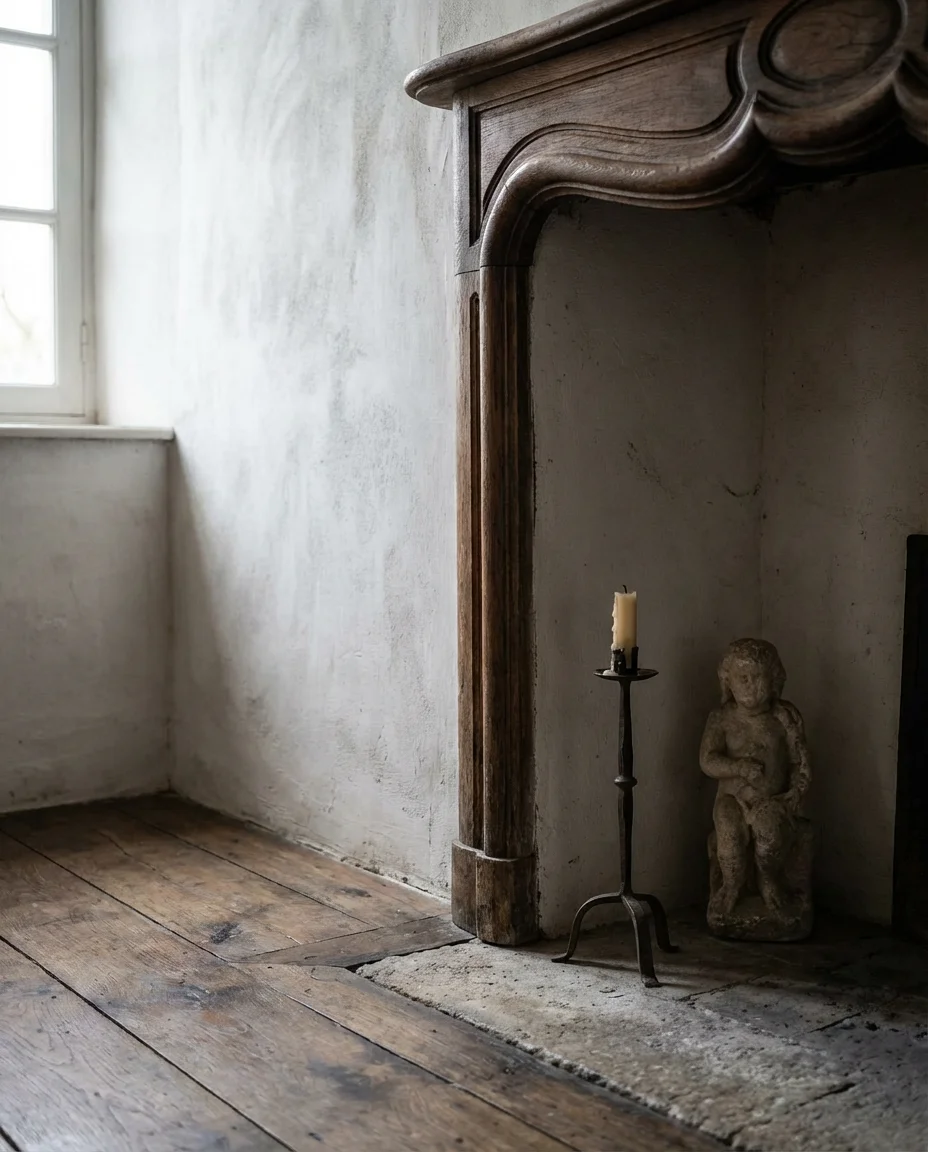
Venetian plaster and limewash paint are the most accessible ways to achieve the European farmhouse wall texture in a modern home. Both techniques create depth, movement, and a slightly matte, mineral quality that drywall and standard paint simply can’t replicate. Limewash is particularly DIY-friendly—several companies, including Romabio and Portola Paints, offer premixed versions that can be applied over existing painted walls with a wide brush. The result is a wall that looks centuries old in the best possible way, and it pairs beautifully with natural stone fireplace surrounds and aged oak floors.
16. TV Wall Done Right in a Farmhouse Living Room

The TV wall is one of the trickiest design challenges in a farmhouse living room—a flat screen mounted above a shiplap fireplace can look stunning or awkward depending entirely on how it’s integrated. The key is treating the TV as one element in a composed vignette rather than the focal point around which everything else revolves. Frame the screen with a built-in surround, floating shelves stacked with books and pottery, or a dramatic barn wood feature wall that gives the TV visual context. Black and white photography arranged on either side of the screen helps tie it into the overall décor story.

One of the smartest solutions many farmhouse homeowners have adopted is the Samsung Frame TV — its artwork display mode means it functions as a piece of wall art when not in use, solving the black rectangle problem that plagues so many beautifully decorated living rooms. At around $600–$1,500 depending on size, it’s a real investment, but one that dramatically changes the visual quality of the room during the many hours when the TV isn’t actively being watched. If the Frame TV isn’t in the budget, consider hiding the screen behind a sliding barn door panel—a farmhouse-appropriate solution that doubles as a design feature.
17. Earthy Tones and Natural Materials
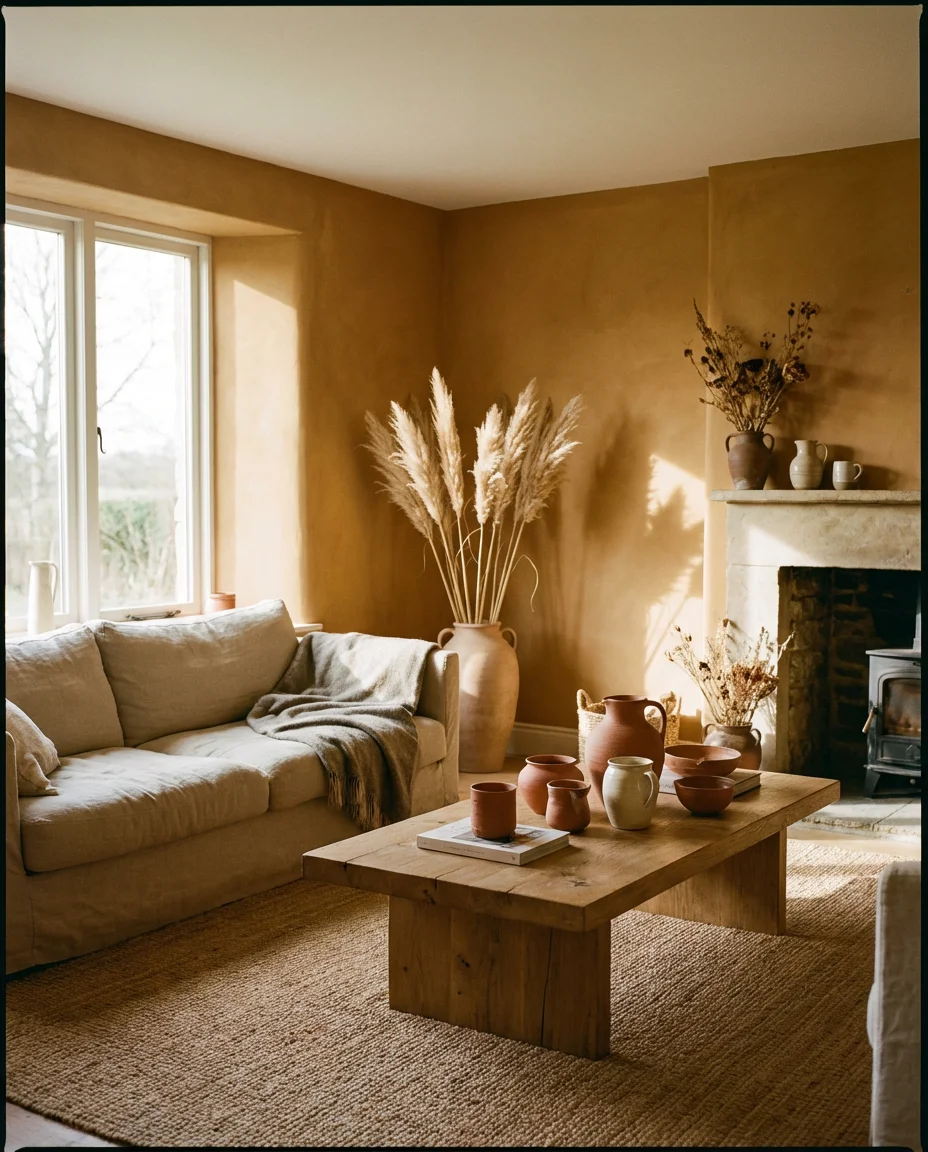
An earthy farmhouse living room leans into the natural world for its entire palette and material vocabulary—clay walls, jute rugs, unfinished linen, raw oak, hand-thrown pottery, dried botanicals, and smooth river stones. The palette runs through ochre, rust, warm brown, olive, and cream—colors pulled directly from soil, sand, bark, and dried grass. This approach has a grounding, almost meditative quality that resonates deeply in a cultural moment when so many people are craving connection to something more natural and less synthetic. It also photographs exceptionally well in the warm, organic light that Pinterest and Instagram favor.
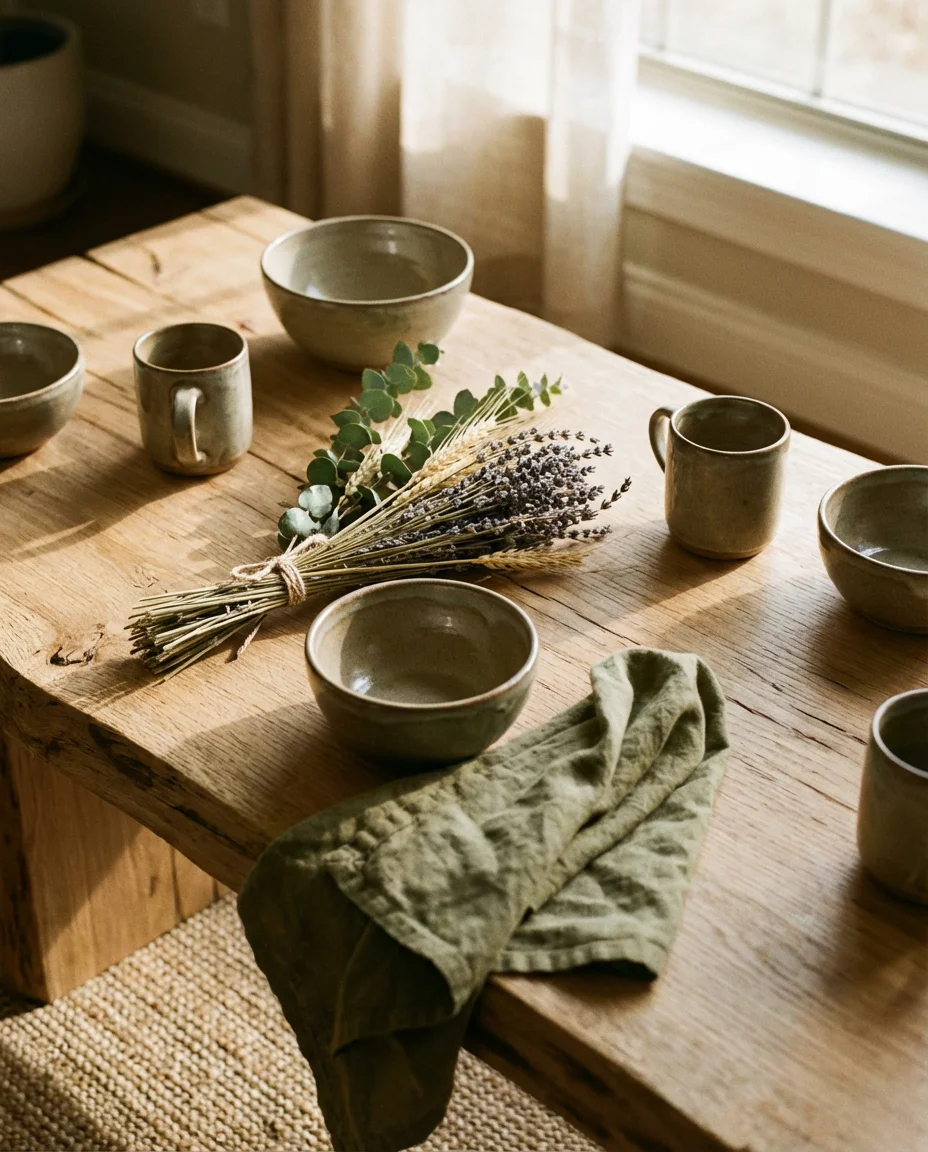
The beauty of the earthy farmhouse palette is that it’s enormously forgiving—natural tones almost always work together because they share the same visual origin. You can mix a rust throw pillow with an olive velvet armchair and a caramel leather ottoman without creating visual conflict, because all three colors exist in the same natural landscape. Start with the largest surface—the rug or the sofa—and build outward. Many interior designers recommend choosing the rug first because it’s the hardest element to adjust once you’re committed; let it set the tonal key for everything else in the room.
18. Black and White Farmhouse for Graphic Impact

A black and white farmhouse living room is bolder than it sounds—and the results are consistently stunning. The contrast of crisp white walls or shiplap against matte black iron fixtures, hardware, furniture legs, and frame details creates a clean, graphic quality that feels both timeless and entirely current. Natural wood tones serve as the essential warmth in between—without them, the scheme can tip into stark minimalism. A weathered oak coffee table, a woven jute rug in natural tones, and a few pieces of terracotta pottery break the binary and keep the room feeling like an evolved farmhouse space rather than a modern art installation.
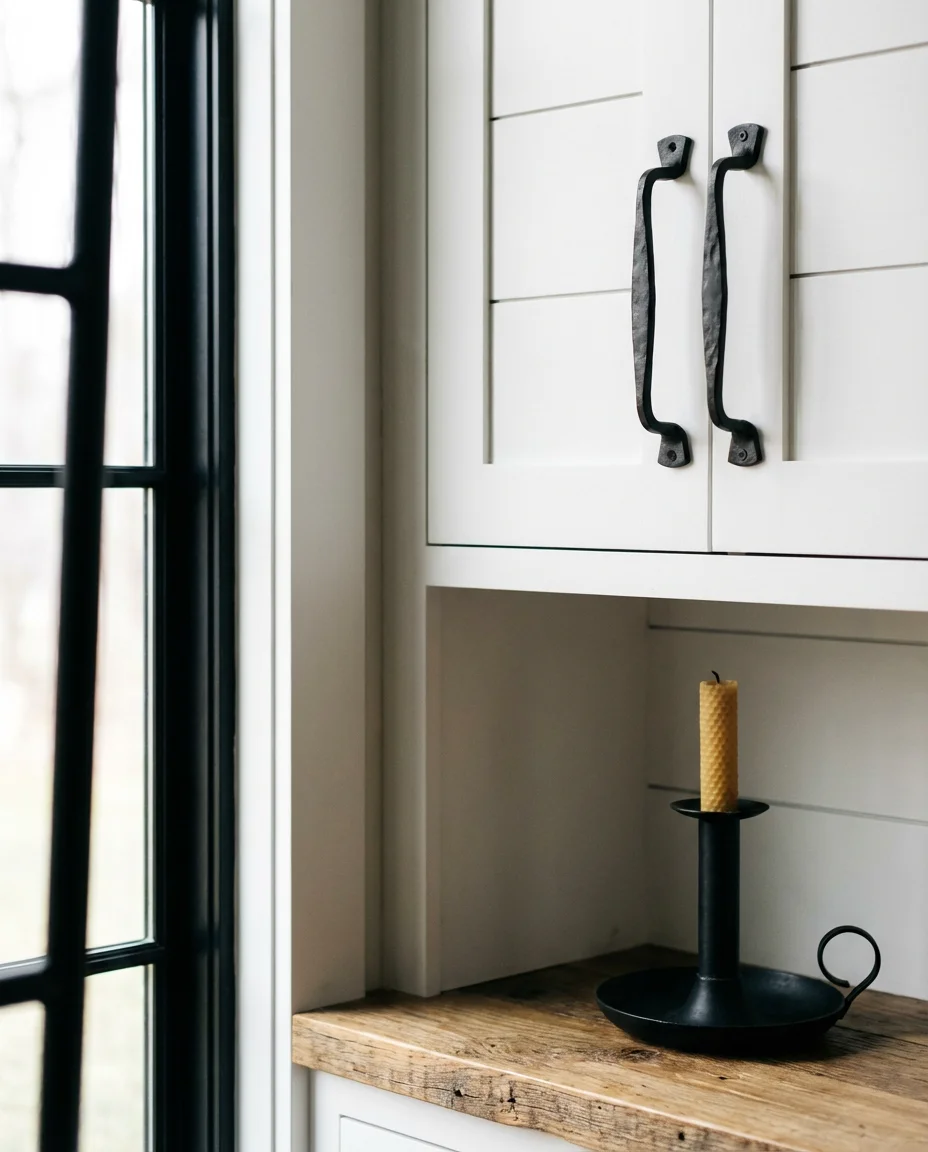
Matte black has become the signature finish of modern farmhouse design—and it shows up everywhere from window frames to cabinet hardware to light fixtures to picture frames. The matte finish is crucial: glossy black reads as more formal and urban, while matte black retains the unpretentious, utilitarian quality that feels right in a farmhouse context. Budget-conscious designers can achieve a lot with this look by simply swapping out hardware on existing furniture—replacing brass or nickel pulls and knobs with matte black alternatives is a $50–$150 update that transforms the entire feel of a room.
19. Cottage Farmhouse With Florals and Softness
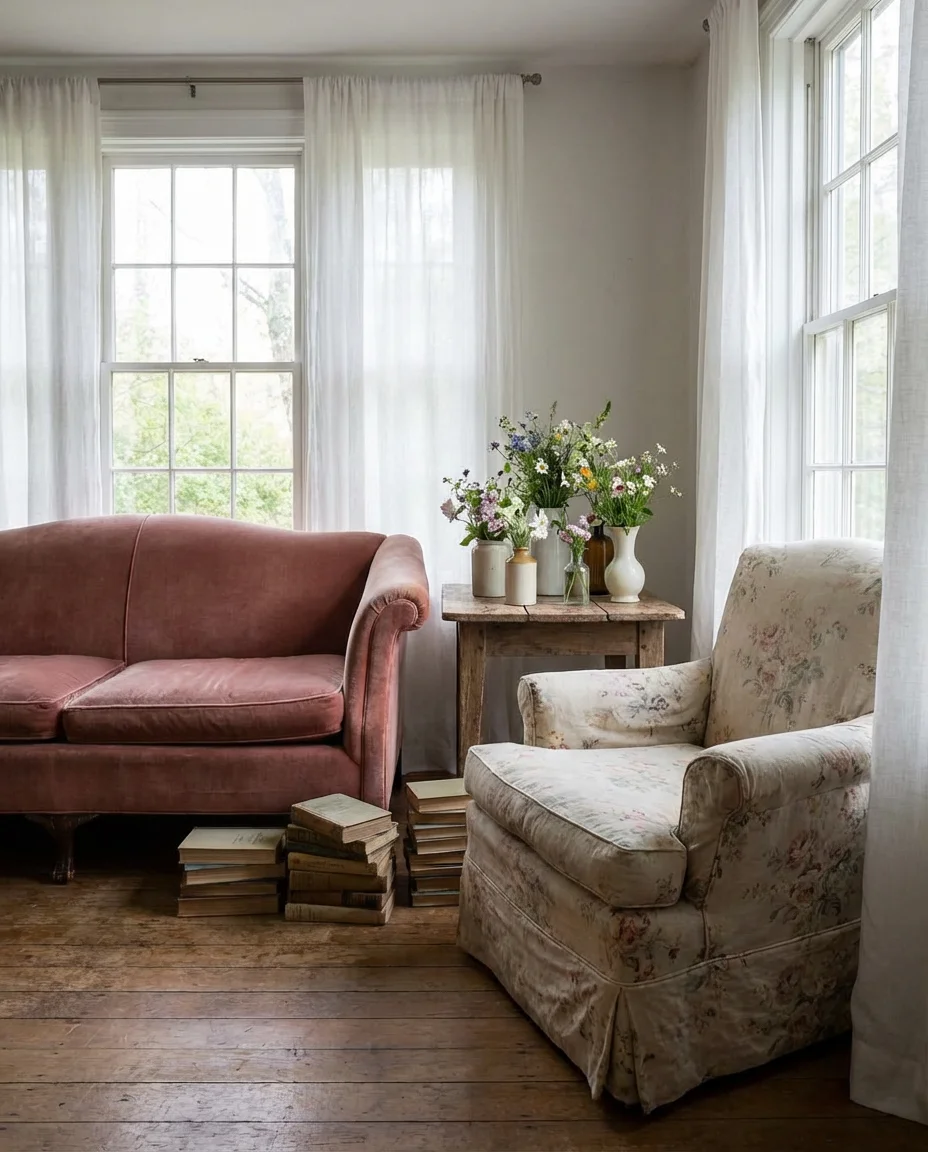
The cottage farmhouse style is farmhouse at its most romantic and unhurried—think an English cottage garden brought indoors. Faded floral chintzes layered with linen, a slightly worn velvet sofa in dusty rose or sage green, books stacked on every surface, fresh or dried flowers in mismatched vases, and windows dressed in simple white curtains that flutter in a breeze. This look is unapologetically feminine and soft without being fussy, and it has an enormous amount of warmth and personality. It’s the farmhouse aesthetic filtered through the lens of a well-loved, well-read home rather than a decorator’s showroom.
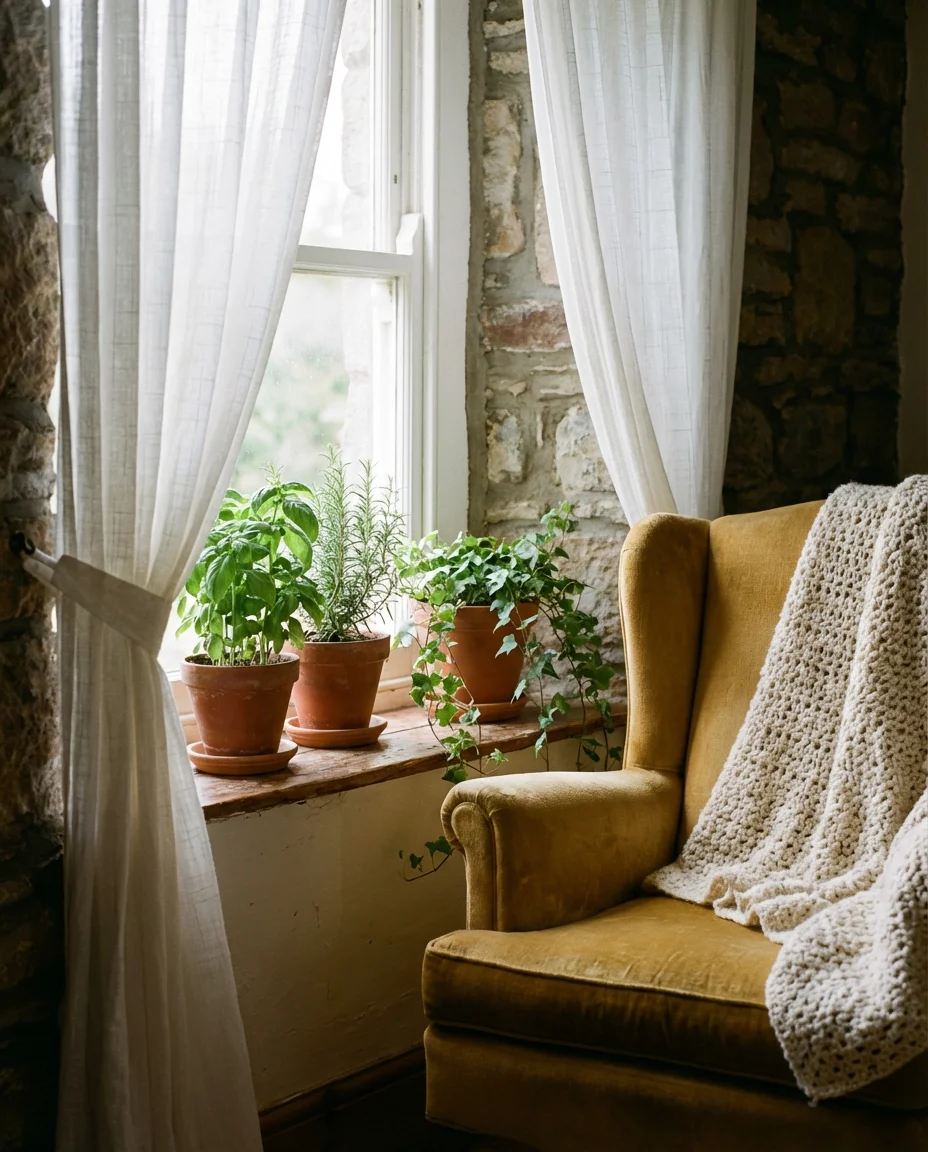
Real homeowners who love this style often describe it as the antidote to the overly styled, everything-must-coordinate approach to decorating. The cottage farmhouse living room is allowed—even encouraged—to have a little bit of charming chaos: a stack of novels on the floor, a crocheted blanket tossed over the sofa back, and a windowsill lined with small potted herbs and trailing plants. The floral element can be as subtle or as dominant as you like—from a single large-scale botanical print to a fully floral-upholstered armchair. Keep the background neutral, and the florals will do their job without overwhelming the room.
20. Modern Coastal Farmhouse With Breezy Neutrals
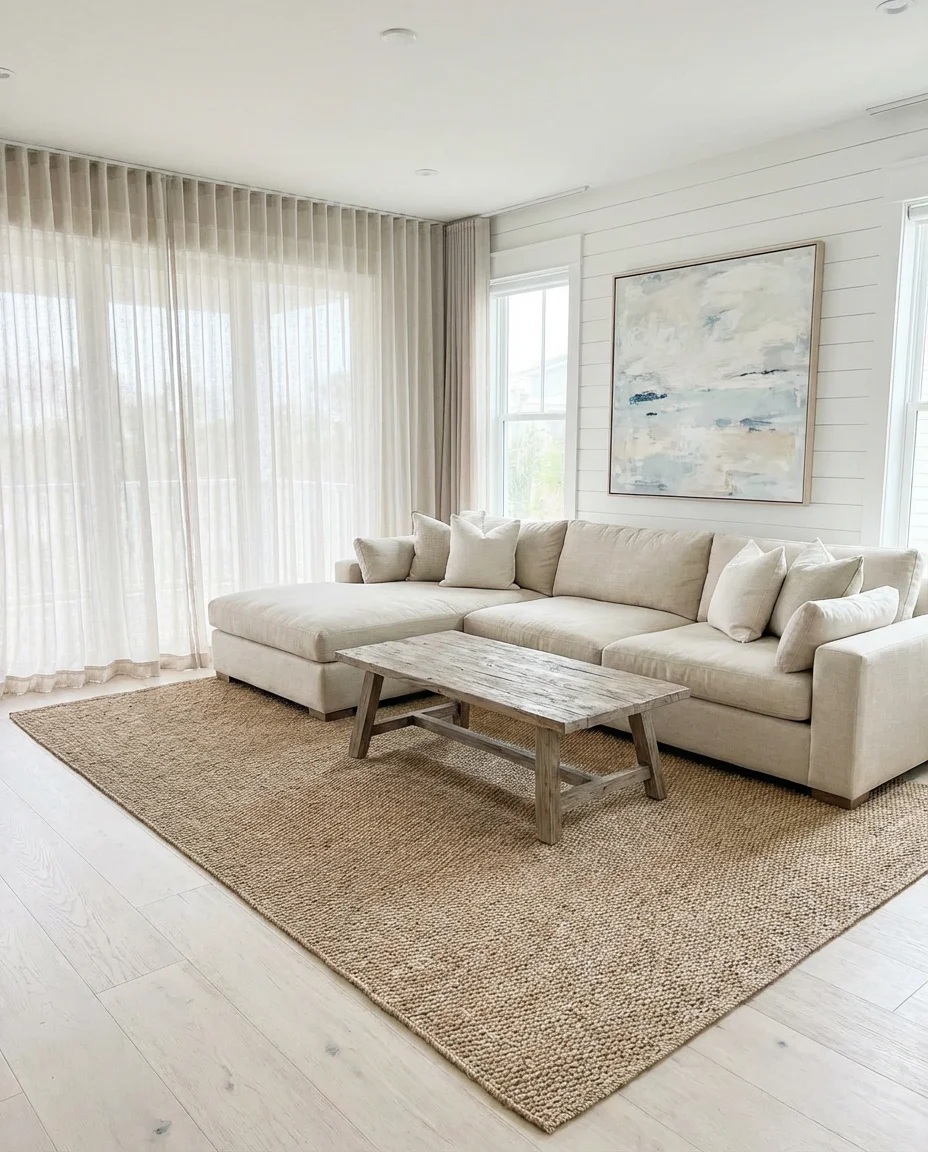
The modern coastal farmhouse look is less about seashells and more about the quality of light and air you find near the ocean—that bleached, sun-washed, utterly relaxed atmosphere. Whitewashed floors or wide-plank white oak, breezy linen curtains that reach the floor, a large sectional in natural canvas or performance linen, and a driftwood-finish coffee table are the building blocks. The rustic farmhouse elements—reclaimed wood, handmade pottery, woven baskets—ground the look and keep it from feeling too polished or resort-like. This is a farmhouse you could actually live in with kids, dogs, and sand-covered flip-flops.
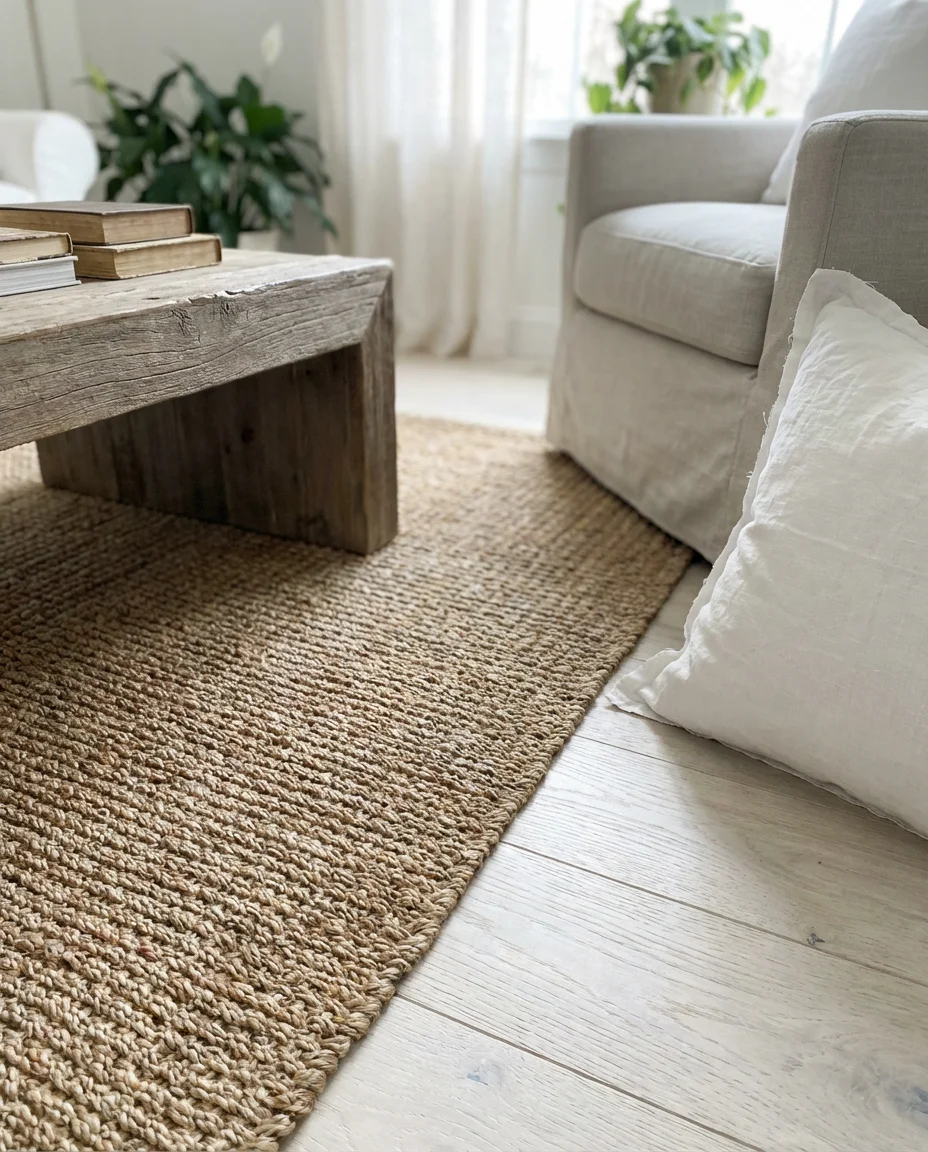
Performance fabrics are a practical necessity for this look if the room gets actual daily use. Indoor-outdoor fabrics from brands like Sunbrella or Perennials are now available in the soft, natural-looking textures that this aesthetic demands—and they’re virtually indestructible. A performance linen or canvas sofa can be wiped clean, resists fading, and handles the kind of casual, everyday use that a genuinely lived-in coastal farmhouse requires. Invest in performance fabric for the sofa and any chairs that get heavy use, then spend freely on the softer, more decorative textiles—throws, pillows, rugs—where beauty is the priority over durability.
21. Gray and White Farmhouse With Minimalist Edge
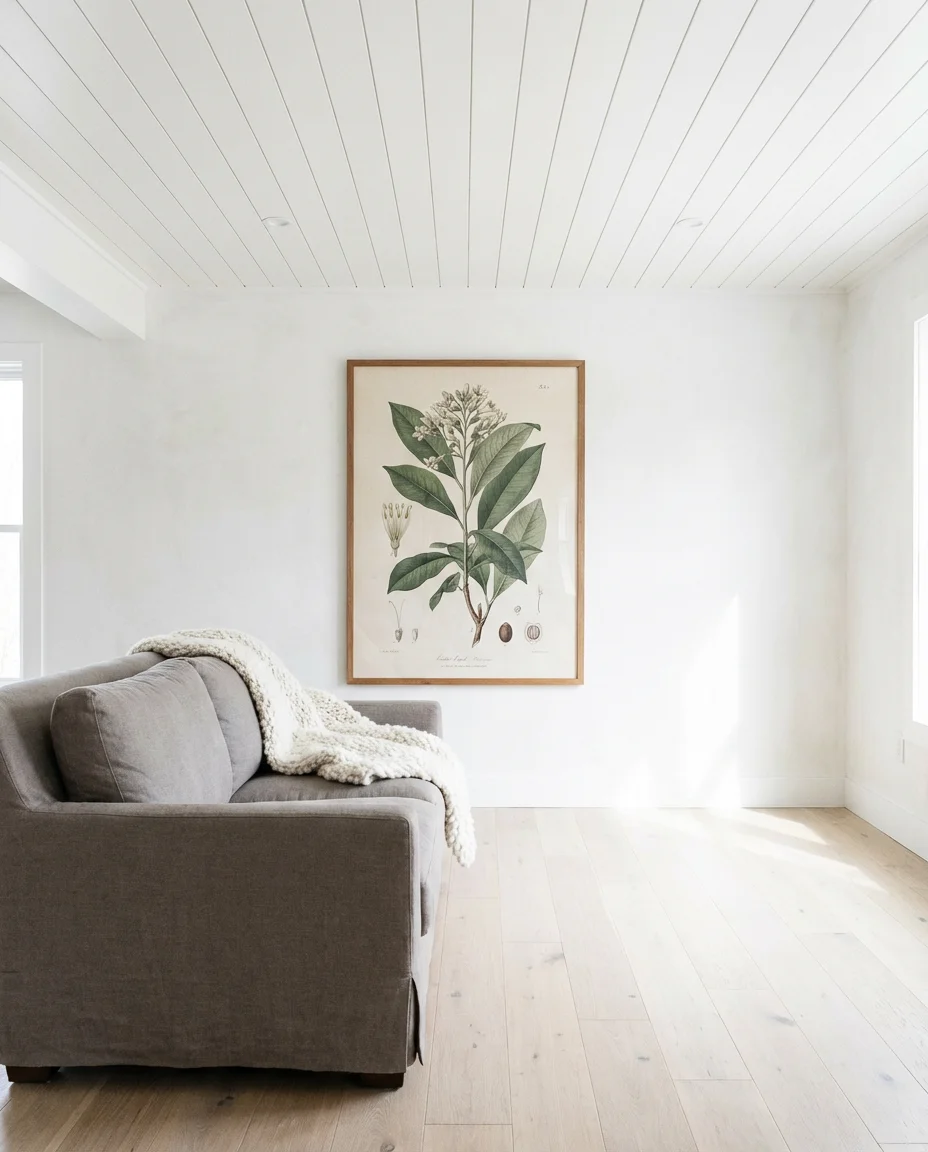
A clean gray and white palette is the quietest, most restrained version of farmhouse design—and in the right hands, it’s incredibly elegant. Cool whites on the walls, warm white shiplap on the ceiling, a gray linen sofa, and a whitewashed wood floor create a room that feels almost monastic in its simplicity. The farmhouse character comes through in the textures: the grain of the wood, the weave of the linen, and the rough edges of hand-thrown ceramics in white and gray. A single oversized vintage map or botanical print provides the room’s focal point without breaking the quiet palette. This is contemporary farmhouse at its most disciplined.
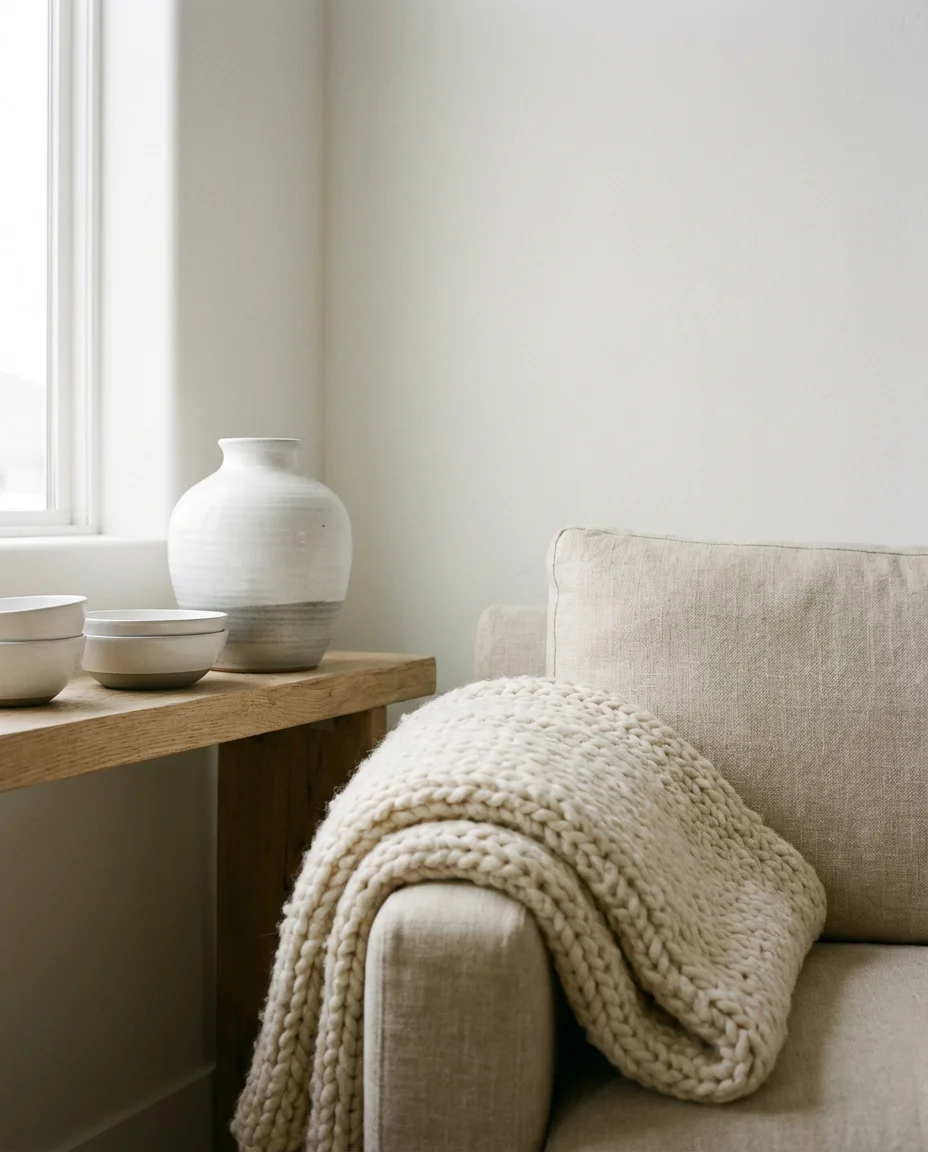
This look works beautifully in homes where the architecture is already doing a lot of the visual work—a lovely window view, good molding, and a well-proportioned fireplace. It’s also enormously practical: a neutral gray and white room is the easiest one to photograph, the easiest to keep looking clean and composed, and the most flexible if your taste evolves over time. The biggest risk is that it tips into feeling cold or lifeless—guard against this with warm-toned wood accents (never gray-stained wood), and make sure at least one textile in the room has some visual weight and warmth, whether that’s a thick wool rug or a chunky knit throw.
22. Antique-Layered Farmhouse With a Curated Collector’s Eye
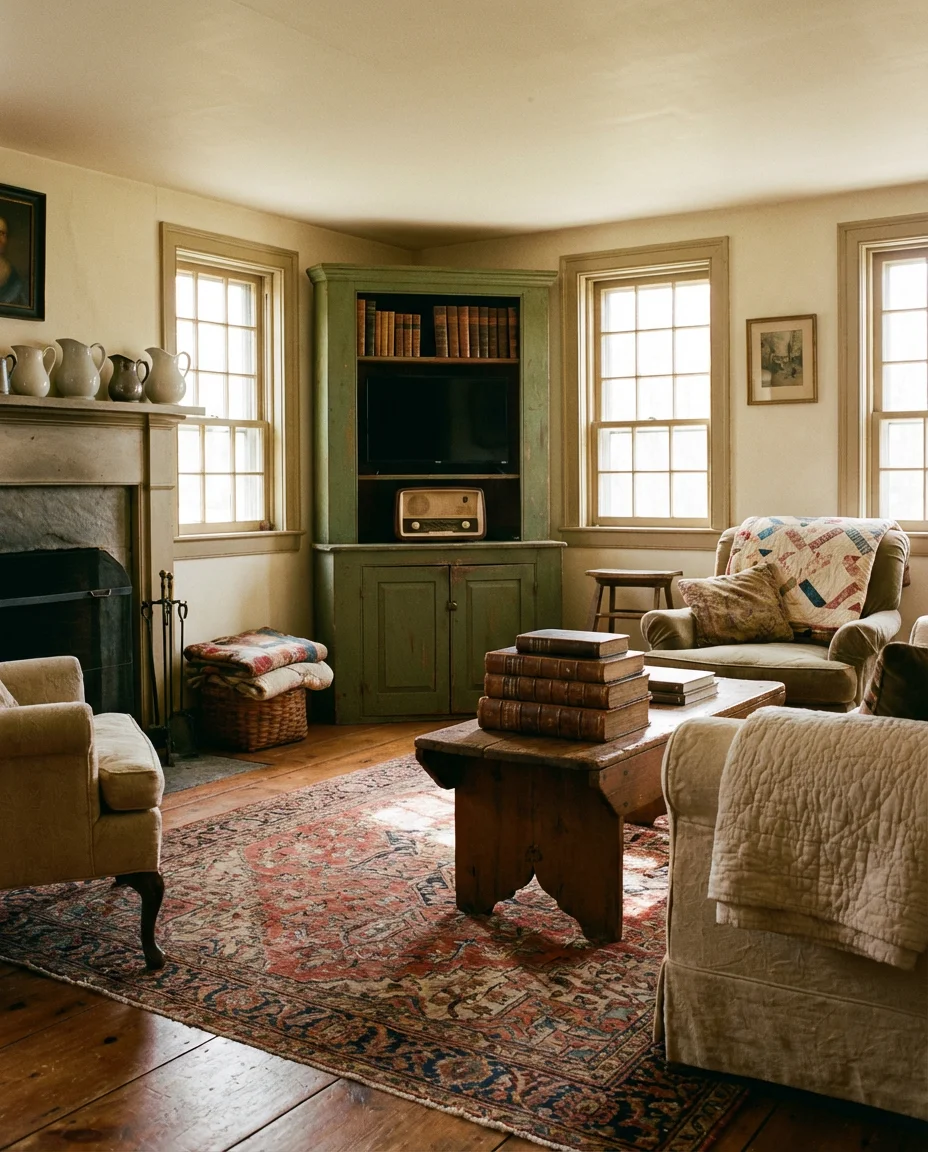
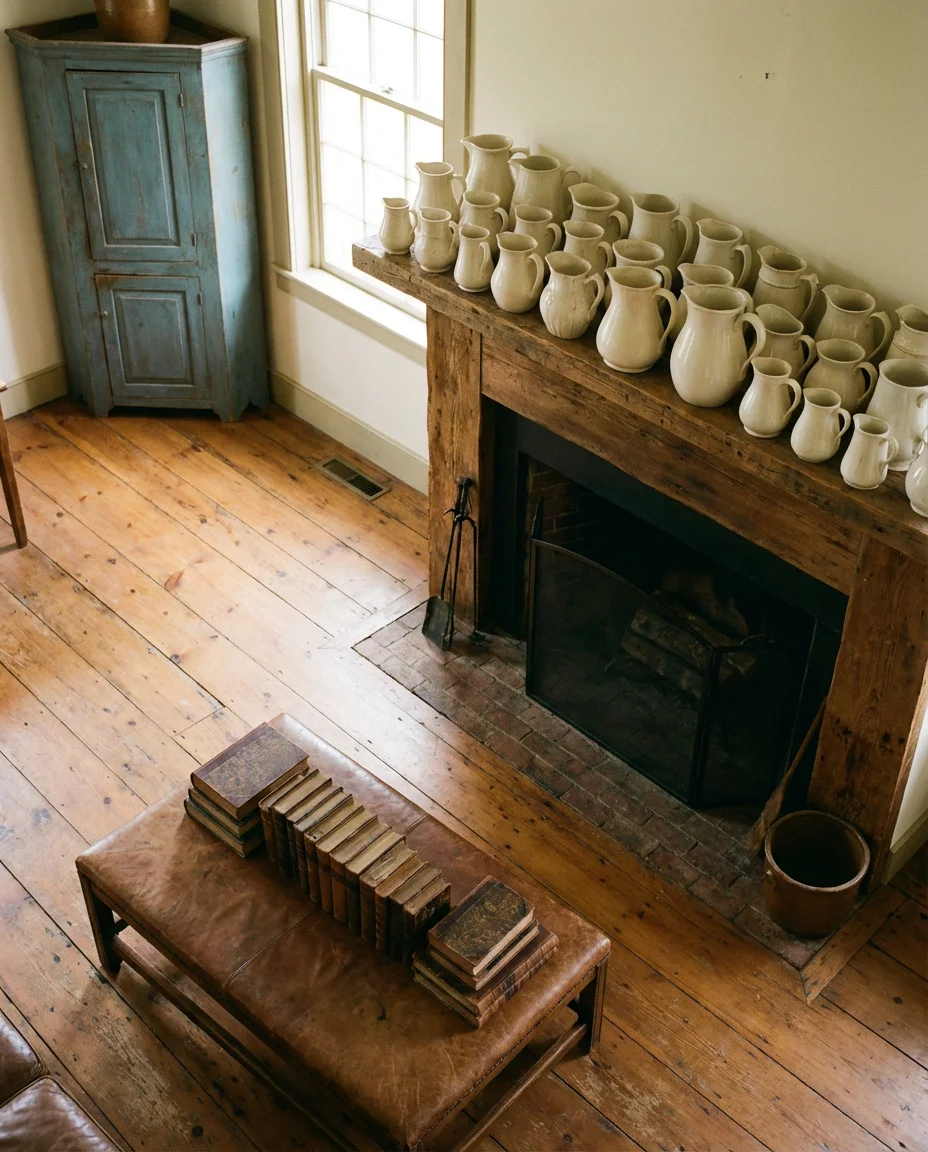
The most soulful farmhouse living rooms are often the most antique-layered ones—rooms where every object has a history and nothing was bought simply to fill a space. A collection of ironstone pitchers on the mantel, a stack of 19th-century leather-bound books on the coffee table, a worn Persian rug that’s been in the family for decades, and a primitive painted cupboard repurposed as a media console. This is less a design style and more a philosophy: buy only things you genuinely love, give each piece enough space to be seen, and let the room evolve slowly over years rather than being decorated all at once.
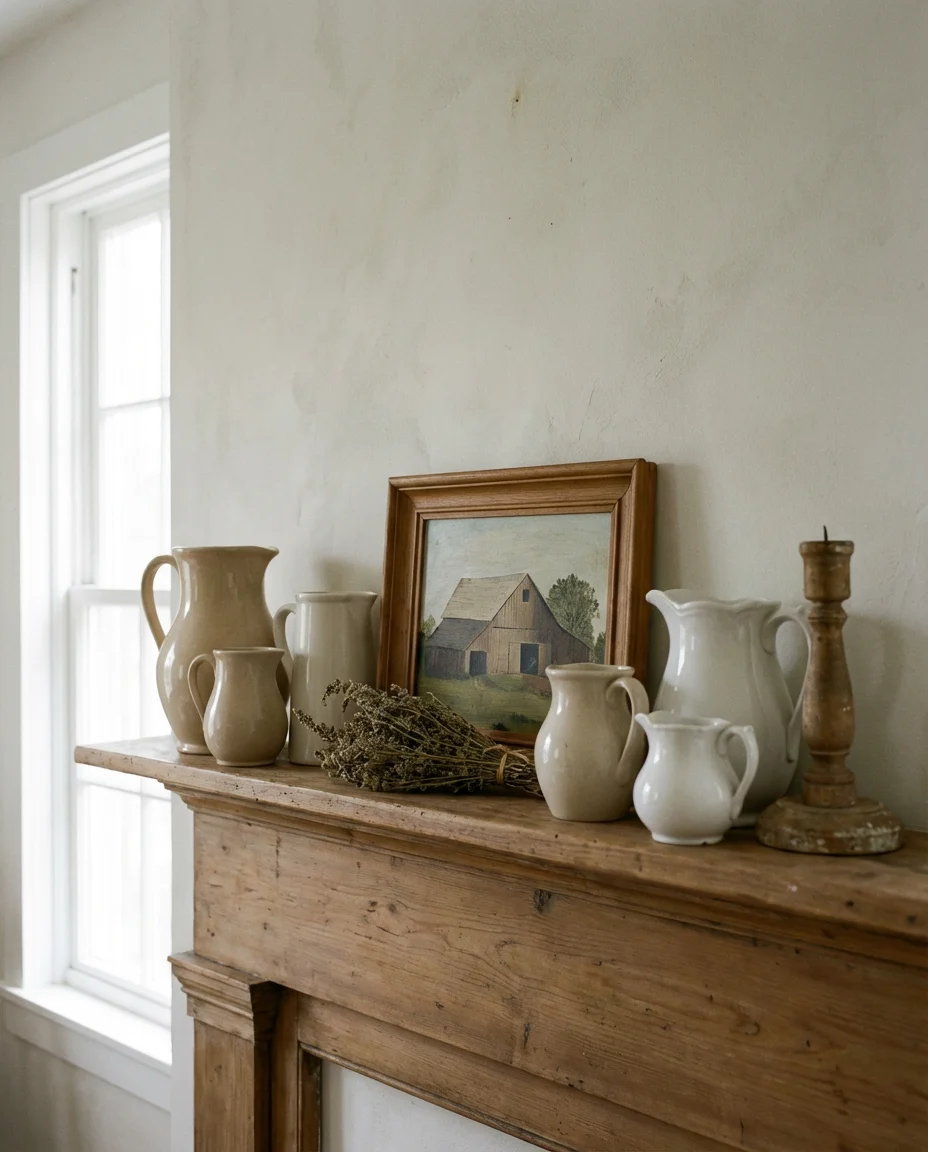
The collector’s farmhouse is the ultimate long game in interior design—it can’t be rushed or replicated in a single shopping trip, and that’s exactly what makes it so distinctive. Start by identifying two or three categories of antiques that genuinely interest you: early American primitives, English transferware, folk art, vintage quilts, or architectural salvage. Then shop with focus: estate sales, auction houses, and rural antique fairs consistently yield better finds than the overly curated antique malls in tourist areas. Over time, a focused collection tells a story that no amount of new-but-old-looking décor can replicate. That story is what makes a house feel like a home.
Conclusion
Whether you’re drawn to the quiet sophistication of a European plaster wall or the bold drama of a moody dark-painted room, farmhouse style has a version that fits your taste and your life. The ideas in this article are meant to be mixed, adapted, and made your own—because the best farmhouse living rooms are always the ones that feel genuinely personal rather than perfectly styled. We’d love to know which ideas resonated most with you. Drop your favorites in the comments below, share your own farmhouse living room photos, or ask any questions about sourcing or styling—we read every single one.