Elementary classroom decor is having a serious moment—and if you’ve spent more than five minutes on Pinterest lately, you already know it. Teachers across the country are reimagining their spaces from the ground up, blending function with beauty in ways that feel less like school and more like the kind of room a child would beg to spend all day in. Whether you’re a first-year teacher starting from scratch, a veteran educator ready for a refresh, or a parent curious about what modern classrooms look like today, the ideas circulating in 2026 are genuinely exciting. In this article, we’re covering some of the most inspiring classroom decor themes, aesthetics, and practical ideas making waves right now—from boho-meets-vintage to calm ocean blues and everything nostalgic in between.
1. Boho Rainbow Classroom Aesthetic
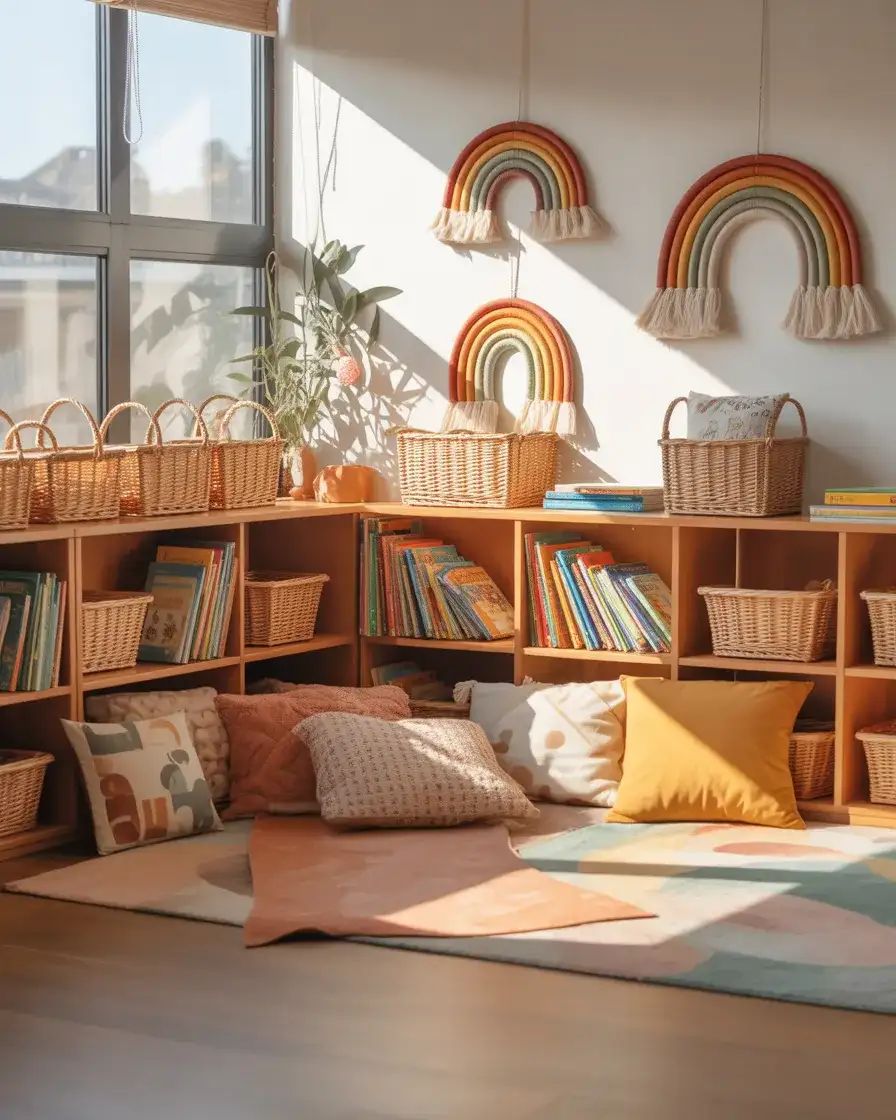
There’s something almost magical about walking into a classroom that wraps you in warmth without screaming loudly about it. The boho rainbow classroom is exactly that kind of space—earthy terracotta, dusty sage, and muted marigold layered together through fabric wall hangings, woven baskets, and hand-lettered signage. It leans colorful without being chaotic, pulling its palette from nature rather than a neon crayon box. This aesthetic works beautifully in both kindergarten and elementary grades, and it photographs like a dream—which is exactly why it keeps blowing up on Pinterest boards every single year.
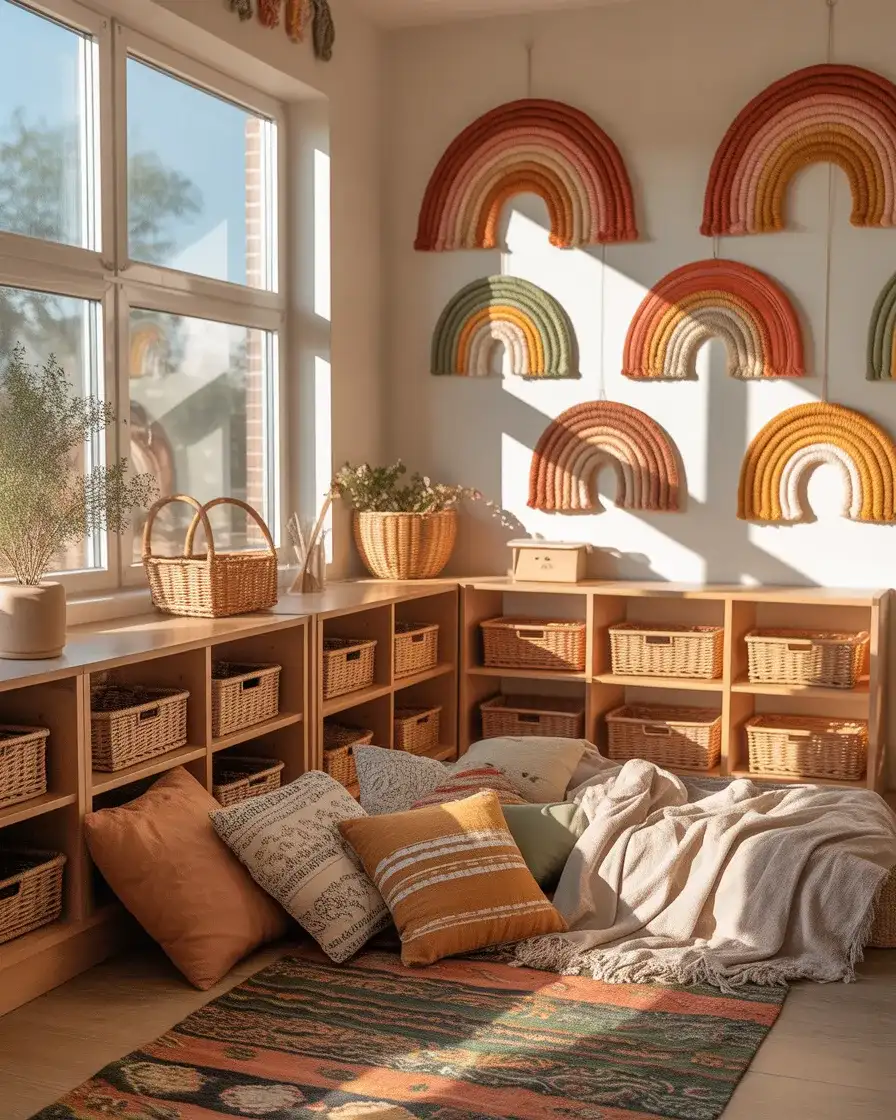
Budget-wise, this look is more affordable than it appears. The majority of the visual impact comes from DIY macramé pieces, thrifted baskets, and a cohesive set of printable posters in muted tones—most available on Etsy for under $15. Teachers report spending between $50 and $150 total to achieve the full look, especially when they lean on neutral backgrounds (think beige or white walls) and let the accessories do all the heavy lifting.
2. Calm and Cozy Neutral Classroom
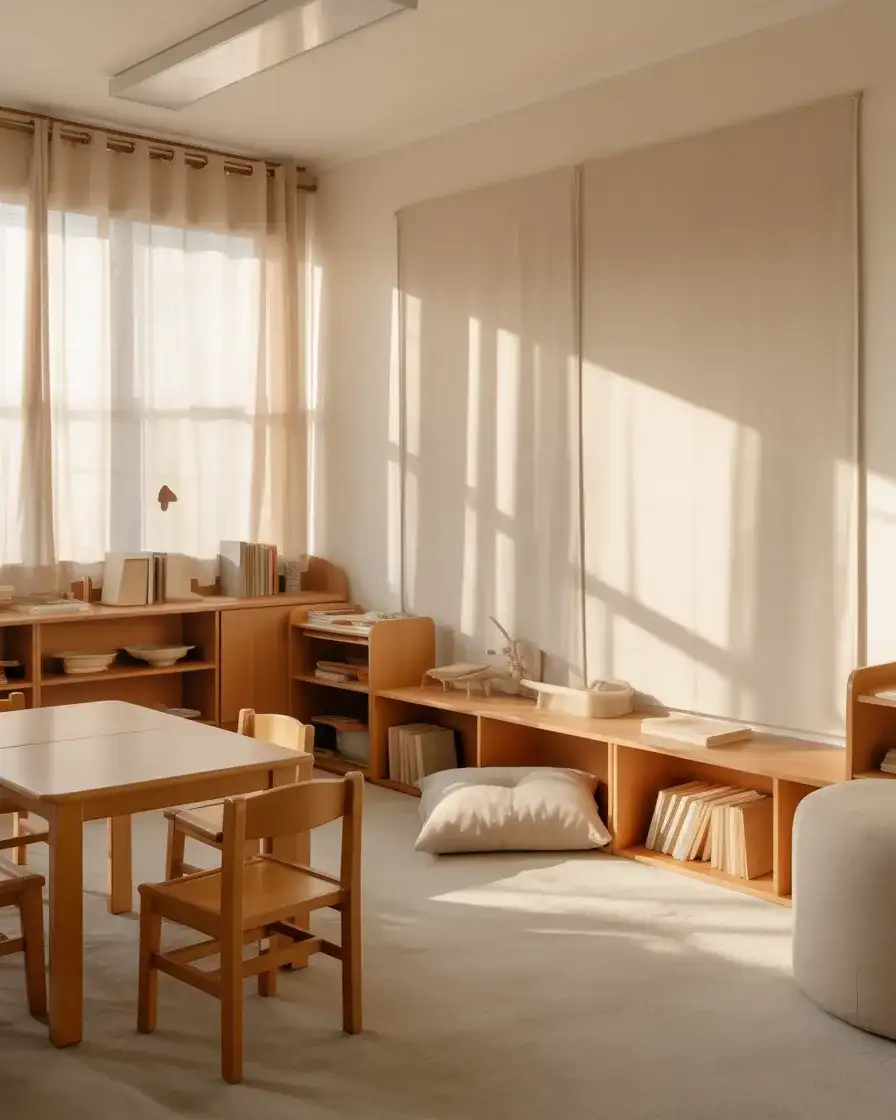
Not every classroom needs to sing. Sometimes the most powerful thing you can do for young learners is give them a space that breathes—and a calm, neutral classroom does exactly that. Think linen-toned walls, soft cream shelving, warm wood-grain furniture, and a carefully considered lack of visual noise. The idea is rooted in research suggesting that overstimulating environments can actually hinder focus and increase anxiety in children with sensory sensitivities. This simple approach has become wildly popular among upper-elementary teachers who want their classrooms to feel like a thoughtful retreat rather than a carnival.
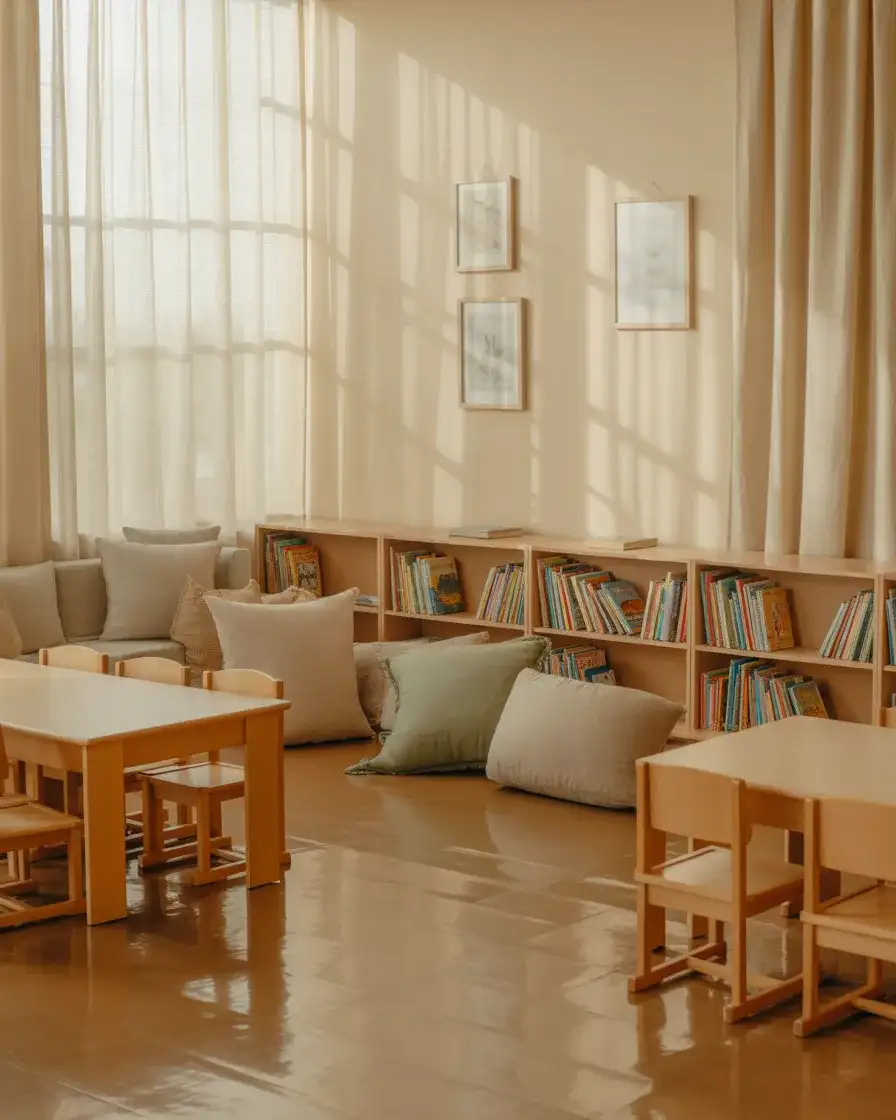
This is one of those “where it works best” themes: it shines in older school buildings with tall windows and natural light, where the architecture already has soul. In those spaces, a neutral palette lets the room’s bones do the work. One common mistake to avoid—don’t strip the room so bare that it feels institutional. The trick is layering: a chunky knit throw on a reading chair, a trailing plant on a shelf, and a single gallery wall that feels curated, not cluttered.
3. Ocean-Themed 1st Grade Classroom
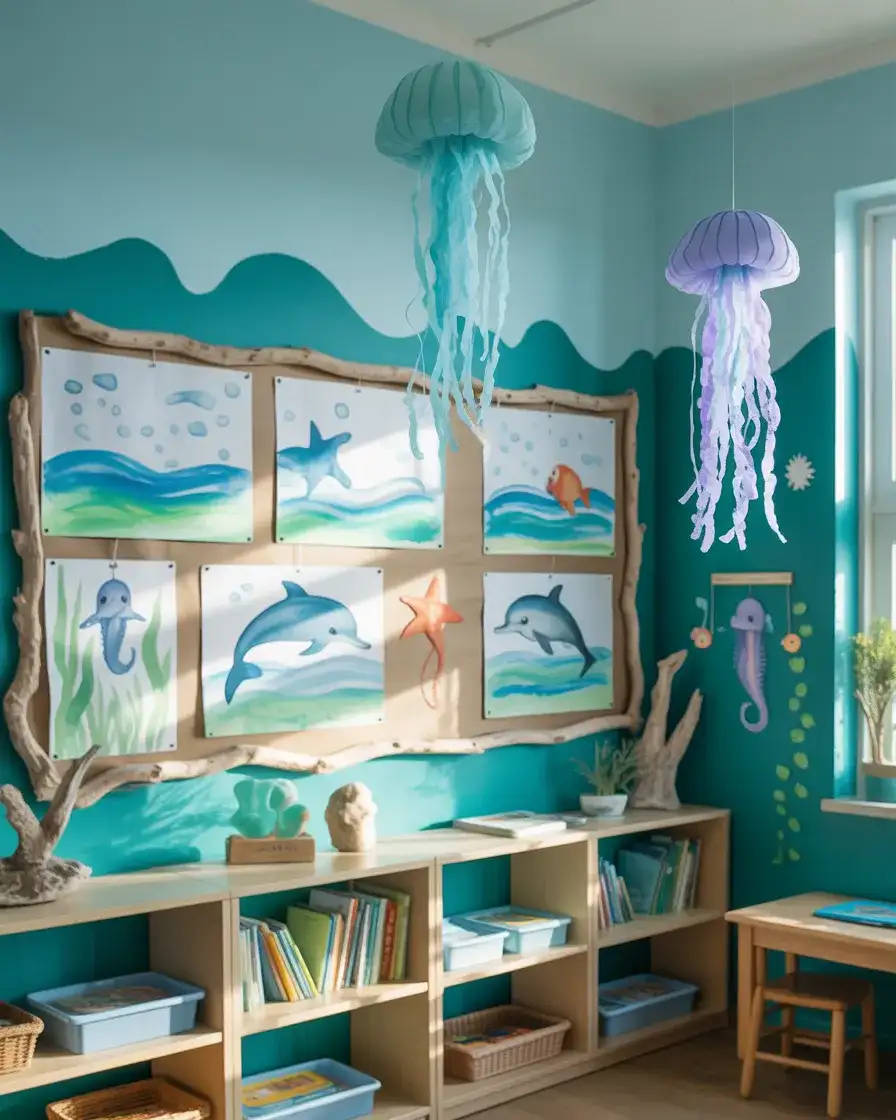
There is simply no theme more universally beloved by six-year-olds than the ocean. Deep teal walls (or even just a well-placed teal accent), watercolor fish bulletin boards, driftwood-style furniture, and hanging jellyfish made from tissue paper—it all comes together into something that feels genuinely immersive without requiring a renovation budget. For a 1st grade classroom, this theme also doubles beautifully as a teaching tool: ocean animals, ecosystems, water cycles, and even math through shell counting all fit naturally into the narrative the room is already telling.
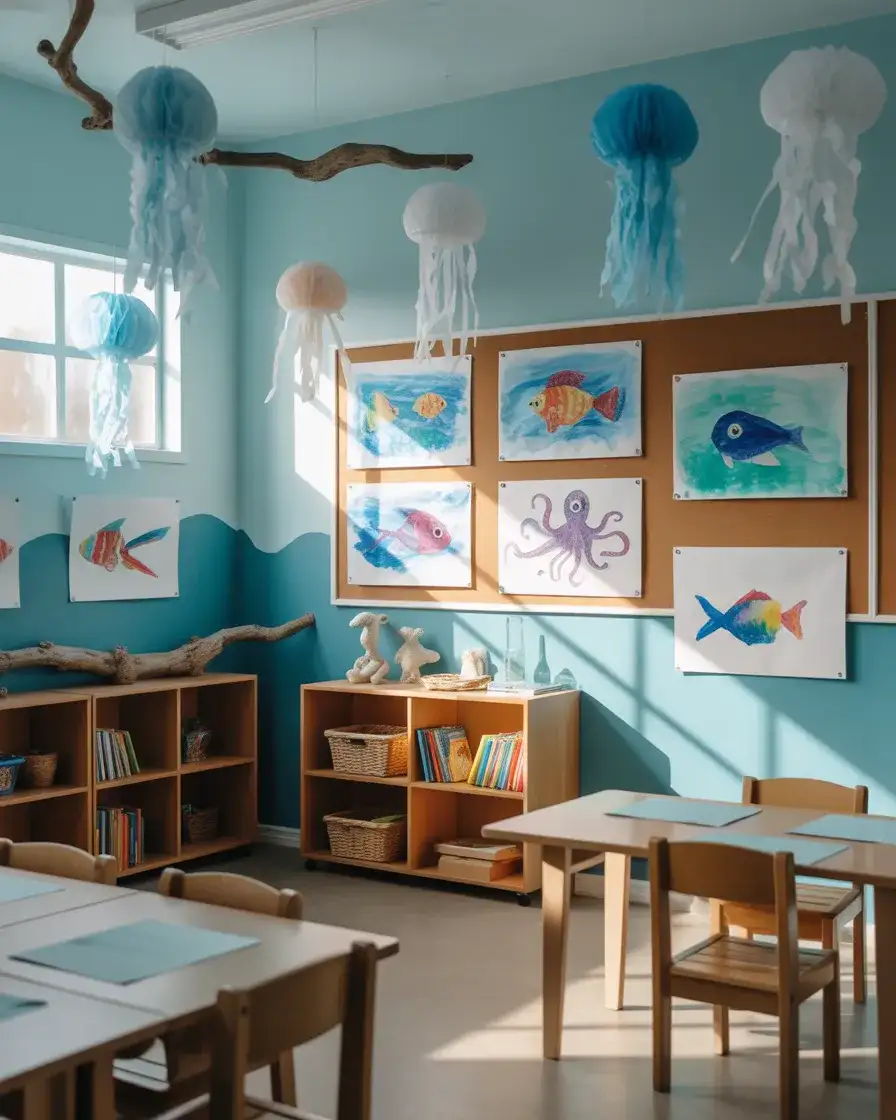
A teacher from Coastal Carolina shared that her ocean room became a powerful anchor for her students who had never actually seen the sea. “They would come in every morning and touch the jellyfish,” she said. “It made the room feel like theirs.” That kind of personal connection—where decor does emotional work as much as aesthetic work—is exactly what the best elementary classroom themes achieve.
4. Vintage Schoolhouse Revival
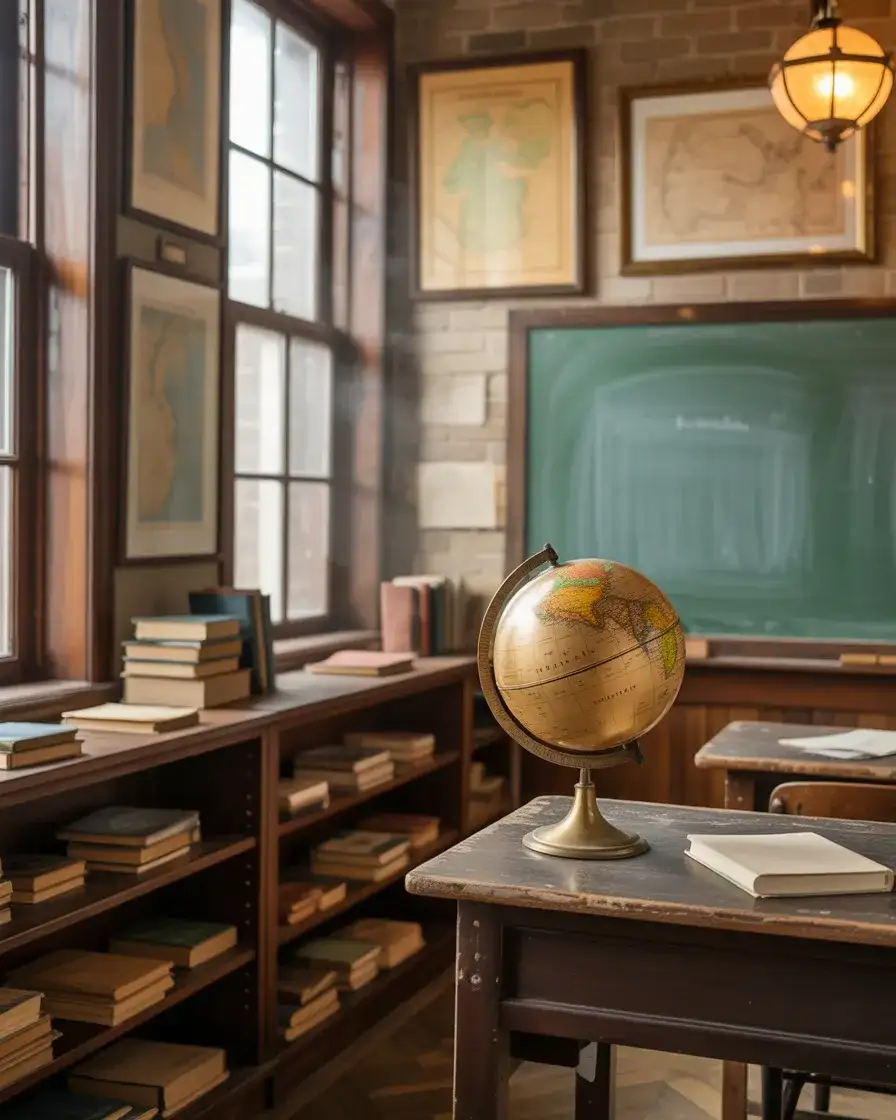
There’s a reason vintage classroom decor keeps cycling back—it carries a kind of nostalgic authority that modern aesthetics simply can’t manufacture. Think antique globe collections, sepia-toned maps framed on the wall, chalkboard accents (real or faux), dark wood accents, and those wonderfully satisfying apple motifs that feel earnest rather than cheesy when executed with intention. For older elementary grades, this aesthetic can feel particularly grounding—a visual nod to the idea that learning has weight, history, and permanence. It layers especially well in schools with original architectural features.
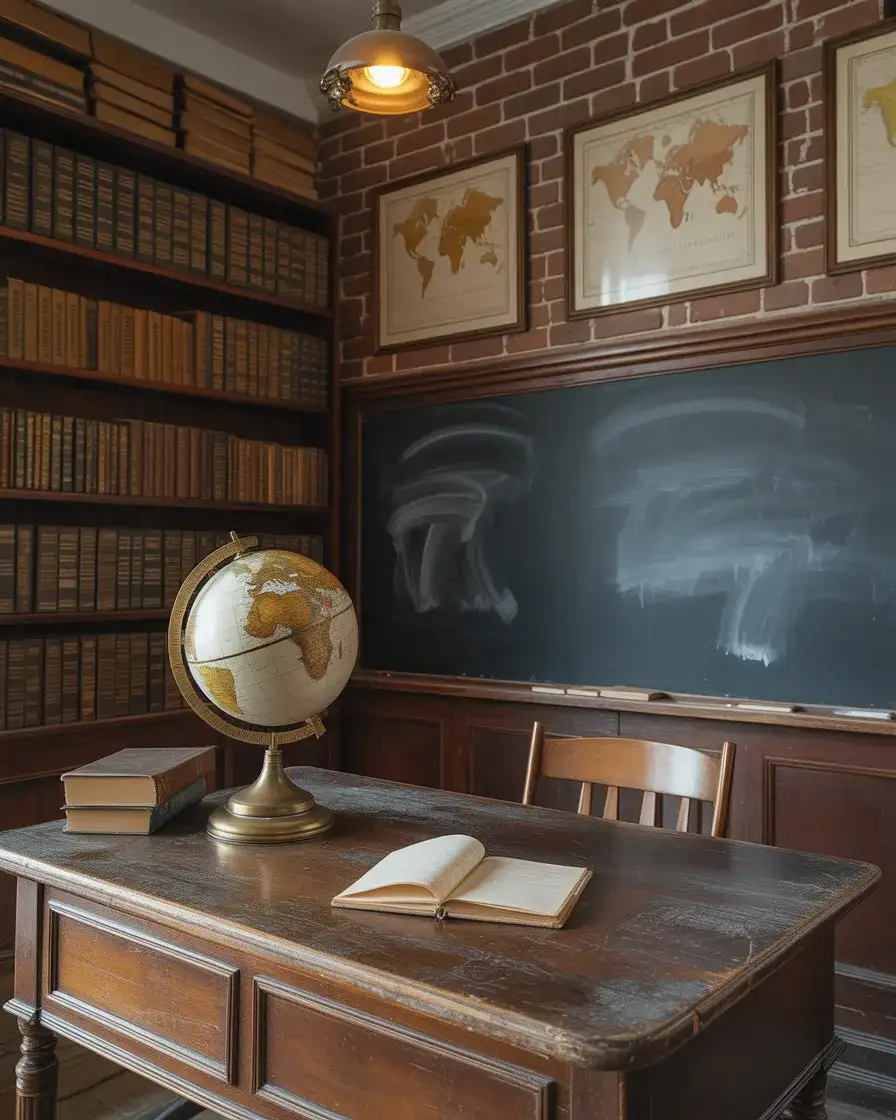
Practically speaking, this look is a thrift store teacher’s best friend. Vintage apothecary jars make brilliant supply organizers. Old encyclopedias stacked under a lamp become instant decor. Flea markets in the Midwest and Southeast are especially rich hunting grounds for the kind of weathered, warm-toned pieces that make this aesthetic sing. The rule of thumb: one genuine vintage piece anchors the room; everything else can be a convincing reproduction.
5. Pastel Dreamworld Classroom
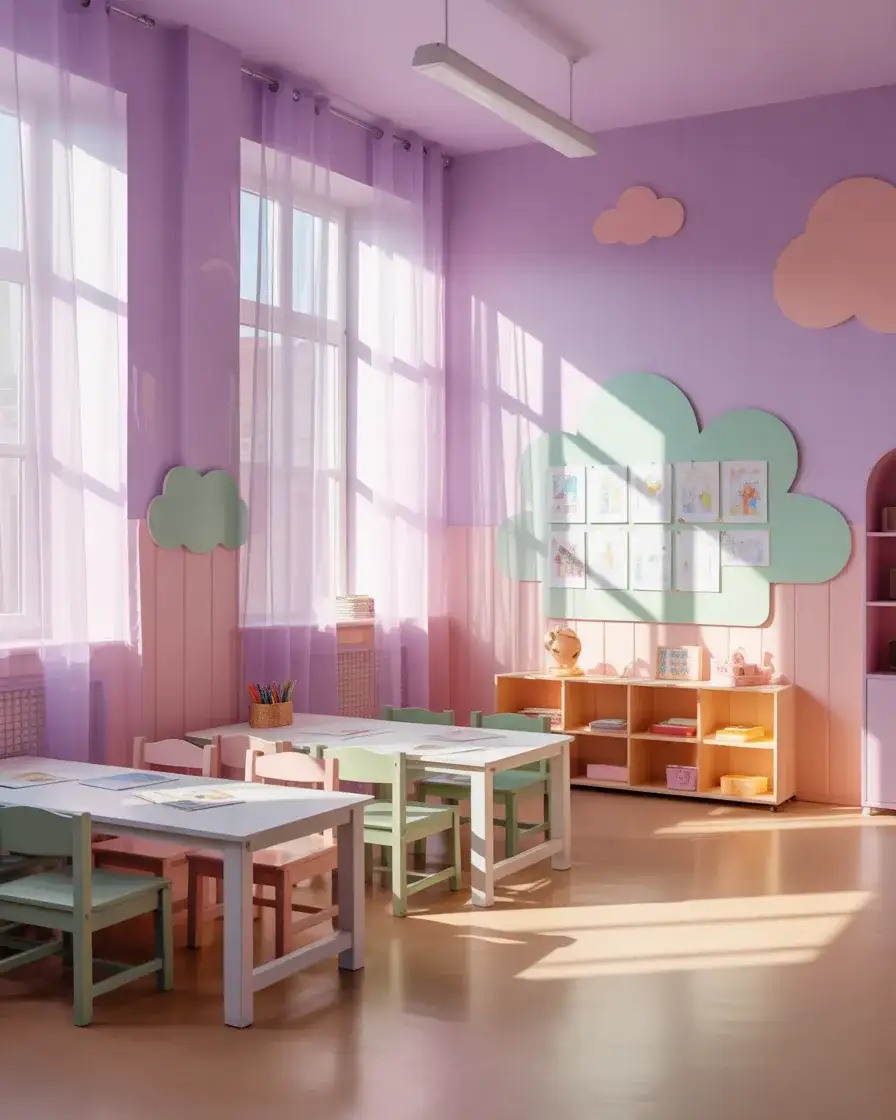
Soft lavender, mint, blush, and baby blue—the pastel classroom aesthetic is having a full cultural moment in 2026, riding the same wave as cottagecore and soft aesthetic design trends that dominate social media. What makes it work for elementary spaces is how intrinsically it softens the environment. A classroom bathed in pastels communicates safety and gentleness before a single word is spoken. This trend skews heavily toward themes and ideas that center femininity and softness, but the best interpretations are gender-neutral and inviting to every student, achieved through careful balancing of colors.
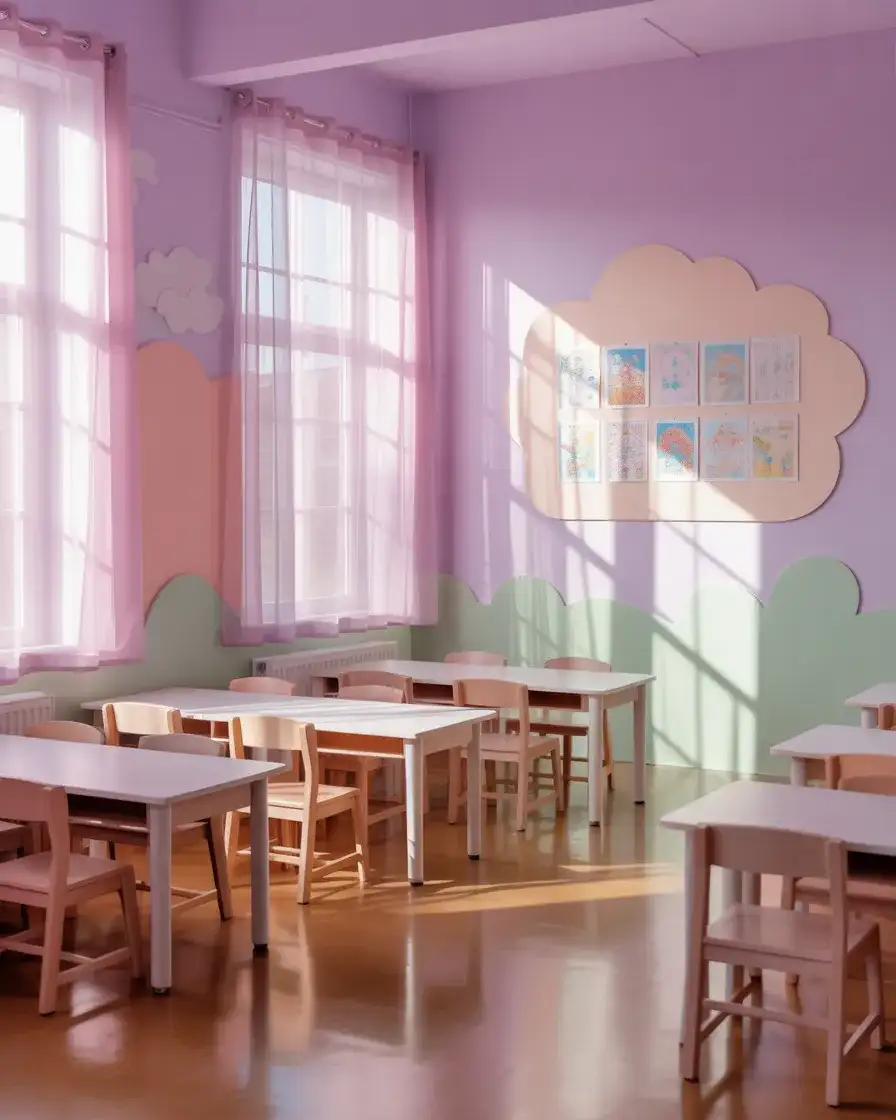
Expert classroom designers note that pastel environments tend to photograph exceptionally well in both natural and artificial light, which is part of why they dominate Pinterest and Instagram. The practical pitfall? Pastels can look dingy if the underlying wall color is too dark or if lighting is fluorescent without a warm filter. Teachers in rooms with cool-tone institutional lighting should invest in warm LED bulbs or a few table lamps to keep the palette feeling intentional rather than washed out.
6. Western Frontier Classroom Theme
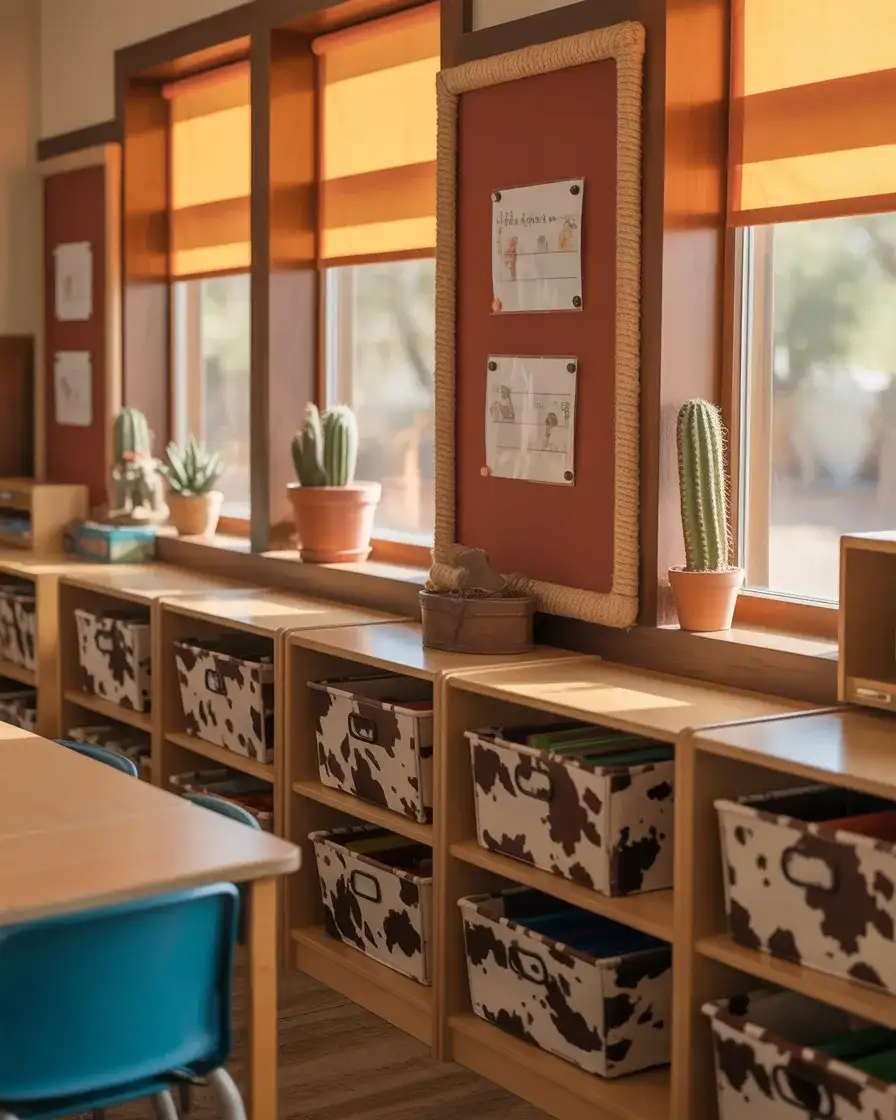
The western classroom theme is one of the most underrated aesthetics in elementary education—and teachers in Texas, Oklahoma, Colorado, and throughout the Southwest have been perfecting it for years. Imagine warm desert tones: rust, sand, turquoise, and cactus green. Cowhide-print fabric bins, rope-trimmed bulletin boards, bandana-patterned supply caddies, and a reading corner styled like a cozy bunkhouse. This inspiration pulls from both the landscape and a sense of American adventure that resonates deeply with kids who grow up under wide, open skies. It’s cheerful without being juvenile.
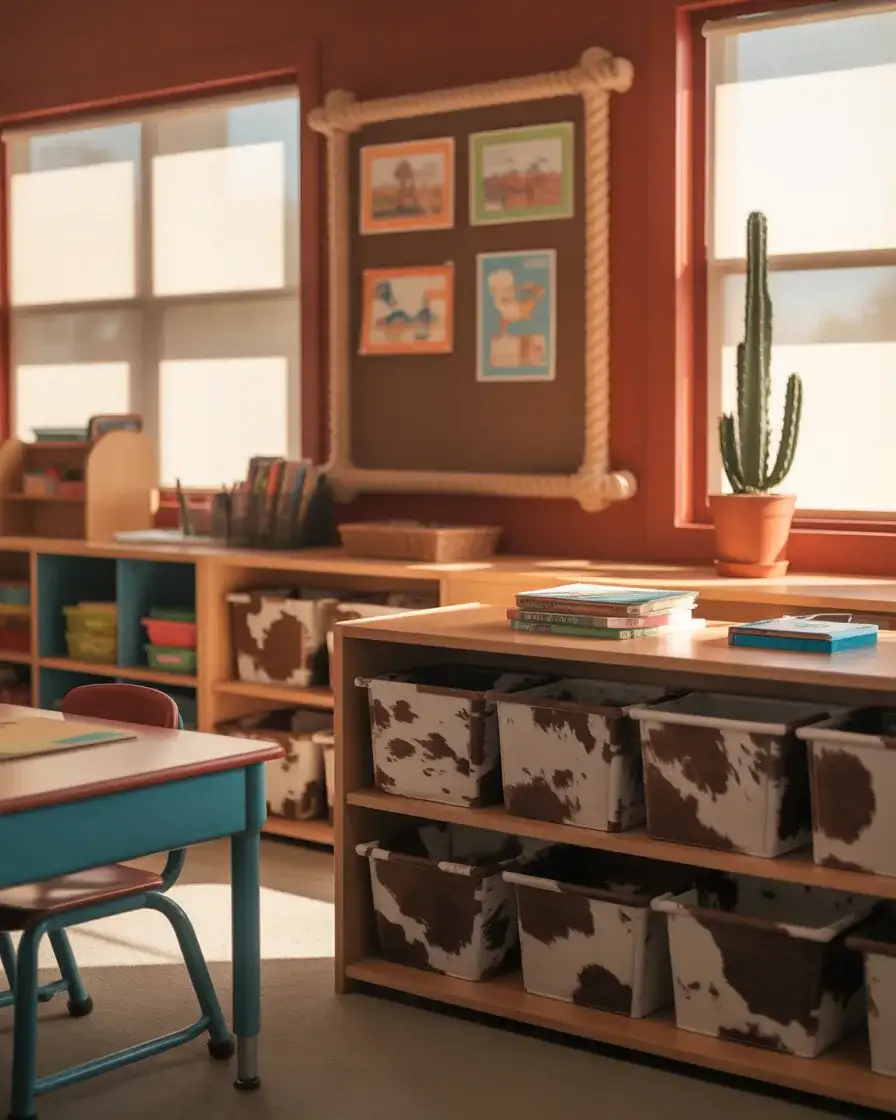
This theme is a particularly smart fit for American regional classrooms. A teacher in rural New Mexico described how her western setup became a genuine conversation starter for history lessons—the room told a story, and her students stepped into it each morning. That sense of narrative immersion is something no generic “red apple” classroom can replicate. The western aesthetic grounds children in place and culture, which is a quiet kind of educational power most themes don’t offer.
7. Early 2000s Nostalgia Classroom
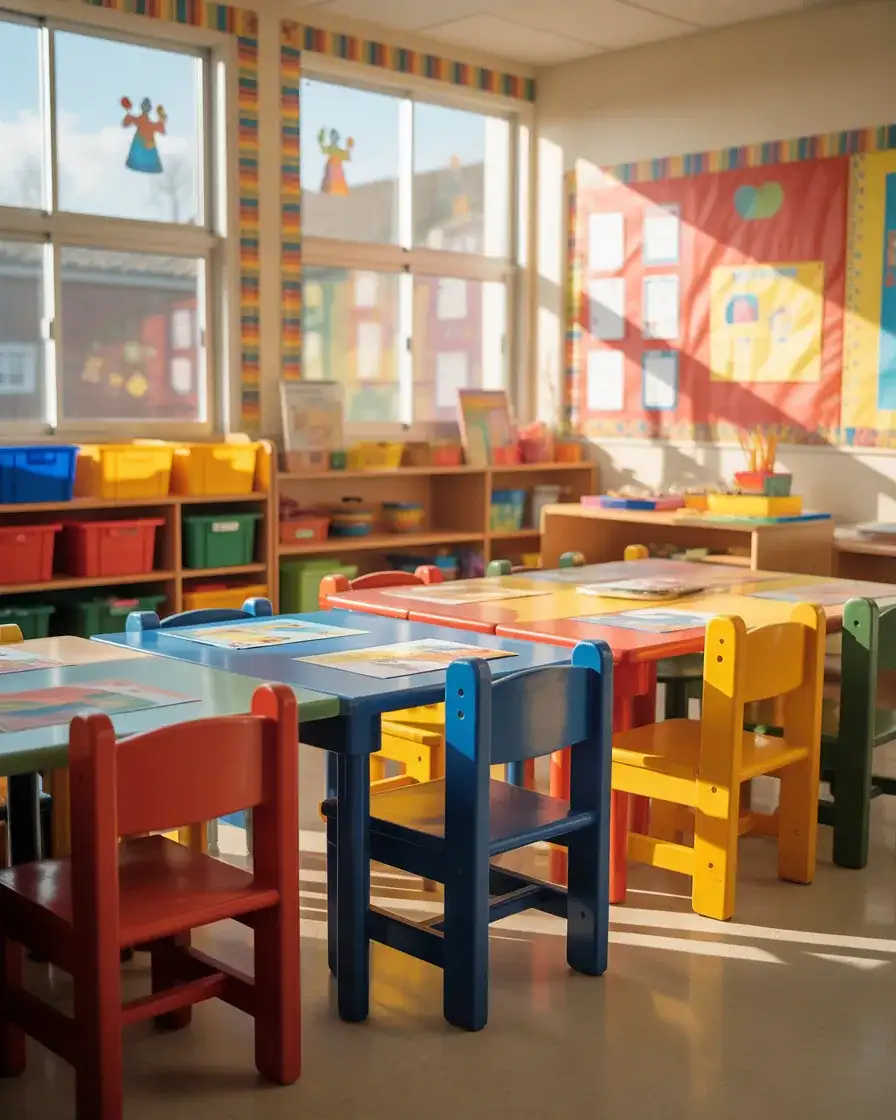
This one is for the teachers. The early 2000s nostalgia classroom trend is as much about the adults designing the space as it is about the children inhabiting it. Think Lisa Frank-adjacent color bursts, bright primary color schemes, those chunky plastic supply bins in primary red and yellow, and motivational posters in fonts that could only have been born in the age of clip art. There’s a warmth to this 2000s aesthetic that’s genuinely disarming—it’s comfortable precisely because it feels familiar, like finding an old photo from a field trip you barely remember but somehow miss.
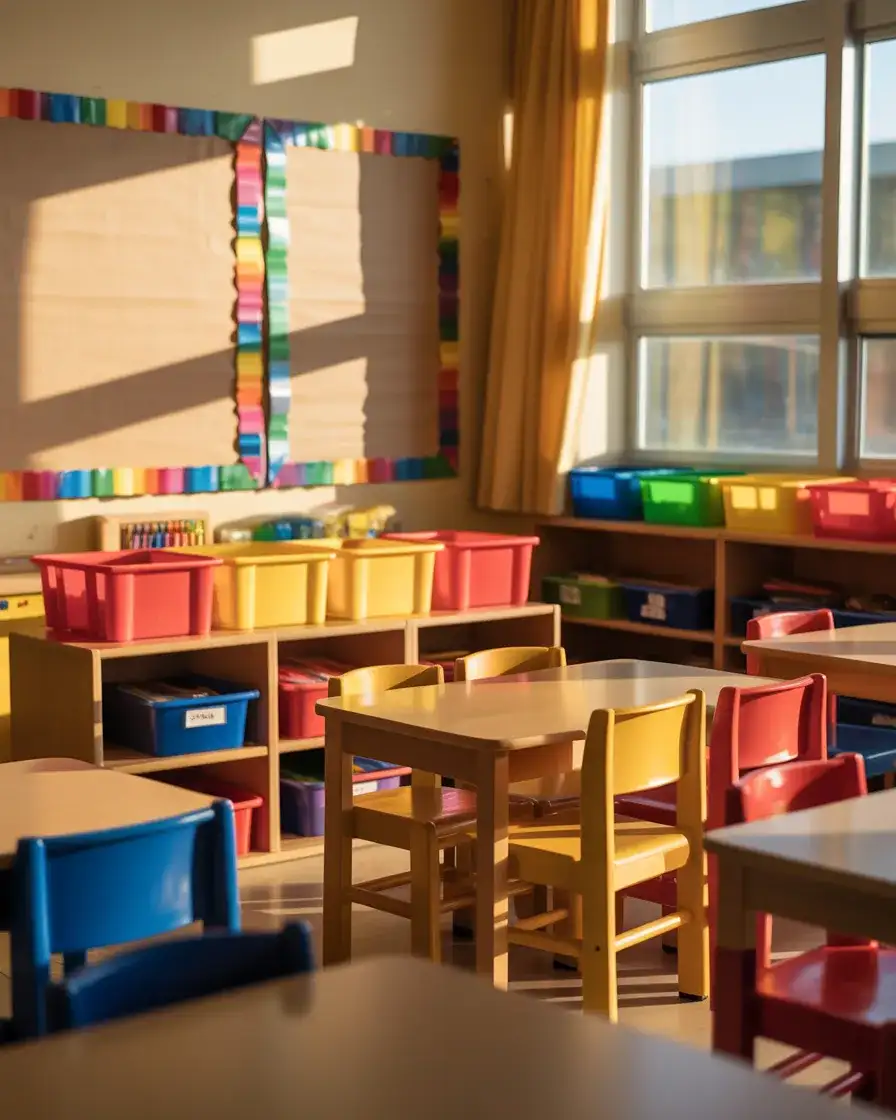
What’s interesting about nostalgia as a design tool is how effectively it builds teacher morale—and morale, as any school administrator will tell you, is directly linked to how much time and energy teachers pour into their classrooms. When a space feels personally meaningful to the educator who built it, students pick up on that investment. The nostalgic classroom isn’t just cute—it’s emotionally efficient in ways that more trend-chasing aesthetics often aren’t.
8. DIY Nature-Inspired Classroom Decor
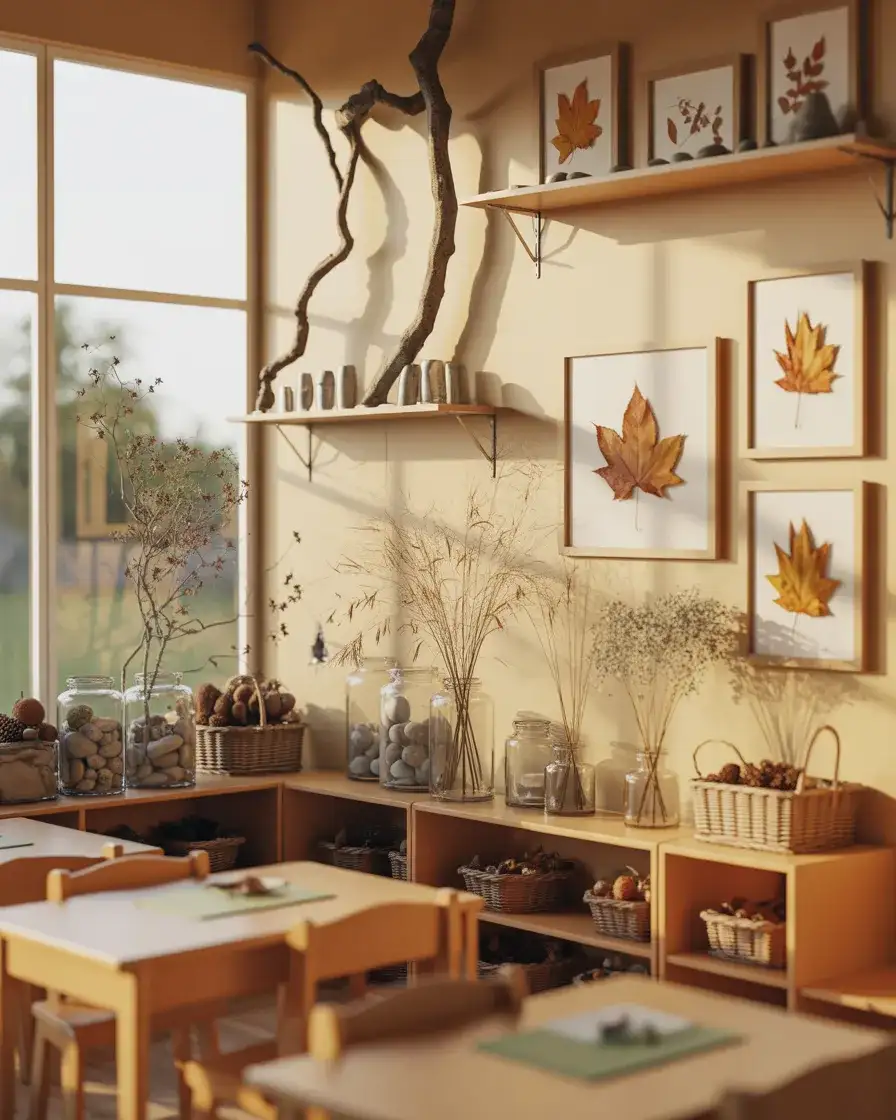
A DIY approach to classroom decor is practically a rite of passage for American teachers—and the nature-inspired version is particularly satisfying because the materials are often free. Pinecones, pressed leaves, smooth river stones, dried flower bundles, and branches collected on weekend walks become the raw material for displays, table centerpieces, and reading corner styling that no store-bought kit can match. This direction pairs beautifully with science curriculum, especially in grades that study ecosystems, seasons, and the natural world. It’s a genuinely original approach that tells students this classroom pays attention to the living world outside.
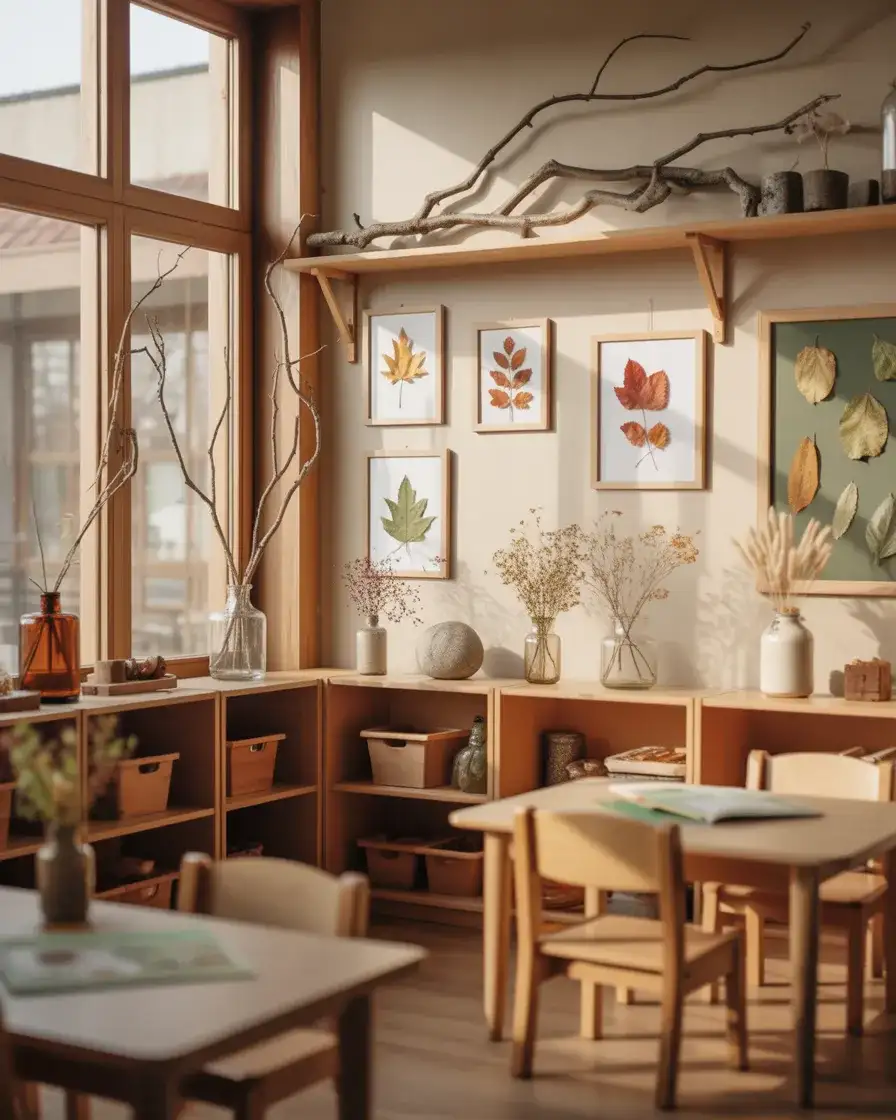
The real magic of DIY nature decor is what happens when students participate in building it. Several teachers incorporate a “nature table” where children add found objects throughout the year—an acorn, a colorful stone, or a fallen bird feather. By spring, the table has become a living record of the season the class shared together. It costs nothing and creates a sense of classroom ownership that expensive store-bought displays rarely achieve.
9. Christian and Faith-Based Classroom Aesthetic
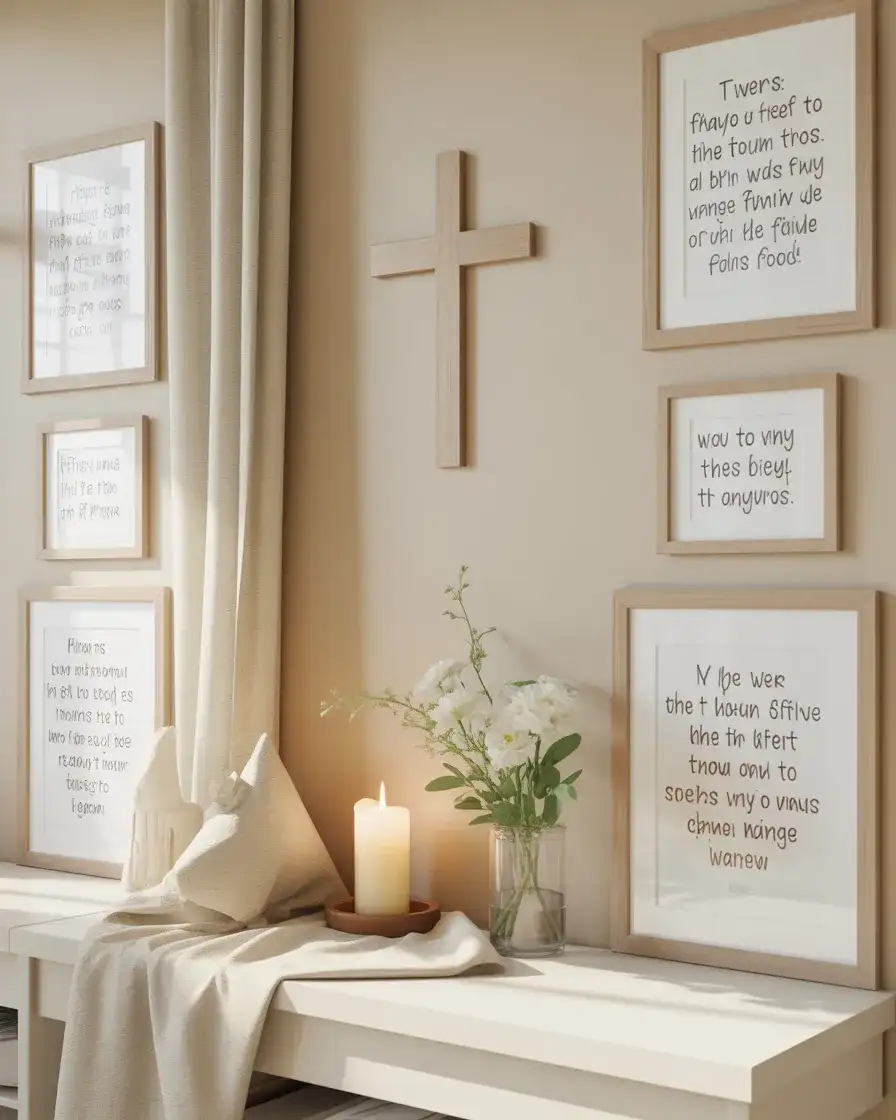
In Christian schools and Catholic parishes across America, the classroom is often an extension of the faith community itself—and decor carries genuine meaning. The best faith-based classroom aesthetics balance warmth and reverence without tipping into the visually overwhelming. Think soft wood crosses as wall accents, scripture verse printables in hand-lettered frames, warm creamy tones, and small devotional corners with a candle and a simple floral arrangement. The visual language is calm, intentional, and deeply rooted in the idea that this is a sacred space—not just a learning space.
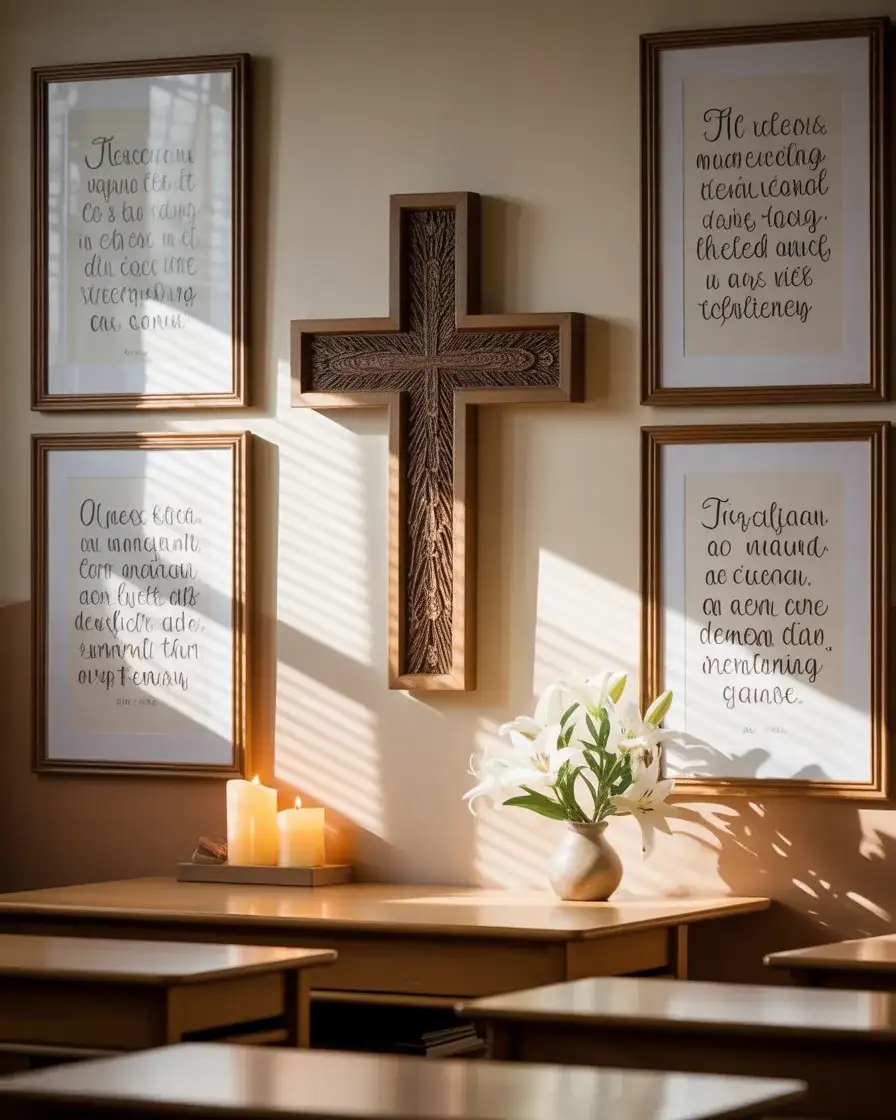
Teachers at faith-based schools often note that this aesthetic works best when it mirrors the visual language of the church or worship space students already know. Familiar visual cues—the color of liturgical seasons, the imagery of specific saints, the warmth of candlelight—translate beautifully into classroom decor that feels spiritually coherent rather than decorative for its own sake. It’s an approach that honors both the educational mission and the faith community surrounding it.
10. Christmas and Holiday Seasonal Classroom
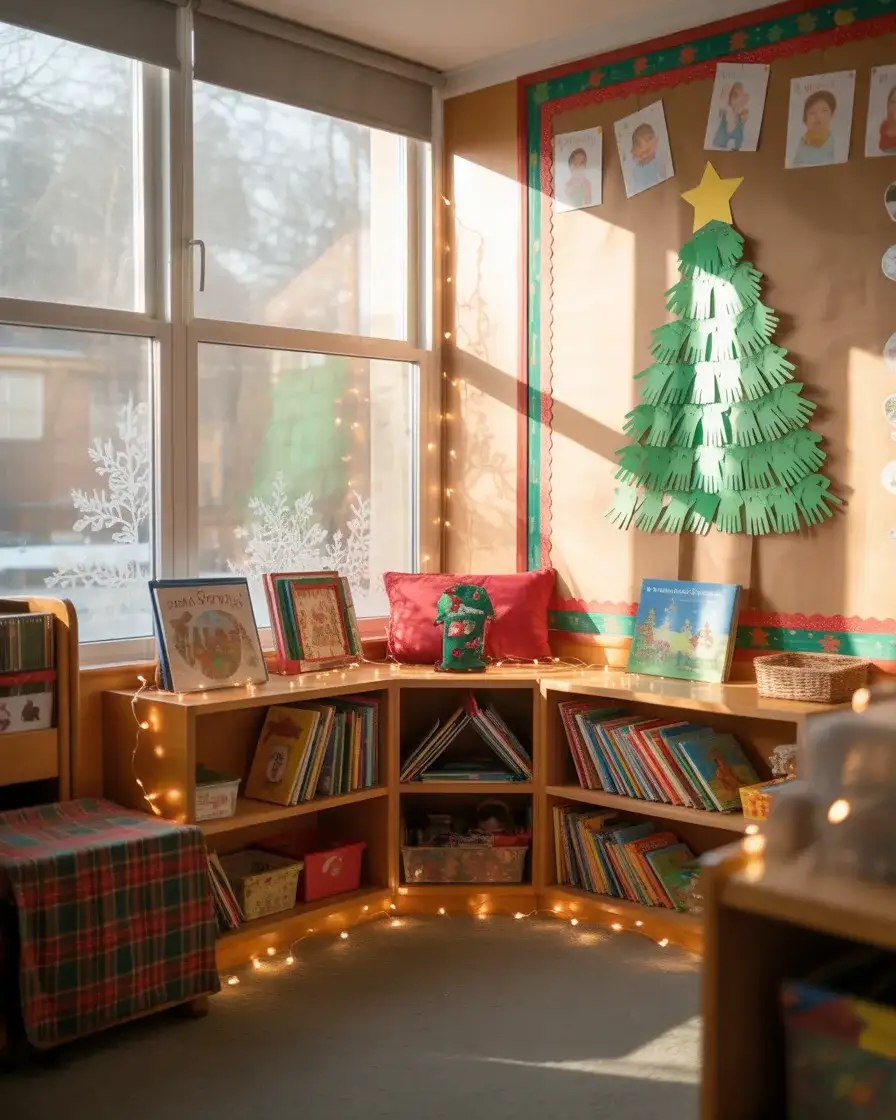
Seasonal classroom transformations are a beloved American teacher tradition—and the Christmas classroom might be the most Pinterest-searched of them all. The best holiday classroom decor doesn’t just add a wreath and call it done. It layers a garland along the whiteboard ledge, a tree made from green paper footprints on the bulletin board, warm white string lights around the reading corner, and a cozy advent-calendar-style display that builds excitement as December unfolds. The theme ideas here are endless—from plaid and tartan to winter woodland to classic candy cane stripes.
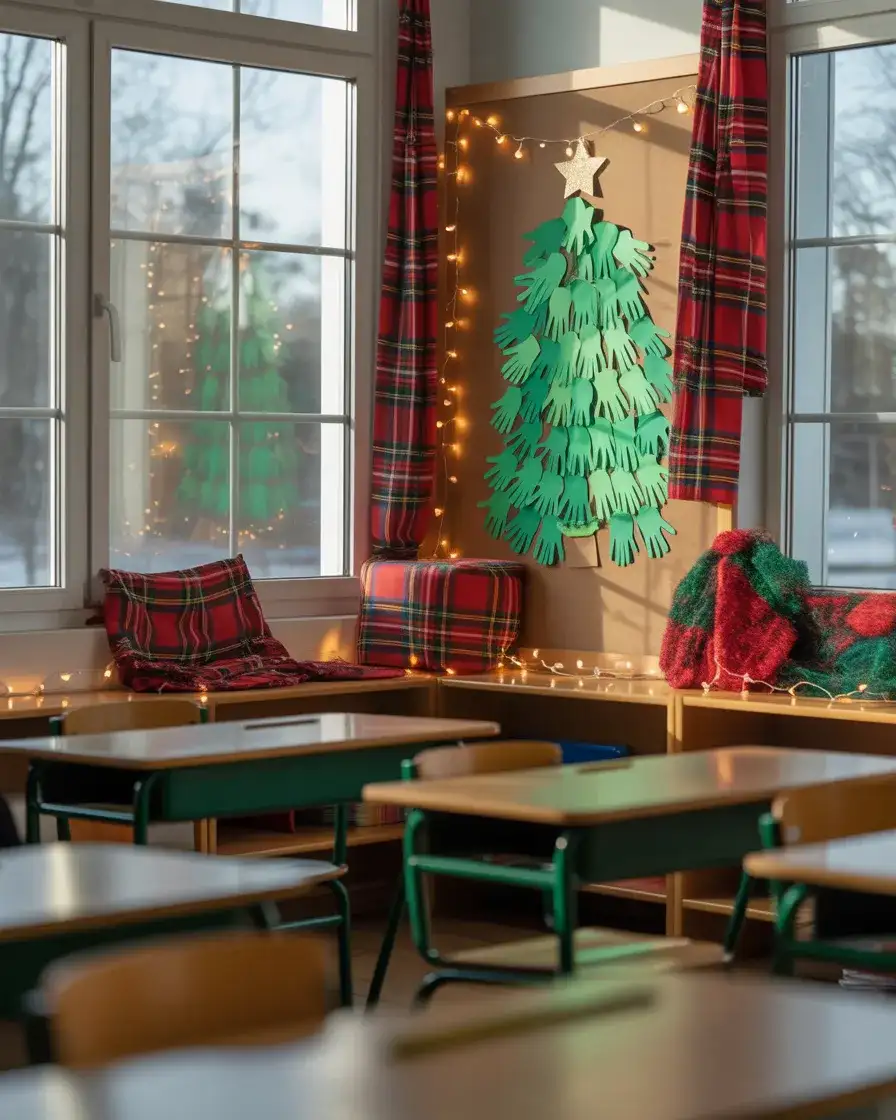
A common mistake with holiday classrooms: going so all-in on decor that the learning environment suffers. The bulletin boards still need to function. The reading corner still needs to be accessible. The best seasonal transformations layer holiday elements over—not instead of—the existing classroom structure. That way, students feel the magic without losing the sense of order and routine that good classroom environments depend on.
11. Upper Elementary Modern Farmhouse Theme
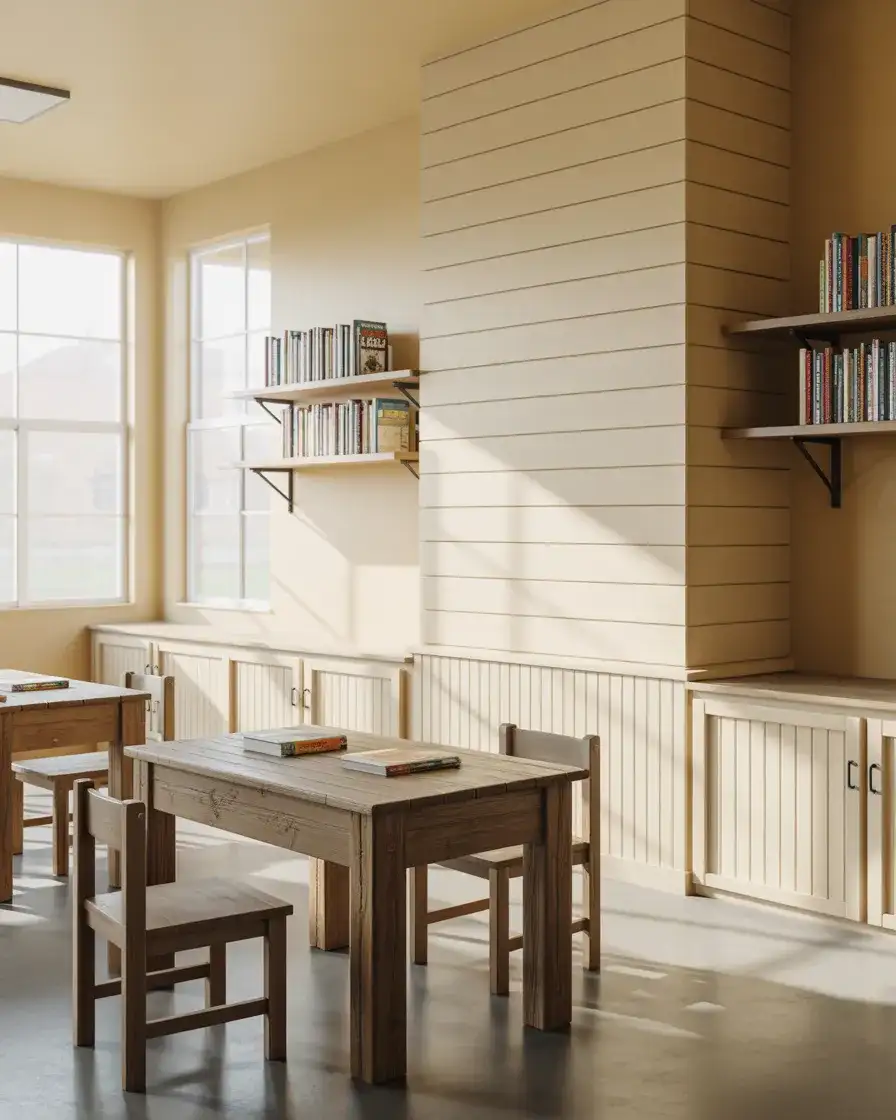
The modern farmhouse aesthetic—shiplap textures, black metal accents, cream and white palettes, rustic wood shelving—has been a dominant force in American home decor for the better part of a decade. It was only a matter of time before it crossed into upper elementary classrooms, and the result is genuinely compelling. For grades 3 through 5, this design direction feels mature and purposeful in exactly the right way. It says: you’re not babies anymore, and your classroom reflects that.” Themes 3rd grade teachers especially love this aesthetic for its clean, organized visual language.
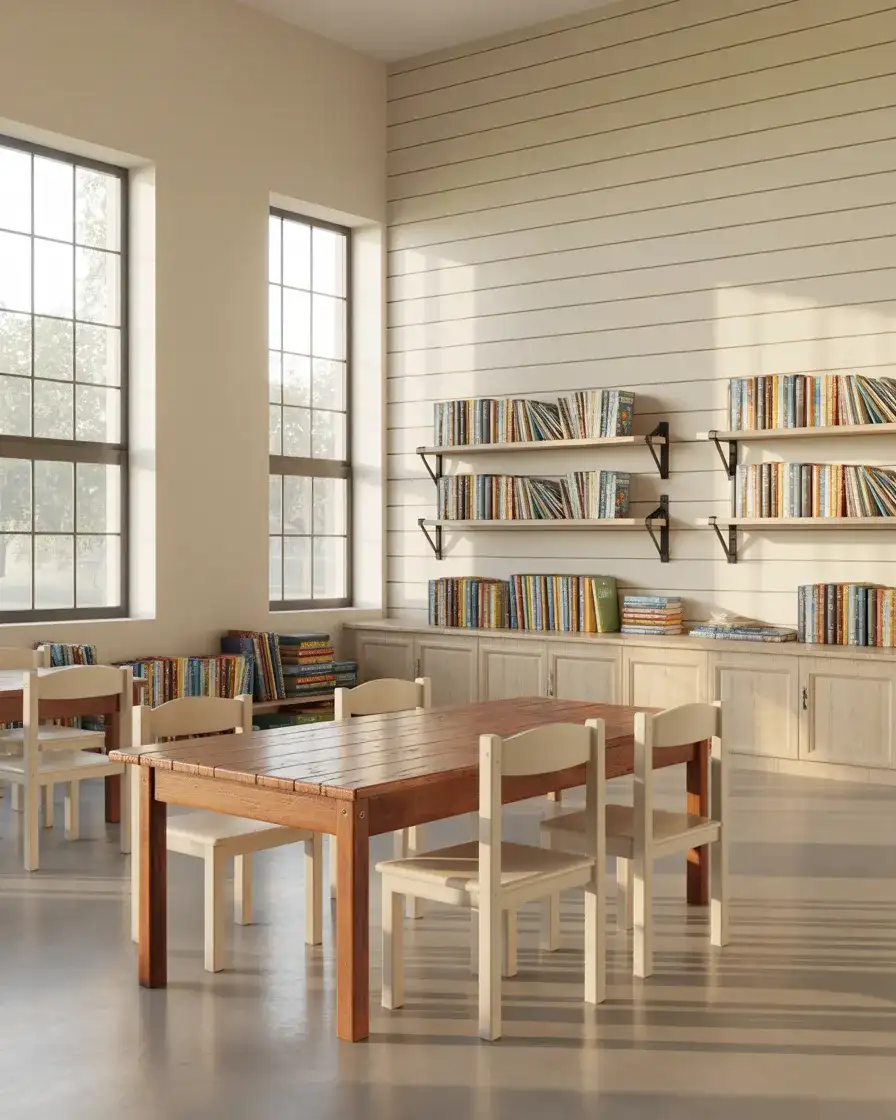
Real teachers who’ve adopted this theme report that older students respond to it with unexpected pride. “They stopped writing on the desks,” one 4th grade teacher from Tennessee noted. “The room felt too nice. “That’s not incidental—when students perceive their environment as intentional and respected, they tend to reflect that back through behavior. The modern farmhouse classroom is, quietly, a classroom management strategy masquerading as interior design.
12. Colorful Jungle Safari Classroom
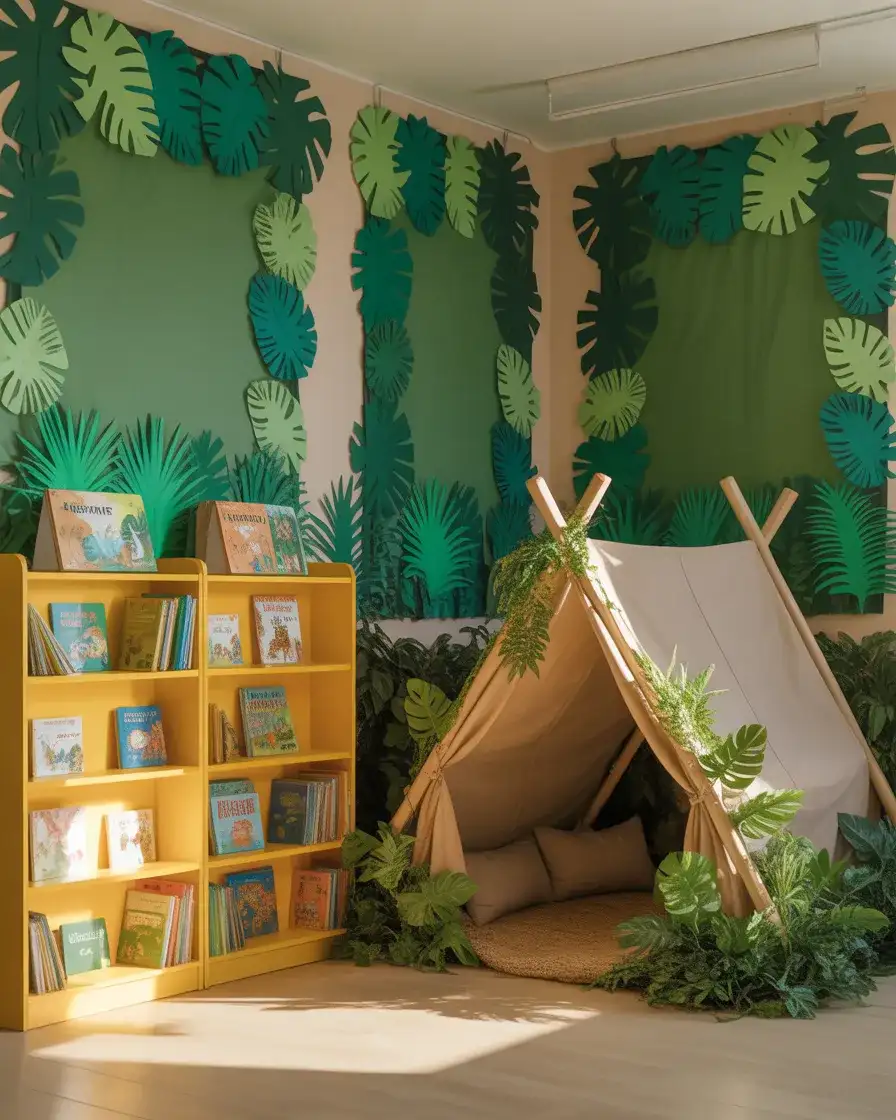
Bold, lush, and bursting with life—the jungle safari classroom is unapologetically colorful in a way that younger students absolutely love. Deep banana-leaf greens, golden yellows, rich oranges, and splashes of tropical pink create a visual landscape that feels like stepping into a different world. Large tropical leaf cutouts on bulletin boards, stuffed animal safari creatures peeking out from shelves, and a reading corner styled as an explorer’s tent pull the theme into three dimensions. This is an aesthetic that doubles beautifully as a science classroom motif—animals, ecosystems, geography, and biodiversity all fit naturally within it.
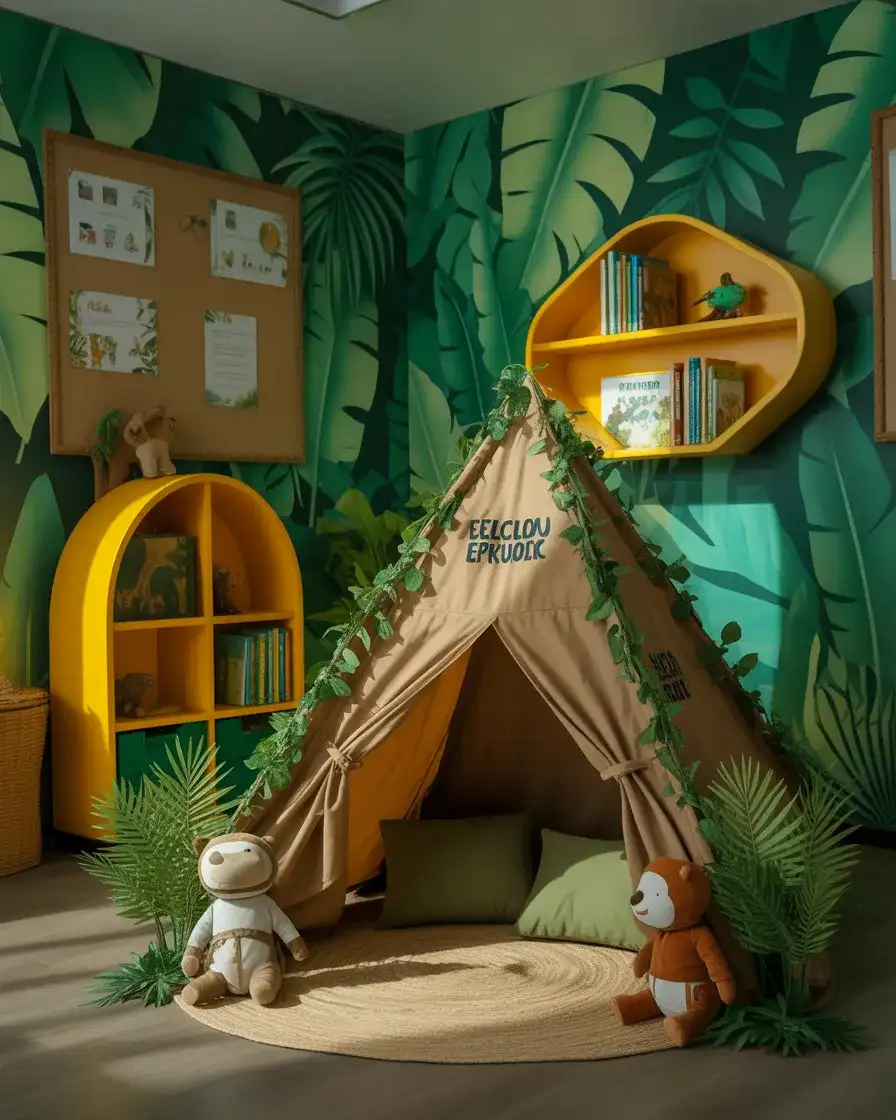
This is a theme where the physical materials matter a great deal. Fabric matters more than paper here—leaves made from felt or fabric hold their shape and color in ways that paper cutouts simply can’t sustain over a school year. Teachers on a tight budget can find excellent tropical fabric remnants at Joann or Hobby Lobby for a few dollars a yard, then cut their own leaves in an afternoon. The investment pays back visually for months.
13. Color Scheme Classroom: Black, White, and Pops of Color
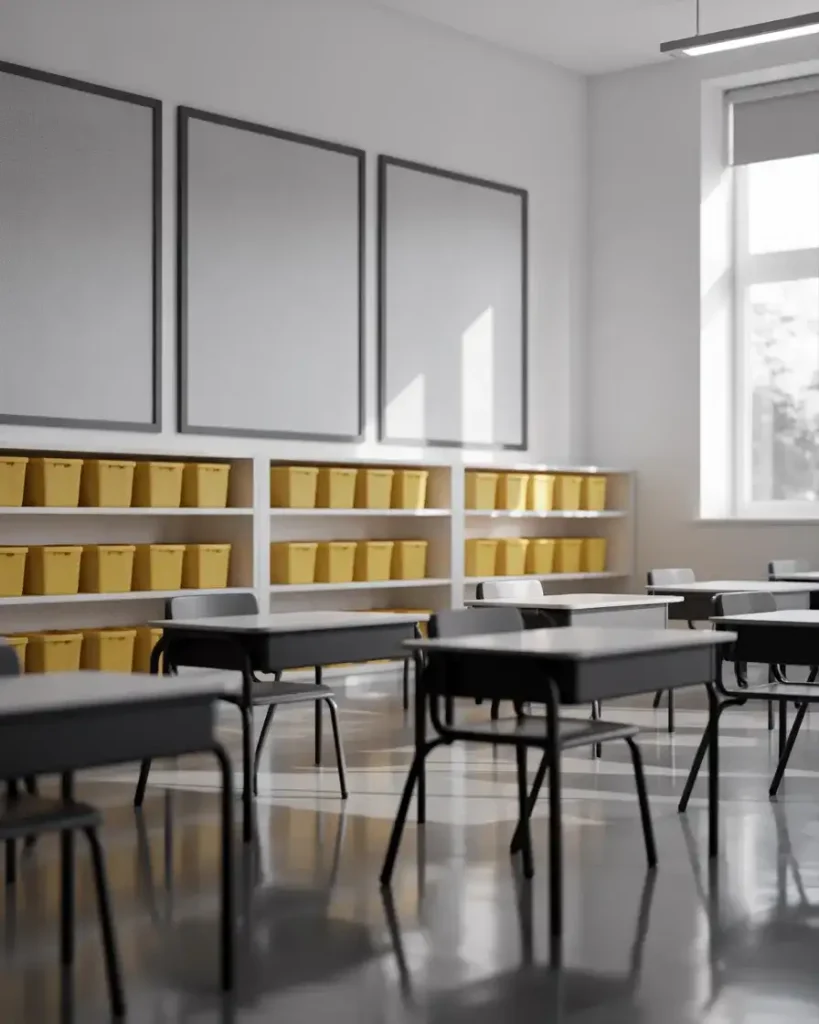
Among all the themes and color schemes trending in elementary classrooms right now, the black-and-white-with-color-pops palette might be the most sophisticated. The concept is architectural in nature: use a high-contrast neutral base—stark white walls, black shelving, and black-framed bulletin boards—and let one or two accent colors do all the emotional work. Mustard yellow. Coral red. Electric teal. The accent color becomes the personality of the room, which means teachers can refresh the entire look each year simply by swapping out the accent. It’s a design system, not just a theme.
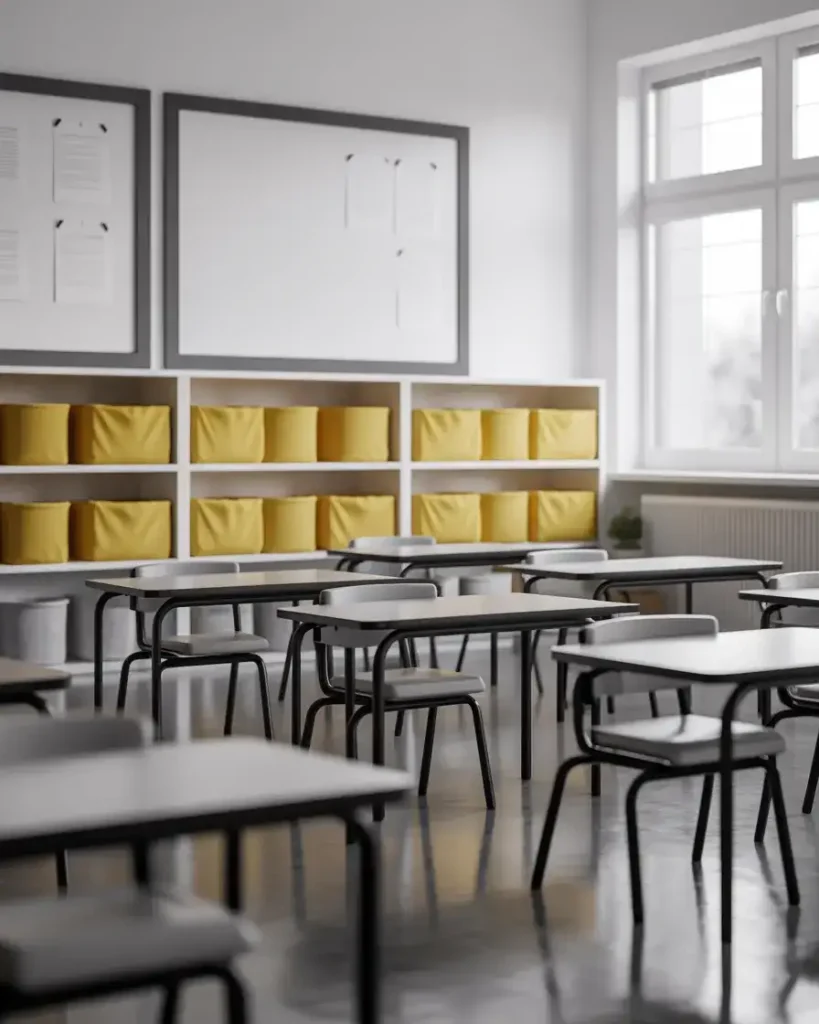
This approach is particularly popular among teachers who self-describe as design-minded outside of school. It mirrors the kind of curated, intentional interiors they’d want in their own homes—and that personal investment shows. It’s also worth noting that this color scheme photographs exceptionally well, which matters in an era when sharing classroom photos on Pinterest and Instagram has become part of how teachers build community and professional identity.
14. Galaxy and Space Exploration Classroom
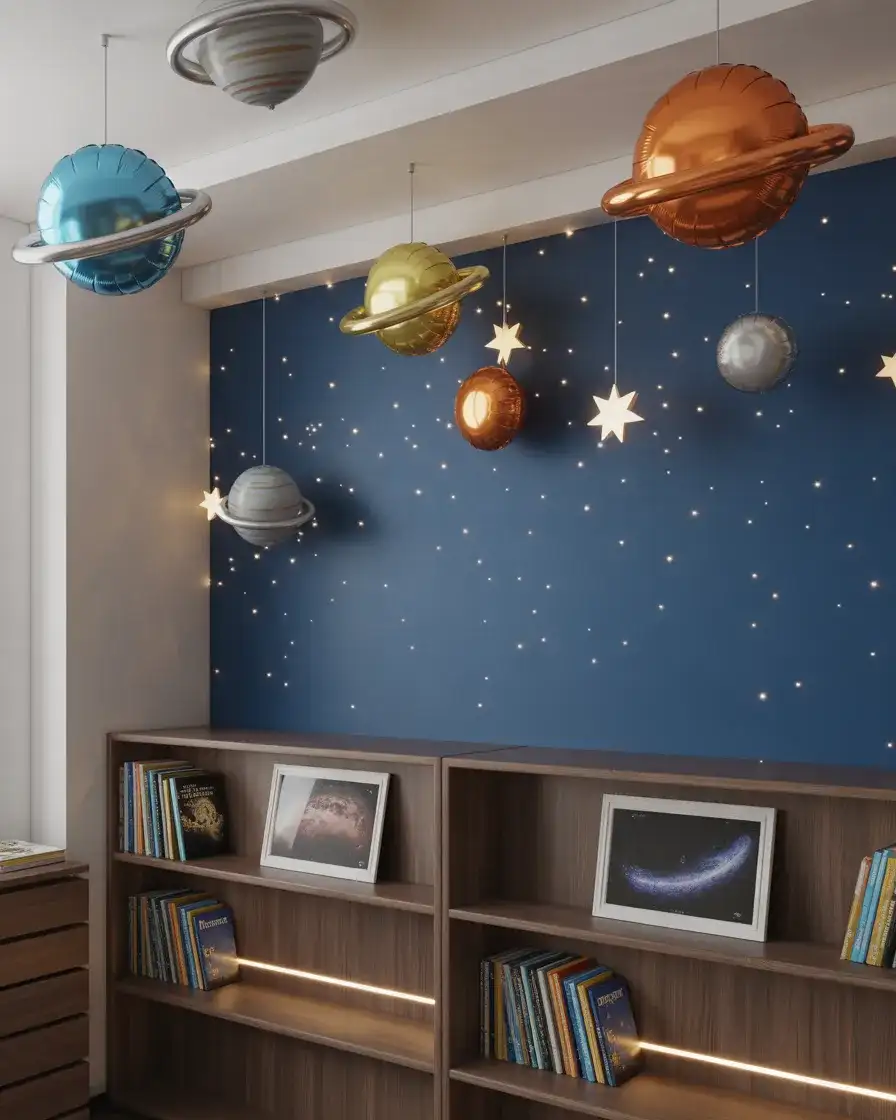
Deep navy walls, hanging planets made from paper mâché or metallic balloons, constellations of glow-in-the-dark stars on the ceiling, and a reading corner that resembles a rocket cockpit—the space exploration classroom is a guaranteed crowd-pleaser with any elementary age group. It hits a particularly sweet spot with inspiration-driven educators who want their classrooms to communicate ambition and possibility from the moment students walk in the door. For science-focused classrooms, this theme carries genuine curriculum weight—the solar system, physics concepts, astronauts, and STEM careers all find a natural home here.
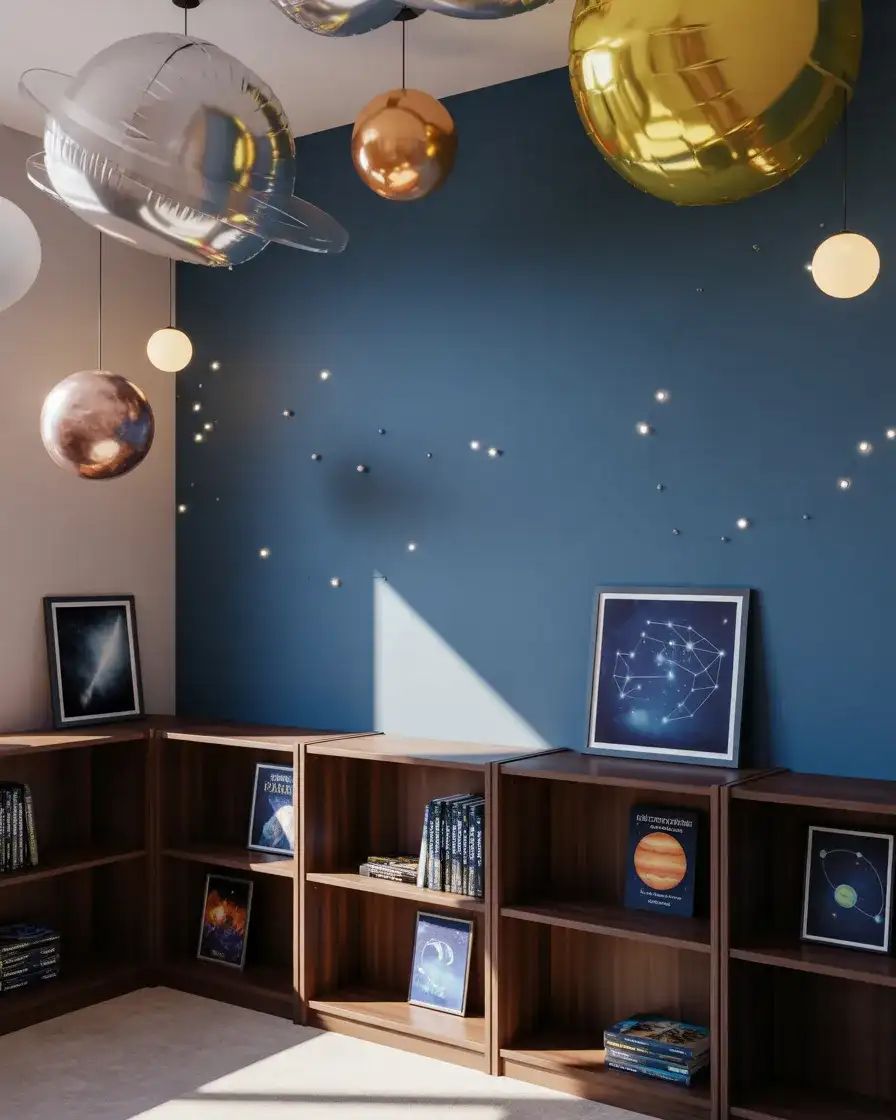
One practical insight worth knowing: this theme works especially well in classrooms with limited natural light. Rooms that feel dim or closed-off with traditional decor become genuinely atmospheric with a galaxy treatment. Navy paint and warm Edison-style string lights convert what might otherwise feel like an uninspiring basement classroom into something that actually benefits from the absence of bright windows. Constraints, it turns out, can be invitations.
15. Woodland Forest Friends Classroom
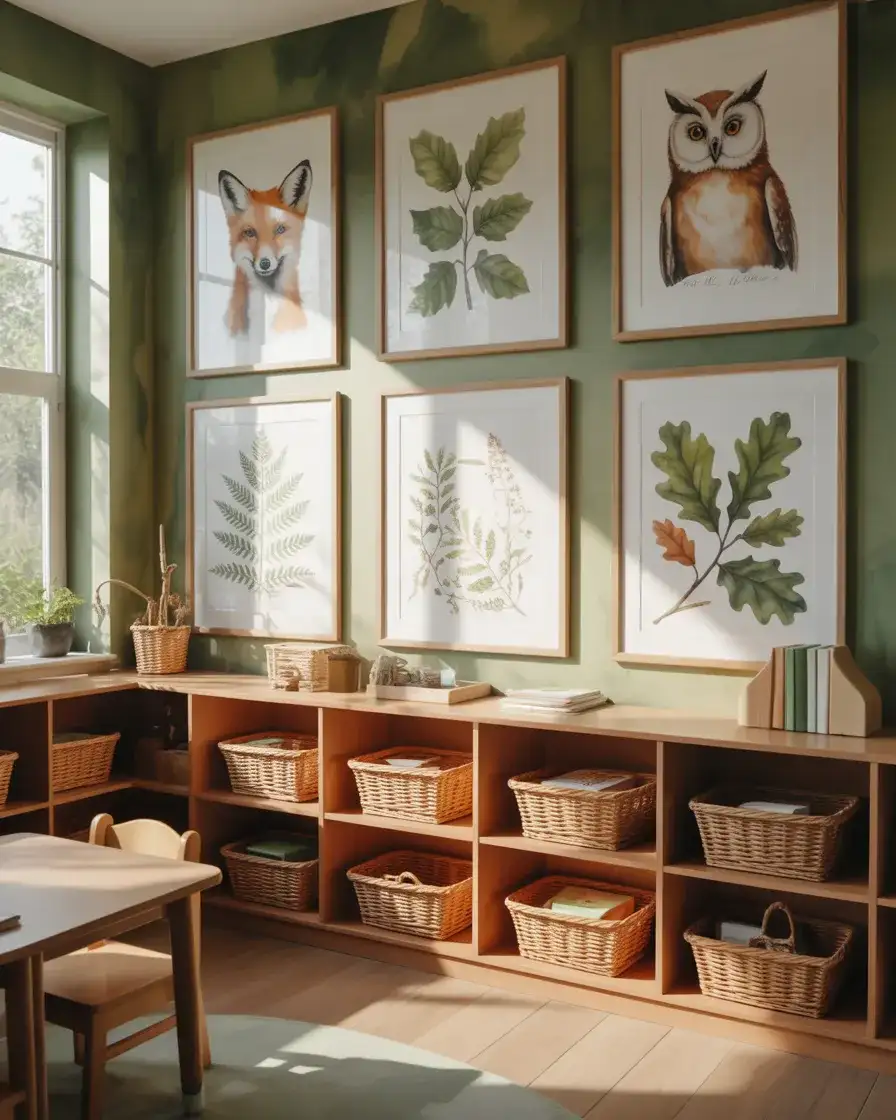
Foxes, owls, deer, hedgehogs—the woodland animal classroom has been a fixture in early elementary decor for years, but 2026’s version is more refined and less cartoon-like than its predecessors. Contemporary theme ideas in this category lean toward watercolor illustrations, muted forest greens and warm browns, and a more editorial approach to the animal imagery. Think framed botanical prints alongside a fox illustration rather than a row of matching clip-art stickers along the border. The result is a classroom that feels age-appropriate and visually coherent for multiple grade levels without ever looking babyish or dated.
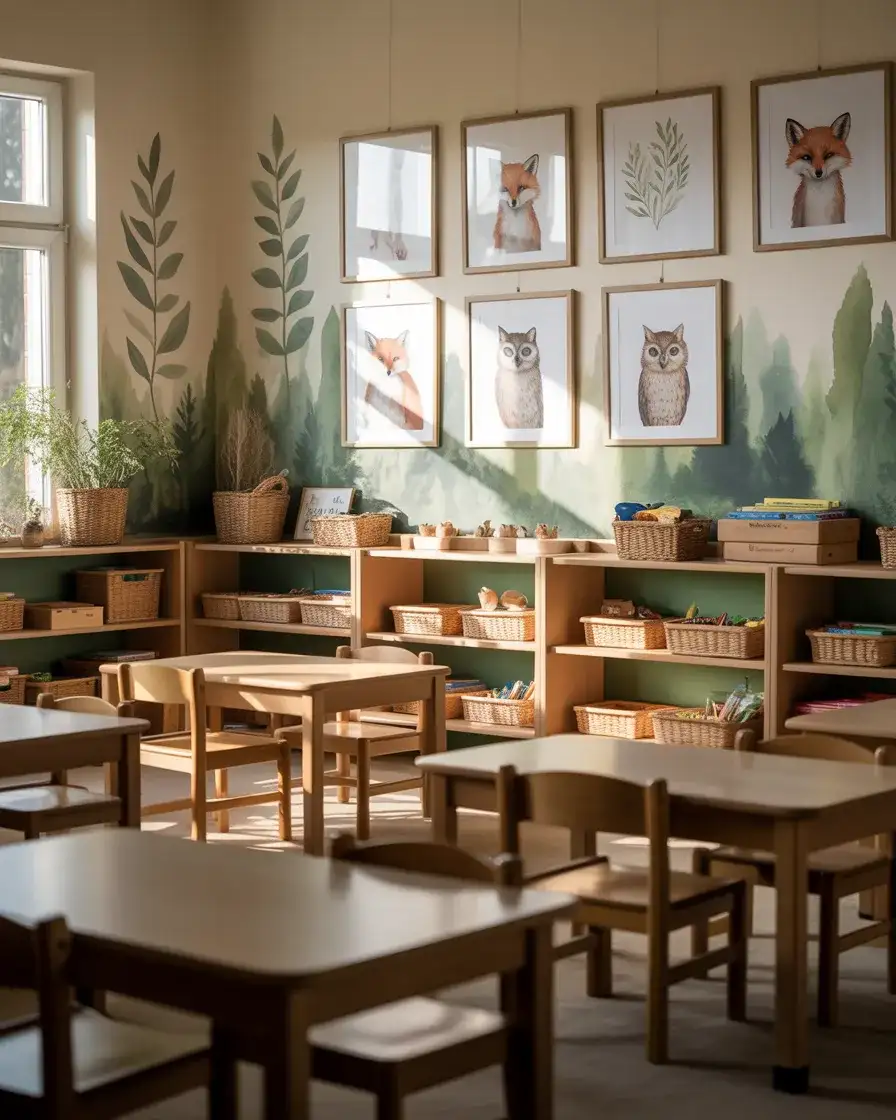
Teachers often ask how to keep this theme from aging poorly—and the answer is almost always: invest in quality illustration prints rather than mass-market character products. A $12 watercolor fox print from an Etsy artist will look beautiful for years; a character-branded set from a big-box teacher supply store often feels dated before Thanksgiving. Quality over quantity, and original over licensed: that’s the long game with woodland decor.
16. Pastel Rainbow Boho Chic for 3rd Grade
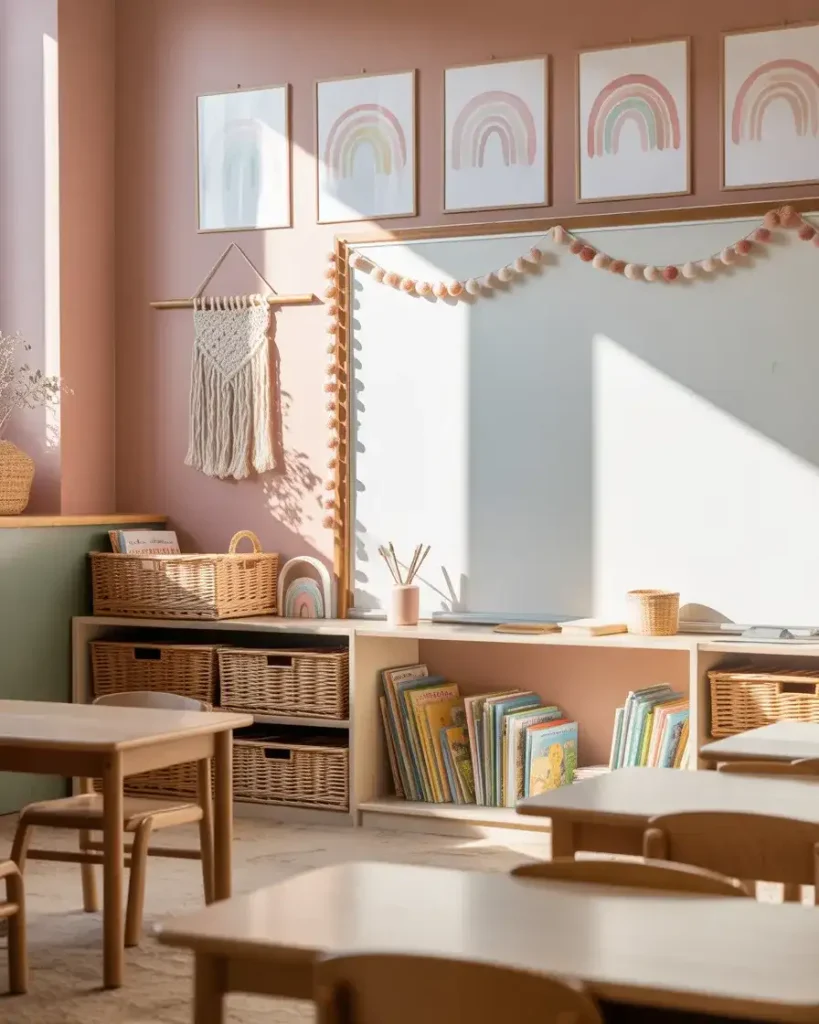
The intersection of pastel tones and boho textures creates one of the most visually satisfying classroom aesthetics currently trending—and it’s particularly well-suited to themes 3rd grade teachers are searching for. At this age, students are old enough to appreciate visual sophistication but young enough to still love rainbow anything. A dusty rose, lavender, sage, and peach palette layered through pom-pom garlands, woven wall hangings, rattan shelf dividers, and watercolor rainbow prints threads that needle beautifully. The overall effect is celebratory without chaos—and deeply covetable on Pinterest.
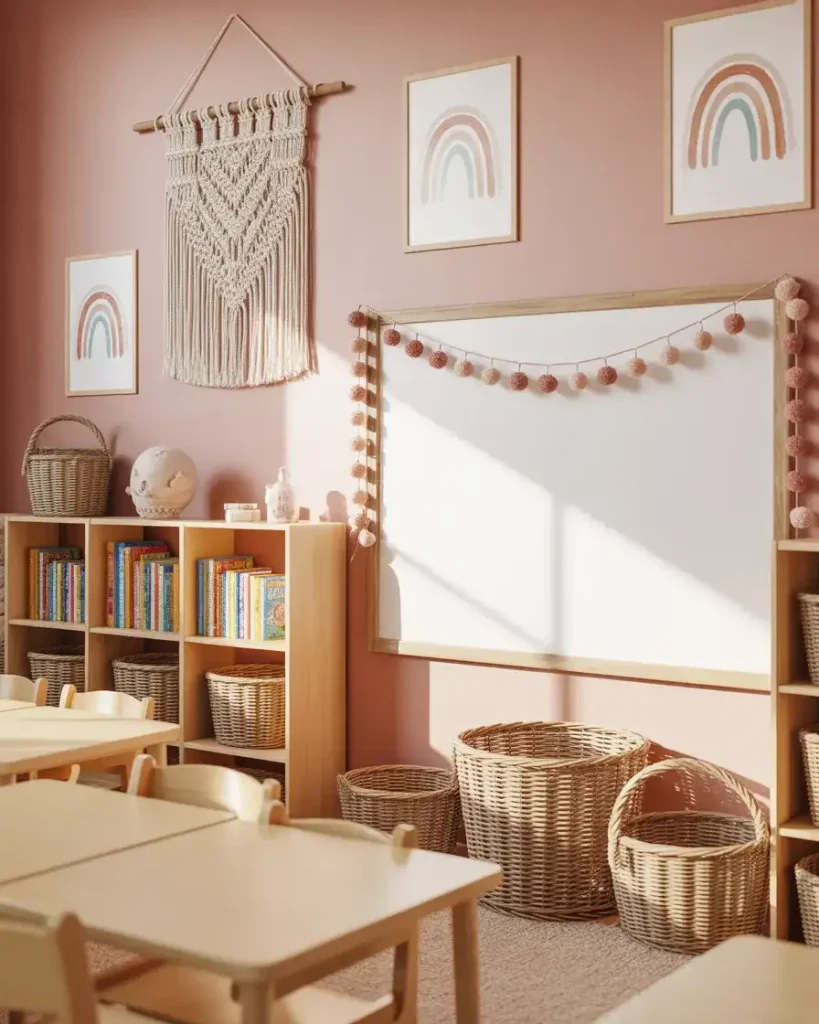
One of the most common mistakes with this combination aesthetic is overwhelming the eye with too many textures in too many colors. The best boho pastel classrooms pick a dominant hue—usually the dusty rose or the sage—and use the others sparingly as accents. When every element shouts, nothing does. Restraint is the design skill that separates the Pinterest-worthy rooms from the ones that just look crowded.
17. Simple, Clean, Minimalist Classroom Setup
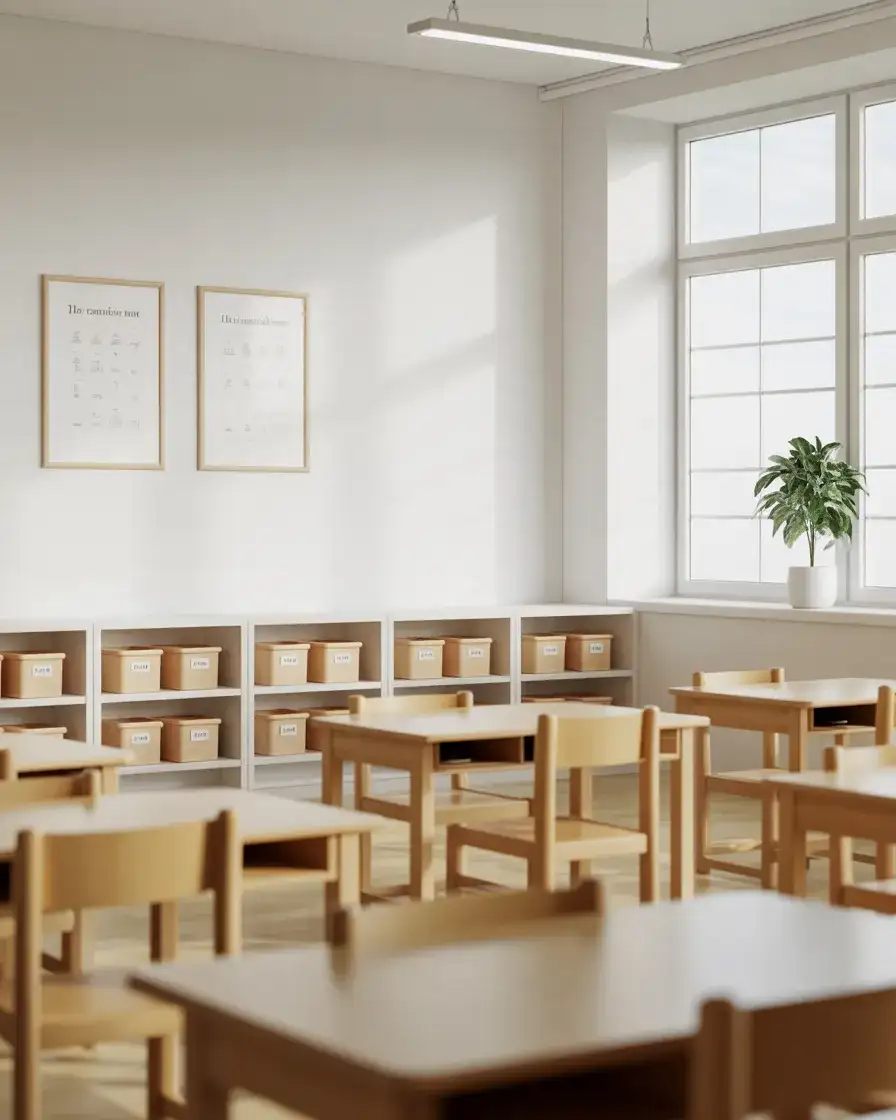
There’s a quiet but powerful movement among elementary teachers toward radical simplicity—and it’s being driven as much by student wellness research as by aesthetic preference. A simple, intentionally minimal classroom removes visual overwhelm, which research increasingly links to improved attention and reduced behavioral incidents. This means fewer bulletin boards, emptier walls, cleaner shelving, and a deliberate choice to leave negative space rather than fill every surface. For teachers raised on the idea that more decoration equals more effort and care, this is a genuine mindset shift—and a liberating one once they make it.
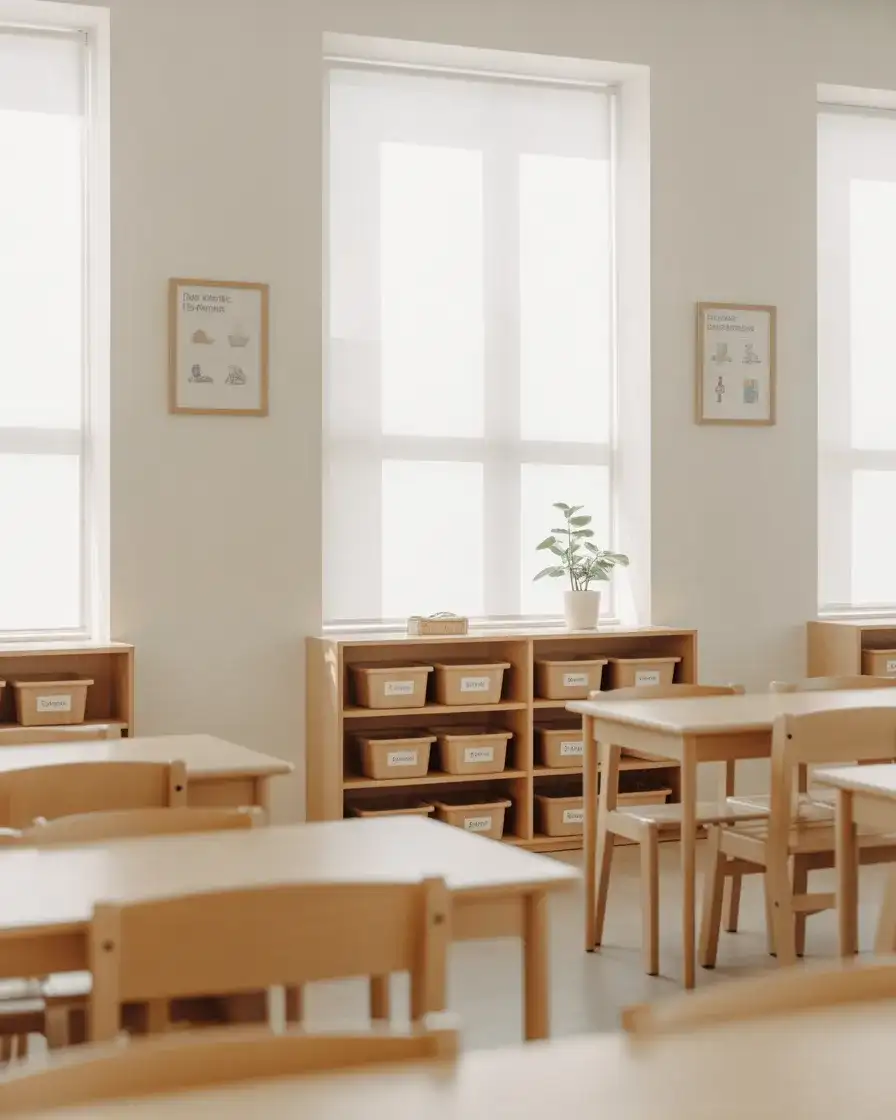
What strikes visitors to genuinely minimalist classrooms is how the students themselves seem calmer—less frenetic, more able to settle. One occupational therapist who consults with American schools made a striking observation: “When I walk into a bare classroom, my first instinct is worry—it looks uncared for. But when I watch kids work in it for twenty minutes, I change my mind completely.” The simplest classrooms often produce the most focused learners. That’s not nothing.
18. Colorful Vintage Maps and World Traveler Theme
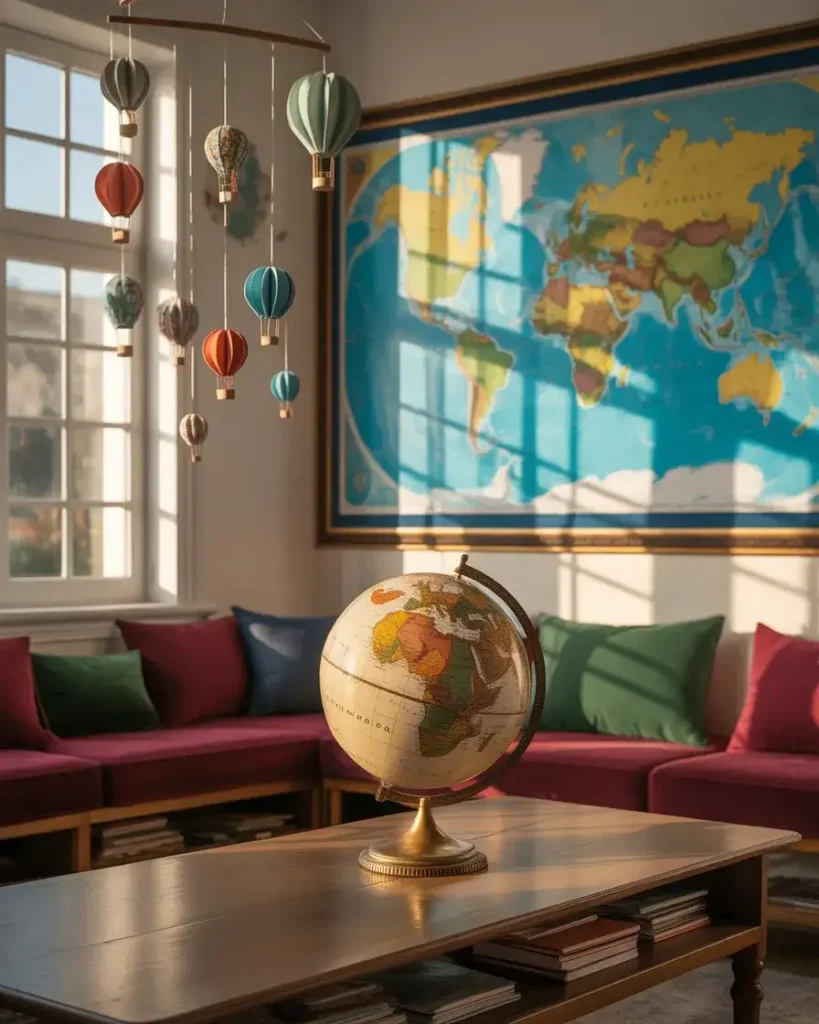
Framed vintage maps in jewel-tone colors—cobalt blue oceans, forest green continents, and golden compass roses—create an instantly striking classroom wall that works as both decor and teaching material. The world traveler theme builds on this anchor piece with passport-stamp bulletin board displays, suitcase-shaped book bins, hot air balloon mobiles, and a reading corner styled as a travel lounge with a world globe as its centerpiece. It’s genuinely colorful in a way that reads as sophisticated rather than childish, and it scales beautifully from kindergarten through 5th grade.
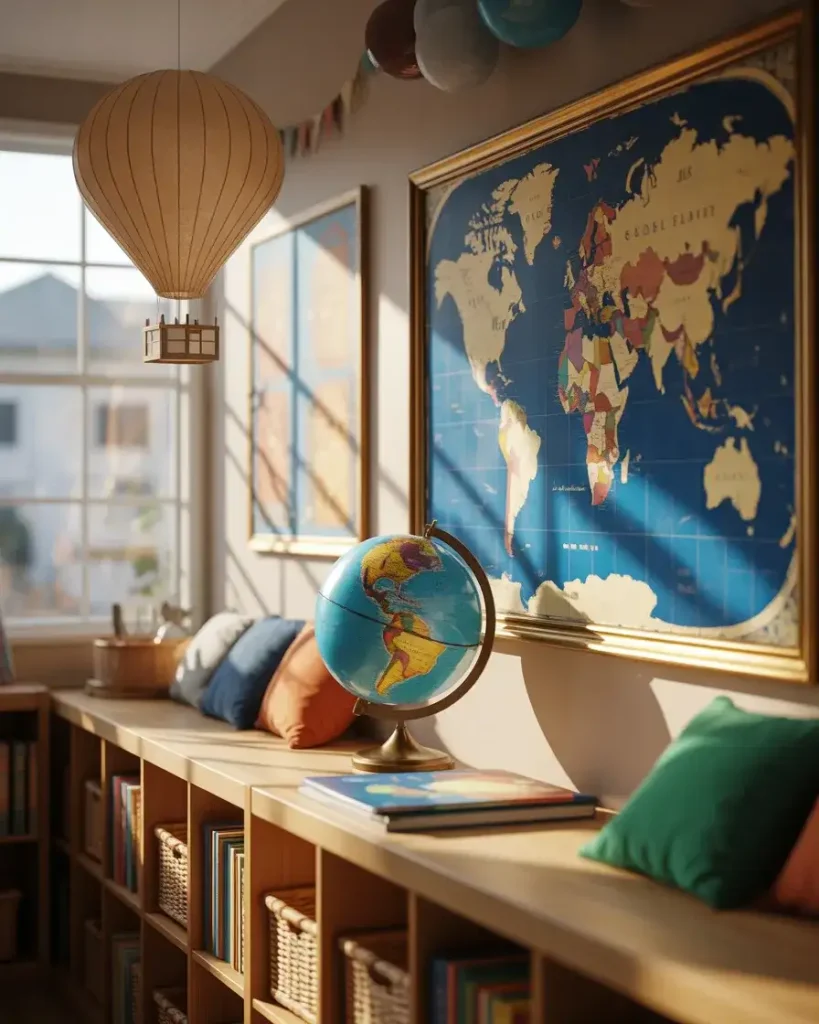
This theme works best for classrooms that teach social studies or geography as a centerpiece subject—but it doesn’t require that justification to be beautiful. American teachers living in cities with strong immigrant communities, or in areas where students come from diverse national backgrounds, often find this theme carries particular emotional resonance. It says, visually and implicitly: every place on this map matters. Every story of origin is worth knowing. That’s a powerful message to put on a classroom wall.
19. Bright and Happy Primary Colors Classic
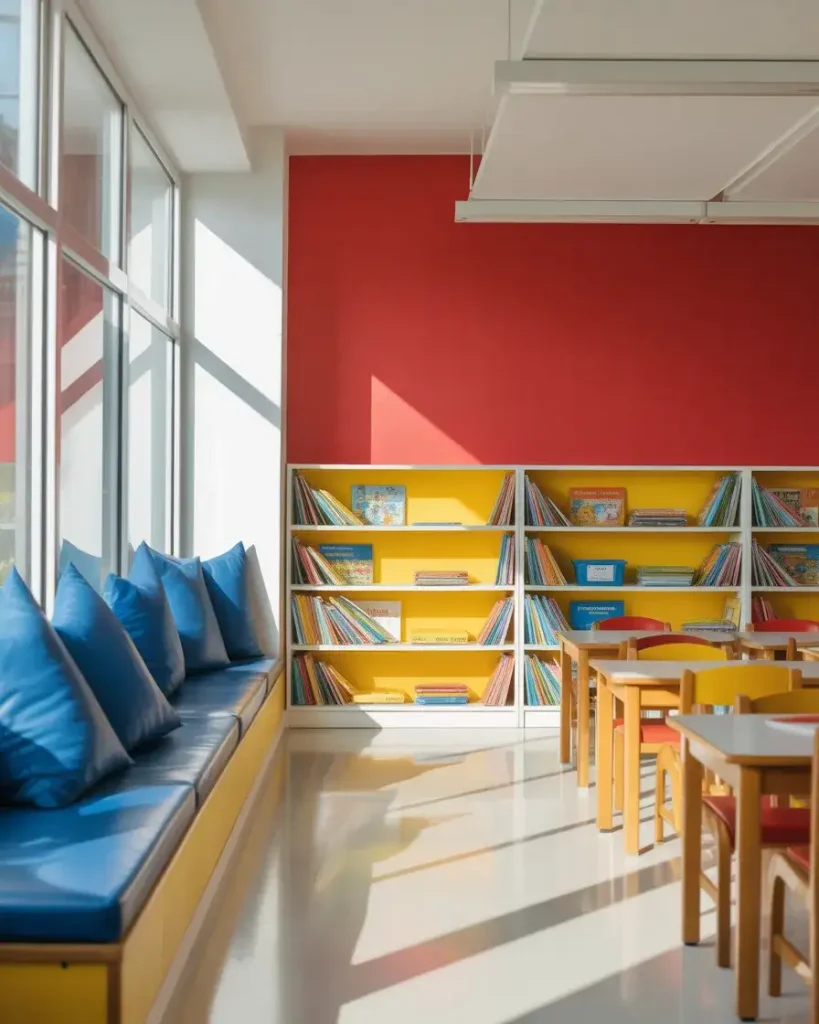
Red. Yellow. Blue. Sometimes the classics endure because they work—and the primary color elementary classroom is a perfect example. This is the aesthetic that defined American schools for generations, and in 2026 it’s enjoying a self-aware revival that leans into its own heritage. The key upgrade from its older iterations: cleaner execution. Instead of a cacophony of mismatched primaries, the contemporary version uses a deliberate color-blocking approach—a red accent wall here, yellow shelving there, blue reading corner cushions—that makes the palette feel intentional rather than incidental.
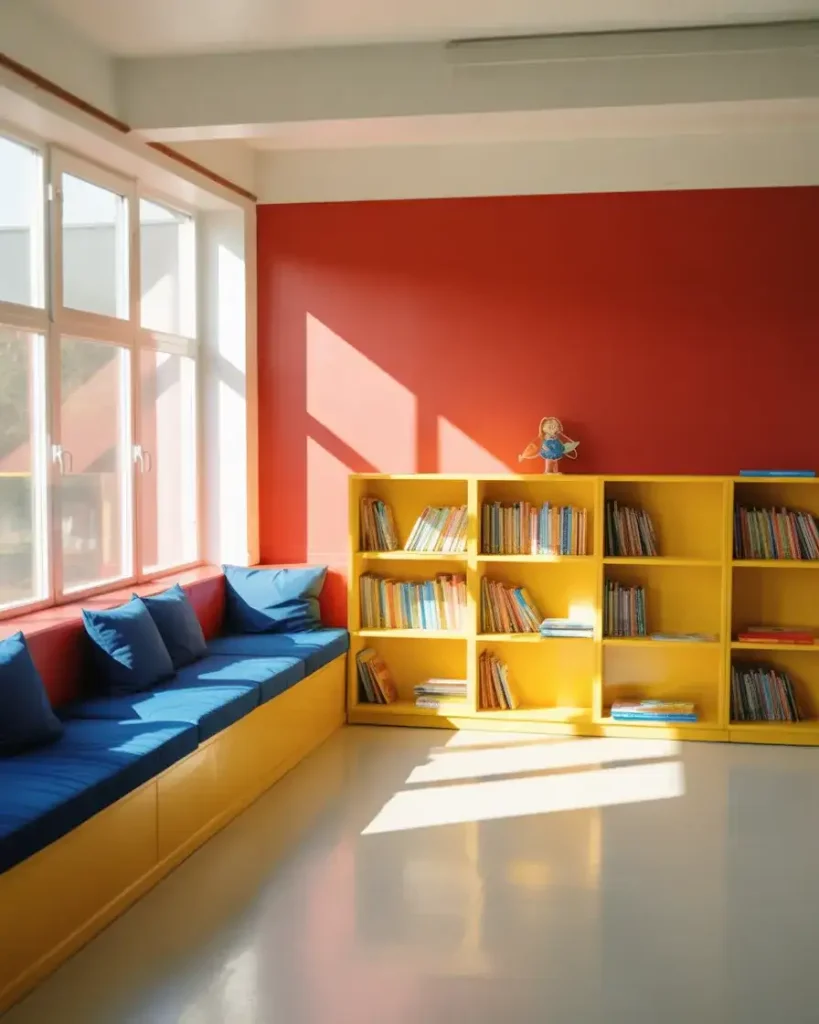
There’s a real homeowner behavior parallel here: American families who grew up with primary-color nurseries often find themselves unconsciously drawn back to this palette when creating spaces for children. It carries cultural weight as the visual language of American childhood—Crayola boxes, LEGO bricks, and Fisher-Price toys. Leaning into that familiarity rather than running from it can make a classroom feel like a genuinely welcoming home base for students on the first anxious day of a new school year.
20. Cottagecore Floral Classroom Oasis
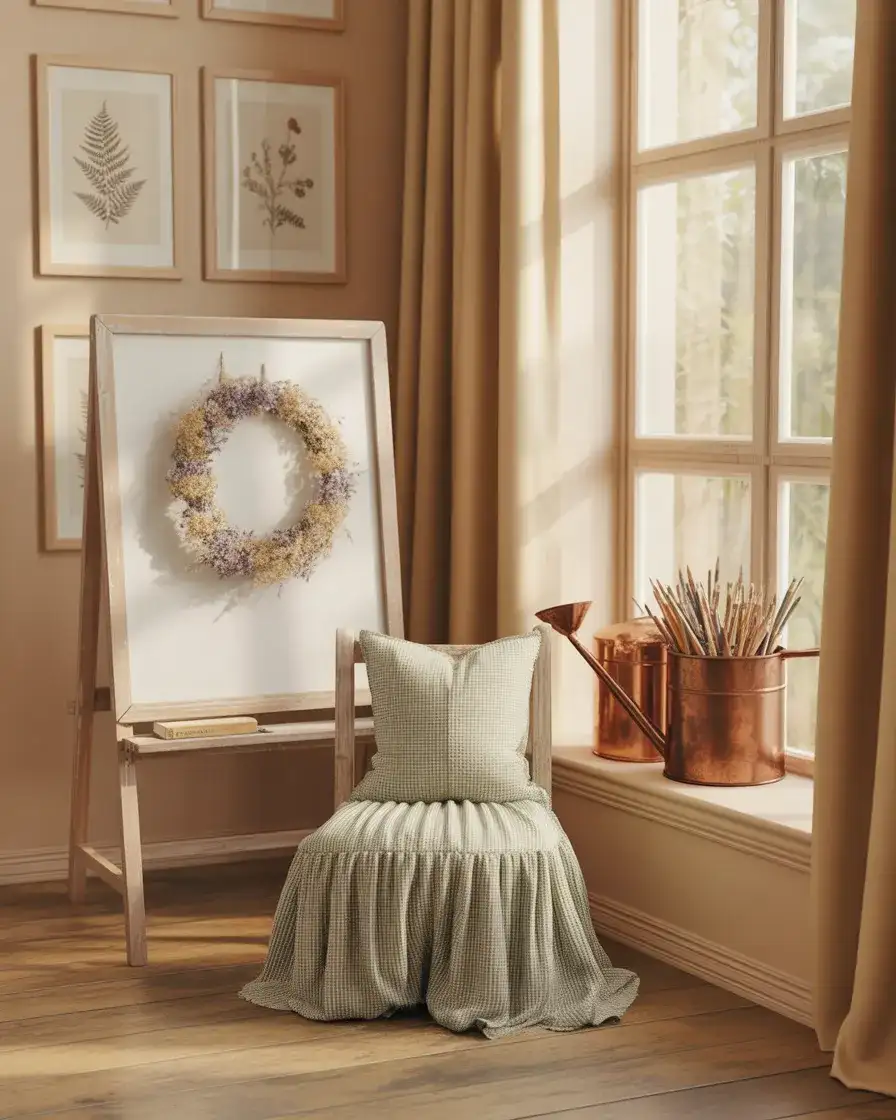
Dried flower wreaths, botanical watercolor prints, soft gingham fabric accents, antique-style watering cans used as supply holders, and a reading corner that genuinely looks like a garden shed—the cottagecore classroom aesthetic is Pinterest catnip, and it’s growing. It draws from the same cultural wellspring as the broader cottagecore movement: a longing for slowness, nature, handmade things, and the kind of beauty that feels accidental rather than purchased. For an elementary classroom, this translates into spaces that feel genuinely loved—as though someone spent a long time imagining how a child might feel sitting in each corner.
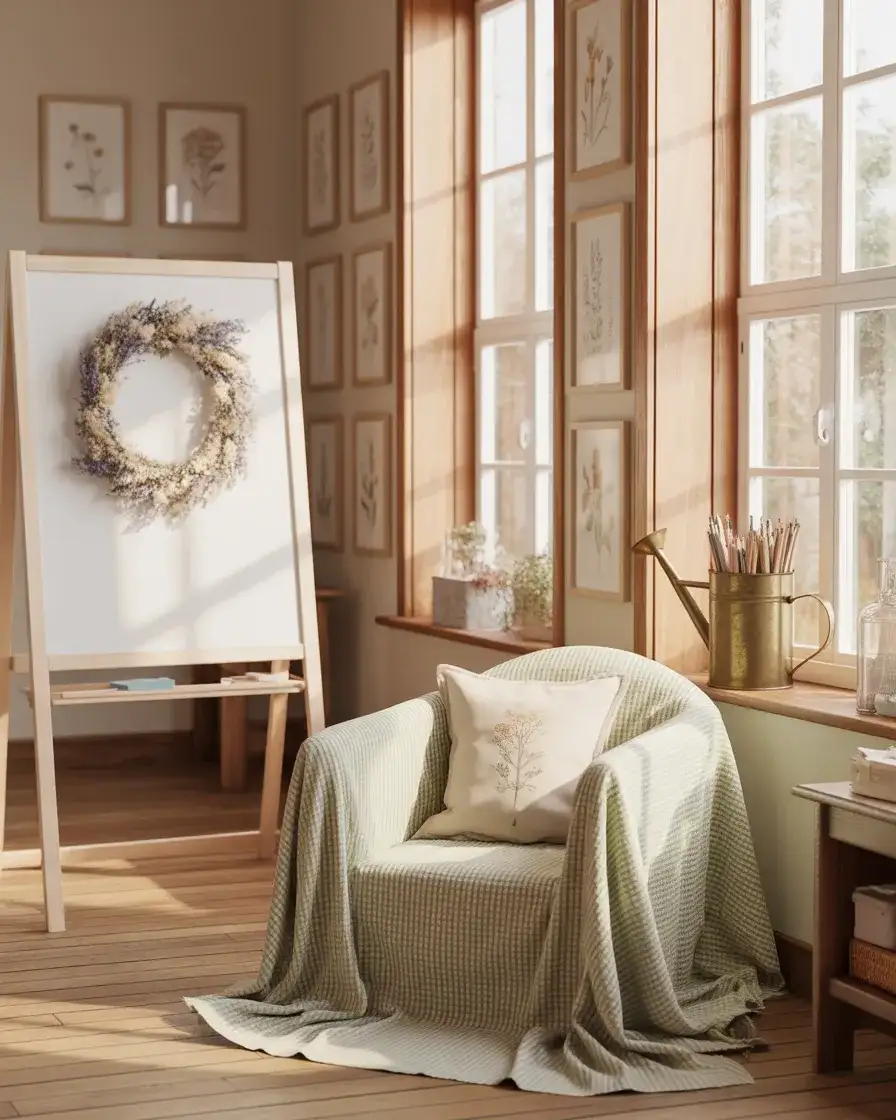
What makes this theme particularly well-suited to DIY execution is that dried flowers are among the most cost-efficient classroom decor materials available. A $10 bunch of dried lavender, pampas grass, or eucalyptus goes further visually than almost any store-bought alternative. Teachers who love crafting can spend a single afternoon assembling a wreath, a few small arrangements, and some pressed flower art—and produce a classroom transformation that would retail for three times the cost of materials. The time investment is the whole point.
21. Retro 90s and Y2K-Inspired Classroom
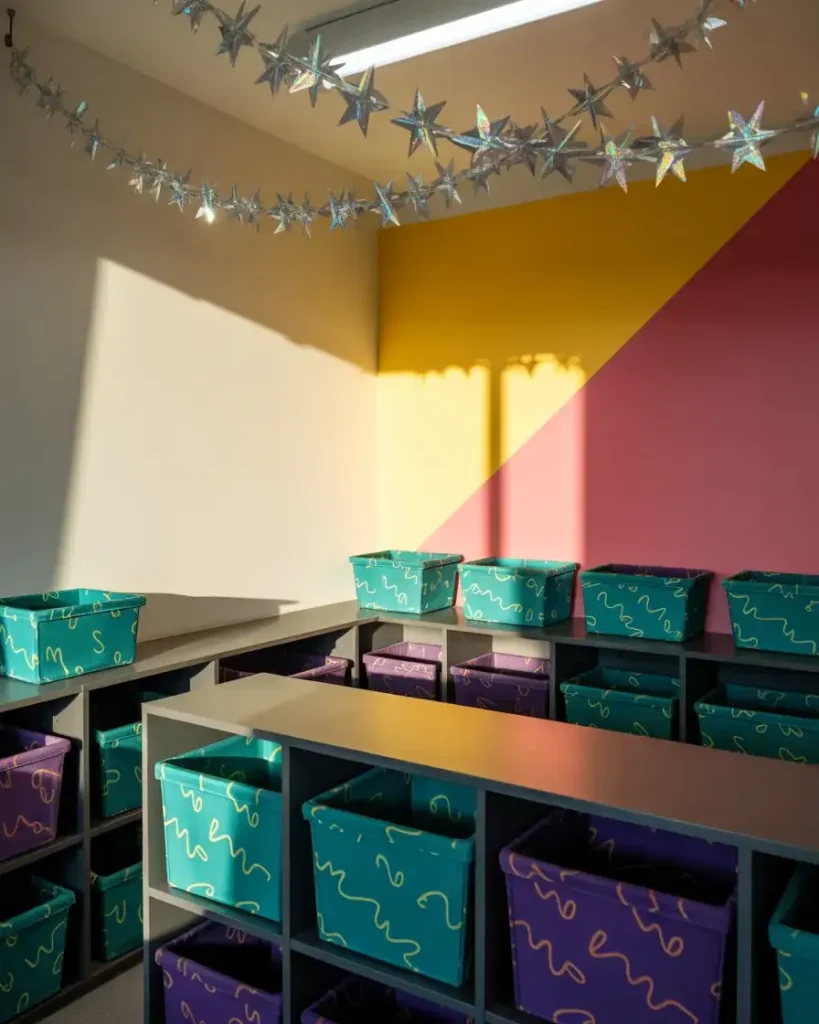
The nostalgia wave sweeping interior design has now fully reached the classroom, and the 90s-to-2000s window is at the center of it. Think squiggly line patterns in teal and purple, bold geometric shapes, smiley face motifs, silver and holographic accents, and that distinctive checkerboard floor-tile energy that defined the era. For teachers who were elementary school students themselves in this period, designing this classroom is an act of joyful time travel. For their students, who encounter the same aesthetic through fashion and social media, it lands as immediately cool rather than dated—a generational crossover moment that’s genuinely rare in classroom design.
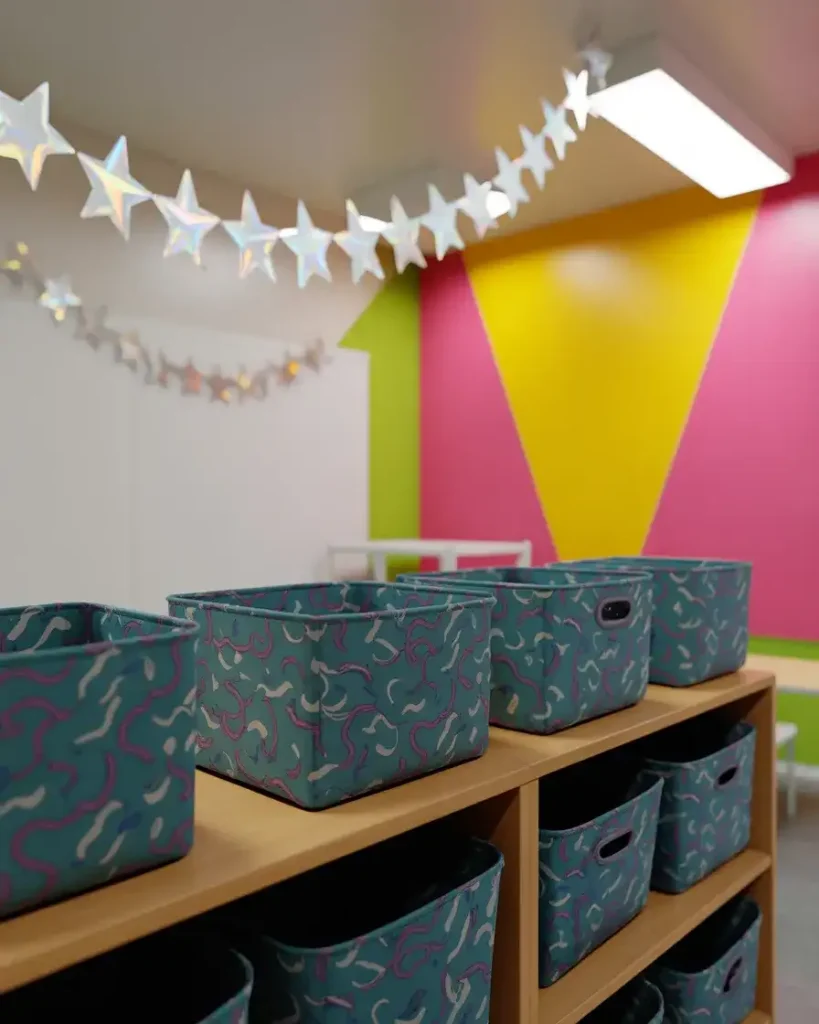
From a lifestyle perspective, this theme resonates with the growing millennial teacher cohort—the largest group currently entering and filling elementary classrooms across the U.S. Teachers in their late twenties and thirties are designing rooms that reflect their own childhood experiences, and students are responding to that authenticity with enthusiasm. It’s a reminder that the best classroom decor is always personal—the rooms that resonate most deeply are the ones where a teacher’s genuine sensibility is visible in every choice.
22. Cozy Reading Nook-Centered Classroom Design
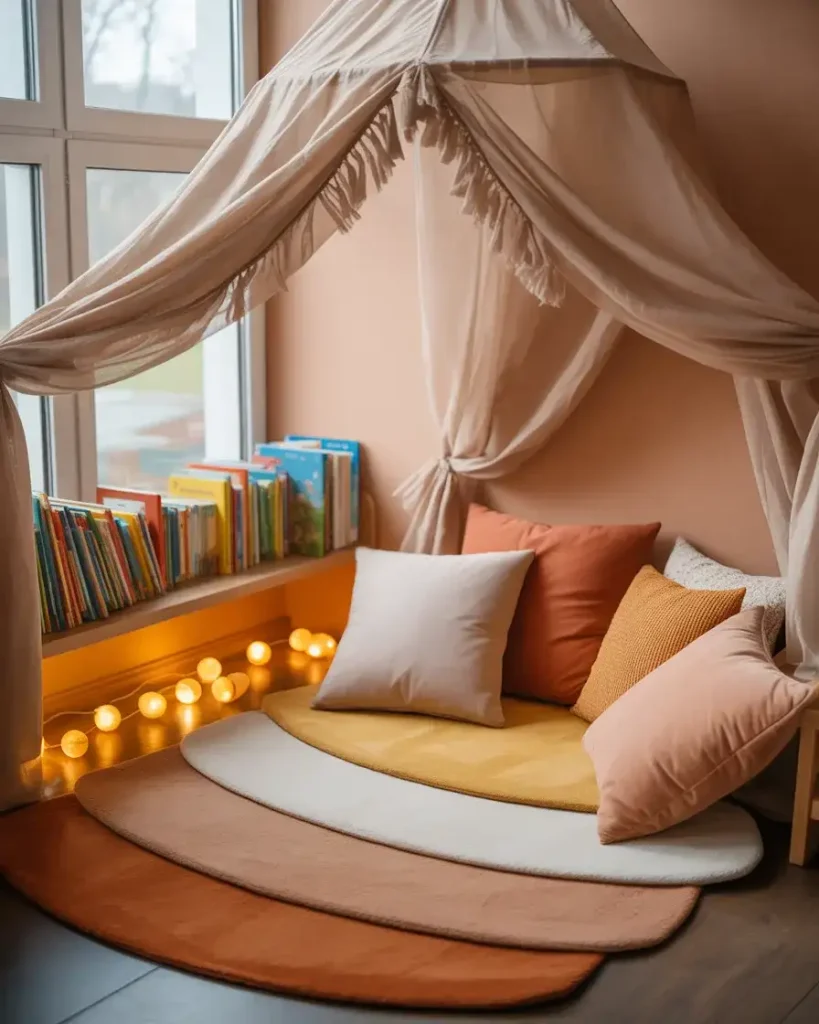
Some classrooms are designed around the whiteboard. The best ones are designed around the reading nook. Making the cozy reading corner the visual and emotional anchor of your classroom is a philosophy as much as a decor choice—it communicates that reading is the heart of what happens here, and everything else radiates outward from that belief. A canopy overhead, a layered rug underfoot, pillows in every texture, a low bookshelf at arm’s reach, and string lights casting a warm amber glow at eye level—this kind of calm, intentional space creates the sort of reading environment that shapes kids’ relationships with books for life.
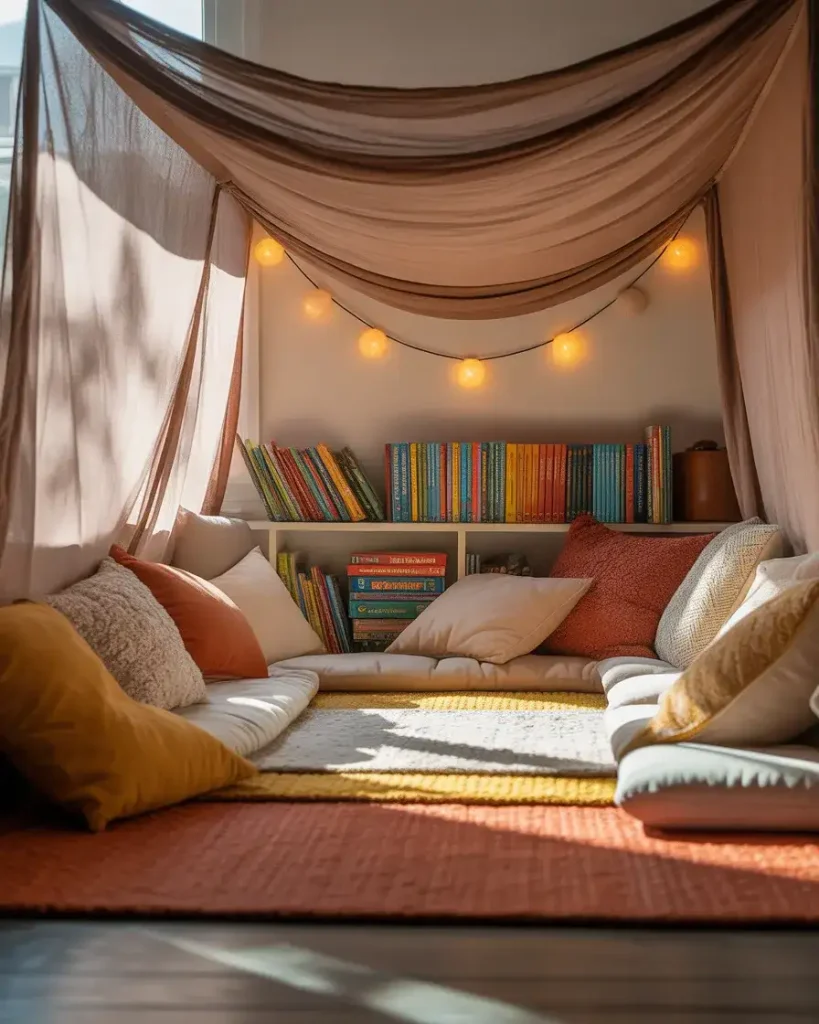
The single biggest mistake teachers make with reading nooks is building one that looks beautiful in September but becomes a storage overflow zone by November. The best reading corners are protected spaces—teachers who succeed in maintaining them describe treating them with the same intentionality as the rest of their instruction. The nook isn’t just decoration. It’s a destination. And destinations, whether in a classroom or anywhere else, require ongoing care to remain worth visiting.
Conclusion
Elementary classroom decor in 2026 is richer, more personal, and more intentional than ever before—and that’s worth celebrating. Whether your instinct pulls you toward the wild color of a jungle safari room, the sacred stillness of a faith-based space, or the nostalgic warmth of a Y2K corner, the best classroom is always the one that reflects who you are as a teacher and what you want students to feel when they walk through the door. We’d love to hear from you—drop a comment below and tell us which aesthetic you’re planning to try this year, or share a photo of a classroom transformation you’re proud of. Your ideas just might inspire someone else’s perfect room.