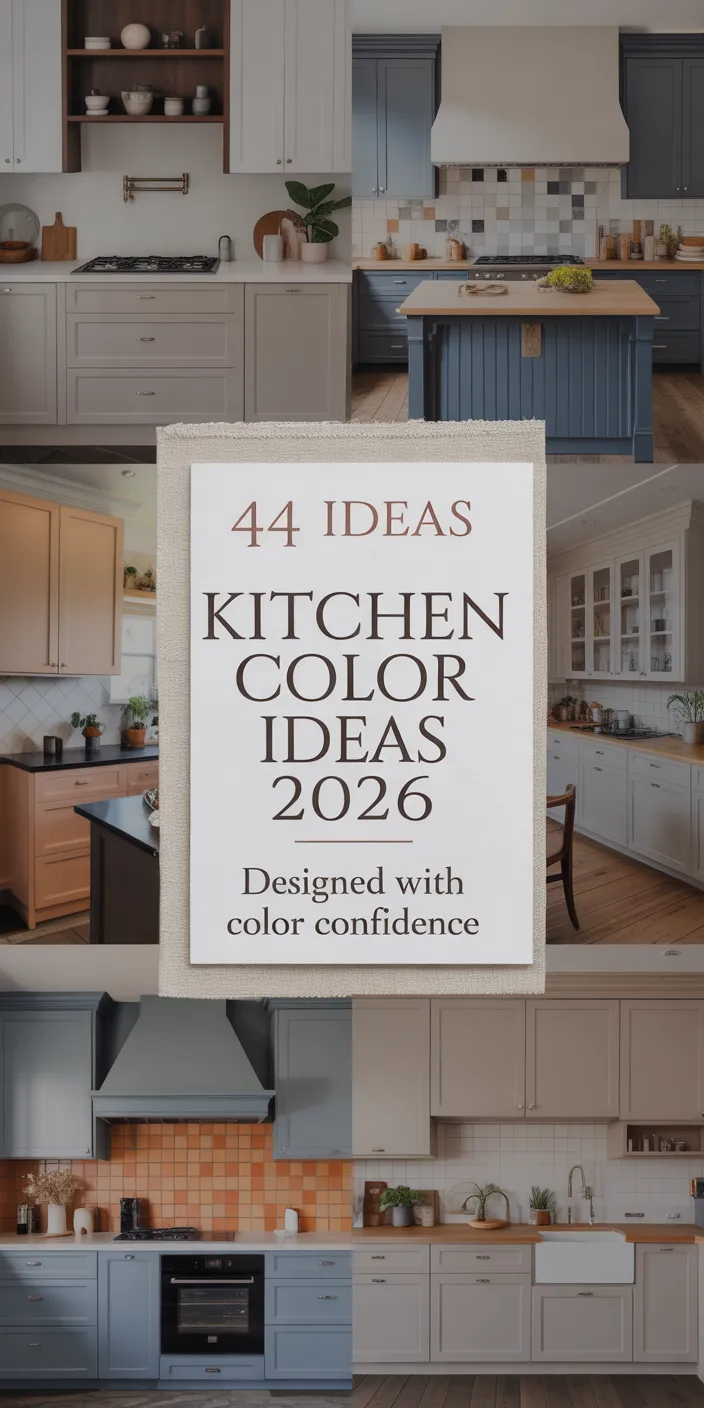
Black kitchen cabinets have become one of the most sought-after design choices for American homeowners looking to make a bold, sophisticated statement. Whether you’re drawn to sleek modern aesthetics or cozy farmhouse charm, black cabinetry offers incredible versatility that works across styles and budgets. From pairing with warm butcher block countertops to elevating small kitchens with dramatic contrast, these ideas showcase how black cabinets can transform your space. If you’re coming from Pinterest seeking real inspiration, you’ll find practical approaches here—from matte finishes to gold hardware accents—that feel both current and timeless.
1. Matte Black Cabinets with White Countertops
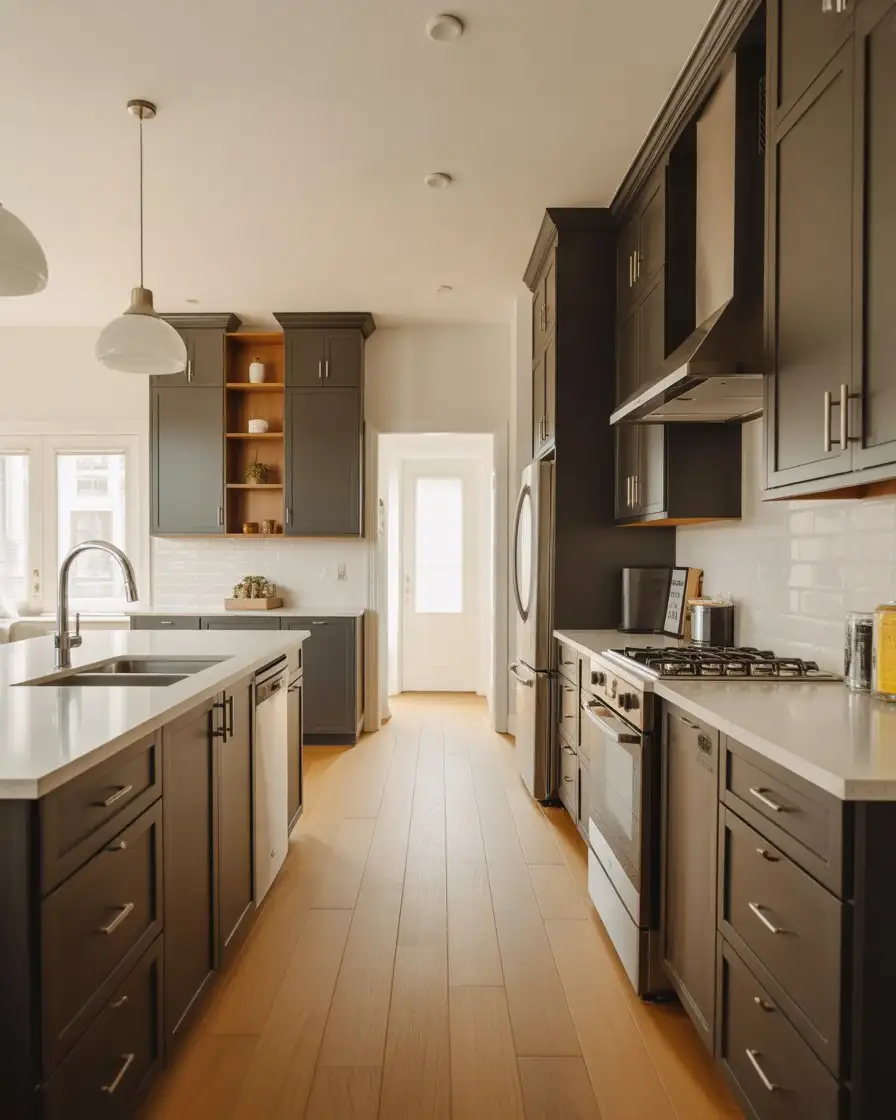
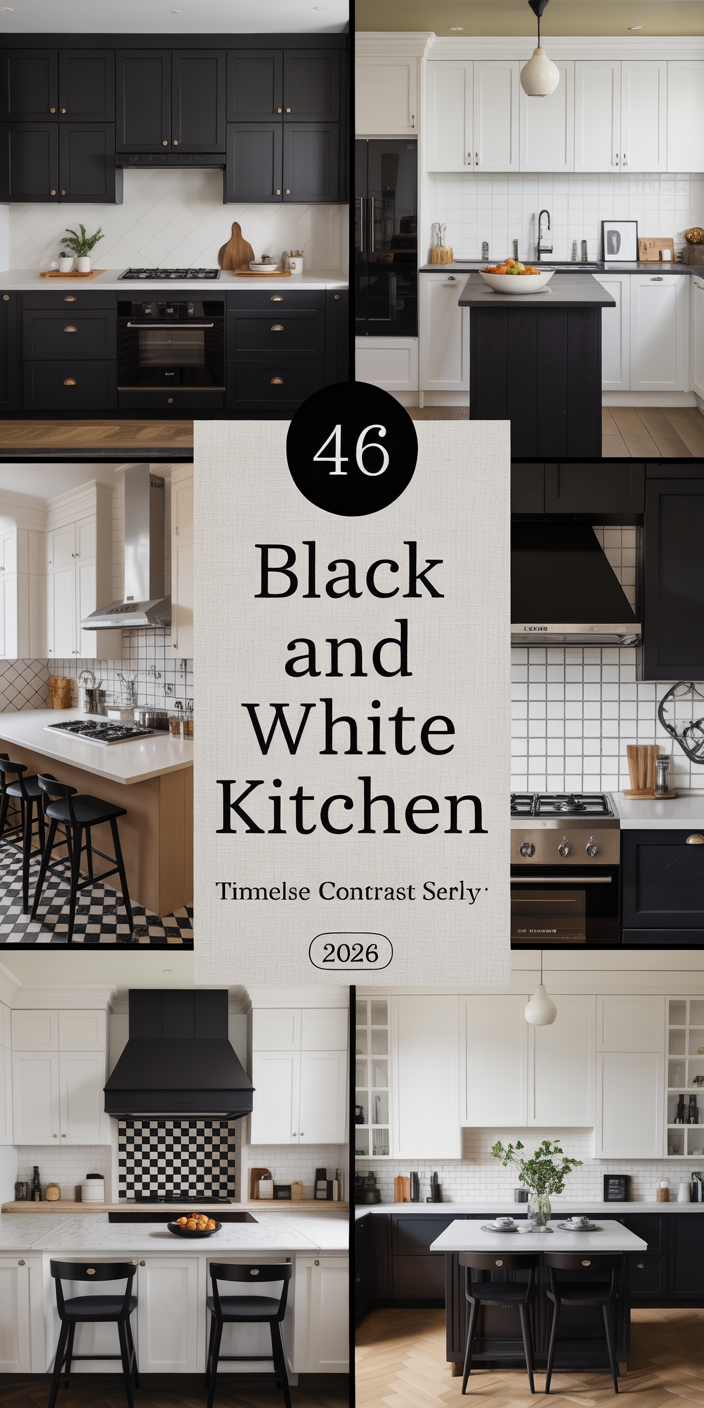
The combination of matte black cabinetry and crisp white countertops creates a high-contrast kitchen that feels both modern and approachable. This pairing works beautifully in open-plan homes where the kitchen flows into living spaces, offering visual drama without overwhelming the room. The smooth, non-reflective finish of matte black hides fingerprints better than glossy alternatives, making it practical for busy families. Quartz or marble white surfaces amplify natural light while grounding the bold cabinet choice with classic elegance. 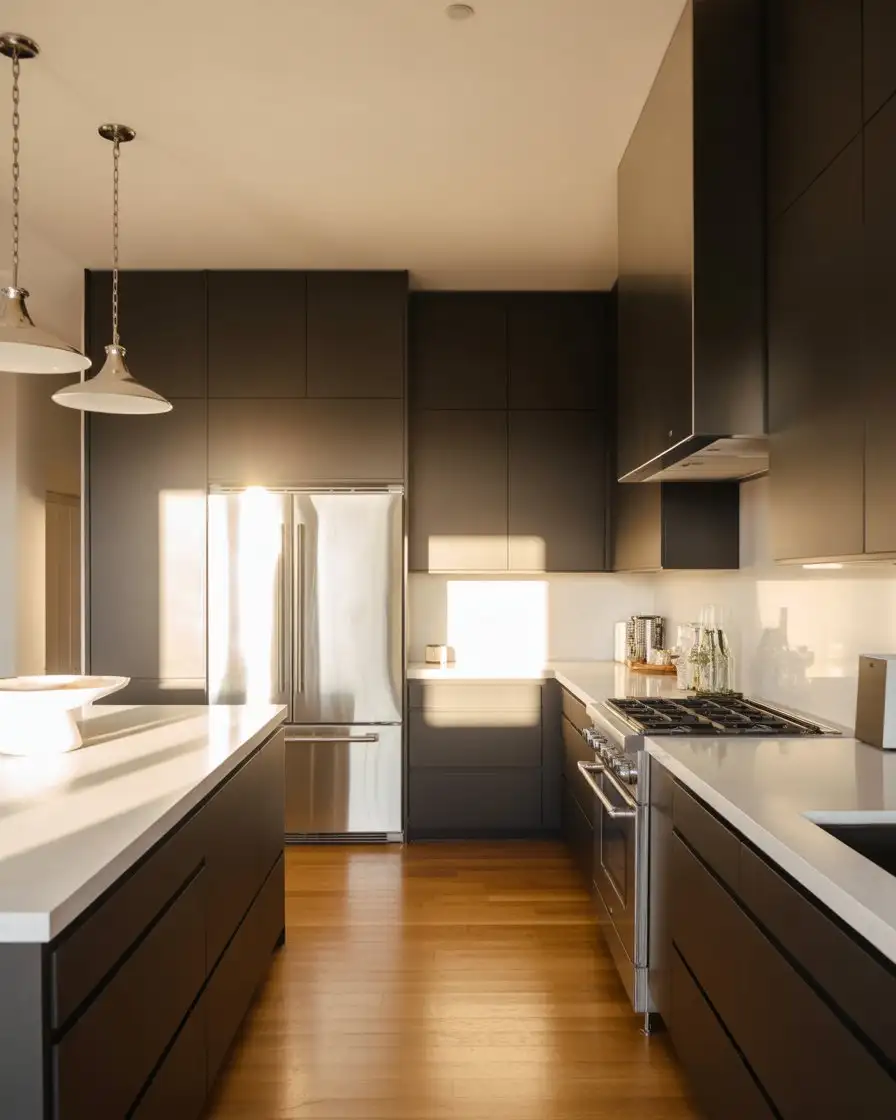
This works best in kitchens with abundant natural light or large windows—the white counters reflect illumination throughout the space, preventing the black from feeling too heavy. Many homeowners in urban lofts and suburban new-builds favor this combo because it photographs beautifully and appeals to a wide range of tastes. Consider adding open shelving in natural wood or brass fixtures to soften the stark palette and introduce warmth without diluting the contemporary edge.
2. Black Kitchen Cabinets with Butcher Block Countertops
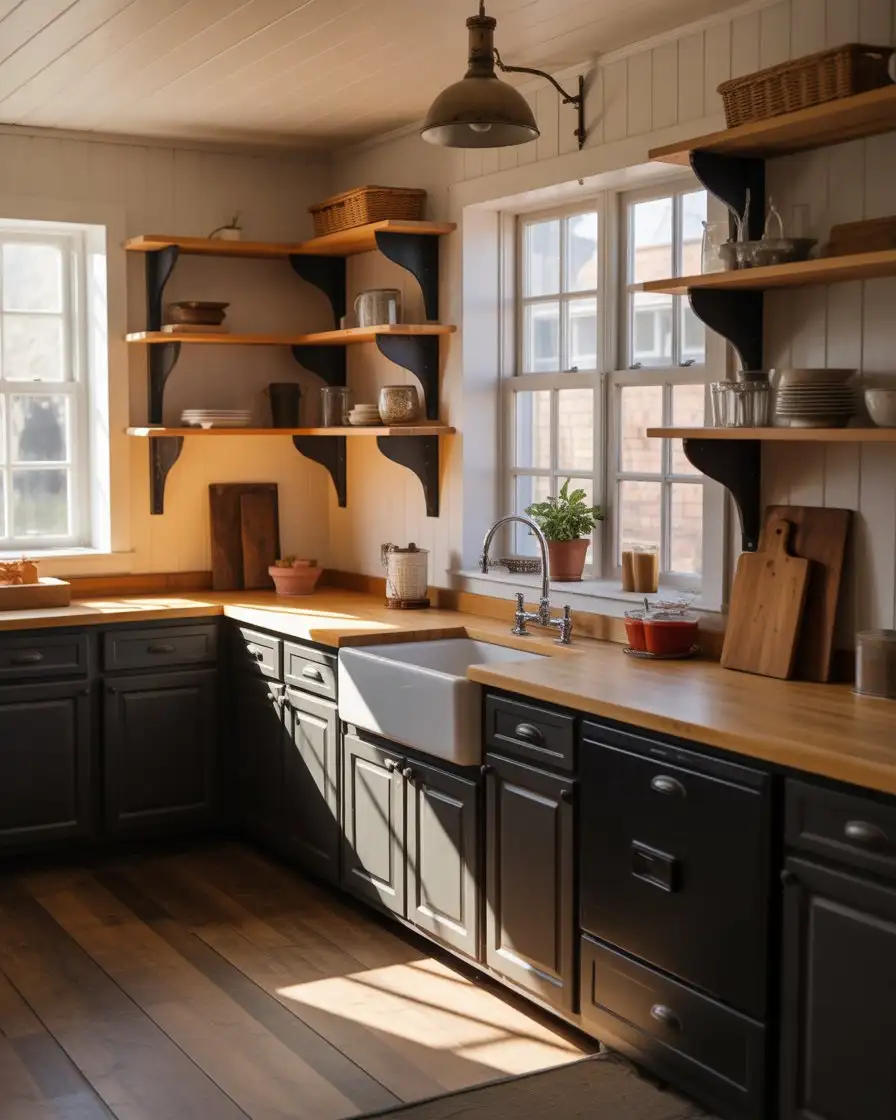
When you pair black cabinetry with butcher block countertops, you create an inviting balance between industrial edge and organic warmth. The rich grain of wood countertops brings texture and personality, while the dark base cabinets anchor the design with modern sophistication. This combination has exploded in popularity among homeowners renovating older homes or seeking farmhouse aesthetics with a contemporary twist. Maple, walnut, or oak butcher block all work beautifully, each offering different tones and character. 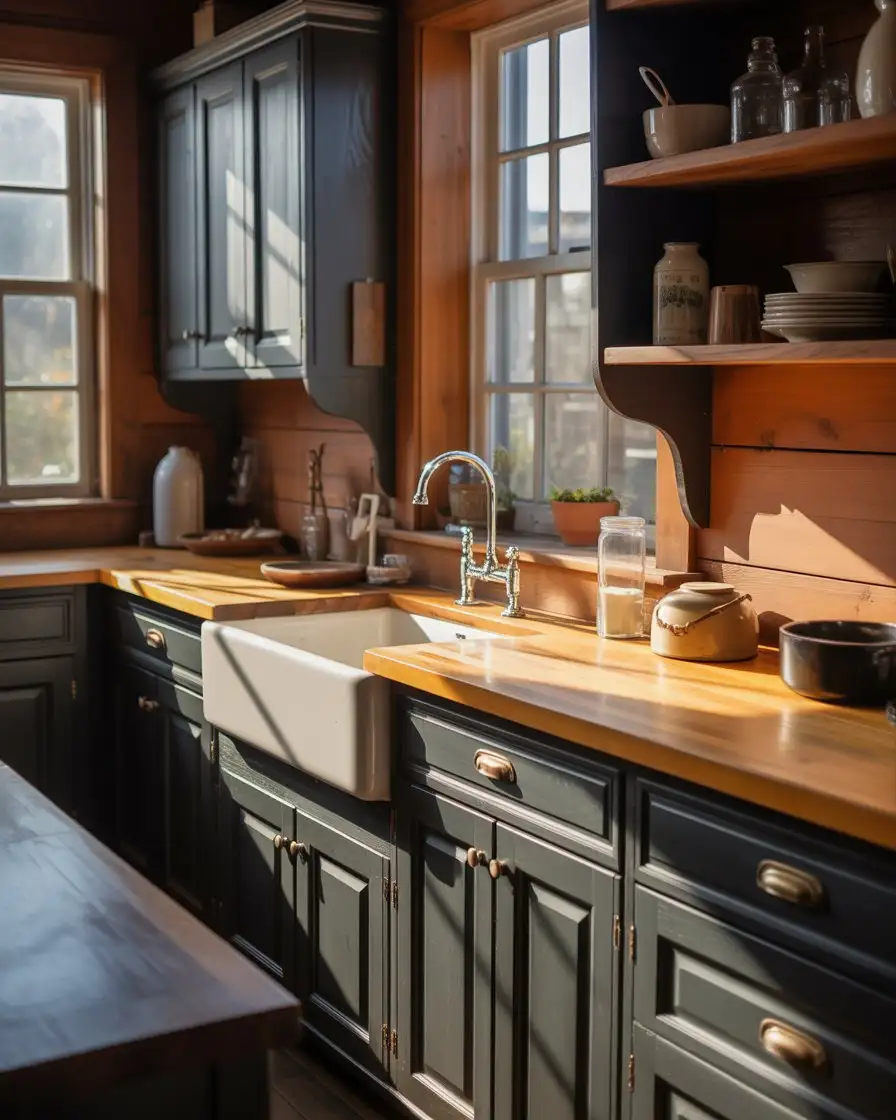
Budget-conscious renovators love this approach because butcher block often costs less than stone while delivering high-end visual impact. You can find quality options ranging from $40 to $100 per square foot, depending on wood species and thickness. Regular oiling maintains the surface and deepens its honey tones over time, creating a living finish that evolves with your home. Just avoid placing it directly next to cooktops without protective trivets, as heat can damage the wood.
3. Small Kitchen with Black Cabinets and Strategic Lighting
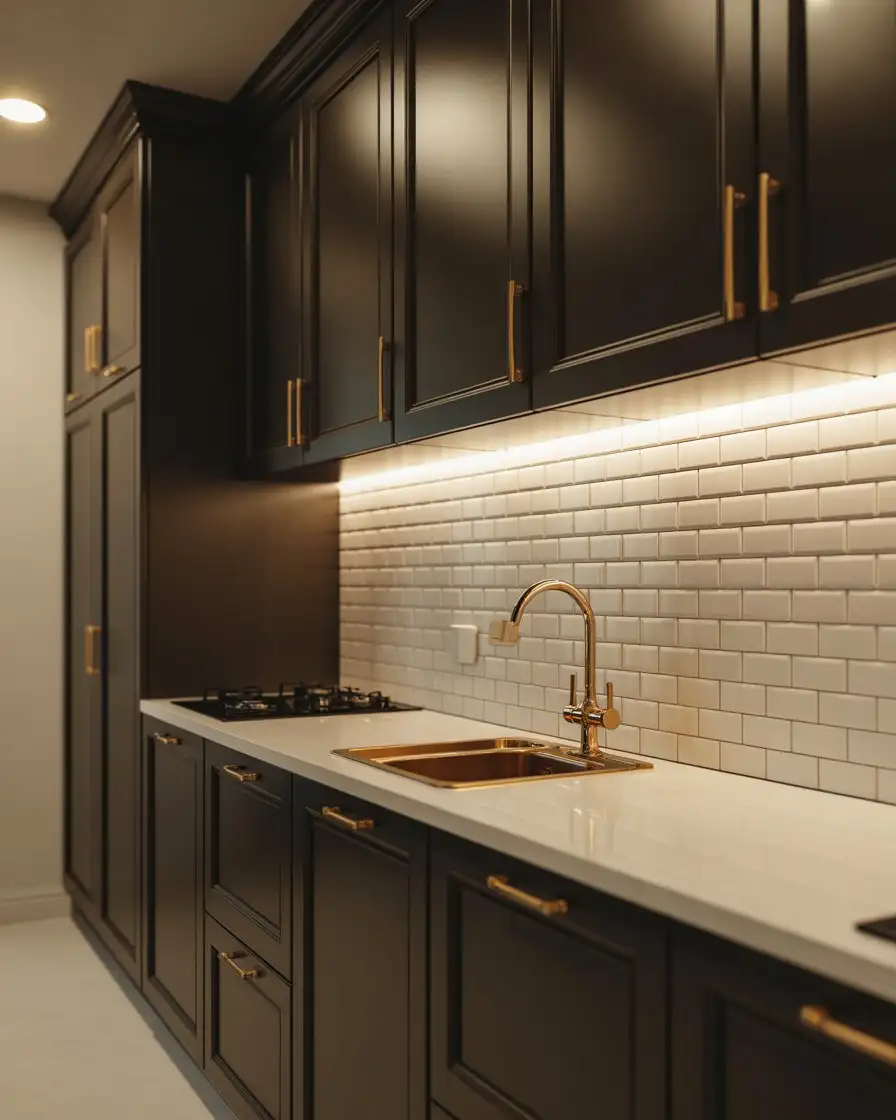
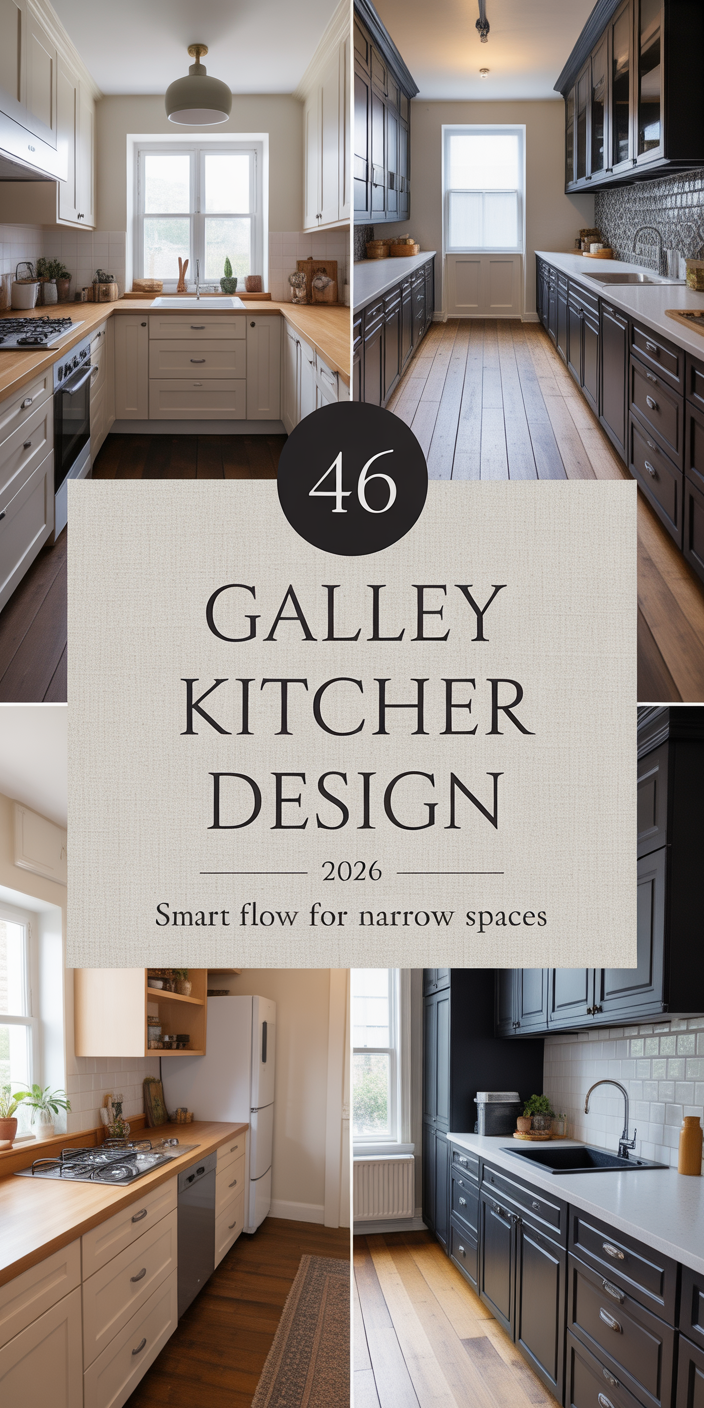
Dark cabinetry in a small kitchen might sound counterintuitive, but when executed thoughtfully, it creates depth and drama that light colors can’t match. The key lies in layering multiple light sources—under-cabinet LEDs, pendant fixtures, and recessed ceiling lights—to prevent shadows and maintain brightness. Black cabinets actually help define zones in compact layouts, making the space feel intentionally designed rather than cramped. Pair with reflective backsplash tiles or mirrored accents to bounce light around. 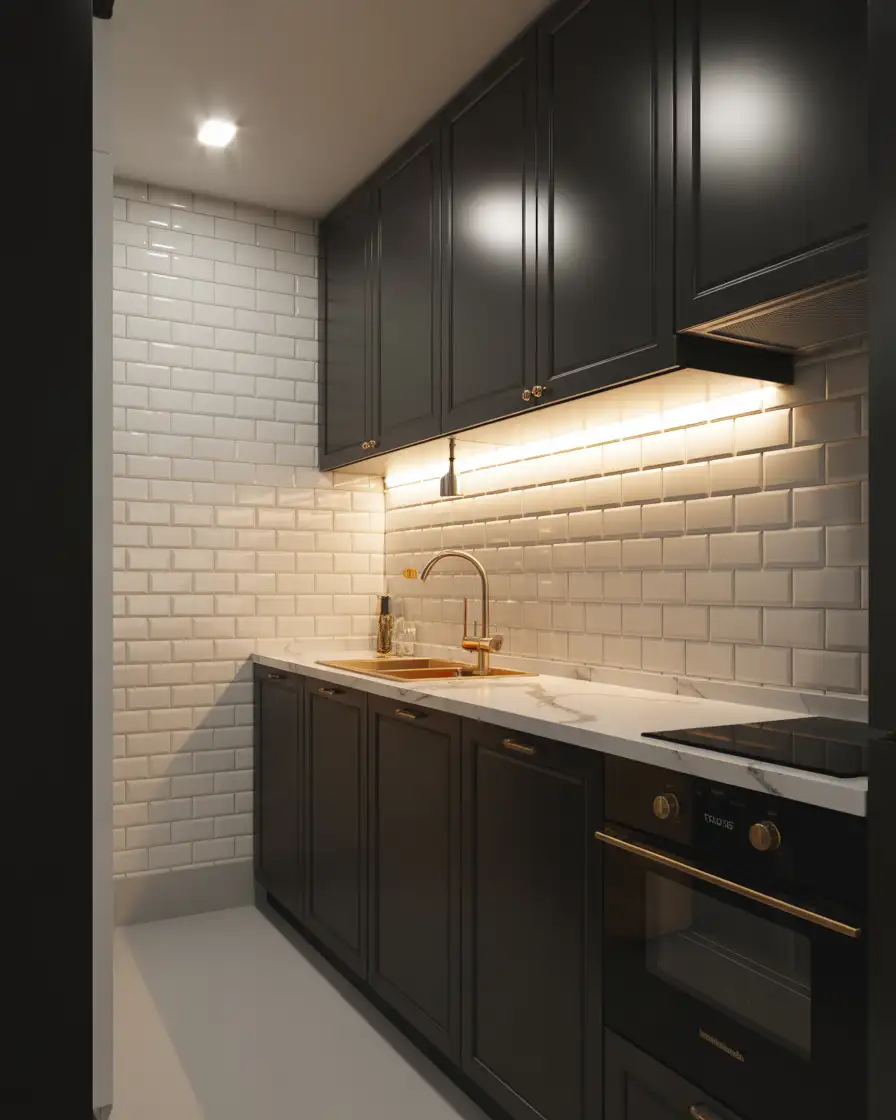
Common mistakes include using all black in windowless kitchens or skipping the upper cabinets entirely, which can leave the design feeling unfinished. Instead, many designers recommend keeping upper cabinets in black while introducing lighter elements at eye level—like open shelving with white dishes or a pale backsplash. In city apartments and starter homes across the Midwest and Northeast, this strategy transforms tight kitchens into sophisticated spaces that feel curated rather than limited.
4. Black and White Oak Kitchen with Modern Lines
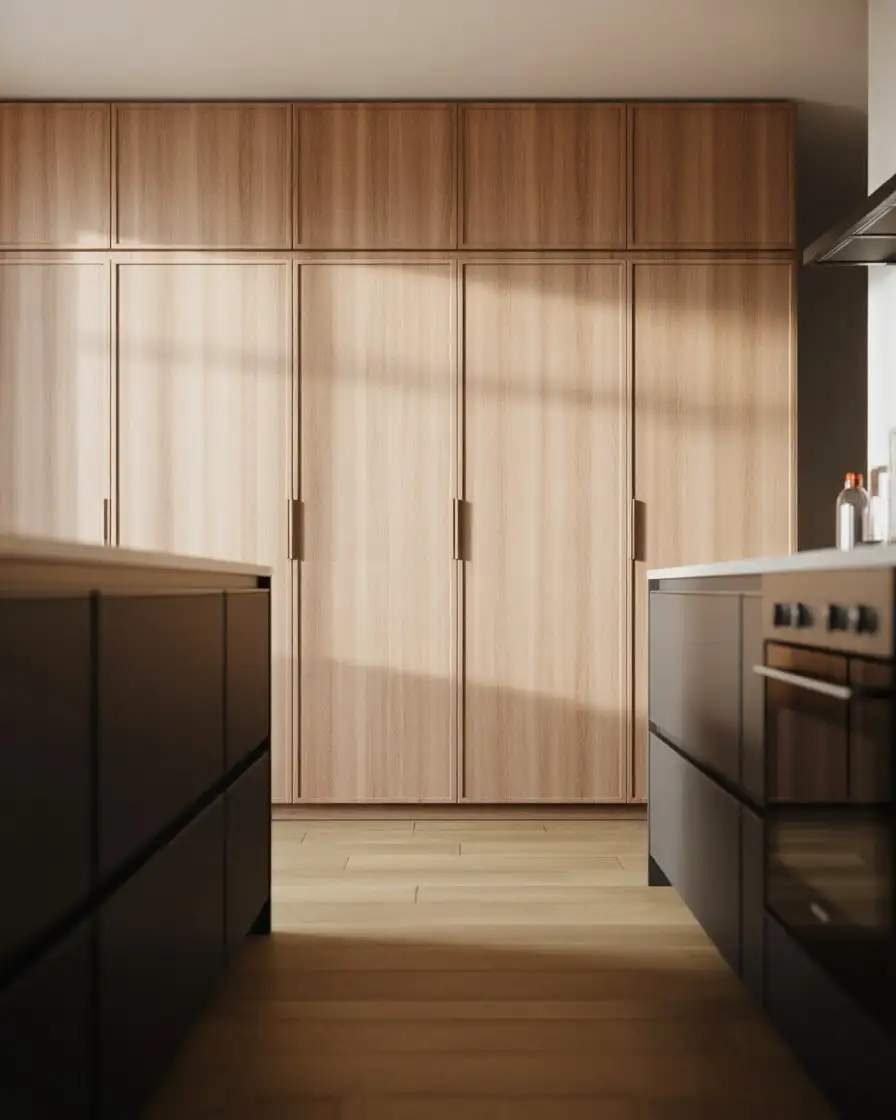
Combining black lower cabinets with white oak upper units or accent elements creates a Scandinavian-inspired kitchen that feels current without chasing trends. The pale, subtle grain of white oak introduces warmth and natural texture, softening the boldness of black while maintaining clean, modern lines. This two-tone approach has gained traction in Pacific Northwest homes and California renovations where homeowners want drama balanced with organic materials. The contrast helps delineate workspace from display areas naturally. 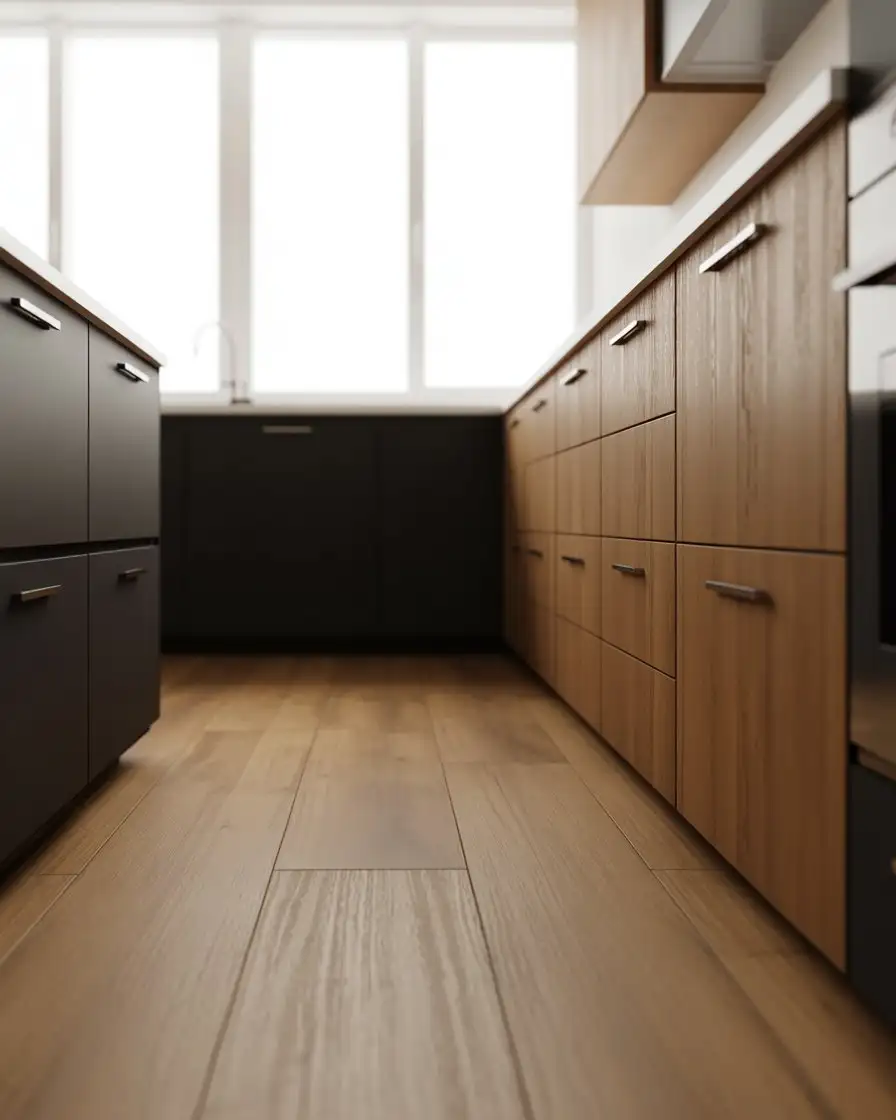
From an expert perspective, this combination works because it avoids the visual heaviness that all-black kitchens can create while still delivering bold personality. The white oak ages beautifully, developing a richer patina over years, which complements the timelessness of black cabinetry. It’s particularly effective in open kitchens where you want the space to feel connected to adjacent wood flooring or furniture. Consider matching the oak tone to your floors for seamless flow.
5. Black Cabinets with Gold Hardware and Handles
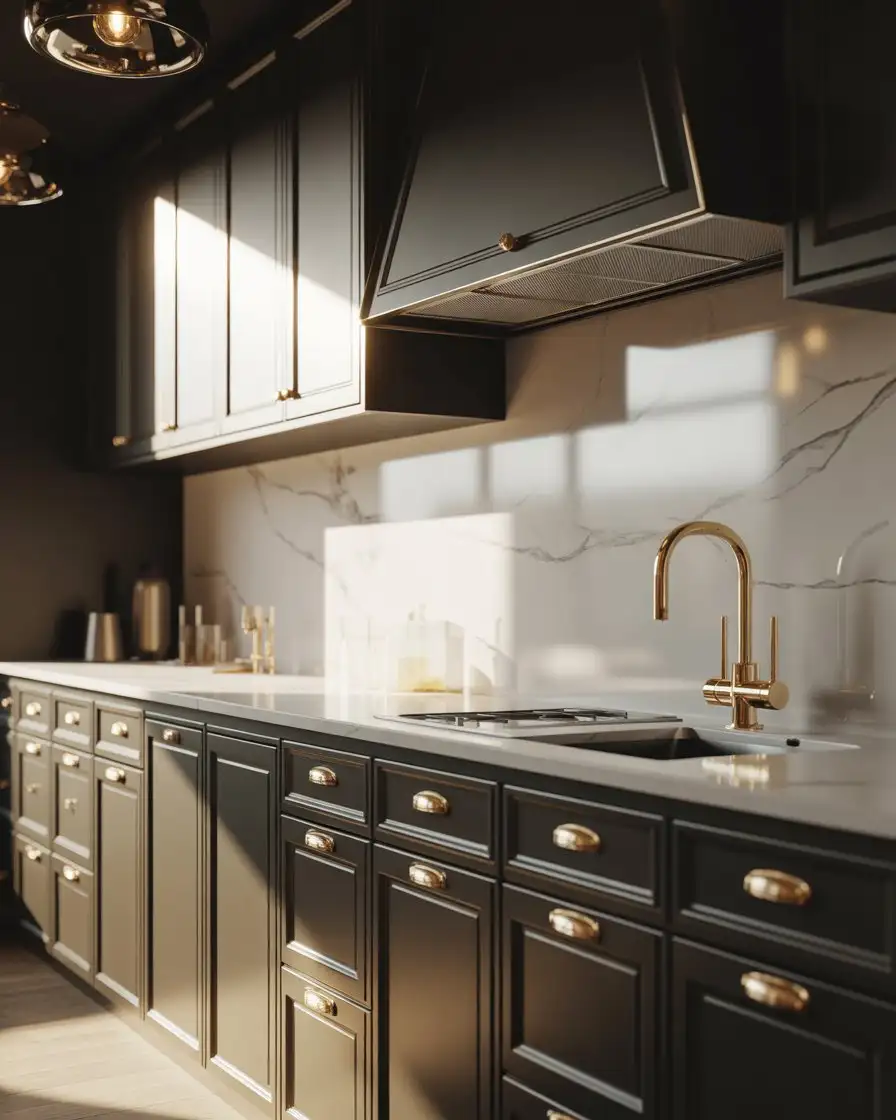
Nothing elevates black cabinetry quite like warm gold handles and hardware. The metallic gleam against dark surfaces creates instant luxury, reminiscent of high-end boutique hotels and designer showrooms. Whether you choose brushed brass, aged gold, or polished champagne finishes, these accents catch light beautifully and introduce a jewelry-like quality to everyday kitchen handles. This detail has become a signature move for homeowners wanting to add personality without overhauling their entire design. 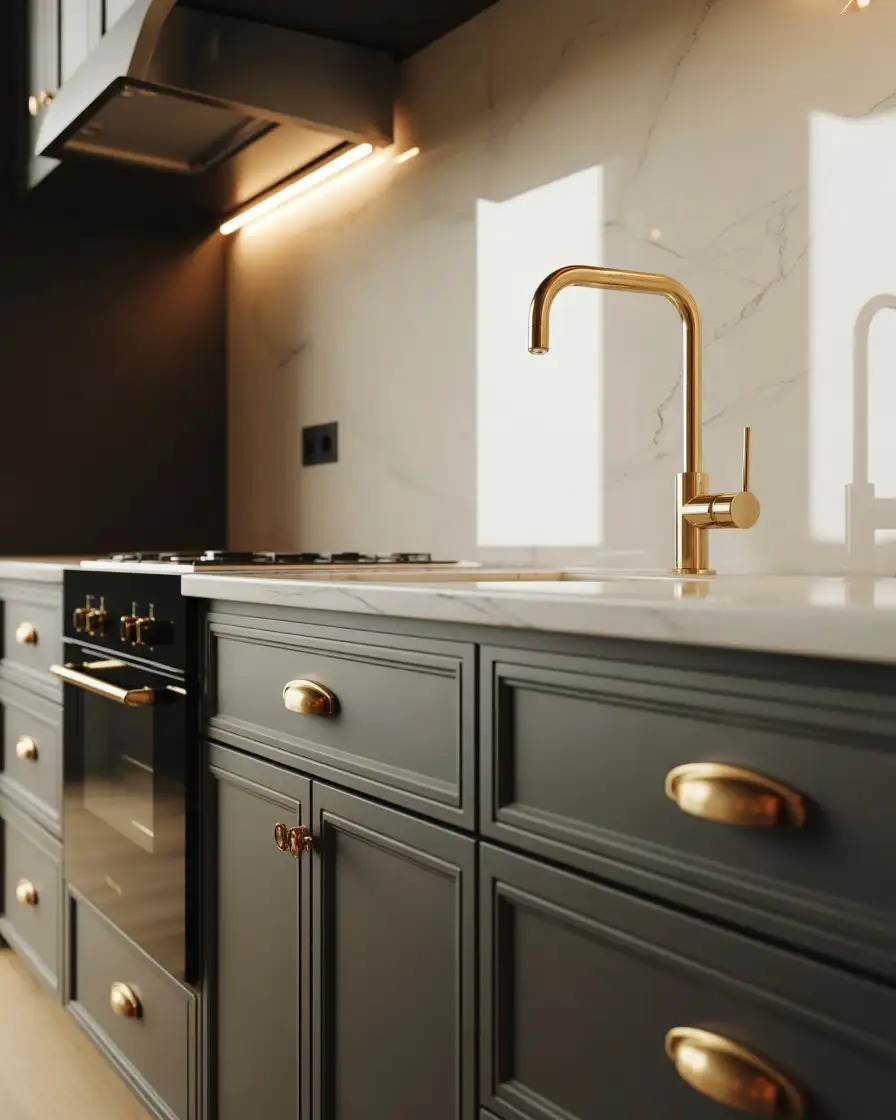
A designer I spoke with in Austin mentioned that clients often underestimate how much hardware impacts the overall feel—it’s the detail people touch daily, so quality matters. She recommends investing in solid brass or stainless steel with gold coating rather than budget alternatives that tarnish quickly. Across the South and in renovated Victorians throughout the East Coast, this combination feels both fresh and rooted in traditional elegance. Plan for $8 to $25 per pull depending on finish and brand.
6. Rustic Black Kitchen with Reclaimed Wood Accents
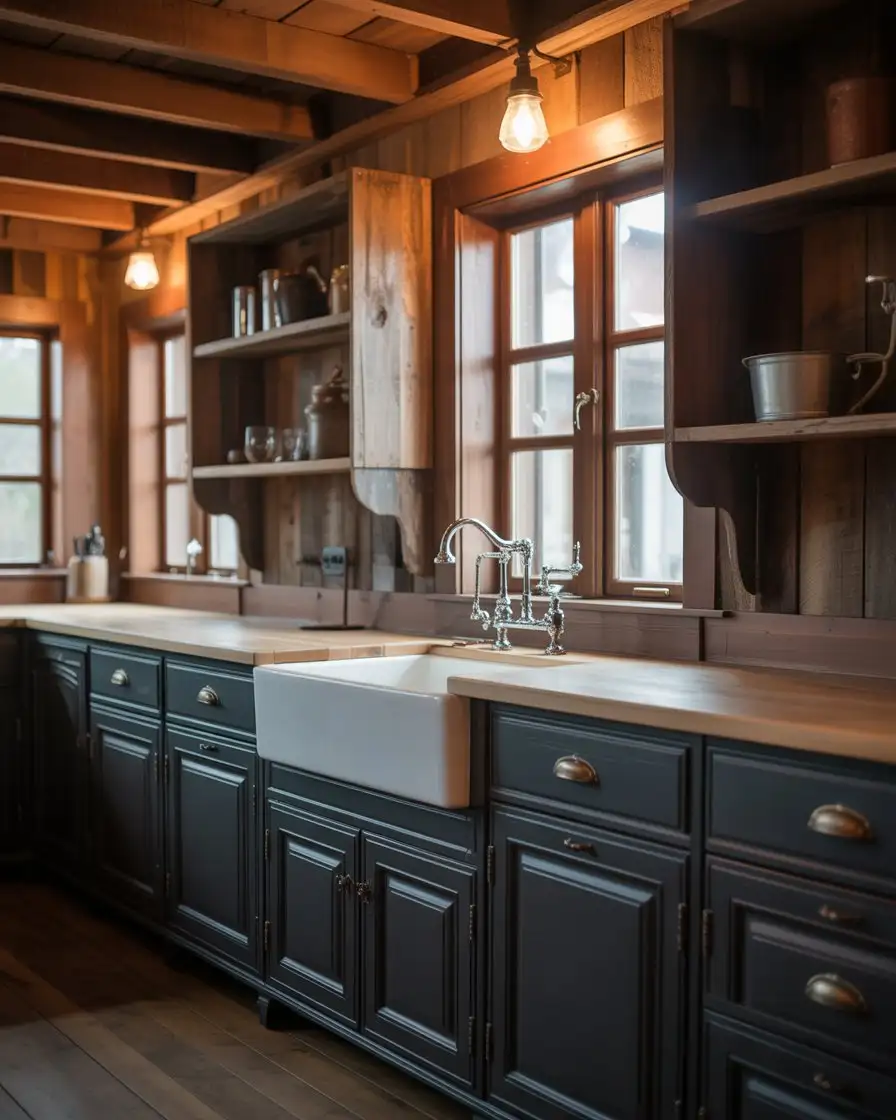
For homeowners drawn to rustic aesthetics, black cabinets provide an unexpected foundation that makes weathered wood and vintage elements pop. Instead of the expected stained wood cabinetry, painted black units create contrast that highlights the texture of reclaimed ceiling beams, barn doors, or open shelving. This approach has found enthusiastic adoption in renovated farmhouses across the Midwest and mountain homes in Colorado, where blending old and new materials tells a richer story. The black acts as a modern anchor for heritage ideas.
Where this works best is in homes with existing architectural character—exposed brick, original wood floors, or vaulted ceilings. The black cabinetry doesn’t compete with these features but instead frames them, much like a gallery wall uses dark matting to showcase art. Real homeowners in these spaces often mix in copper accents, wrought iron fixtures, and natural stone to deepen the rustic narrative while keeping the overall design from feeling too themed or forced.
7. Black Cabinets with Black Countertops for Maximum Drama
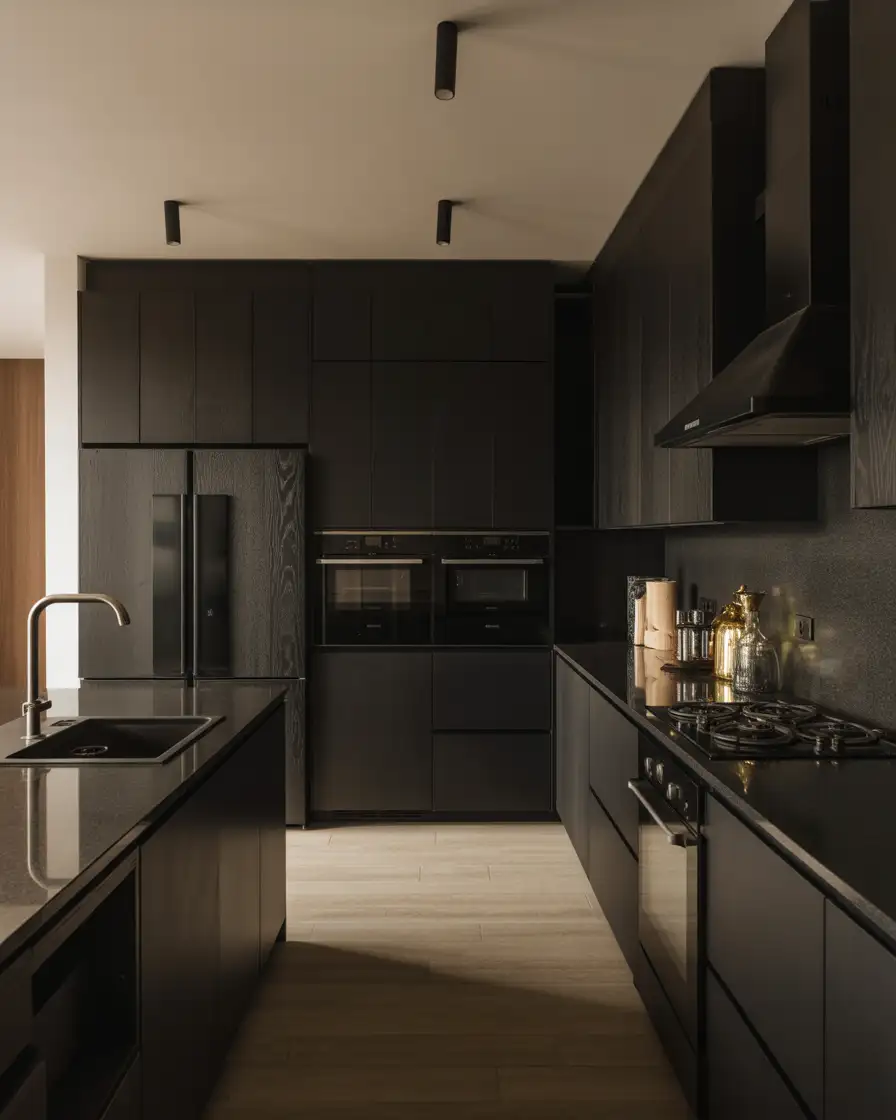
An all-black kitchen—cabinets and black countertops—represents the pinnacle of bold contemporary design. This monochromatic approach creates a moody, cocoon-like atmosphere that feels sophisticated and intentional. Honed granite, soapstone, or matte quartz in deep charcoal tones continue the visual flow seamlessly, erasing typical breaks between surfaces. While not for the faint of heart, this strategy has gained followers among urban professionals and design-forward homeowners who want spaces that feel more like art installations than conventional kitchens. 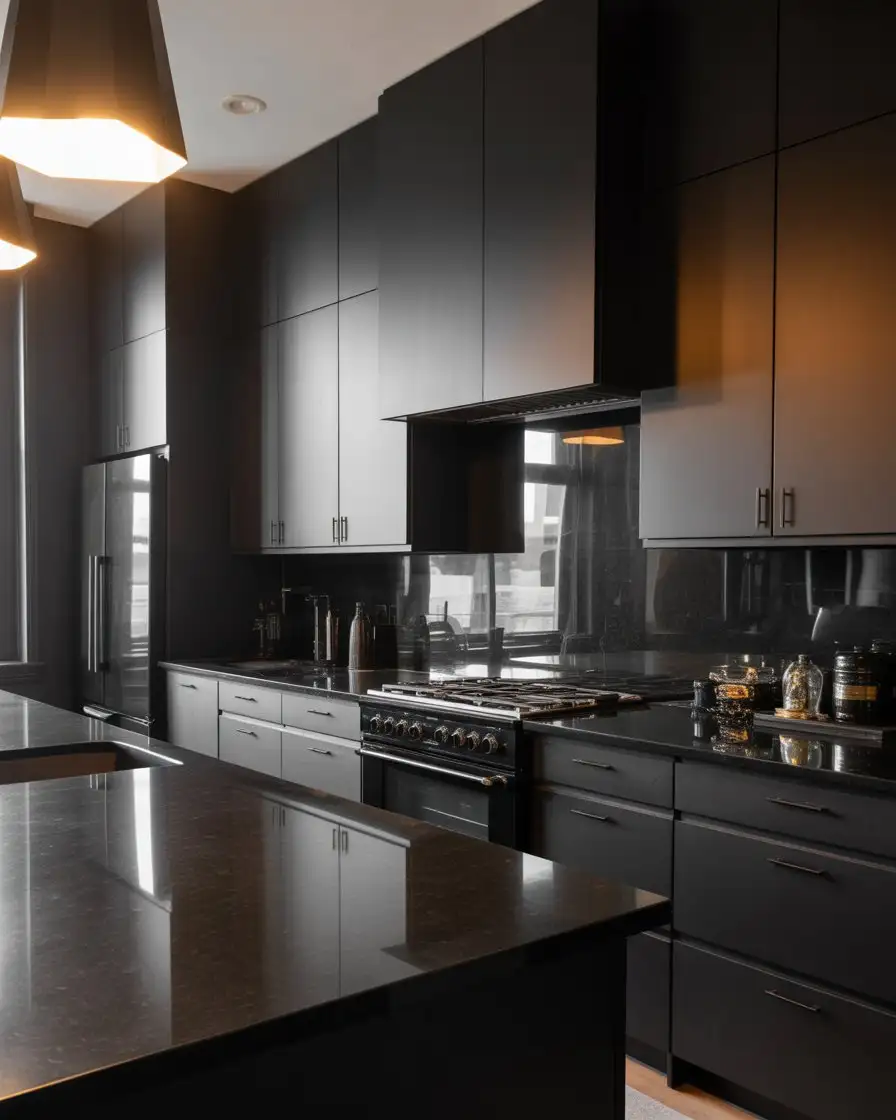
The practical insight here involves lighting—you absolutely need both task and ambient lighting to prevent the space from feeling cave-like. Install bright LED strips under cabinets, add pendant lights with warm bulbs, and consider a light-colored floor to ground the darkness above. In loft spaces and modern condos in cities like Brooklyn and Portland, designers balance the intensity with large windows, metallic accents, or a single statement element in white or natural wood to give the eye a resting place.
8. Black Shaker Cabinets with Butcher Block Counters
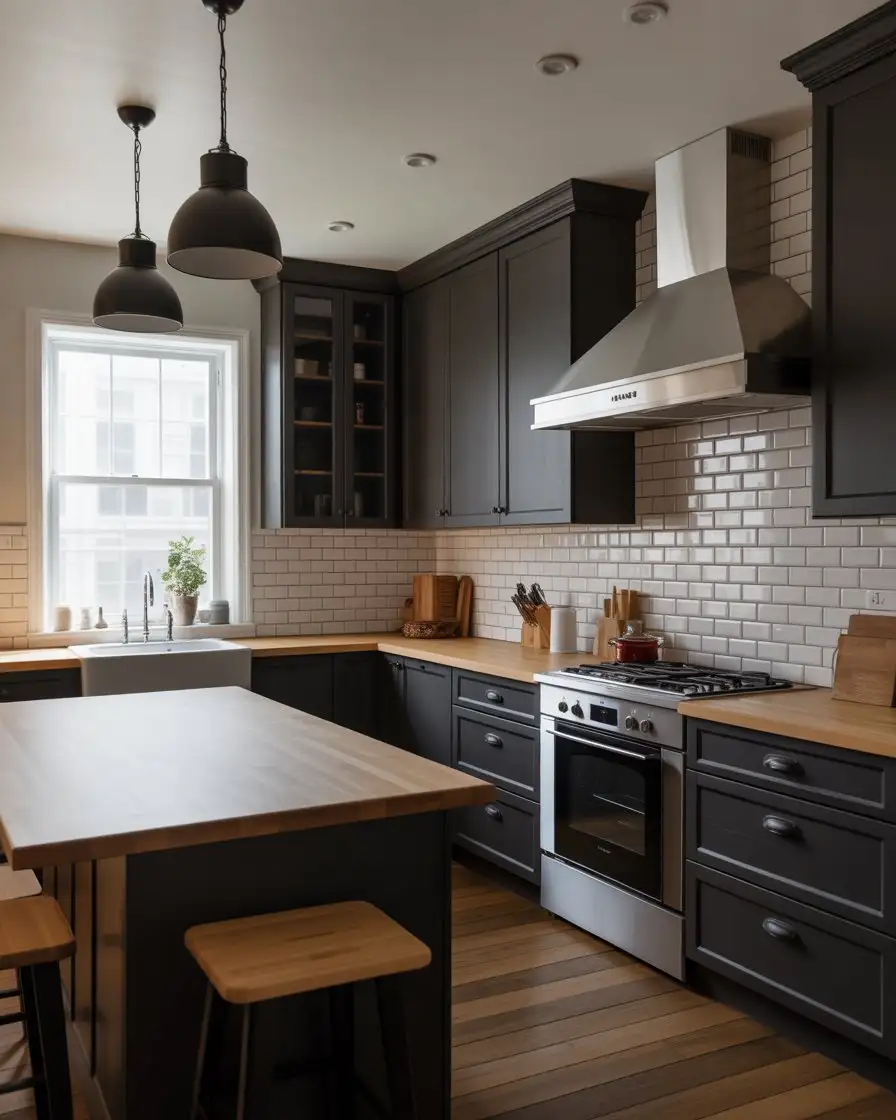
Classic shaker-style cabinets painted black offer timeless appeal with just enough edge to feel current. When topped with warm butcher block counters, the combination bridges traditional and contemporary effortlessly. The recessed panel doors and simple lines of shaker design prevent the black from overwhelming smaller kitchens, while the wood counter introduces essential warmth and texture. This pairing has become a go-to for renovations in 1920s bungalows and mid-century homes throughout the suburbs, where homeowners want to honor original proportions while updating the palette. 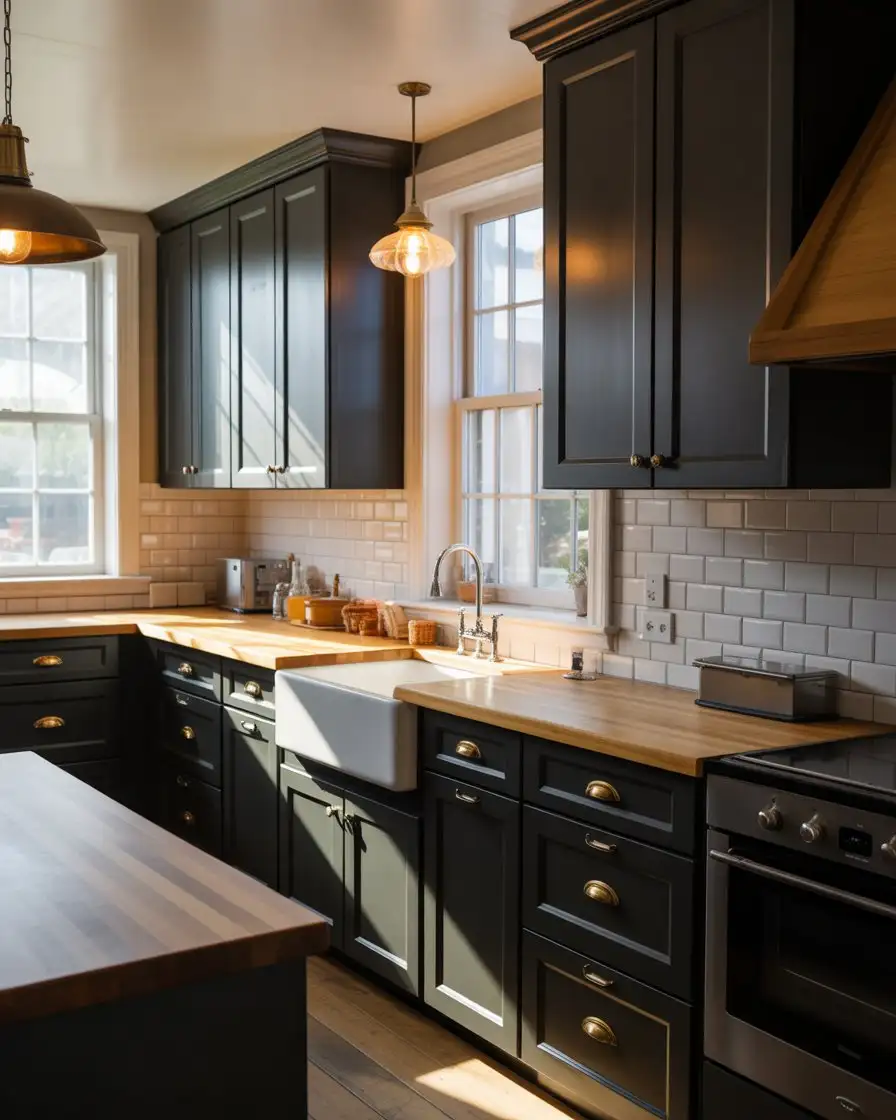
In Southern homes and New England cottages, many homeowners report that this configuration feels both familiar and fresh—it doesn’t scream “renovation” but clearly updates the space. The butcher block requires regular maintenance (monthly oiling), but devotees insist the patina and character it develops make the effort worthwhile. One homeowner in Tennessee shared that her family uses the butcher block island as their primary prep surface, and after three years, the knife marks and slight color variations tell the story of countless family meals.
9. Modern Black Kitchen with Integrated Appliances
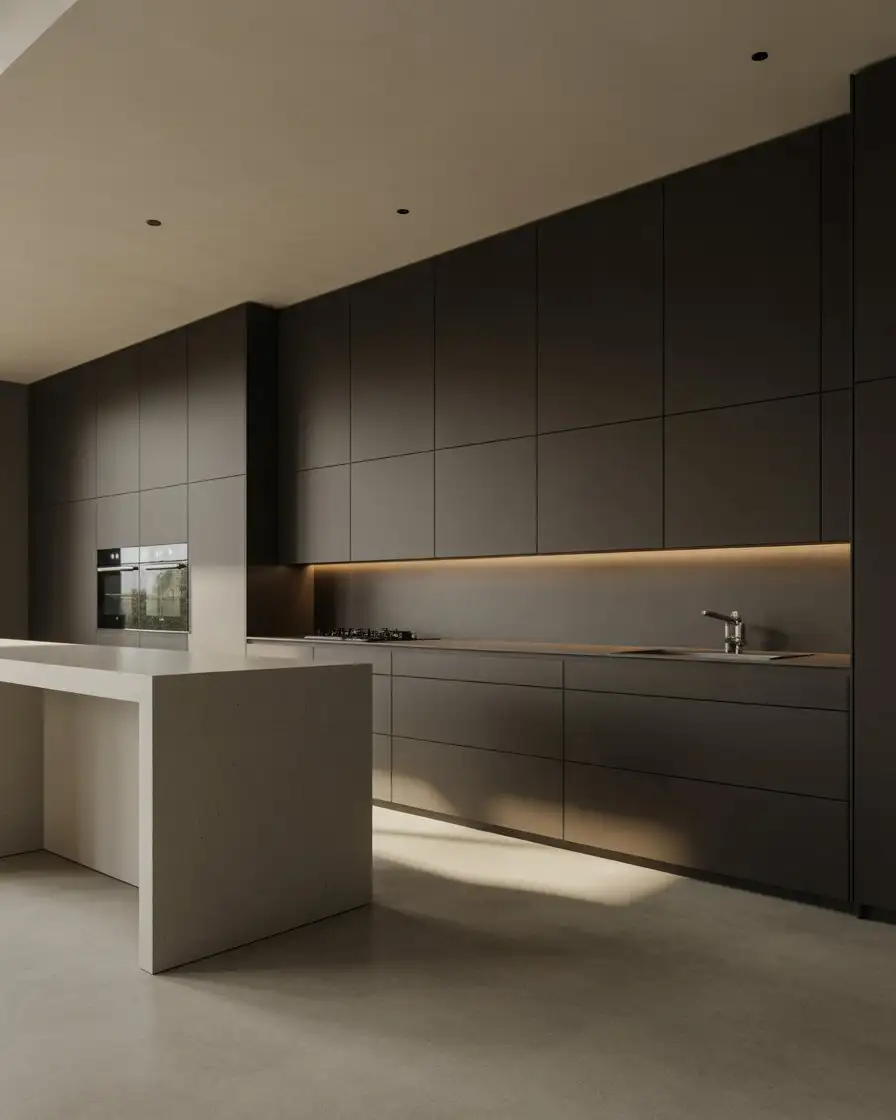
Taking modern black kitchens to the next level means concealing appliances behind matching cabinet panels for a seamless, architectural look. Refrigerators, dishwashers, and even range hoods disappear into the cabinetry, creating clean lines that emphasize form and spatial flow. This approach has become increasingly popular in luxury renovations and new construction across California and the Northeast, where homeowners prioritize minimalist aesthetics and cohesive design. The uninterrupted black surfaces create a gallery-like backdrop for statement lighting or art. 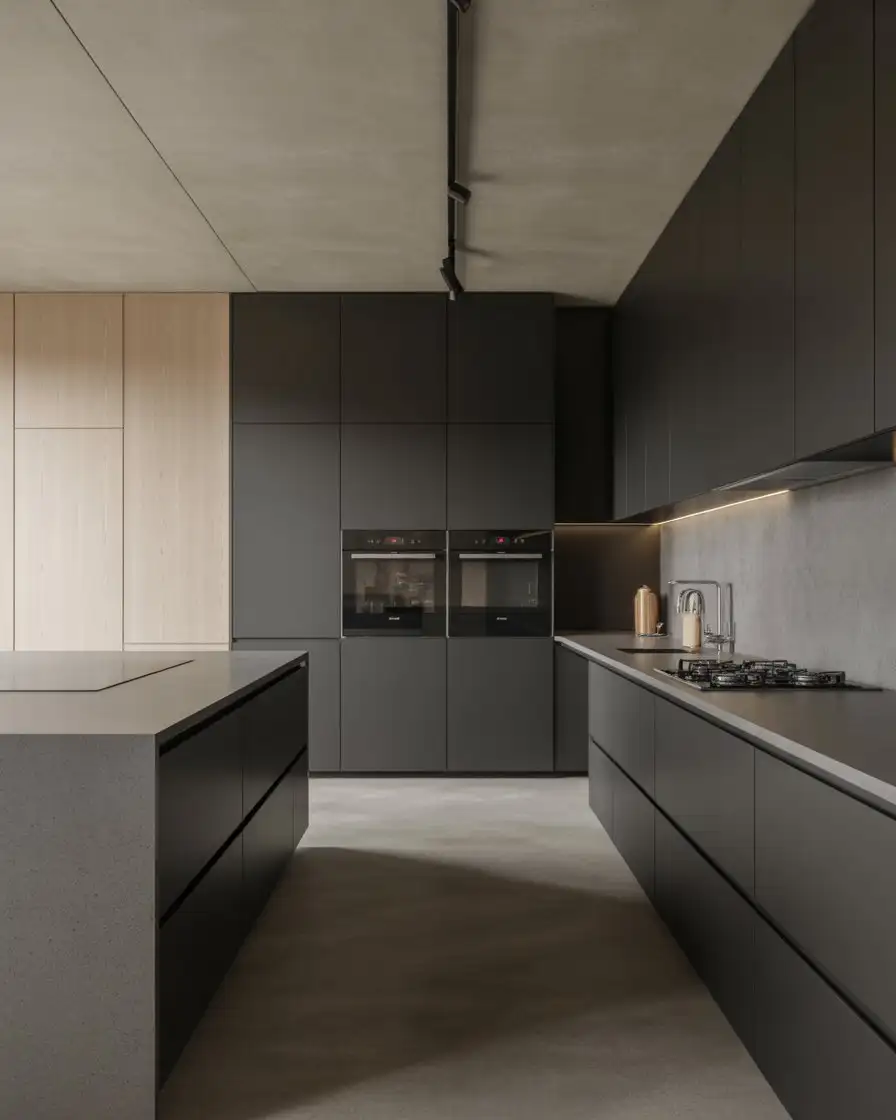
From a budget perspective, this represents a significant investment—panel-ready appliances and custom cabinet fronts add $3,000 to $8,000 to typical renovation costs. However, the visual payoff creates a kitchen that feels more like a designed environment than a functional workspace. Designers recommend this approach for open-plan homes where the kitchen is visible from living areas, as the cohesive appearance prevents appliances from visually cluttering shared spaces. Push-to-open mechanisms eliminate the need for hardware, further simplifying the aesthetic.
10. Black and Green Kitchen with Natural Elements
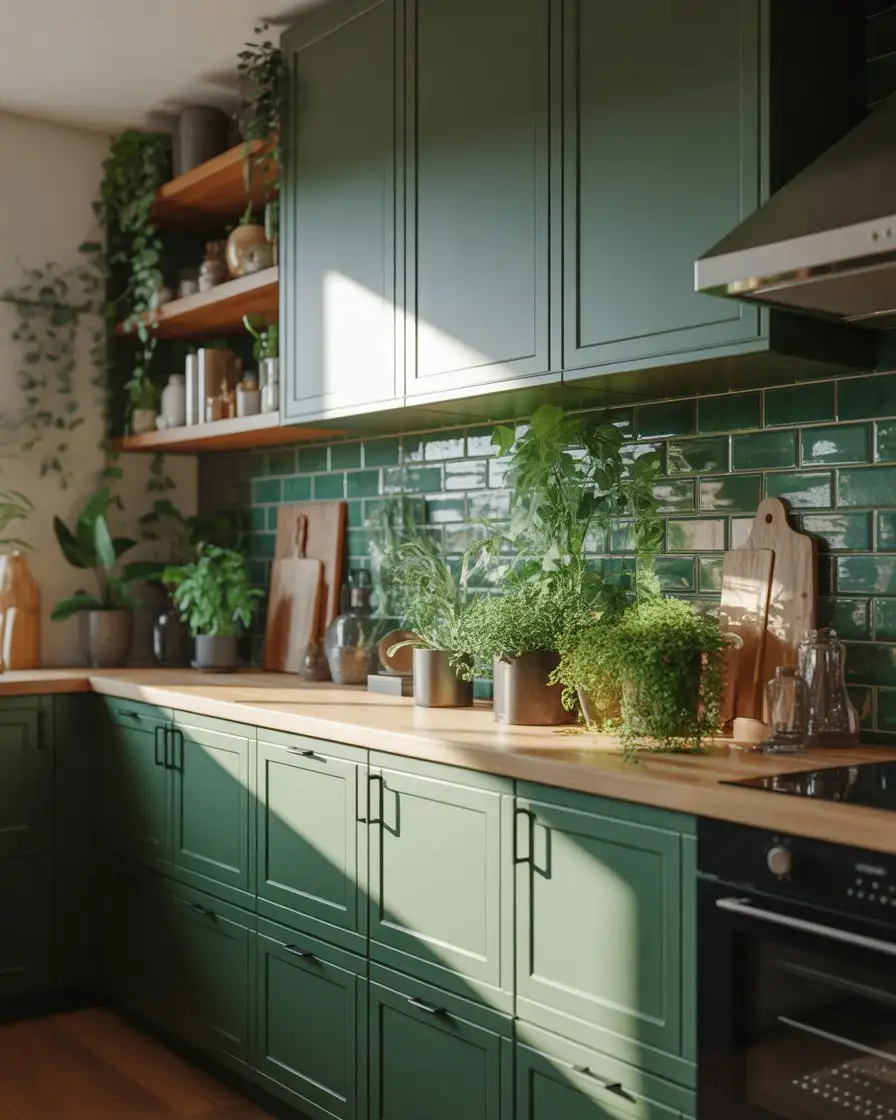
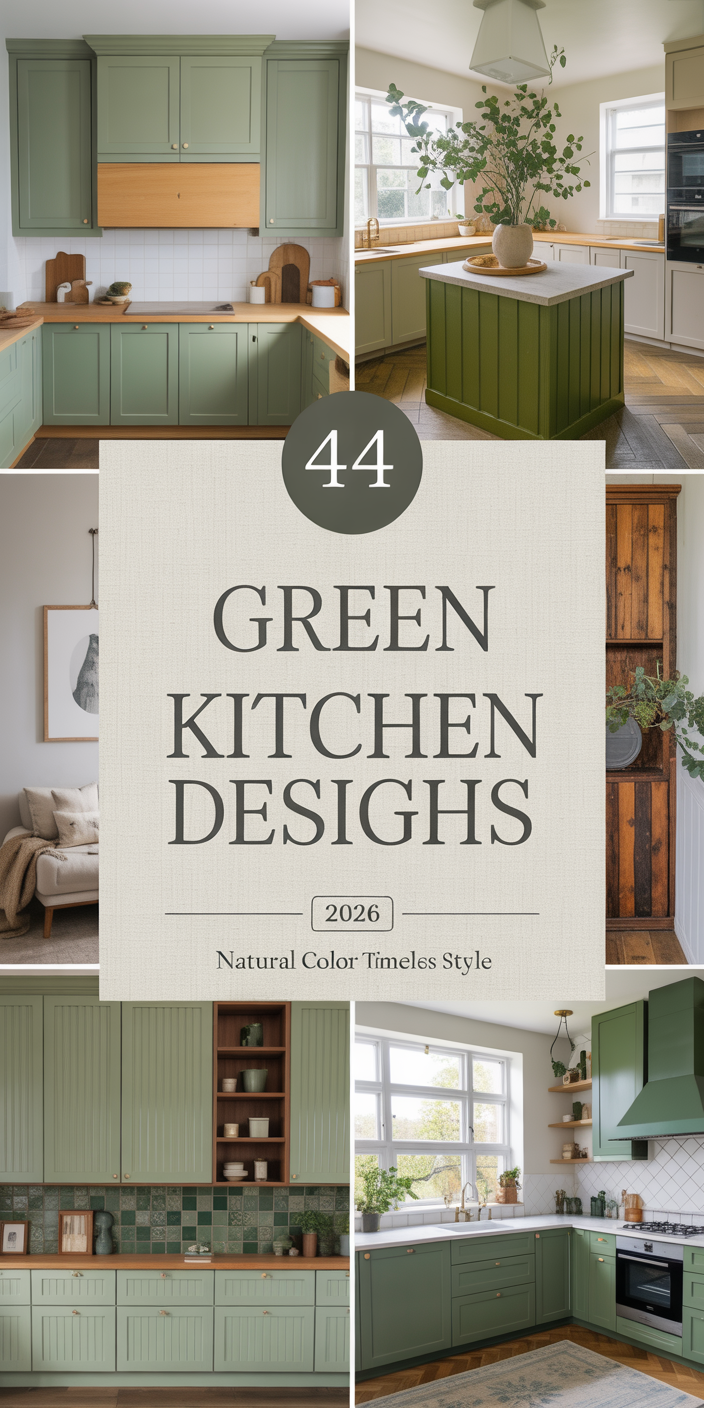
Pairing black cabinets with green and natural elements creates an earthy, botanical-inspired kitchen that feels both grounded and sophisticated. Deep forest greens, sage, or olive tones in tile, paint, or accessories complement black beautifully while introducing color without overwhelming the space. This combination has surged in popularity as biophilic design principles take hold—homeowners want connections to nature even in urban settings. Adding live plants, natural fiber textiles, and wood accents amplifies the organic feel. 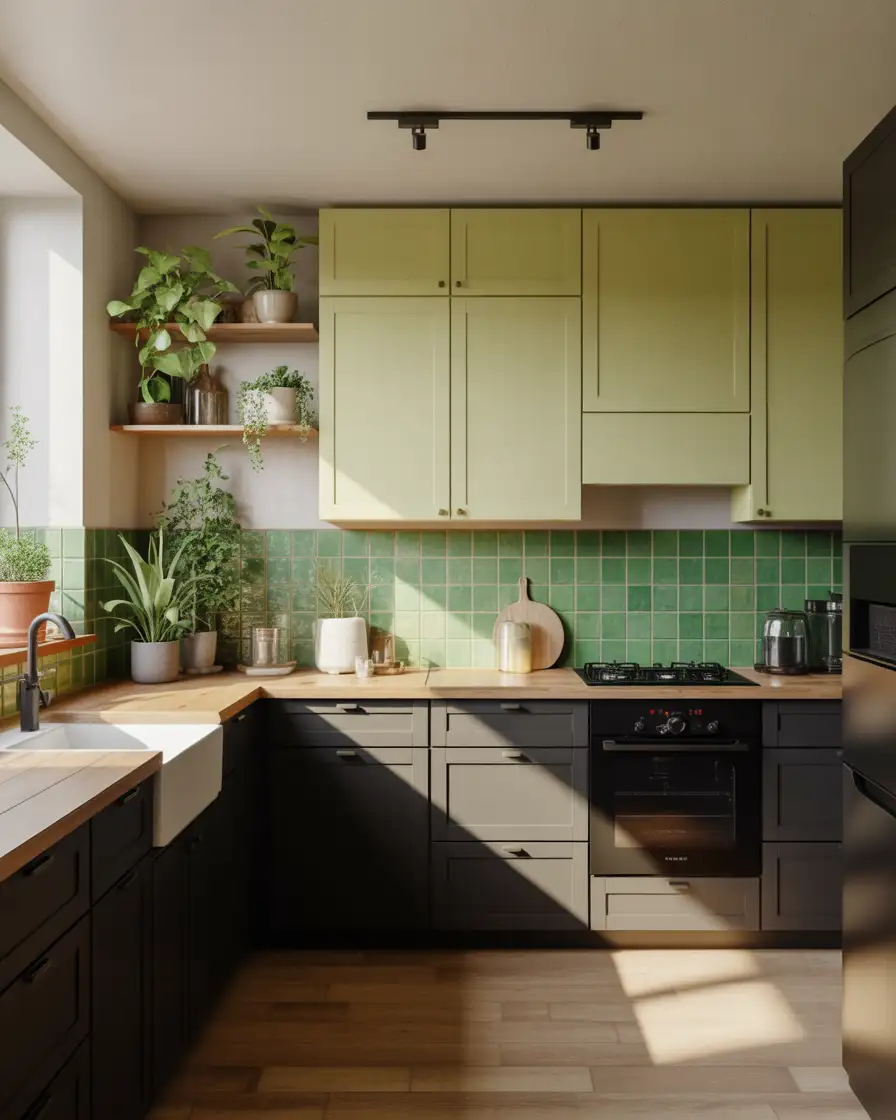
Where this works best is in homes with garden views or abundant natural light—the green tones create visual bridges between indoor and outdoor spaces. Many homeowners in the Pacific Northwest and Northeast have embraced this palette in renovated Craftsman homes and brownstones, where the combination feels both historically appropriate and distinctly contemporary. Consider using green in smaller doses initially—a tiled backsplash or painted island—before committing to larger applications.
11. Black Cabinets with Brown Countertops for Warmth
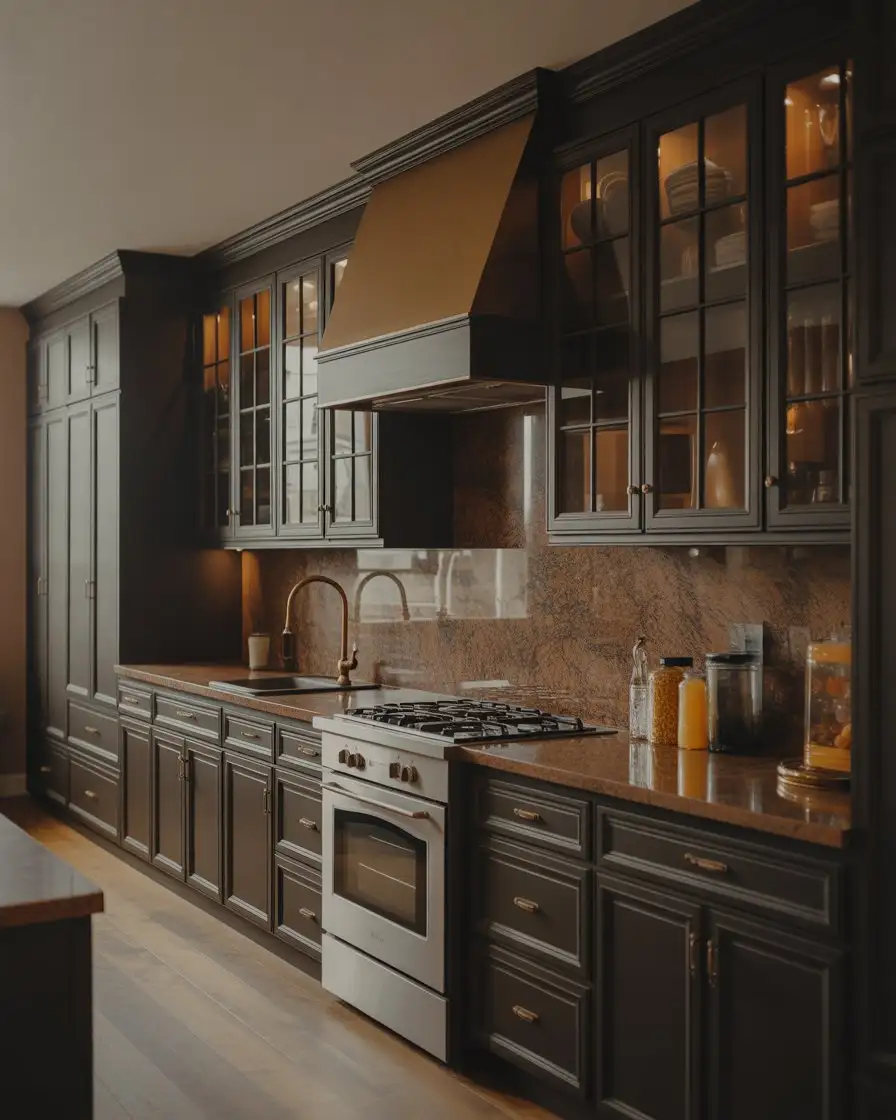
Selecting a brown countertop in granite, quartzite, or engineered stone introduces essential warmth to black cabinetry without sacrificing sophistication. The earthy tones—whether they lean toward caramel, espresso, or terracotta—soften the starkness of black while maintaining visual interest through subtle veining and variation. This combination appeals to homeowners who want drama but also crave the comfort and livability that warmer palettes provide. In brown and black kitchens, the overall effect feels grounded rather than stark, inviting rather than imposing. 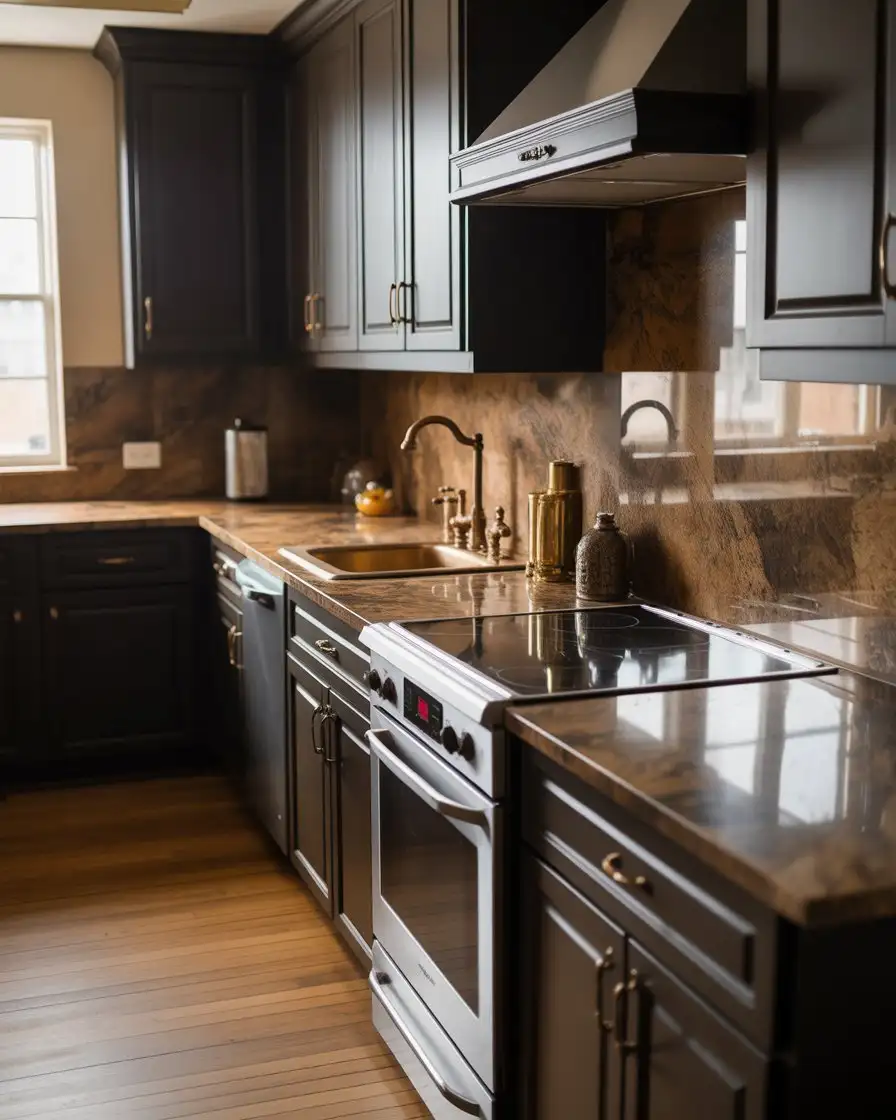
Regional preferences play into this choice—across the Southwest and in mountain communities, brown stone counters connect kitchens to the surrounding landscape’s earthy palette. The stone’s natural variations mean each installation is unique, and unlike solid colors, brown counters camouflage minor stains and wear gracefully. A common mistake is choosing brown that’s too light or orangey, which can clash with cool-toned blacks. Instead, look for deeper, richer browns with gray or burgundy undertones that complement rather than compete.
12. Stained Wood and Black Two-Tone Kitchen
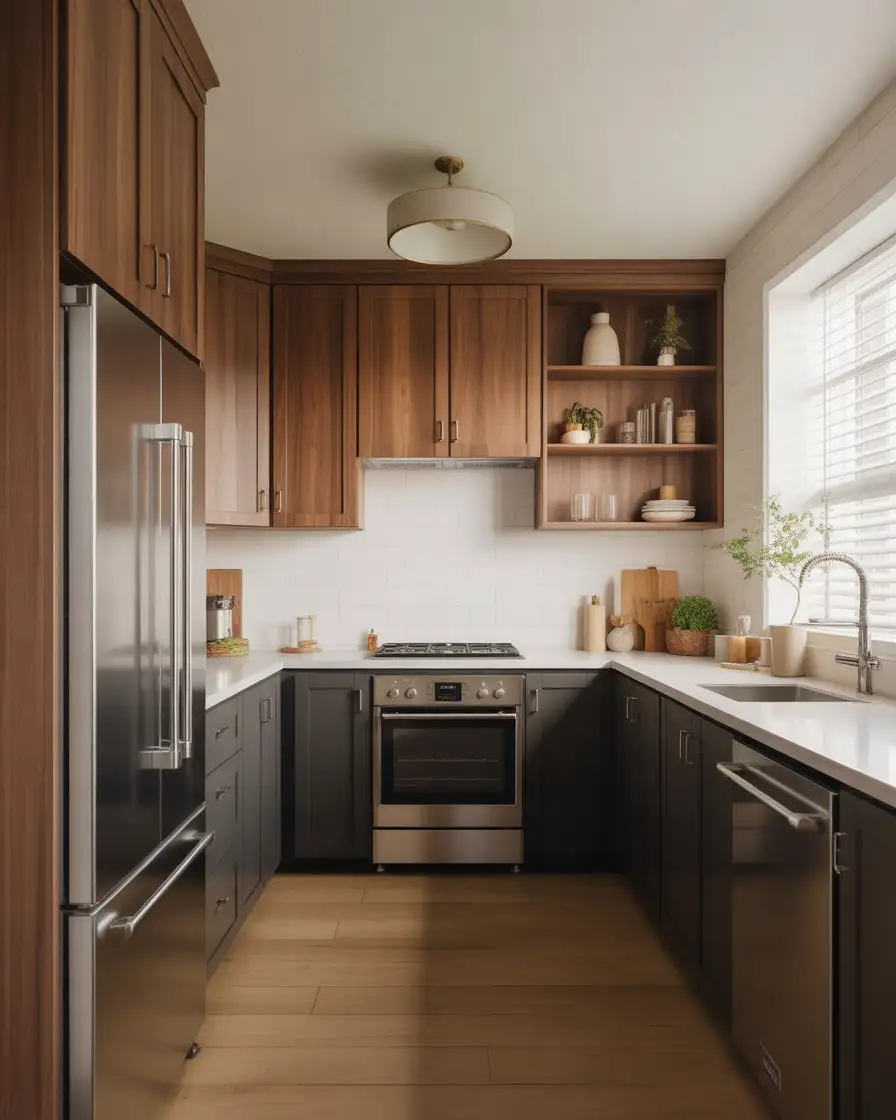
Creating a two-tone kitchen with black painted lower cabinets and stained wood uppers offers the best of both worlds—dramatic contrast with natural warmth. Whether you choose walnut, cherry, or oak stain, the grain pattern and organic tones prevent the space from feeling too industrial or cold. This configuration has become increasingly popular in suburban homes and new builds where homeowners want visual interest without committing to full custom cabinetry. The wood and black combination works across architectural styles from contemporary to transitional. 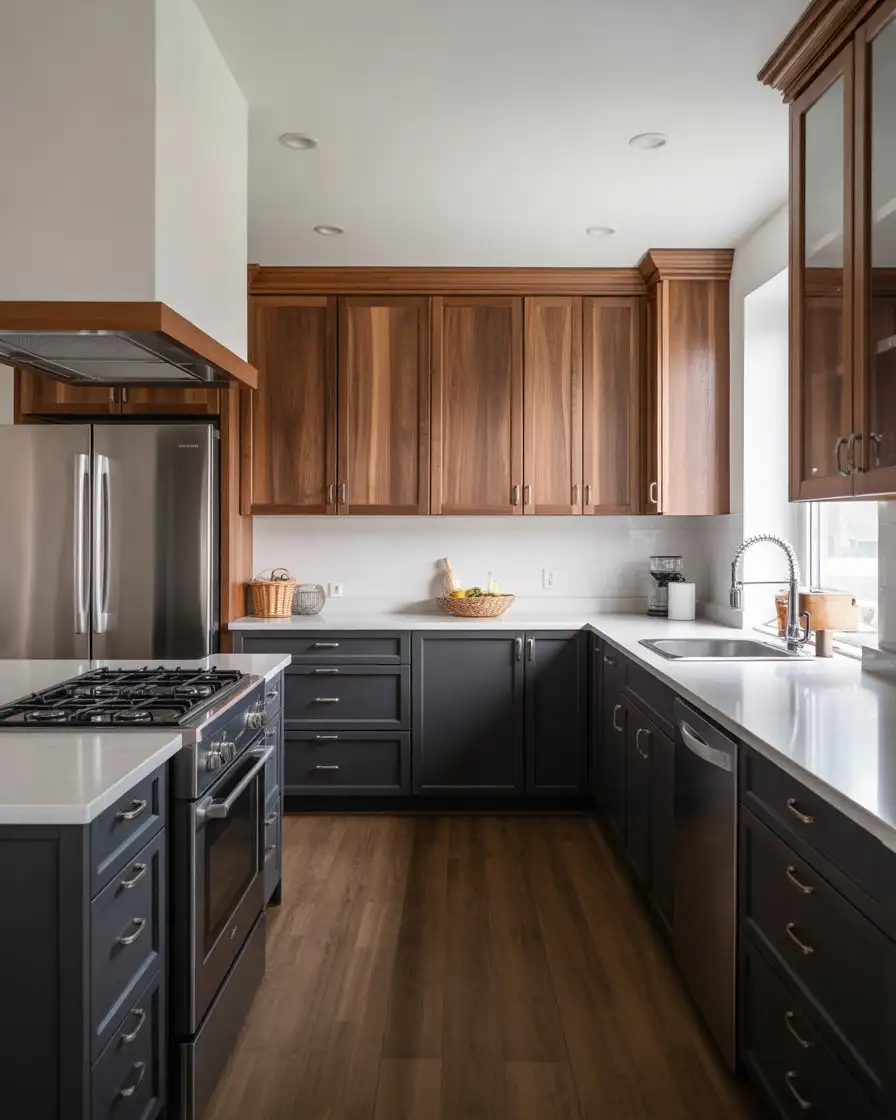
Real homeowner behavior shows that people often choose this layout to hide wear on lower cabinets (black conceals scuffs and splashes better) while showcasing beautiful wood grain at eye level where it’s most appreciated. It’s also budget-friendly—you can paint existing lower cabinets black and invest in quality wood uppers, stretching renovation dollars strategically. In Midwest homes and Southern kitchens, this approach bridges traditional wood preferences with contemporary color trends, satisfying multigenerational households with different aesthetic priorities.
13. Tricorn Black Cabinets with White Accents
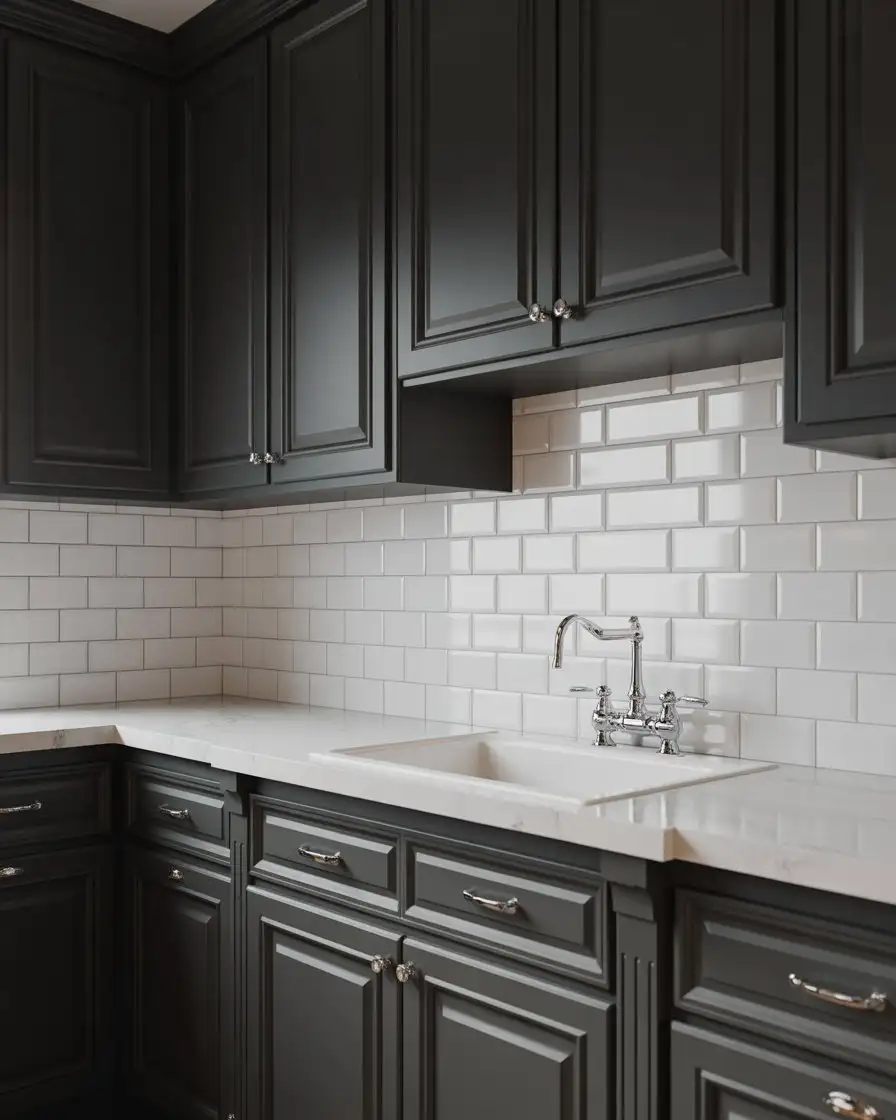
Sherwin-Williams Tricorn Black has become the go-to paint color for homeowners wanting true, deep black cabinetry without blue or green undertones. This pure black reads consistently across different lighting conditions, making it ideal for kitchens with varied natural and artificial light throughout the day. Paired with white marble, subway tile, or painted walls, Tricorn Black creates crisp, high-contrast spaces that photograph beautifully—a key consideration for homeowners who share their spaces on social media. The color’s popularity stems from its reliability and versatility. 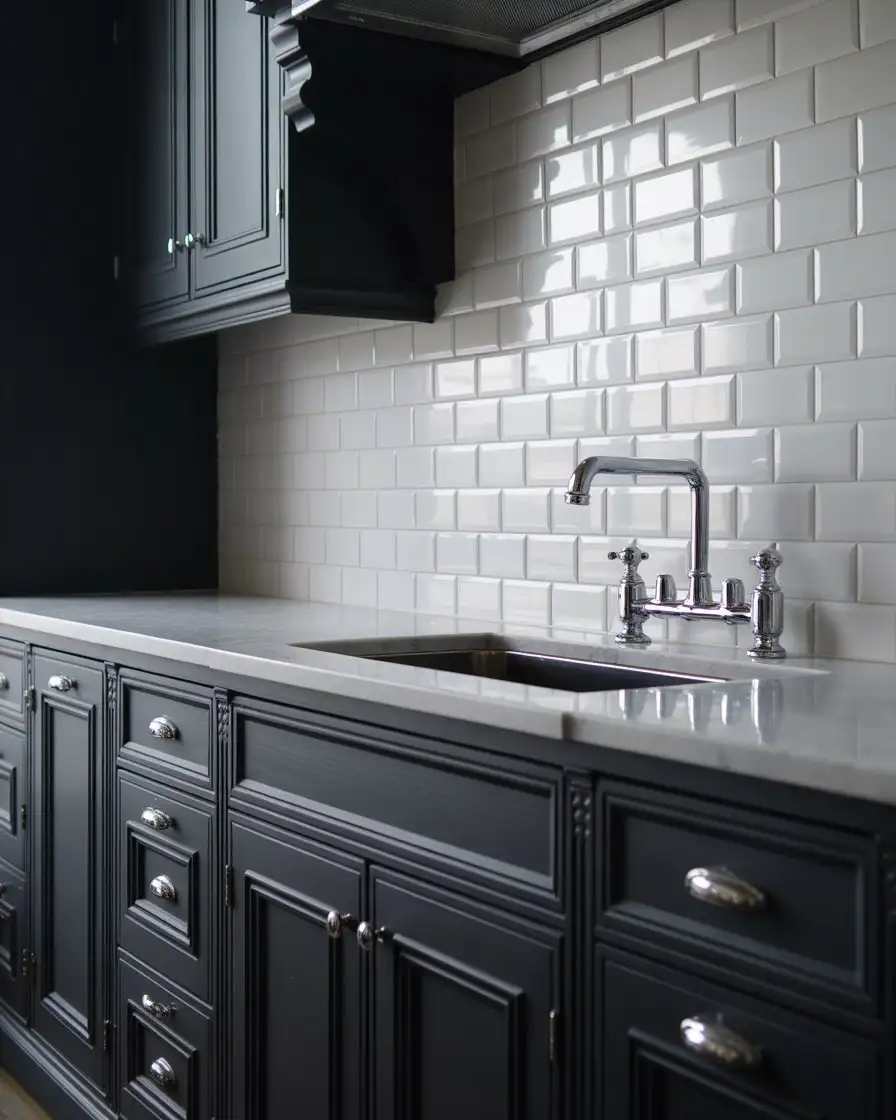
Painting contractors across the country report that Tricorn Black covers exceptionally well, often requiring fewer coats than other dark colors, which translates to labor savings. For DIY renovators, this means less frustration and more professional-looking results. The color works particularly well in historic home renovations where you want a modern update that still respects the building’s bones. In Charleston row houses and Portland bungalows, designers use Tricorn Black to create dramatic kitchens that honor traditional layouts while embracing contemporary color confidence.
14. Farmhouse Black Kitchen with Apron-Front Sink
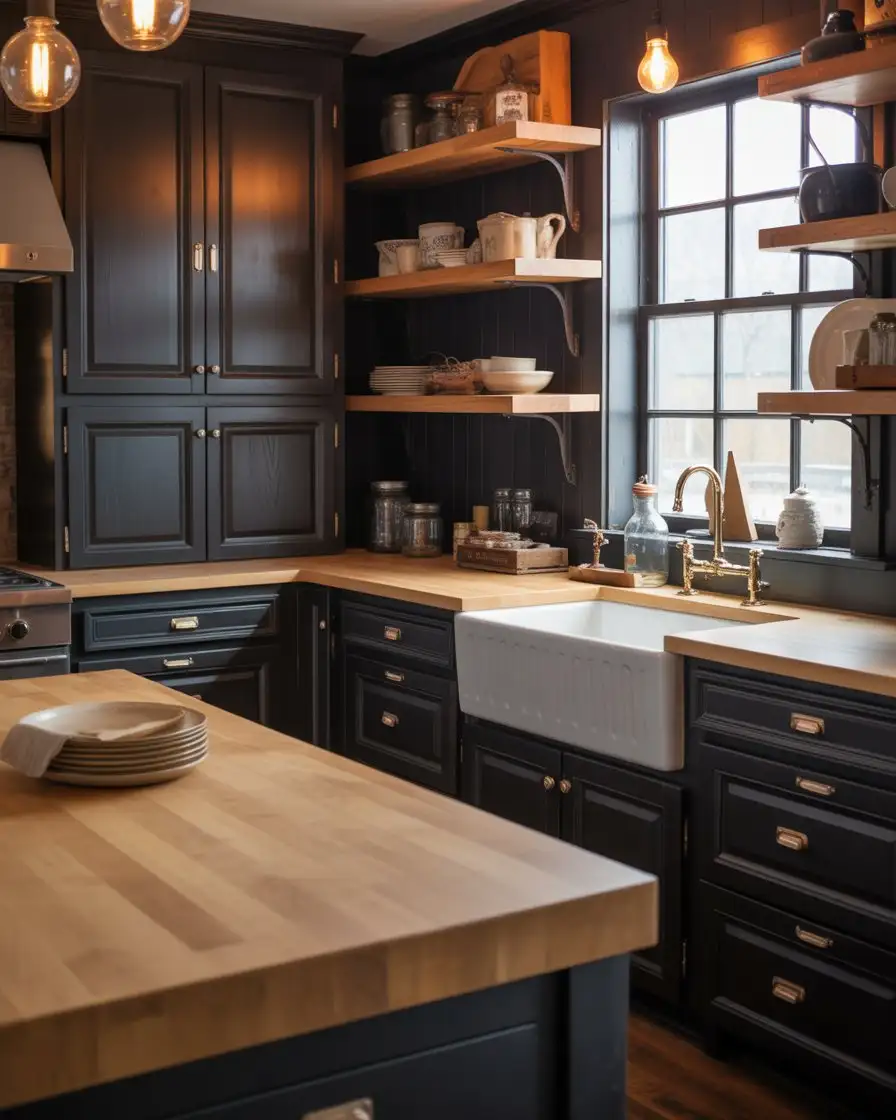
The farmhouse aesthetic gets a sophisticated update when traditional elements like apron-front sinks and open shelving meet black cabinetry. Instead of the expected all-white farmhouse kitchen, black introduces an edge that keeps the style from feeling too sweet or nostalgic. Fireclay or cast-iron farmhouse sinks in white create a focal point against the dark cabinets, while brass or oil-rubbed bronze fixtures add authentic period detail. This combination has resonated particularly with homeowners renovating older homes who want to acknowledge farmhouse roots while signaling contemporary tastes. 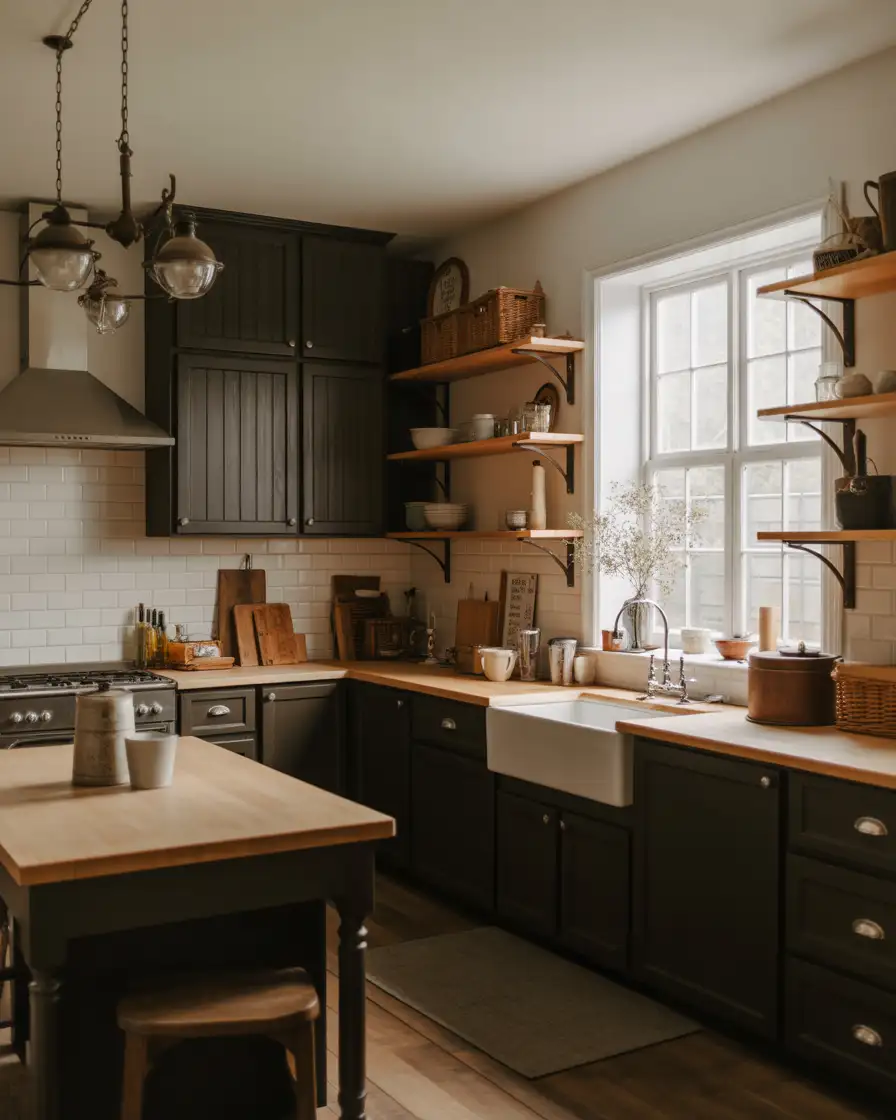
An interior designer in Nashville explained that many clients initially resist black in farmhouse kitchens, assuming it conflicts with the style’s warmth. However, she’s found that black actually grounds farmhouse elements, preventing the space from reading as themed or costume-like. Across rural areas and small towns in the South and Midwest, this updated farmhouse approach allows homeowners to embrace their region’s architectural heritage while creating kitchens that feel relevant and personal rather than catalog-generic.
15. Black Kitchen with Taupe and Neutral Palette
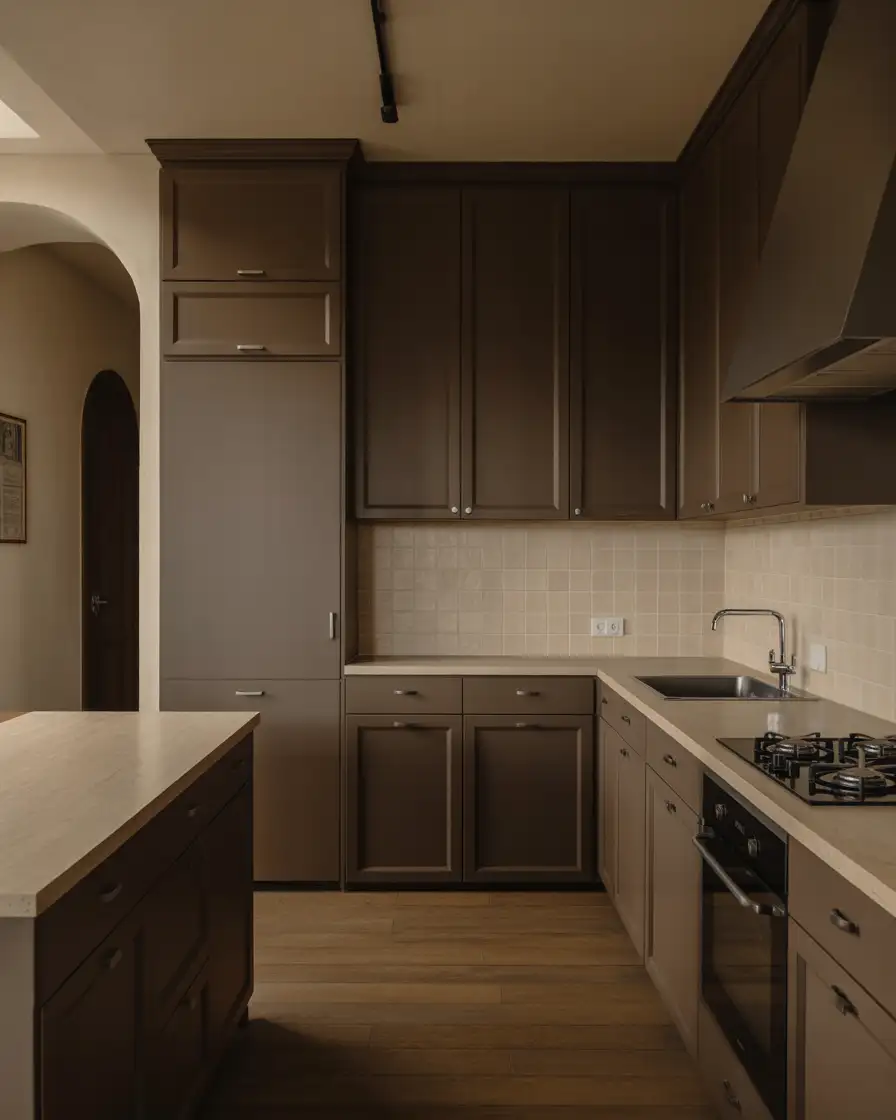
Softening black cabinets with taupe and other warm neutrals creates a sophisticated, layered kitchen that feels curated and intentional. Taupe walls, beige tile, or greige countertops provide gentle contrast that’s easier to live with long-term than stark white. This approach has gained followers among homeowners who love the drama of black but worry about it feeling too intense or cold. The neutral bridge colors create visual rest and allow natural textures—linen window treatments, woven baskets, ceramic accessories—to shine without competing. 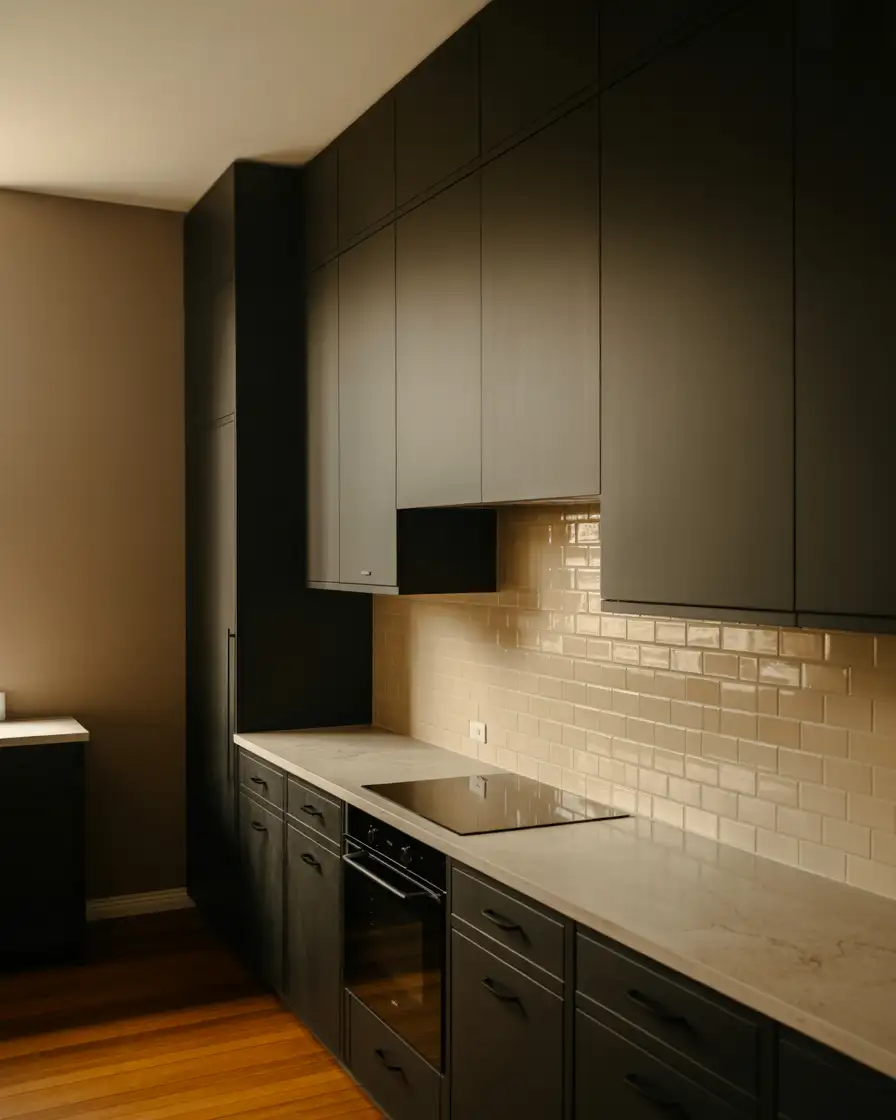
Where this excels is in homes with neutral décor throughout—the kitchen doesn’t jar against adjacent spaces but instead extends the calm, sophisticated palette. Many homeowners in suburban areas and planned communities choose this route because it provides personality without risk, and the neutral elements ensure broad appeal if they eventually sell. From a practical standpoint, taupe and beige surfaces hide dust and minor imperfections better than pure white, reducing maintenance stress while maintaining the elevated aesthetic that black cabinetry demands.
16. Black Cabinets with Industrial Metal Accents
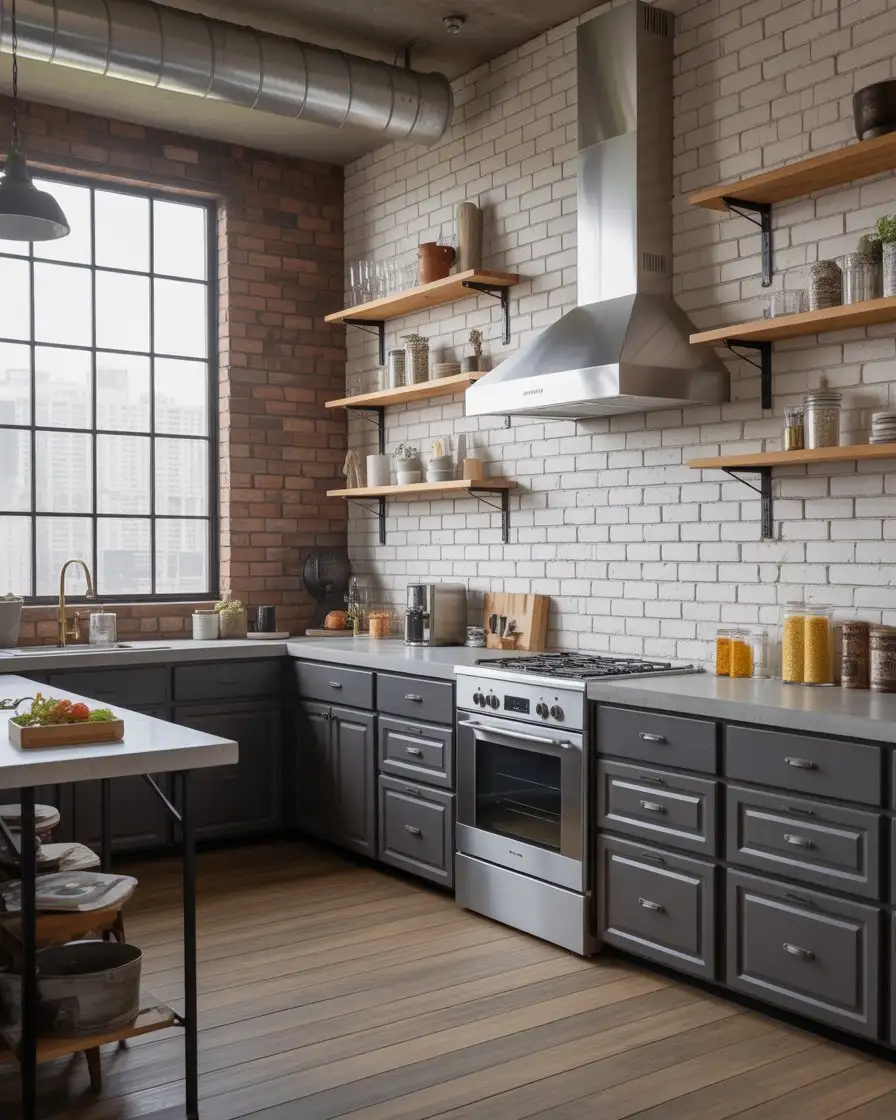
Industrial-style kitchens find their perfect match in black cabinets paired with exposed metal elements—think stainless steel shelving, iron pipe fixtures, and brushed nickel hardware. The utilitarian aesthetic celebrates raw materials and honest construction, with black providing a strong backdrop that highlights metallic finishes and mechanical details. This combination thrives in converted lofts, urban apartments, and homes with exposed ductwork or concrete elements. The modern industrial hybrid feels authentically urban without trying too hard to replicate warehouse spaces. 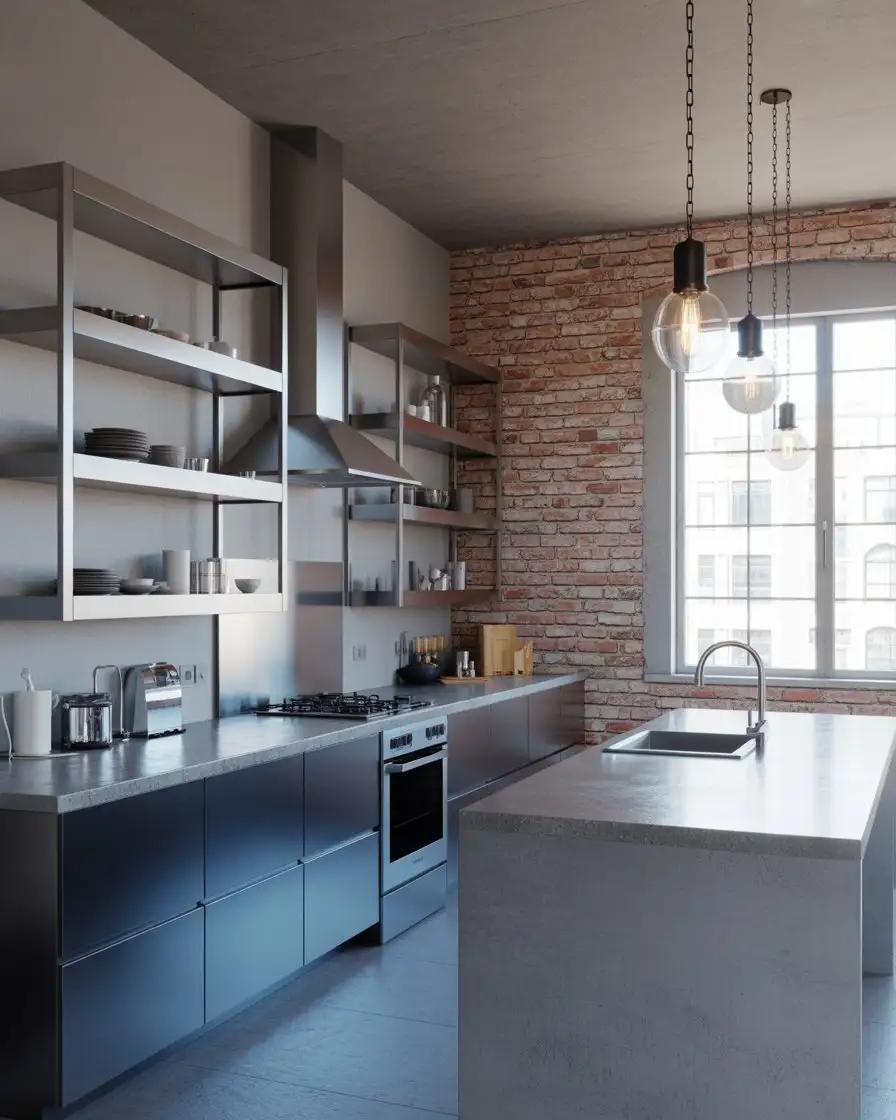
A common pitfall is going too heavy on distressed or weathered metals, which can make the space feel thematic rather than authentic. Instead, mix finishes—polished stainless with matte black iron, brushed nickel with raw steel—to create depth and prevent monotony. In cities like Chicago, Denver, and Brooklyn, homeowners in renovated industrial buildings embrace this aesthetic because it honors the building’s history while incorporating contemporary comfort and function. The black cabinets ground the harder industrial elements, preventing the space from feeling cold or inhospitable.
17. Black Lower Cabinets with Glass Upper Cabinets
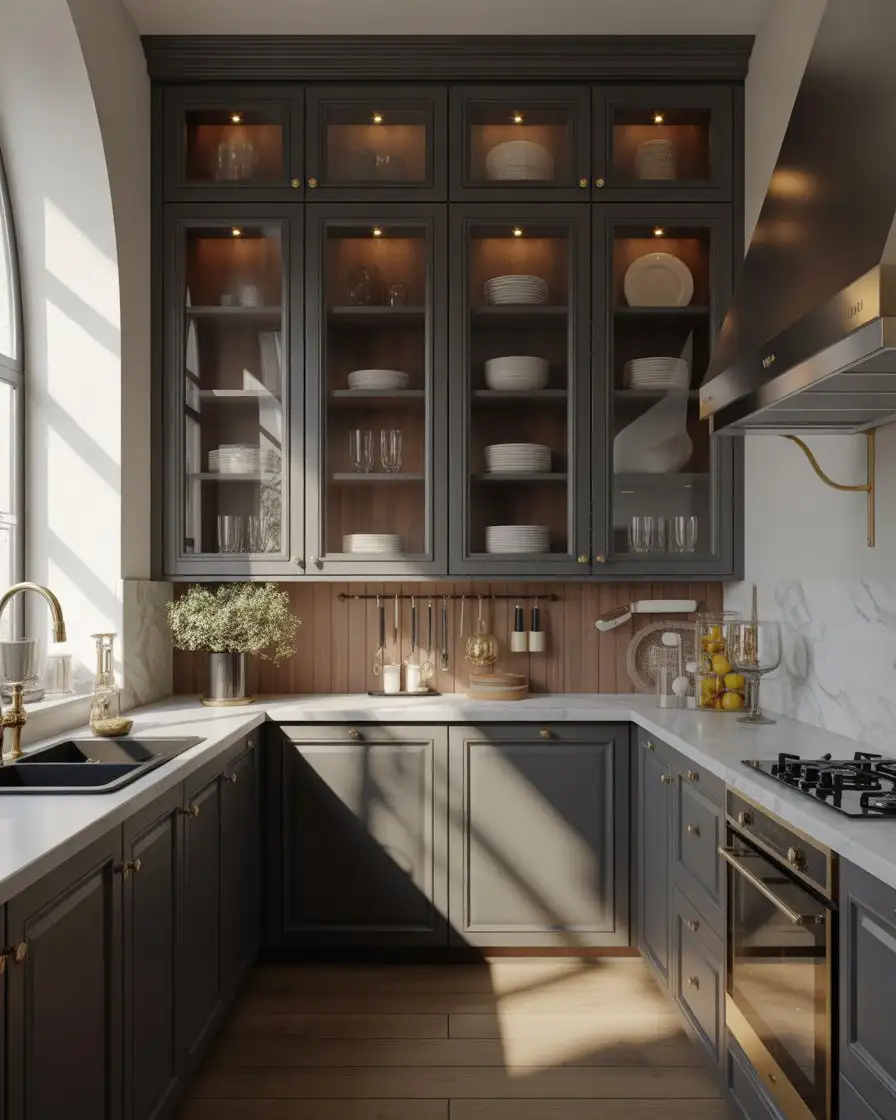
Combining solid black lower cabinets with glass-front uppers creates visual lightness while maintaining storage functionality. The glass breaks up the mass of black, allowing collections of dishes, glassware, or cookbooks to become part of the design. This strategy works exceptionally well in smaller or darker kitchens where all-solid cabinets might feel oppressive. The transparency adds architectural interest and provides opportunities to display items that add personality—vintage pottery, colored glassware, or minimalist white dishes that pop against the black frame. 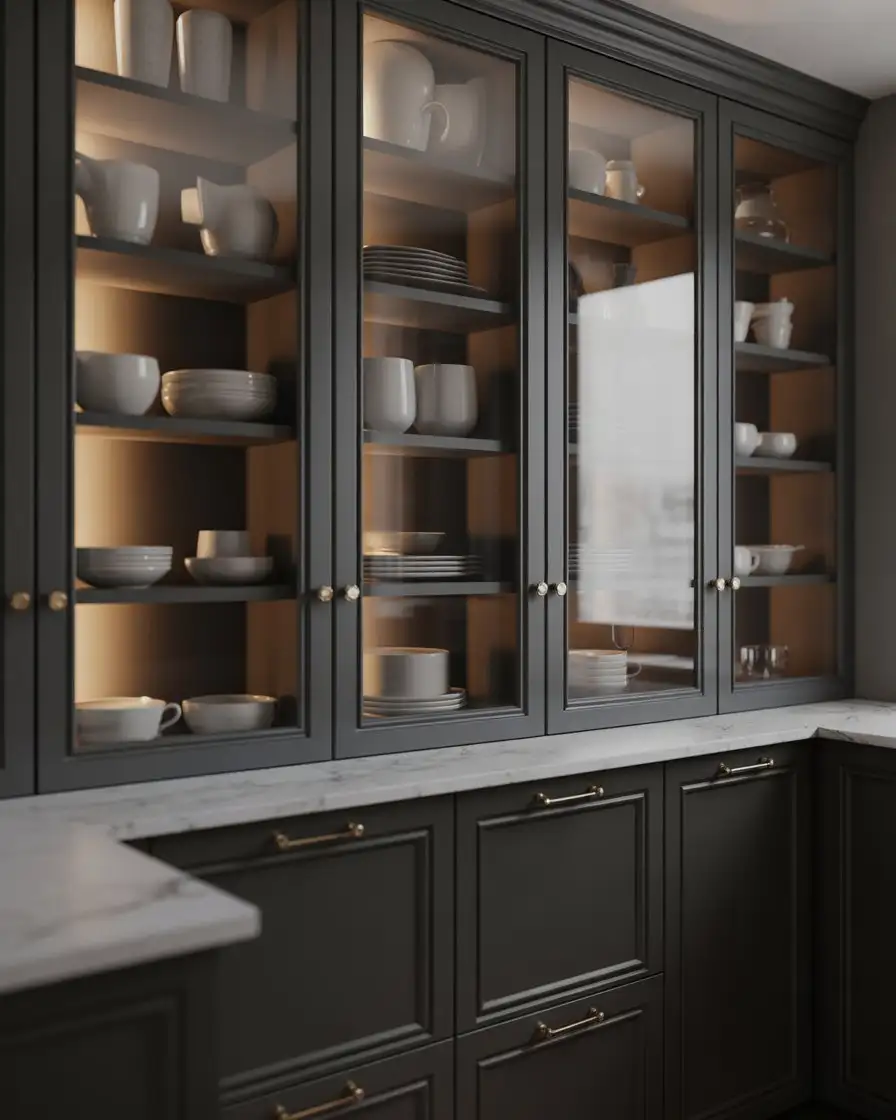
Real homeowners love this configuration because it forces organization—what’s behind glass must look intentional. Many report that this “pressure” actually helps them maintain tidier kitchens and curate their dish collections more thoughtfully. In Victorian homes and historic neighborhoods across the East Coast, glass-front cabinets nod to period authenticity while black updates the look for modern living. Consider adding interior cabinet lighting to illuminate the glass sections in the evening, which creates warmth and makes the kitchen feel inviting after dark.
18. Minimalist Black Kitchen with Hidden Storage
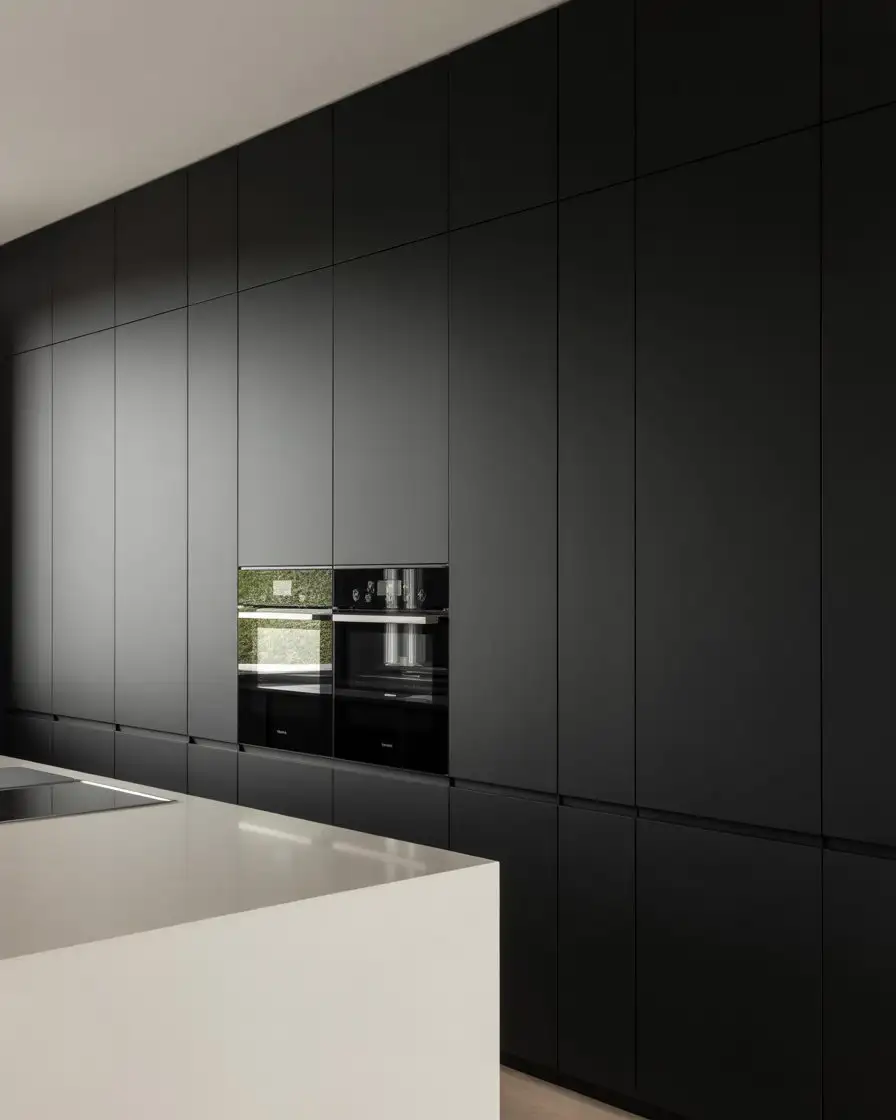
For those drawn to minimalism, black cabinets with push-to-open mechanisms and handleless doors create clean, uninterrupted surfaces that emphasize architecture over ornamentation. Every element serves a purpose, and excess decoration disappears. This approach requires careful planning—without visible hardware, the joinery and alignment must be perfect, and interior organization systems become critical for maintaining the streamlined exterior. The aesthetic has found devotees among tech professionals and design enthusiasts who want spaces that feel calm, ordered, and distraction-free. 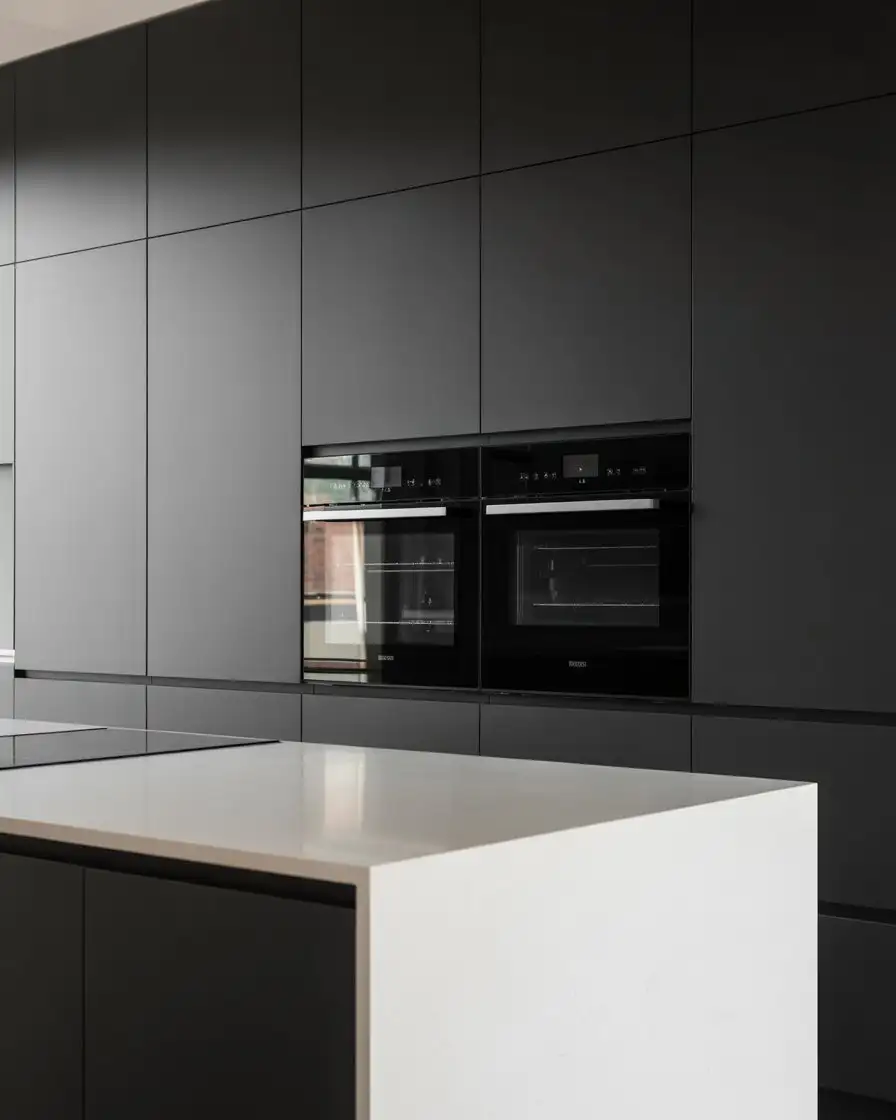
From a budget angle, handleless cabinets with quality push mechanisms add $50-$150 per door to cabinetry costs, but many find the investment worthwhile for the serene result. The lack of hardware also means fewer elements that can date the kitchen—there are no trendy pulls to replace when styles shift. In modern homes throughout California, Texas, and the Pacific Northwest, this pared-down aesthetic complements contemporary architecture and open floor plans where the kitchen functions as a sculptural element within a larger, flowing space.
19. Black Cabinets with Patterned Tile Backsplash
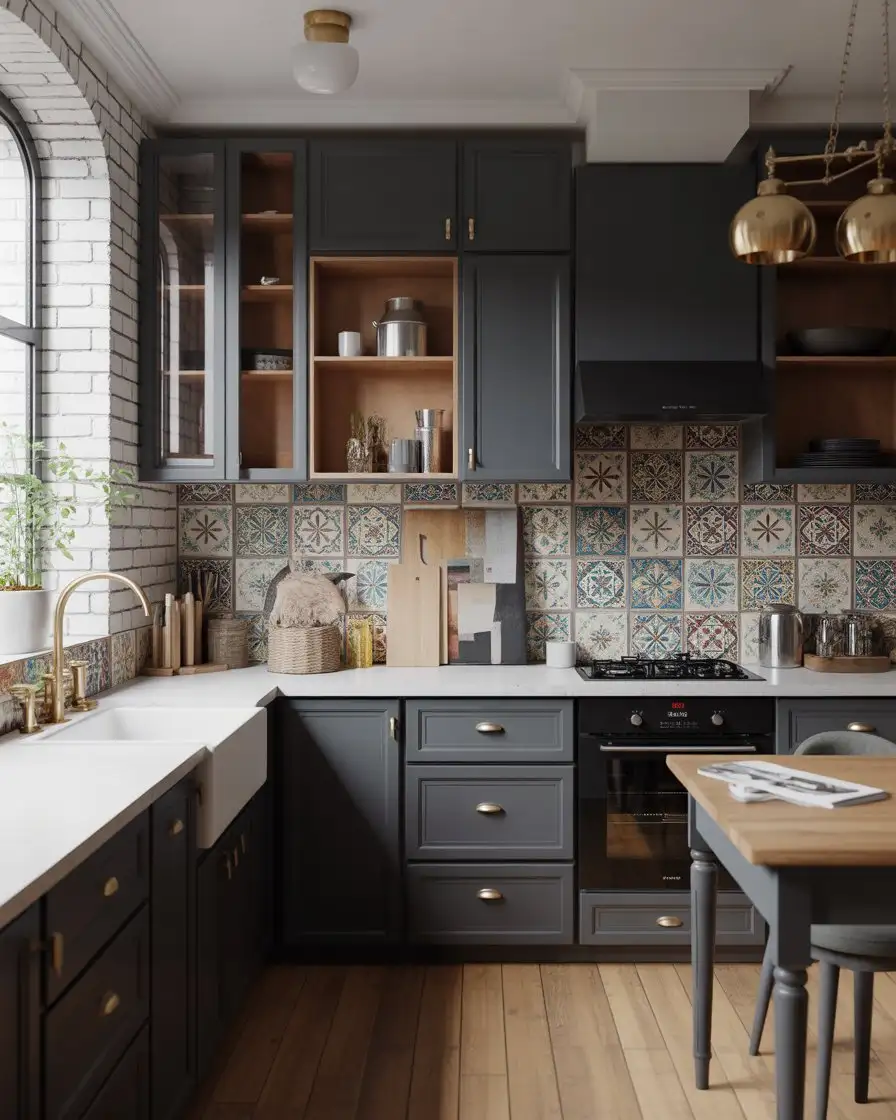
Black cabinetry provides the perfect neutral backdrop for adventurous tile choices—Moroccan zellige, geometric cement tiles, or colorful ceramic patterns all sing against the dark canvas. Where white cabinets might compete with bold tile, black recedes and allows the backsplash to become the star. This approach has exploded among homeowners who want personality in their kitchens but worry about committing to color on larger surfaces. The tile becomes easily replaceable art, while the black cabinets remain a timeless foundation you can build on for years. 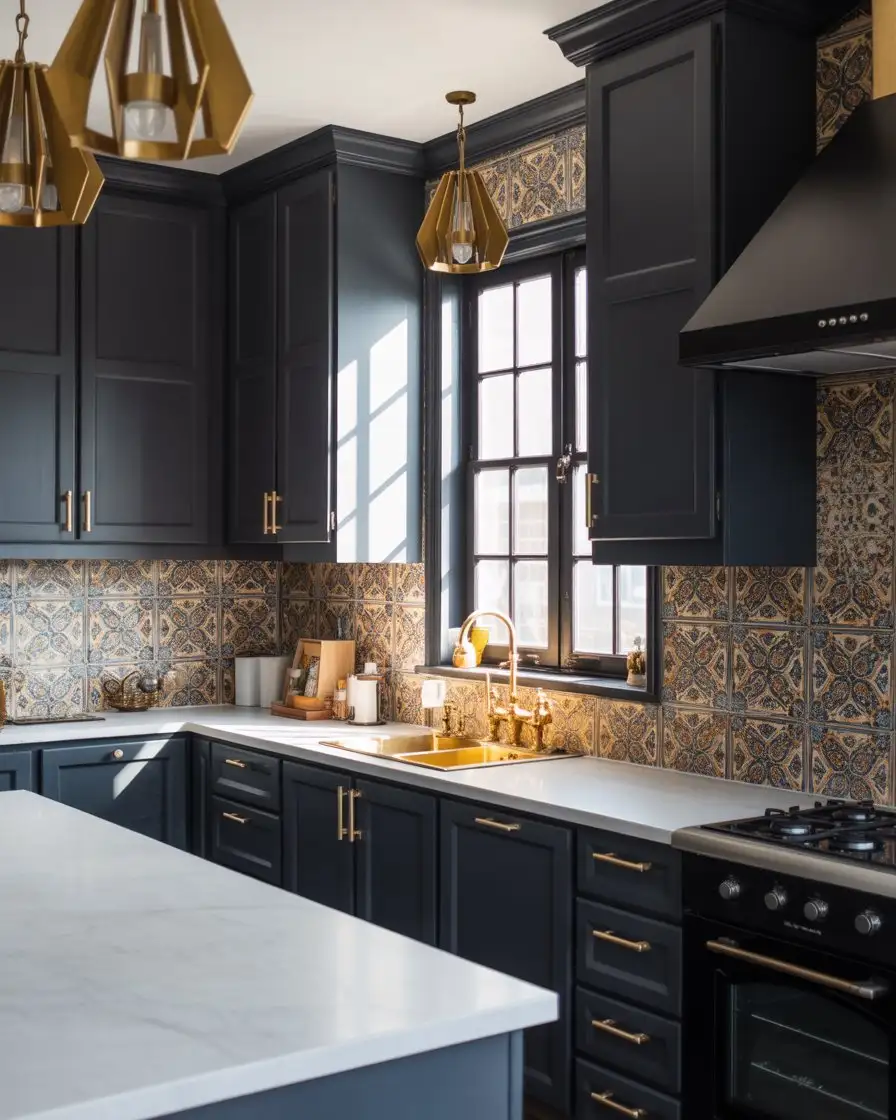
A tile installer in Portland shared that clients often express nervousness about pattern but gain confidence once they see it against black samples. The dark cabinets anchor even the most exuberant tile patterns, preventing the space from feeling chaotic. This combination works particularly well in renovated homes with architectural quirks—the patterned tile celebrates character while the black cabinets provide contemporary sophistication. Budget for $15-$45 per square foot for quality patterned tiles, with installation adding $10-$20 per square foot depending on complexity and regional labor costs.
20. Black Cabinets in Open-Concept Kitchen-Living Spaces
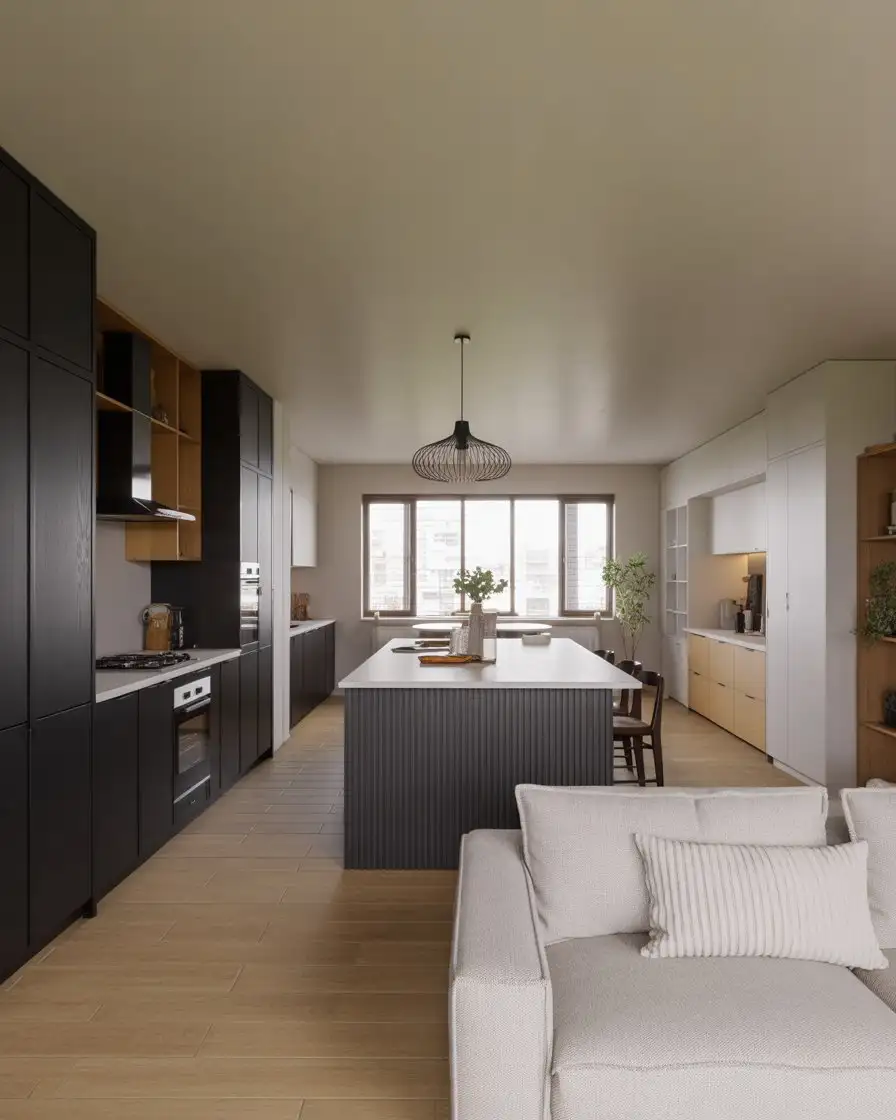
In open floor plans, black kitchen cabinets create natural definition between cooking and living zones without requiring walls or physical dividers. The darker tones visually anchor the kitchen, making it feel like a distinct area while maintaining sight lines and flow. This has become essential in modern home designs where the kitchen opens to dining and family rooms—the black prevents the kitchen from visually bleeding into adjacent spaces. Coordinating the black with other dark elements in the living area—accent walls, furniture, or built-ins—creates cohesion throughout the shared space. 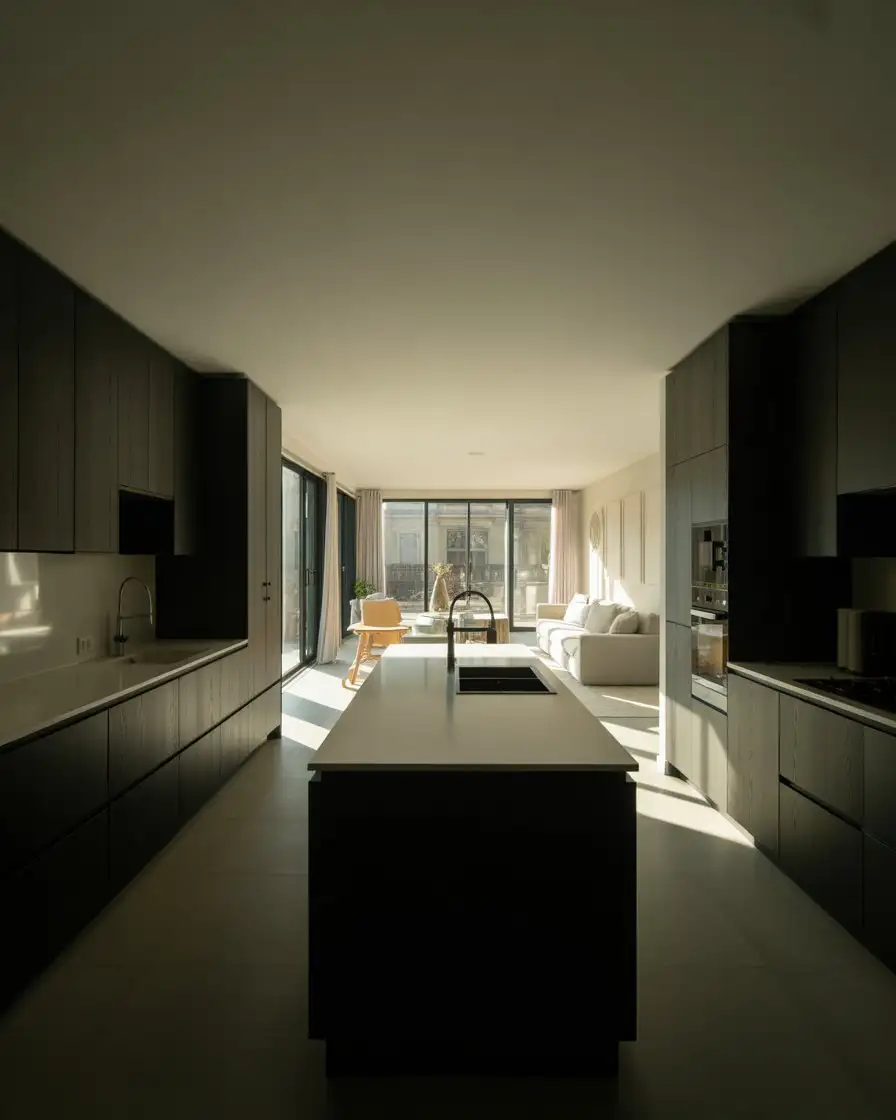
Many homeowners initially worry that black will dominate open spaces, but experience shows it actually recedes more than bright white, which can feel visually loud. The key is balancing the black with lighter elements in adjacent areas—pale sofas, light wood floors, or soft wall colors—so the entire space doesn’t feel heavy. In new construction throughout the Sun Belt and in renovated ranch homes in the Midwest, this approach creates sophisticated, grown-up spaces that accommodate both cooking and entertaining seamlessly. The kitchen feels intentional and designed rather than like an appliance showroom.
21. Black Cabinets with Waterfall Island in Contrasting Material
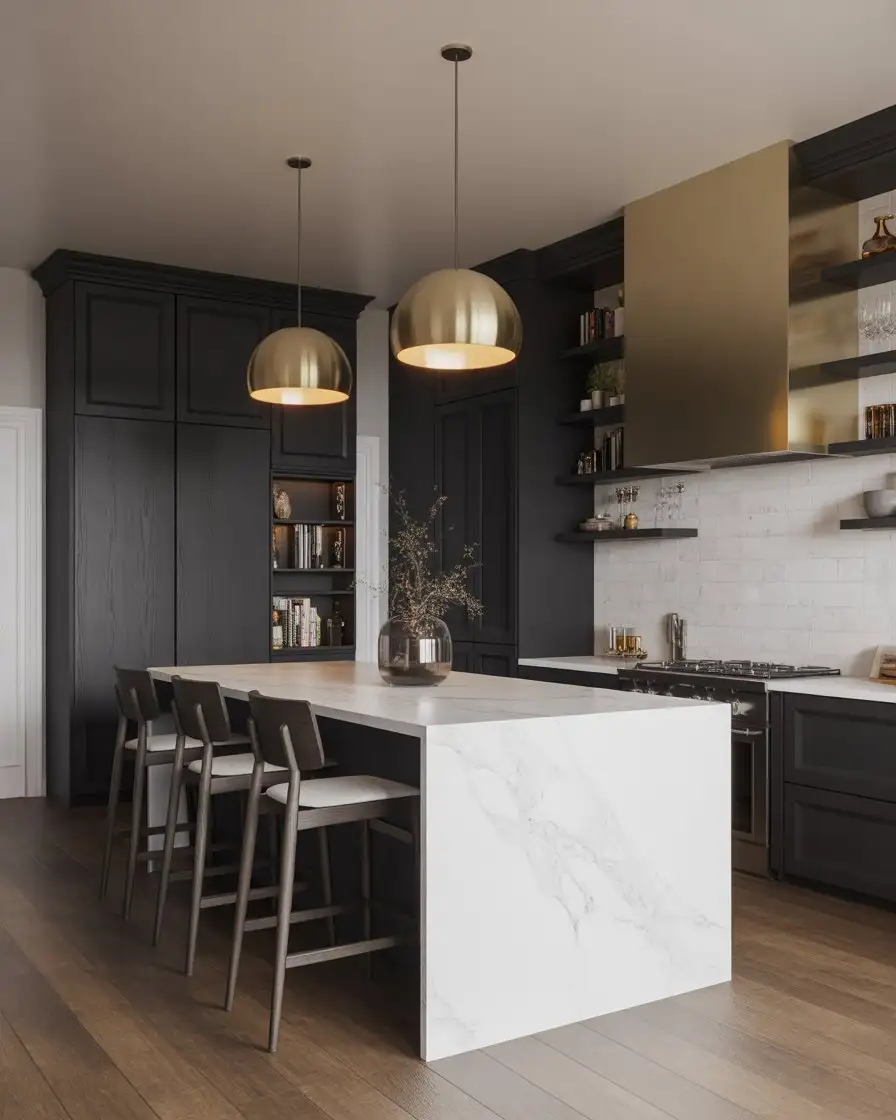
Creating a statement island with waterfall edges in white marble, quartzite, or light wood provides a stunning focal point in black kitchens. The continuous surface flowing from countertop to floor introduces sculptural drama and luxury detail that elevates the entire space. This has become a signature move in high-end renovations where homeowners want a clear centerpiece that anchors the design. The contrast between black perimeter cabinets and the light island creates visual hierarchy and draws people naturally toward the gathering space where families actually spend time. 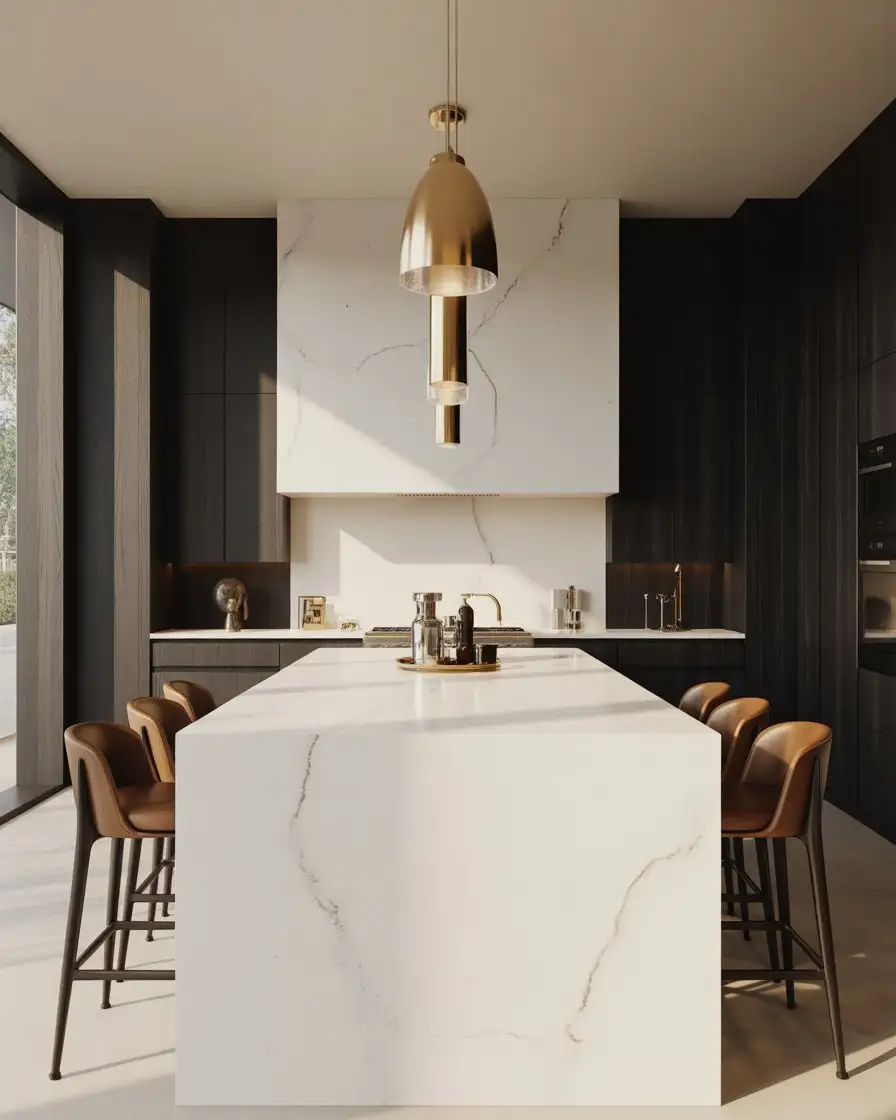
Budget considerations are real here—waterfall edges require more material and precise fabrication, typically adding $800-$2,000 to island costs depending on stone choice and size. However, clients consistently report that this element becomes the kitchen feature everyone comments on and the detail that makes the space feel truly custom. In upscale neighborhoods from Dallas to Seattle, the waterfall island has become the modern equivalent of ornate millwork—a single detail that signals investment in quality and design. Consider matching the island material to your backsplash for additional cohesion.
Conclusion
From sleek urban spaces to cozy farmhouse kitchens, black cabinets offer remarkable versatility that adapts to personal style and practical needs. Whether you’re drawn to the drama of all-black surfaces or prefer balancing the boldness with warm wood and metallics, these ideas demonstrate that black cabinetry can work in virtually any American home. The key is choosing complementary materials, proper lighting, and details that reflect your lifestyle. We’d love to hear which of these approaches resonates with you—drop a comment below sharing your favorite black kitchen idea or any questions as you plan your own renovation.